








The European Commission has been testing Element Pro, a self-hosted backup for Microsoft Teams, since the summer, and the officials using it are not impressed, with one dismissing it in crude terms on an internal message board.
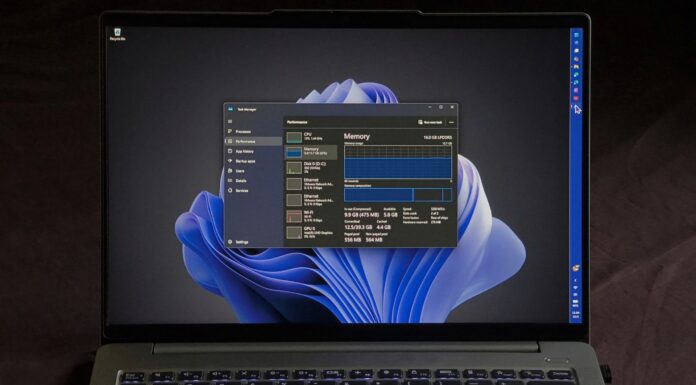
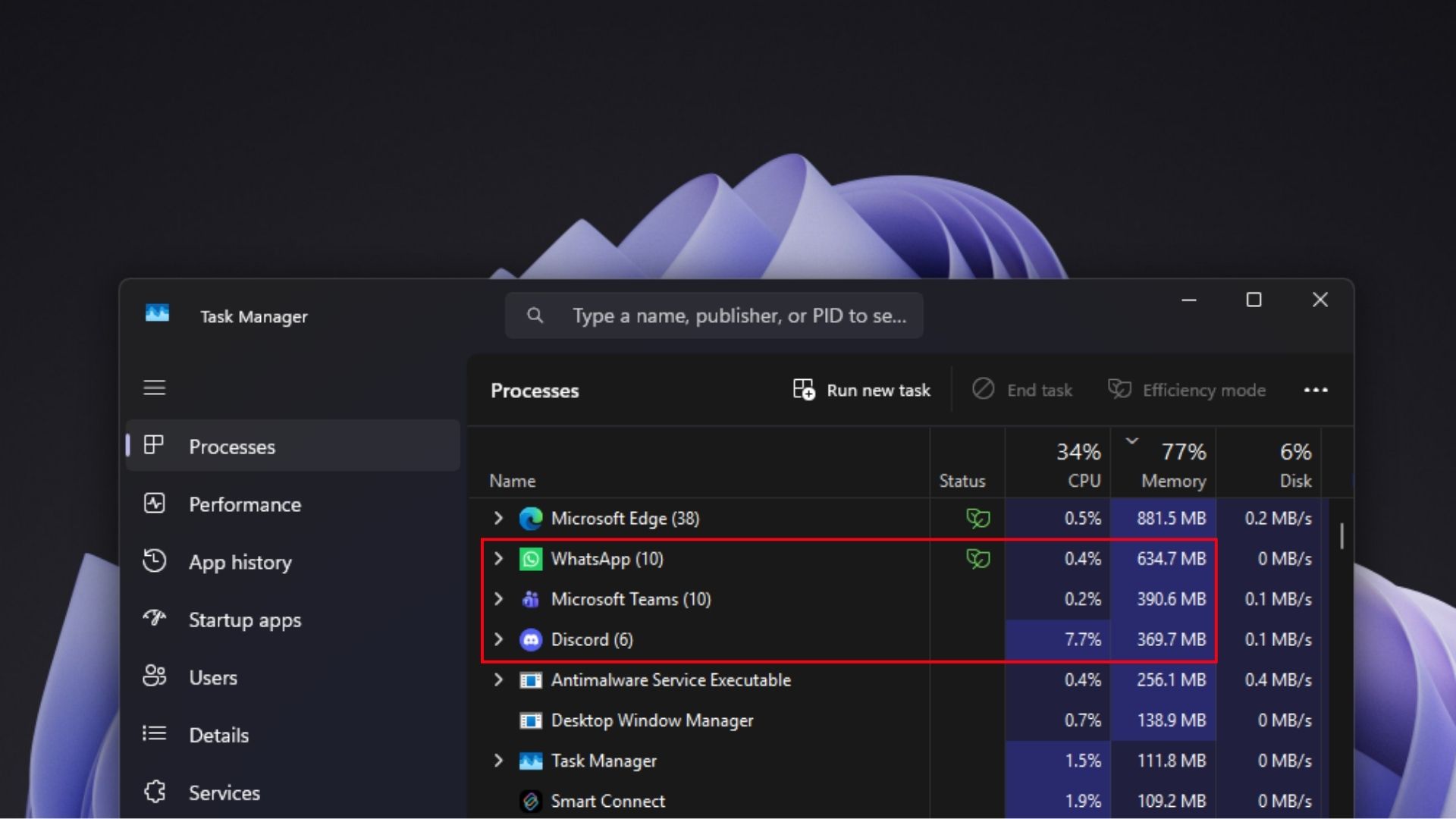
The complaints show how indispensable Teams has become in government, even though we have criticized multiple times how Microsoft’s main communications app is a WebView2 wrapper that uses close to 1GB of RAM when it’s doing nothing.
The EU’s plan to lessen its reliance on American tech and gain more control over European data is understandable. Unfortunately, the move is hitting the people who need to use the product day in and day out.
Ironically, we’ve spent the past year criticizing Teams, WhatsApp, and Discord for being RAM-hungry web apps instead of native Windows apps, so hearing government officials miss Teams sounds odd. If anything, it shows Microsoft did a great job of making Teams vital to governments and corporations, and a poor job of optimizing it.
The European Commission wants Element Pro as a sovereign Teams backup
Politico Europe says the Commission introduced Element Pro over the summer as a “sovereign back-up to Teams,” in the words of an internal staff memo. Teams is still the Commission’s main communication tool, and Element Pro is there to keep staff talking if Microsoft’s service becomes unavailable.
The European Commission’s push towards Element Pro is grounded in a desire for more control over its data and processes. “In recent months, digital sovereignty has become increasingly important,” a July memo read. “In practice, this means having greater control over our data and systems so that we can reduce risk and limit disruption to our work, wherever possible”. Whether these statements follow current geopolitical headwinds or some unannounced greater security risk, the sentiment is growing across the globe.
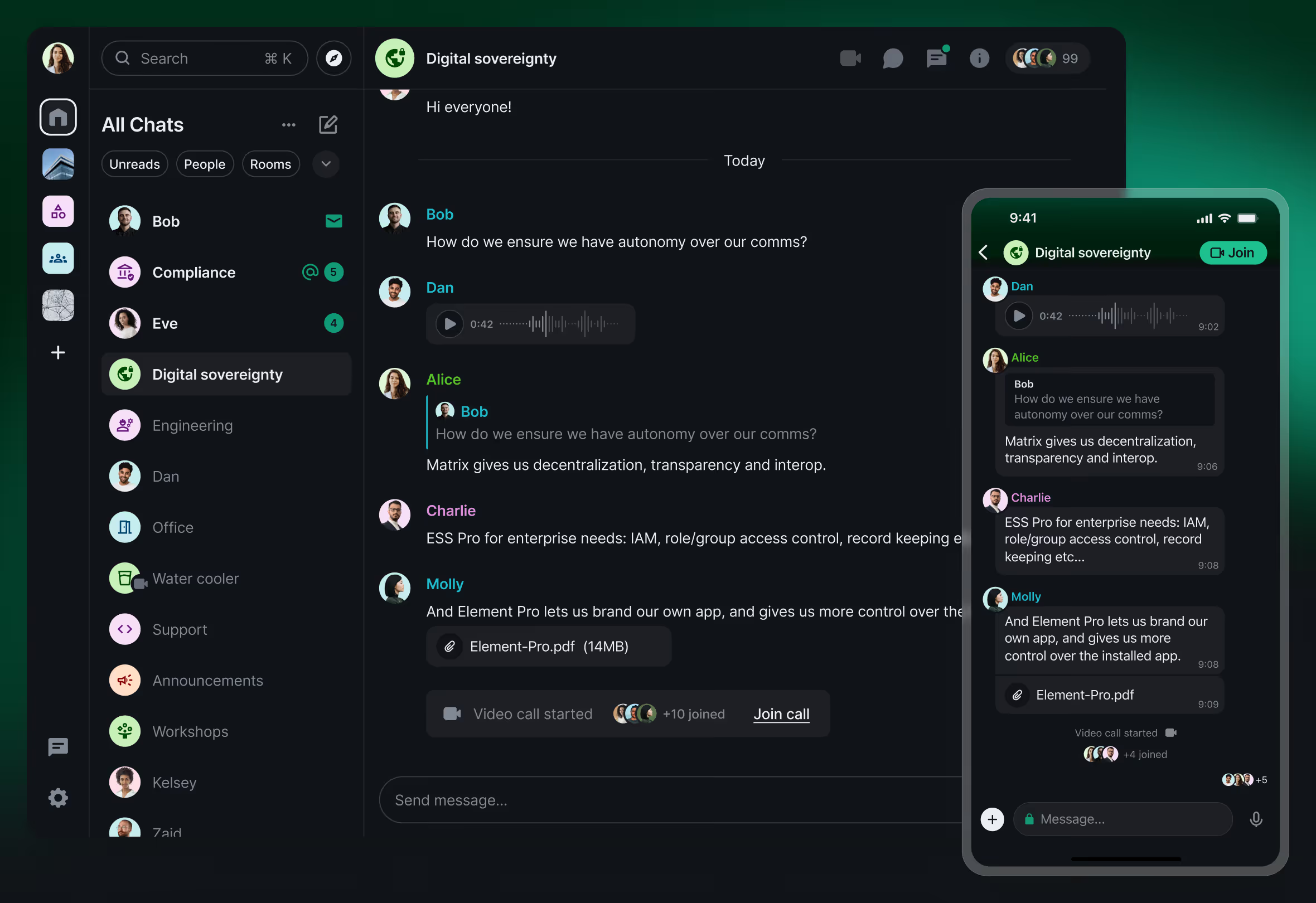
Unlike Teams, which runs on Microsoft’s cloud, Element Pro is hosted on the Commission’s own infrastructure. Element is a London-based company that builds on Matrix, an open messaging standard, and its Pro app adds proprietary features on top of open-source code. A British vendor is a slightly odd choice for EU “sovereignty,” given that the UK left the EU in 2020.
Europe also has a recent example to point to. After the US sanctioned an International Criminal Court official, Microsoft disconnected that official from its services, although the company says it didn’t stop serving the ICC.
International bodies such as the UN and NATO are already trying to make use of Element Pro. France plans to move its civil servants off Teams, Zoom, and other US tools to its homegrown Visio platform by 2027, while Austria’s military swapped Microsoft Office for LibreOffice last year.
While Element Pro is being slowly adopted and providing a path towards “digital sovereignty”, there’s a 500 lbs gorilla in the room named Microsoft Teams that shades reviews of Element Pro.

EU officials say Element Pro can’t match Microsoft Teams
In addition to its Herculean task of shifting nearly a decade of Teams muscle memory and habits, Element Pro also has to meet the accessibility of Teams, and it seems like the solution is coming up short. Element Pro is designed to function like Teams, providing audio/video calls, file sharing, and project rooms. However, users are less than enthused by the results.
“I don’t understand the added value here,” one official noted on an internal message board. Someone else was less subtle in their critique, describing Element Pro as “absolute sh*t.”
Less colorful, but just as stark was a third response that highlighted how far Element Pro needed to go to match Teams, stating that if the US ever decided to pull the plug on its technology to the EU, they would “instantly win the war.”
One official defended Element Pro because it runs on the Commission’s own servers, writing that with Teams, “all we have is a guarantee that Microslop will not peek inside.” Microsoft tried to stop the “Microslop” nickname from spreading earlier this year, and it’s now turning up in European Commission staff chats!
Fortunately, Element CEO Matthew Hodgson is in the UK and offers a sense of humility that’s foreign to most US-based CEO’s, acknowledging that the software is still being trialed and is experiencing “teething issues.” However, he is still a CEO, and in the same breath he also says that there is also some “cognitive dissonance” when moving from one app to another, and that when buttons are in different places, people inherently have some trouble adapting.
“Change is always painful, particularly if it’s a switch from a much-used program like Teams,” he said.
Teams is a RAM-hungry WebView2 app, and EU staff still prefer it
Before the Microsoft Teams engineers start hooting and hollering, keep in mind that Teams is its own minefield of headaches and user-unfriendly practices.
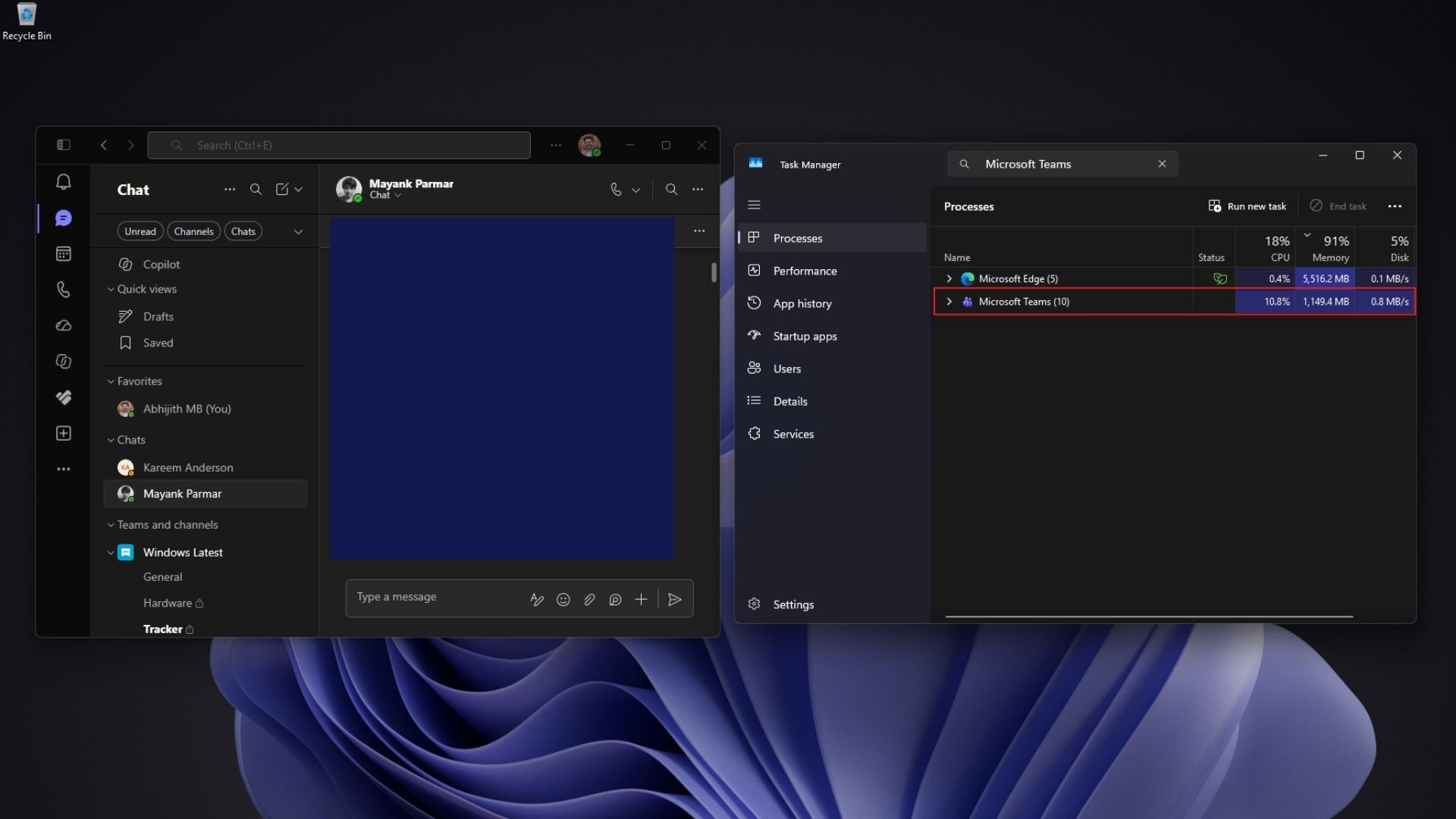
Teams is notoriously resource-heavy. It’s built on Microsoft Edge’s WebView2 runtime, which runs web content (HTML, CSS, JavaScript) inside a native app window. The combination leads to heavy memory consumption, high CPU usage, and fan noise. In our testing, a fresh copy of Teams used 963MB of RAM with no conversations at all, and it can climb to 2GB during calls.
If you’re wondering why your Teams app is lagging, these are the common causes:
- Corrupted Cache: A damaged local cache can leave Teams stuck in loops and constant re-renders that tax your system.
- WebView2 Glitches: Outdated or stalled WebView2 runtime processes can cause the app to hang.
- Heavy Effects: Custom backgrounds and filters used to mask your messy rooms put extra load on the CPU and GPU during calls.
Microsoft knows this. It first moved calling into a separate process, and then added an Efficiency mode for low-RAM PCs, but both are patches on an app that is still a browser in a window.
The EU’s backup doesn’t escape the web either. Element’s desktop client is its web app wrapped in Electron, which is the same framework behind Discord’s RAM problems. We’ve watched this plague spread across Windows 11, with WhatsApp even dropping its native app for WebView2 and using up to seven times more RAM in our tests.
Microsoft should rebuild Teams in WinUI now
Teams winning over government staff proves Microsoft got the hard part right. The optimization is where it keeps failing. But Microsoft’s native framework is in better shape to fix it.
WinUI just picked up basic features and lower memory use, and Microsoft now has a quick-start guide that uses AI agents to take a developer from an empty folder to a published WinUI 3 app in about 30 minutes. In my opinion, if AI can help a beginner ship a native Windows app in half an hour, typing code by hand is no longer the excuse, and Microsoft can afford a native client for its flagship collaboration app.

After all, why should a government’s backup plan be judged against an app that needs close to 1GB of RAM to show an empty chat list?
So, while Microsoft might be experiencing a moment of schadenfreude, it’s not without its critique.
Transitioning is never as smooth as it’s ever sold, and moving governments, education, and regulatory bodies onto a new platform has proven historically challenging; see the popularity of Windows 7 and the ESU’s issued for Windows 10. Whether Element Pro builds up enough creature comforts, as Teams did to get over its “teething issues”, or the EU Commission pivots to an à la carte version of “digital sovereignty” remains to be seen.