









Microsoft just apologized for the Microsoft 365 outage, which disrupted Outlook, Teams, Copilot and other services for more than a day. The company has also promised a post-mortem report after it really messed up. But to my surprise, Microsoft actually had to say it loud and clear that the outage was not caused by Copilot or AI.
Yes, seriously.
In a statement posted on the admin center and first spotted by Windows Latest, Microsoft shared the following details:
“We are deeply sorry for the disruption this incident has caused our customers and partners. We know the trust they place in our services and take that responsibility extremely seriously.
We are seeing broad recovery and stability across our services. This was a technical issue not related to cyber or AI / agents.
The incident was introduced by an issue during an earlier network capacity upgrade that surfaced following a recent network change. We have addressed the underlying issue and continue to restore service to remaining customers and regions. Given the scale of demand, we restored services gradually, validating stability at each stage. While this took longer, it helped ensure a stable restoration. We will provide a full post-incident report once our review is complete.” – Microsoft
The Microsoft 365 outage affected millions who use Copilot, Outlook, Teams, Exchange, Azure, and even Xbox. It also slowed airlines and could have resulted in delayed bail for prisoners in Colorado because officials couldn’t receive the email confirmations needed to process online bond payments.
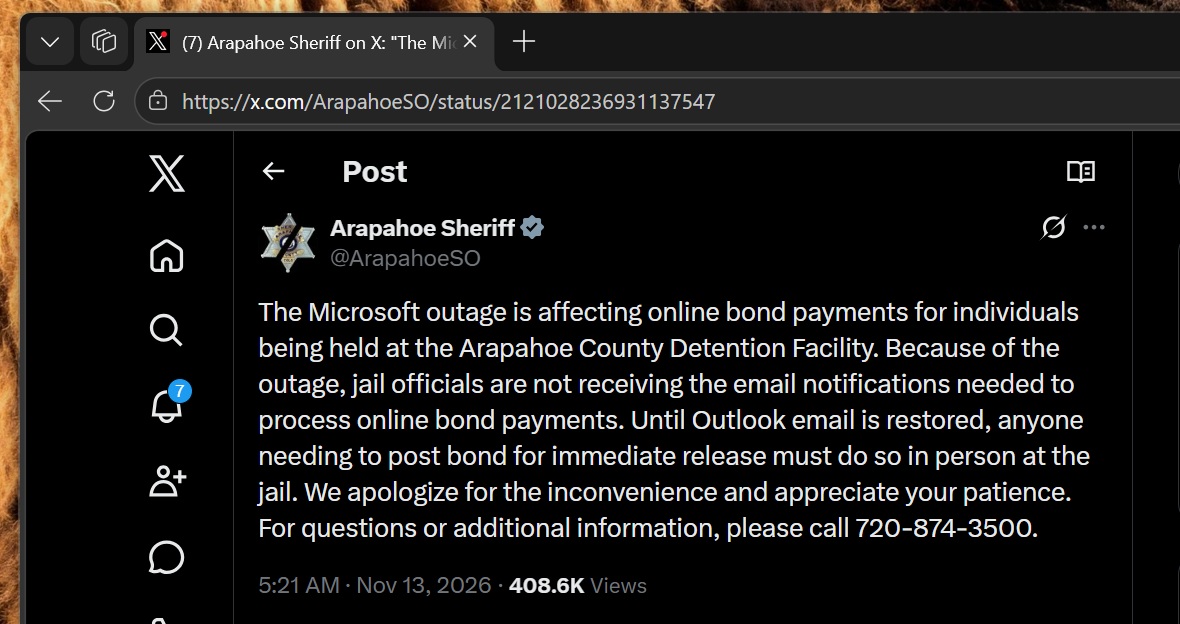
And it wasn’t just the sheriffs who ran into problems while doing their duty. Most of us ran into problems too.
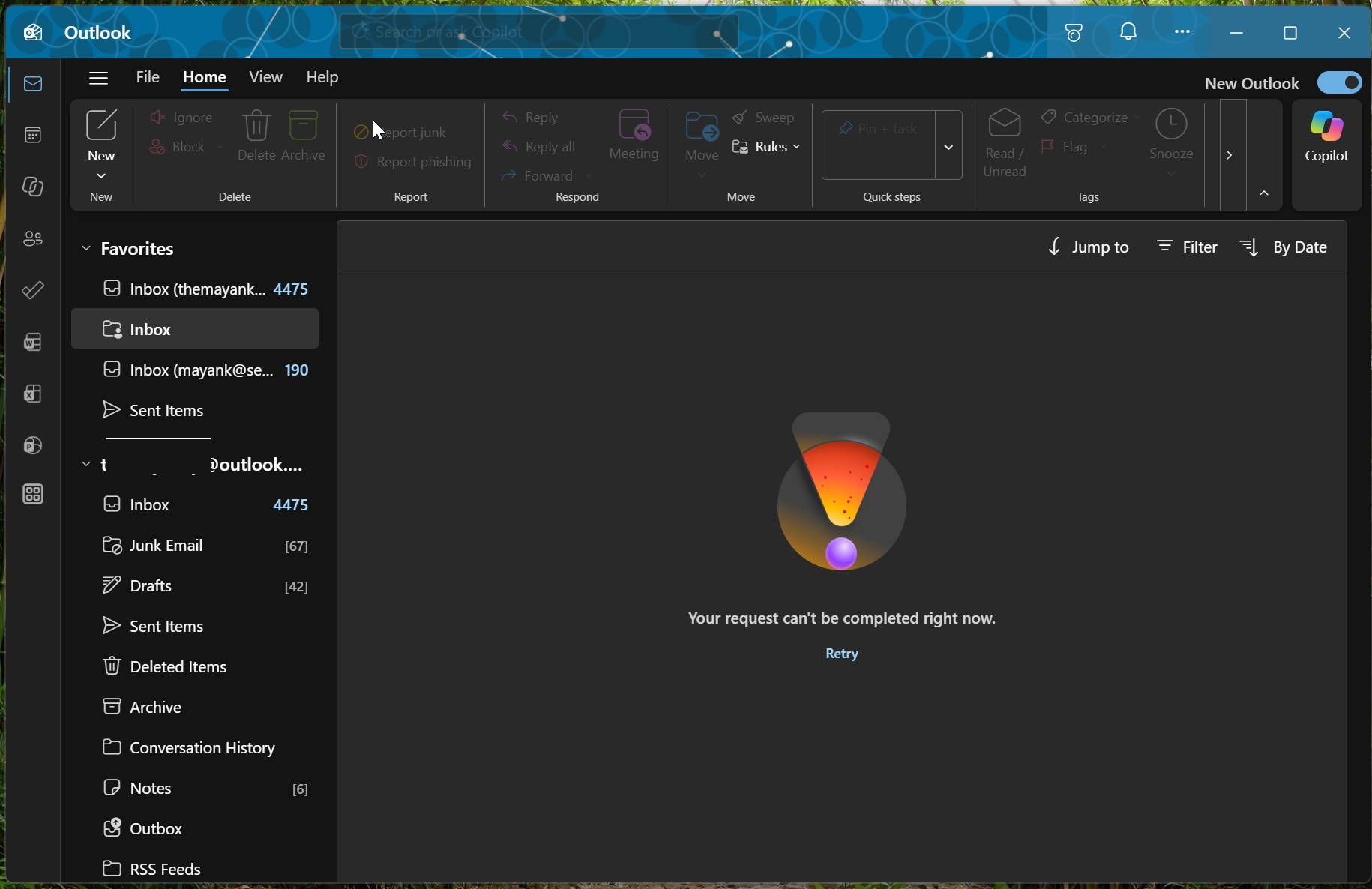
As I reported during the outage, Outlook kept showing me a “Your request can’t be completed right now” error, while Copilot wasn’t working and Teams felt slow. We were also getting a “permission denied” error when trying to access our shared mailboxes, even though I am the admin and owner of the organization!
Microsoft had to tell everyone that Copilot didn’t break Microsoft 365
At this point, there’s no denying that Microsoft’s reputation has been seriously slipping, and the damage goes beyond Windows. The fact that Microsoft had to come out and publicly say AI didn’t break Office and other products seriously tells you that even the company is aware of its sinking reputation.
Microsoft’s slipping reputation is largely due to its Copilot (or AI) push, and we just witnessed that during the outage.
As soon as Microsoft 365 went offline, we noticed hundreds of thousands of people coming up with conspiracy theories about how it was related to Copilot or AI, instead of the usual hacker or cyberattack. It seemed more plausible to some users that Copilot crashed Microsoft than a hacker from Russia.
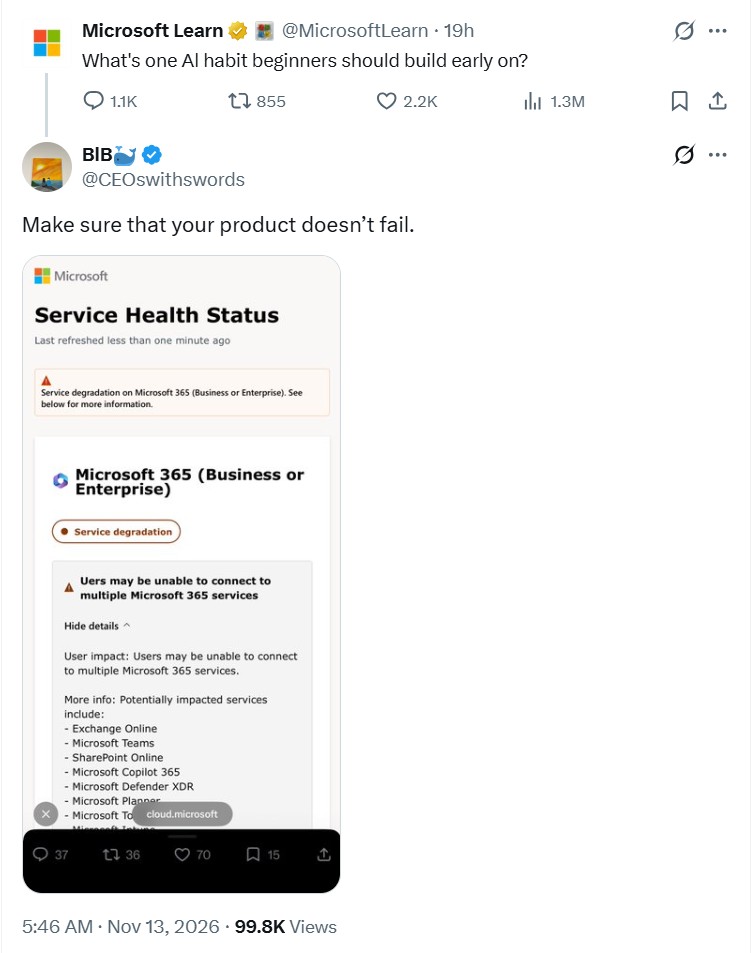
This is quite unusual, and it clearly shows that Microsoft may have seriously damaged its reputation while trying to push Copilot down our throats.
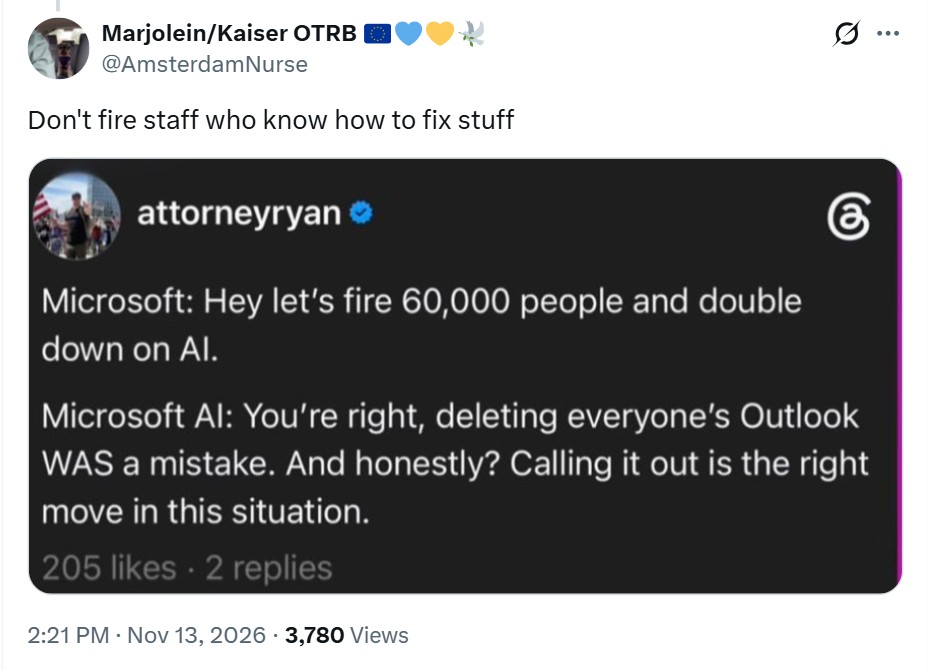
If you haven’t been following the backlash, Microsoft previously blocked users from writing ‘Microslop’ in its Discord server.
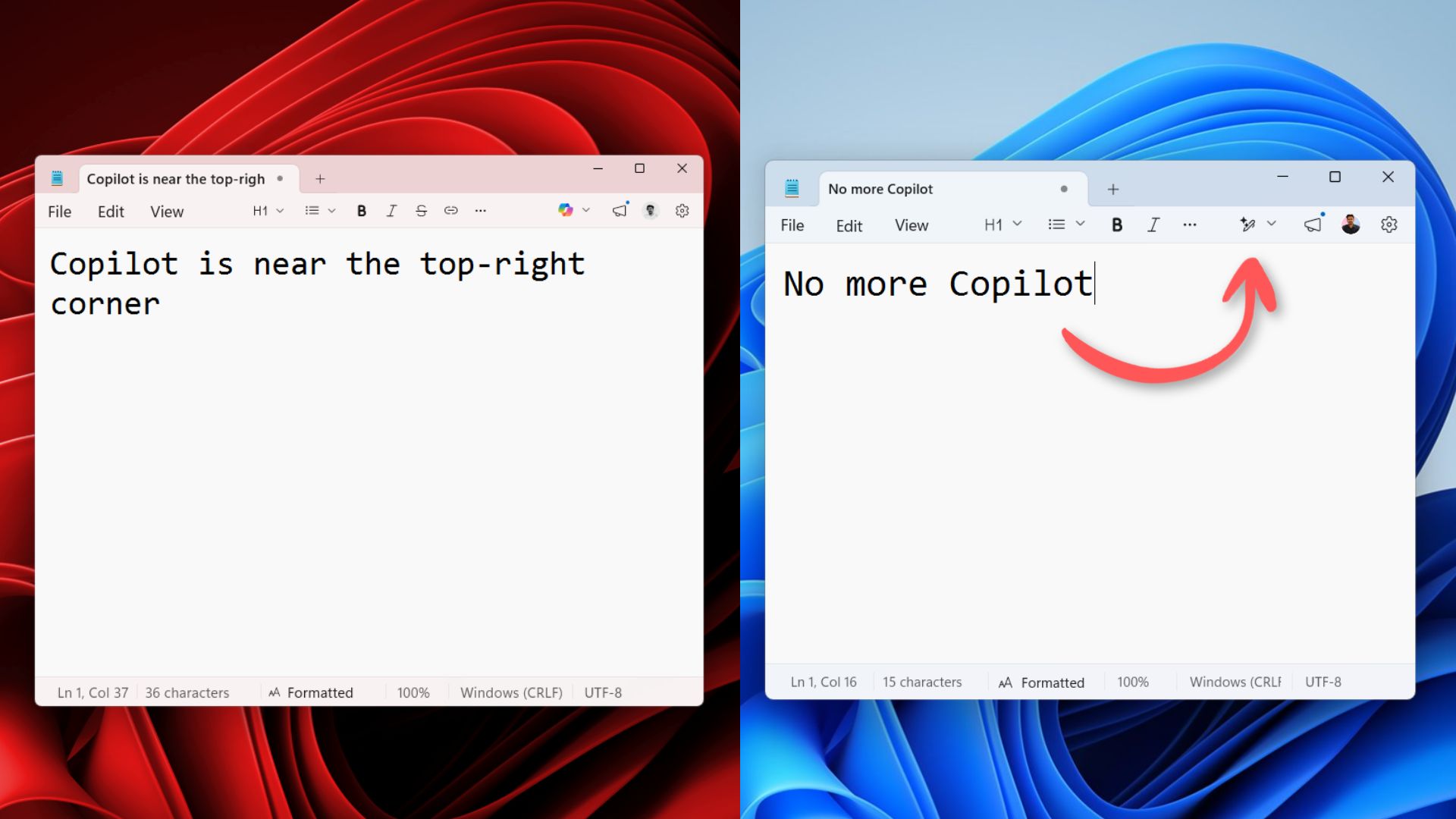
Following the backlash, it also began scaling back Copilot on Windows and removed some Copilot entry points from apps like Snipping Tool and Microsoft Photos. It also renamed the Copilot option in Notepad to “Writing tools,” in the hope that people would hate it less, but the AI features themselves remain.
So, what went wrong with Microsoft 365?
On November 12, in the early morning (PT), users began reporting problems when trying to open Exchange Online mailboxes. Microsoft said it was aware of the reports, but it never said, or I believe realized, that it was a bigger issue than usual.
Microsoft acknowledged that users in the United States were having issues, but later found that other regions were experiencing outages too.
Fast forward to 11 AM PT, the outage had begun to spread, and Microsoft tried to reduce the impact as it detected elevated load across multiple regions. Microsoft’s early findings pointed to system load as a possible contributor, but it later clarified that the load wasn’t caused by an overall increase in traffic.
Instead, a number of servers had unexpectedly become unavailable, forcing the remaining infrastructure to handle more traffic.
As soon as Microsoft figured the situation could easily fall out of its control, it paused all deployments and used its resources to move traffic across its infrastructure. It also did the most obvious thing Microsoft’s own support engineers would tell you when you’ve got high resource usage on your Windows PC: reboot!
Microsoft started restarting affected servers, but that did not really help, as some of its servers were failing automated health checks. That caused them to become unavailable and put more load on the remaining infrastructure. At one point, it started to look like a domino effect with no going back in a short span of time.
After almost 20 hours, Microsoft confirmed that most of its servers were back online, and Outlook, as well as other services, were starting to come online across the world.
This wasn’t even the first Outlook problem I ran into this month. A few days before the outage, Microsoft confirmed that its spam rules had blocked legitimate emails from reaching some Outlook.com and Hotmail accounts. That was a separate issue, and Microsoft rolled back the change.
You may be eligible for a credit if you use Microsoft 365 for work
Given how long the outage was, some of you could be eligible for a service credit, but as I outlined in my steps, you’ll need to contact Microsoft to review the outage and its impact on the services you pay for. For example, you can’t expect Microsoft to compensate you for your entire Microsoft 365 plan if you only had issues with Outlook.
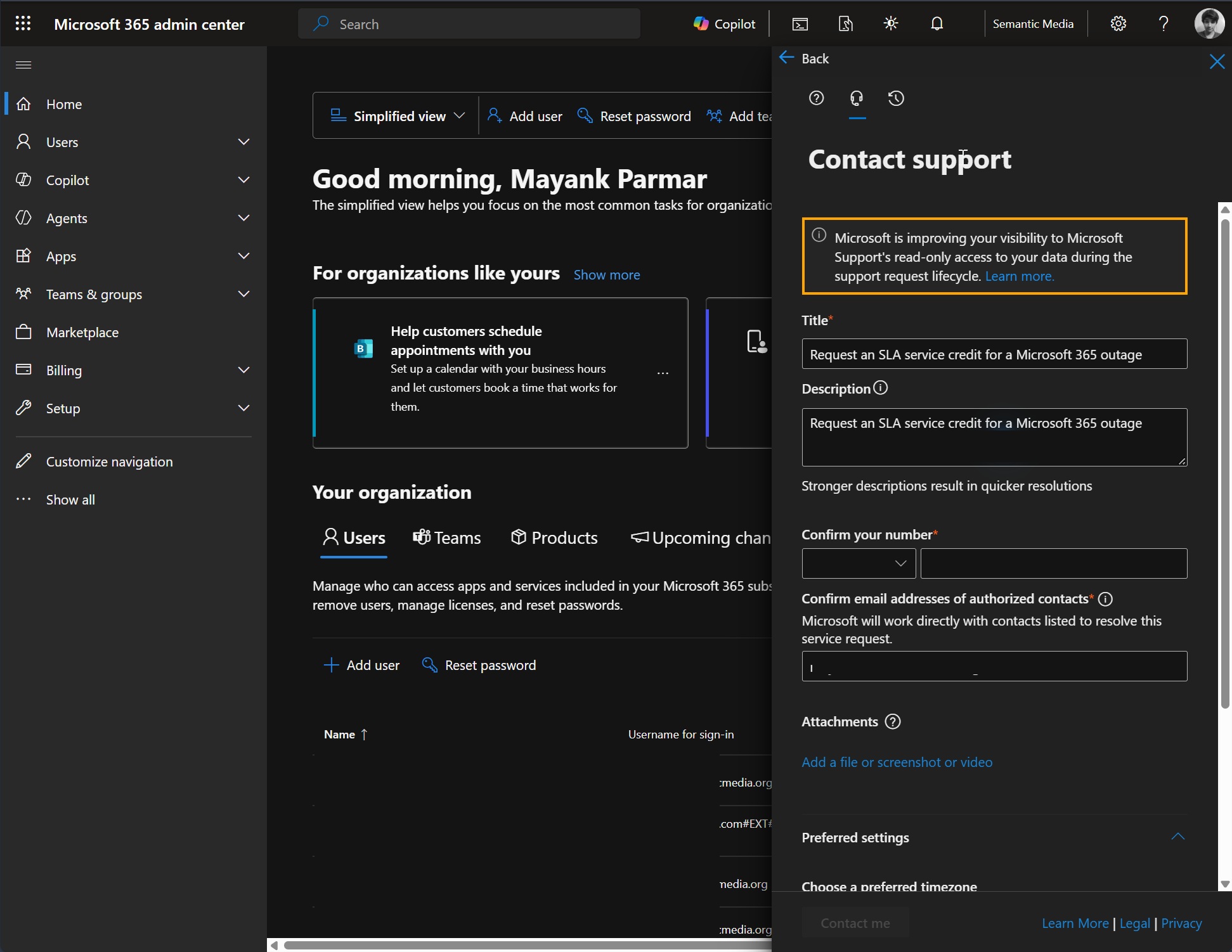
Under Microsoft’s service level agreement (SLA), the credit depends on the product you use and how you were affected. I strongly recommend reaching out to Microsoft support, and claim your credits!