








Microsoft CEO Satya Nadella was asked point-blank whether Redmond’s voluntary exit offers are a prelude to AI layoffs, and he didn’t give a straight yes or no. Instead, he told Gergely Orosz on The Pragmatic Engineer podcast that Microsoft’s 200,000-plus employees “will have to be configured in different ways” as AI changes how software is built.
About 60,000 Microsoft employees are eligible for the offer, and Nadella’s answer is anything but reassuring, but we finally understand the mentality. He admitted that not every team has adapted to AI, and he isn’t promising engineers that things will stay as they are.
Satya Nadella says Microsoft teams must change as AI reshapes jobs
Orosz, a former Microsoft engineer himself, asked Nadella “dead on the head” whether the offers could precede layoffs as AI makes teams more efficient. Funnily enough, they recorded the interview hours before Microsoft’s day-long Outlook outage, which the company later blamed on a botched network upgrade, not AI.
Nadella says there will be “plenty of opportunity going forward,” but “the shape of that opportunity may be different,” right down to “team sizes, team workflows.” Wages for systems engineers, infrastructure staff and AI training researchers are “through the roof,” he said, and the offer gives people more agency to move towards that kind of work.
“I don’t want to be stuck in a team that’s not transformed, even inside of Microsoft,” Nadella said, admitting that not every part of the company has “got the memo.”
If you’re in a team where you feel stuck professionally, he says, “you can vote with your feet.” In the very next breath, he added, “I don’t want you to,” as there are plenty of other teams within Microsoft.
“I wish I could just sit here and say it’ll all be the same. I cannot,” he said.
Well, you rarely hear the CEO of a 51-year-old company admit that parts of it haven’t caught up.
Microsoft’s 60,000-person voluntary exit offer isn’t a retirement program
A post on X called these “voluntary retirement offers,” but they aren’t. Chief People Officer Amy Coleman introduced the Voluntary Exit Offer (VEO) on October 26 for eligible employees at level 70 and below, in participating teams in the US, Canada, the UK and India, with financial support.
April’s Voluntary Retirement Program only covered US employees whose age and years of service added up to 70 or more, while the VEO has no age or tenure requirement.
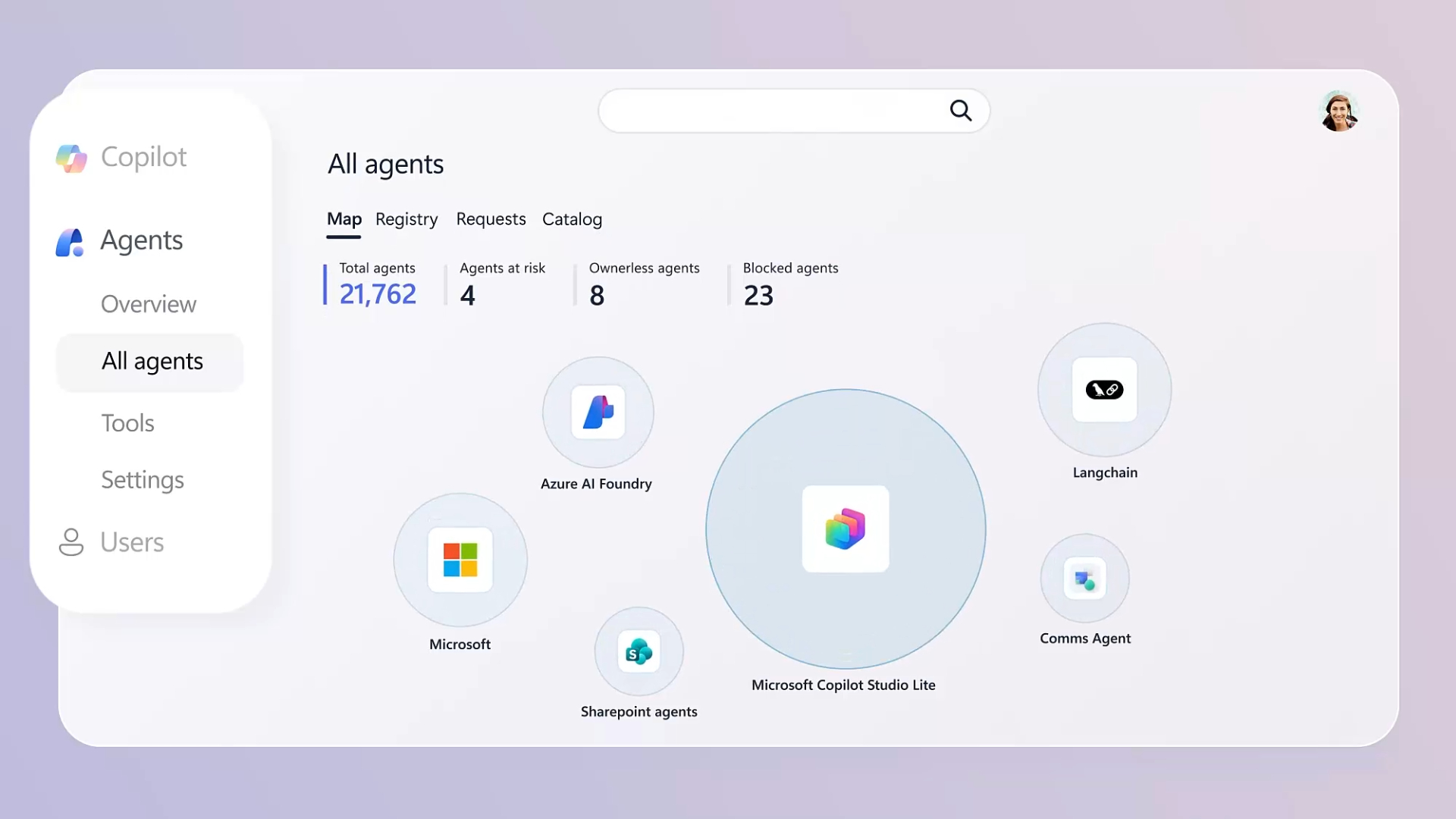
So, is Microsoft showing 60,000 people the door? Not quite. A Microsoft spokesperson told Fortune it expects fewer than 5% to accept, which is fewer than 3,000 people. Before this, Nadella was already imagining 20 million AI agents at Microsoft.
Gergely Orosz believes Microsoft is preparing for bigger AI-driven reorgs
Replying to that post, Orosz shared his insights on X. He expects bigger reorgs than usual, with AI-native teams becoming the starting point. He also sees the VEO as a nudge for stuck developers to interview elsewhere, since resigning with an offer in hand turns the exit payment into a bonus.
As for teams that haven’t transformed, Orosz wrote, “Unsaid is what will happen to such teams, but you can guess.”
Yes, this is Orosz’s interpretation, and not Microsoft’s plan, but I’m sure an hour long interview with the head of the company gives a sharper perspective. Nadella’s strategy for internal moves suggests Microsoft wants to keep people who adapt, and he says forward deployed engineer (FDE), a fairly new role, is one of its fastest growing jobs. Let’s just see when this too becomes irrelevant.
AI is already changing how Microsoft builds Windows and other software
Nadella has said AI writes 20 to 30% of Microsoft’s code, and Distinguished Engineer David Fowler says “typing code is absolutely over.” Even designers are using AI to code Windows 11, and a research team wants to move C and C++ code to Rust with AI, though Microsoft says it won’t rewrite Windows that way.
The Windows team is building a pipeline from crash traces to fixes, partly because AI models now find more CVEs. “In a world where code generation has become cheap, what has become hard is verification,” Nadella said.
Nadella says junior hiring could recover once Microsoft reorganizes its teams
Asked if Microsoft still hires new grads, Nadella admitted the slowdown, but says step one is getting existing employees “re-orged to places that make sense,” before adding college hires. It actually makes sense, but it looks like the days of getting a job at Microsoft through campus recruiting could become increasingly uncommon.
The slowdown may only last until these “new factories” of software engineering are built. An AI-native company starts “with a token budget and a human,” then adds the next person once the first maxes out their tokens. “Every company is going to start looking like that,” Nadella said, though he thinks it’s too early to call it a long-term trend.
Nadella also admits the industry has created “enormous anxiety” by talking about the singularity and a future with no jobs. For 60,000 Microsoft employees with an exit offer in their inbox, I doubt one podcast will make it go away.