







Microsoft is quietly loosening its grip on the Microsoft account (MSA) requirement. Edge is getting a new option to sign in with a Google account, and we already know that internal teams in the company are working to bring back local account in Windows 11. This may be the first time in 10 years that Microsoft is getting a change of heart when it comes to forcing us to sign in with MSA.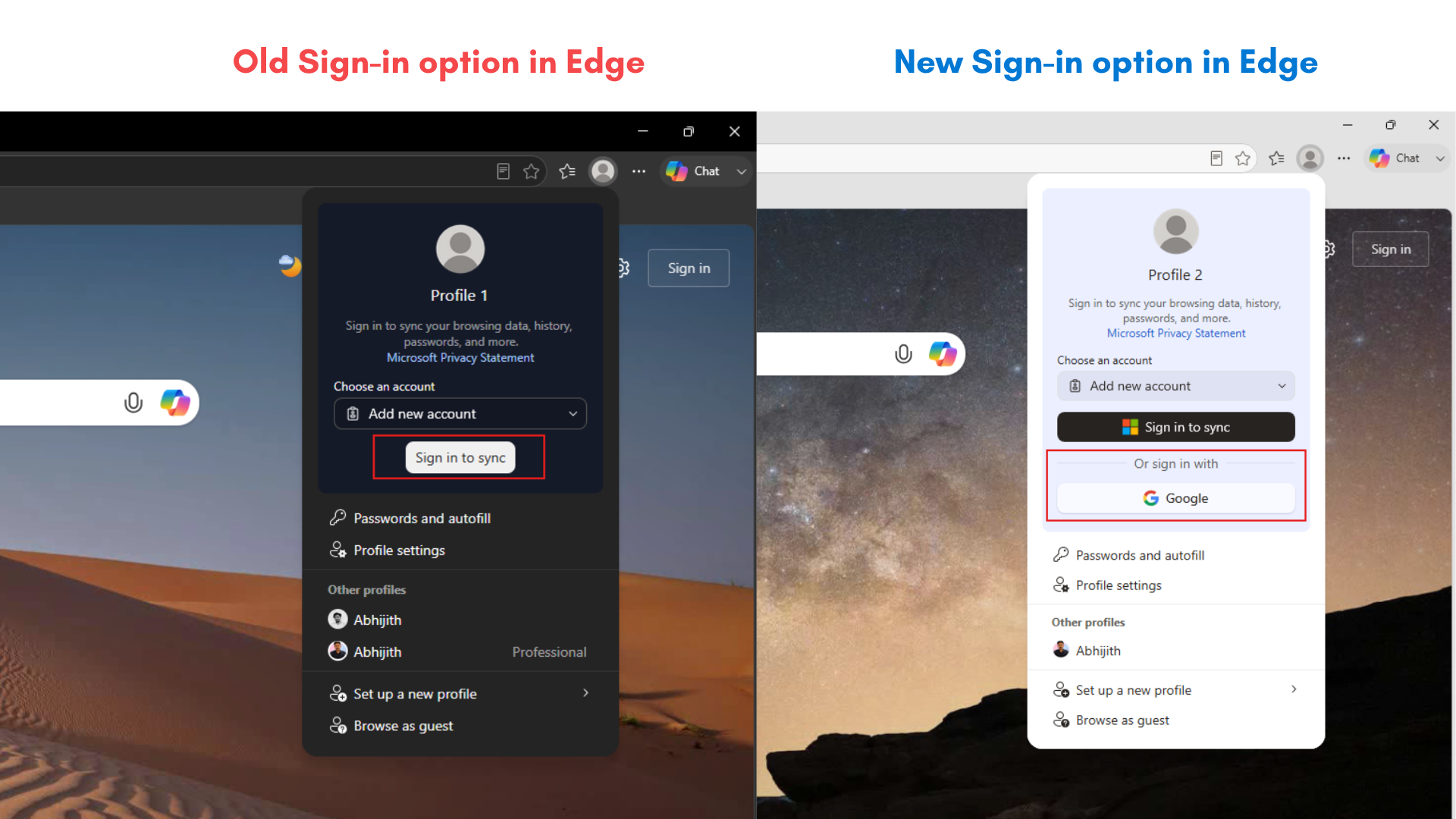
For years, Microsoft pushed MSA hard. You needed one to set up Windows 11, to get the most out of Bing, to claim Rewards points, and to sync anything in Edge.
The company even paid people $1 million to use Bing, a promotion that only worked if you had a Microsoft account, since Bing Rewards cannot be redeemed without one. But something has changed. Microsoft is quietly stepping back from that hard stance, and the most visible sign of it is coming to Edge.
Microsoft Edge will let you sign in with a Google account
Microsoft has added a new entry to the Microsoft 365 Roadmap (Roadmap ID: 565860), confirming that Edge users will be able to sign in to the browser using a Google account. The feature is currently in development and is slated to begin rolling out in July 2026. It will be available on both Windows and macOS.
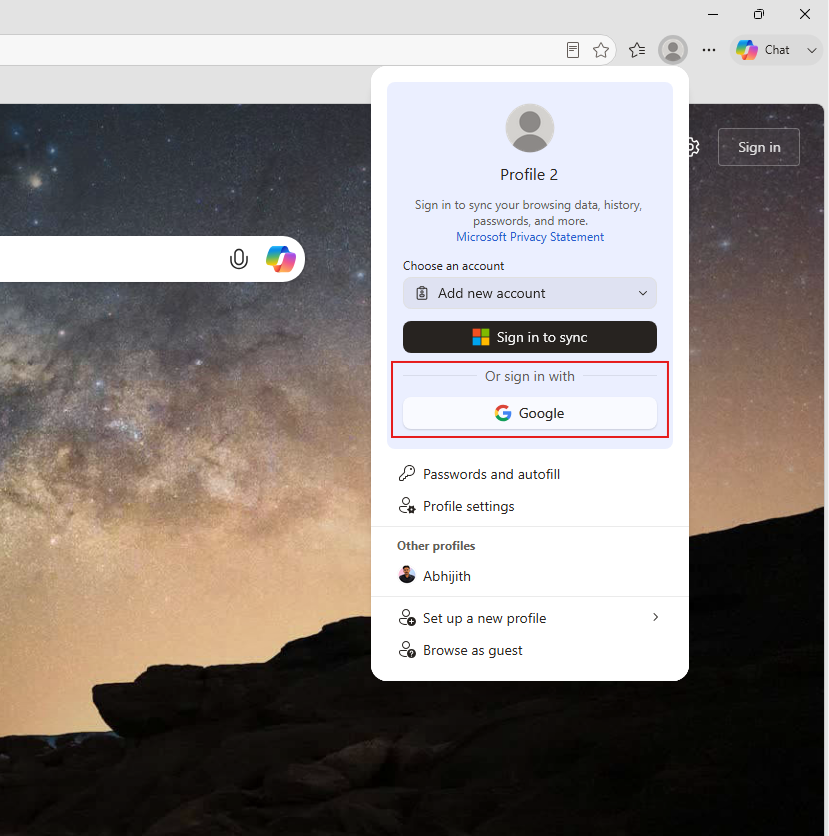
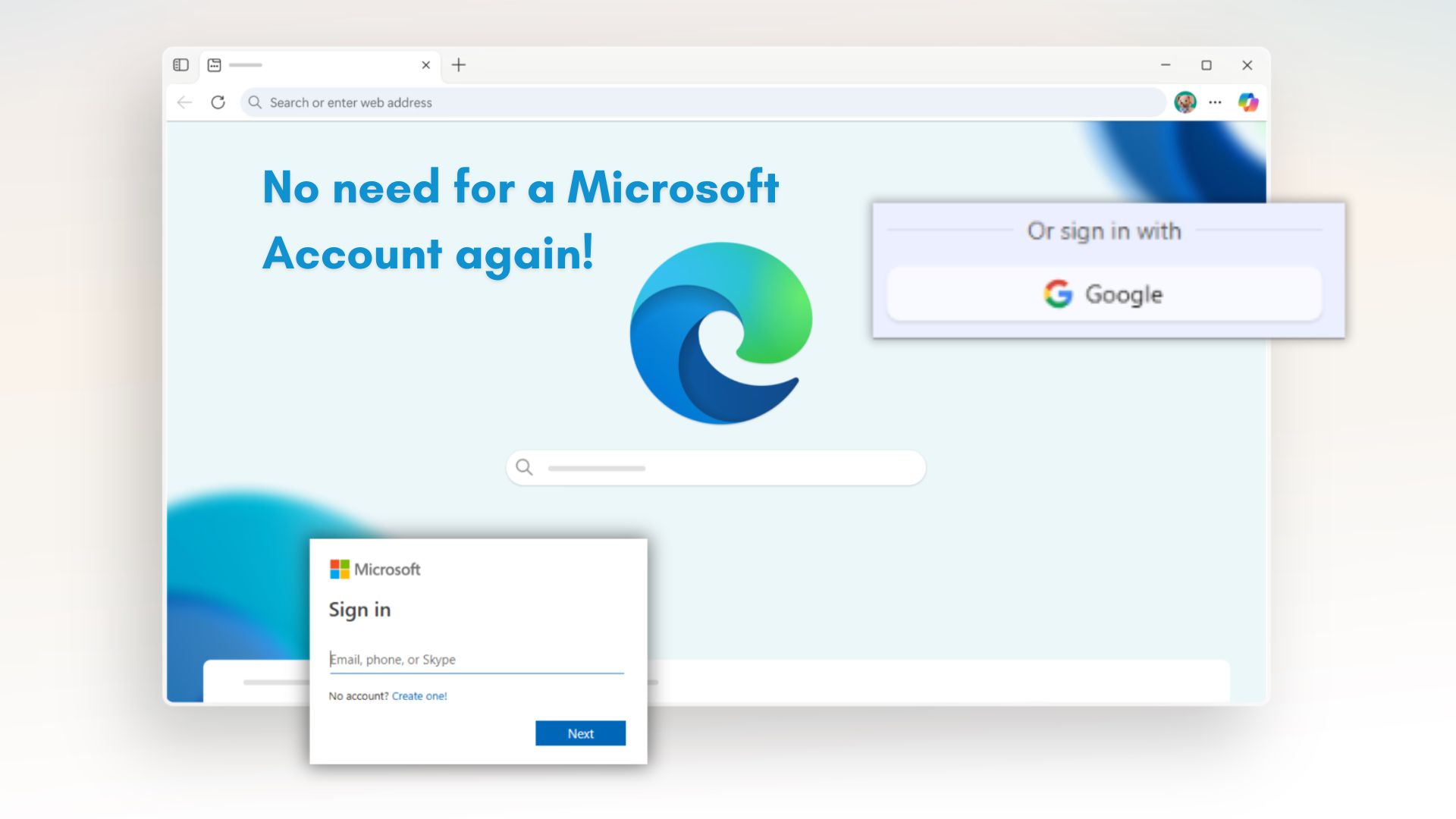
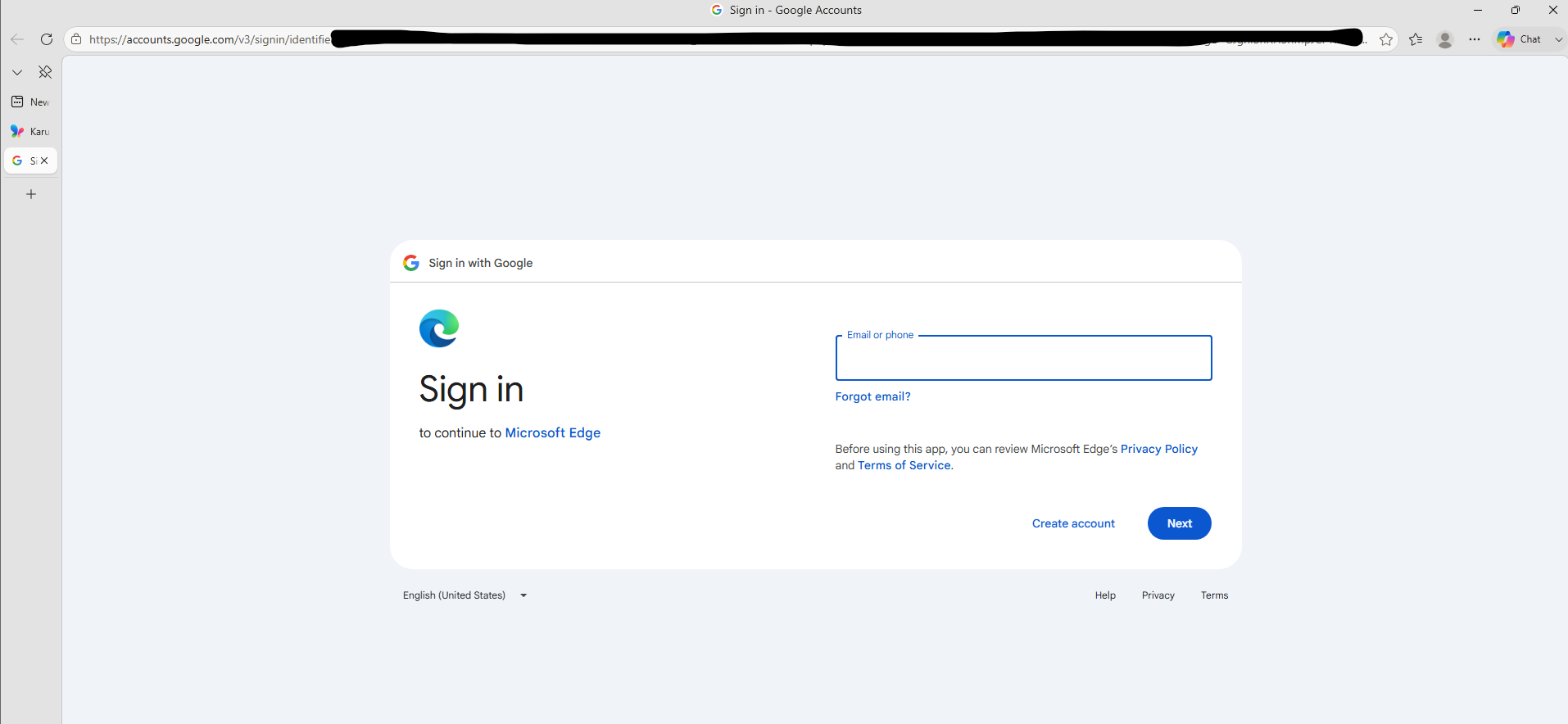
We got early access to a build of Edge where the feature is already live, and in the profile menu, below the existing “Sign in to sync” button, there is now a new “Or sign in with” section with a Google button. Clicking it opens Google’s standard sign-in page, which shows the Edge logo and asks you to sign in with your Google account to continue to Microsoft Edge.
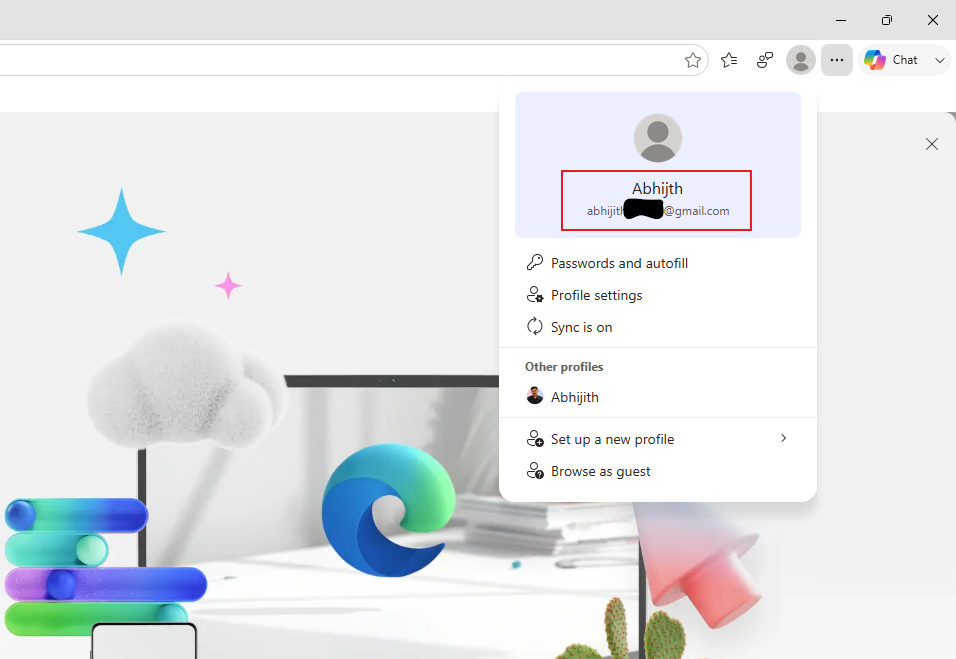
Once signed in, the Edge profile card shows your Gmail address, with sync turned on. Your Google account becomes the profile identity, no Microsoft account required.
Note that the UI or behaviours may change as we still have a few more weeks since this rolls out to general public. Of course, this doesn’t mean that Microsoft account is being removed, but the Google account login is an addition, not a replacement.
Microsoft says: “Users can now sign in to Microsoft Edge using a Google account in addition to the Microsoft account from the profile menu and Edge sign-in screen.”
Enterprise administrators can control whether the feature is available using the NonMicrosoftAccountSignInEnabled policy.
It’s clear that Microsoft is targeting Chrome users. If your passwords, bookmarks, and browsing history are all linked to a Google account, signing into Edge with that same Google account means a far lower barrier to switching. You get all the Microsoft ecosystem perks, vertical tabs, and immersive reader, both of which Google already copied, and my favourite feature, AI Tab Organizer, which Apple copied to Safari.
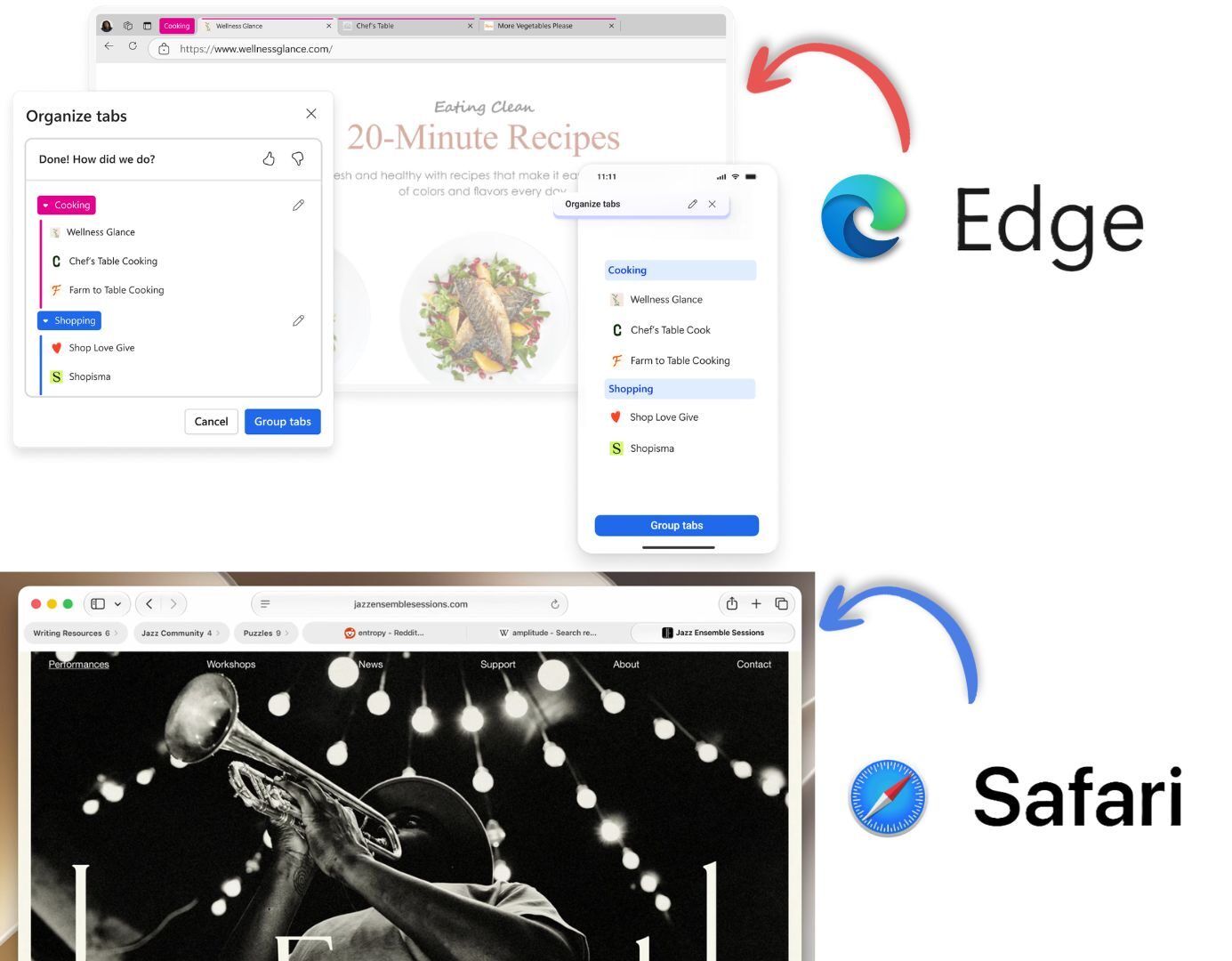
Anyway, Edge is a good browser, and you’ll get to use it without needing a separate Microsoft account just to get started.
Edge already lets you bring your Google data over
Edge has offered Google data import options for quite a while. As we reported back in 2022, Microsoft built a feature that continuously pulls bookmarks and passwords from Chrome into Edge, so switching browsers does not mean losing your saved data.
More recently, Edge has also offered a “Your Google data and services, now in Edge” prompt during setup, allowing users to import Gmail, Google Drive, YouTube, and more directly into the browser without ever touching Chrome again.
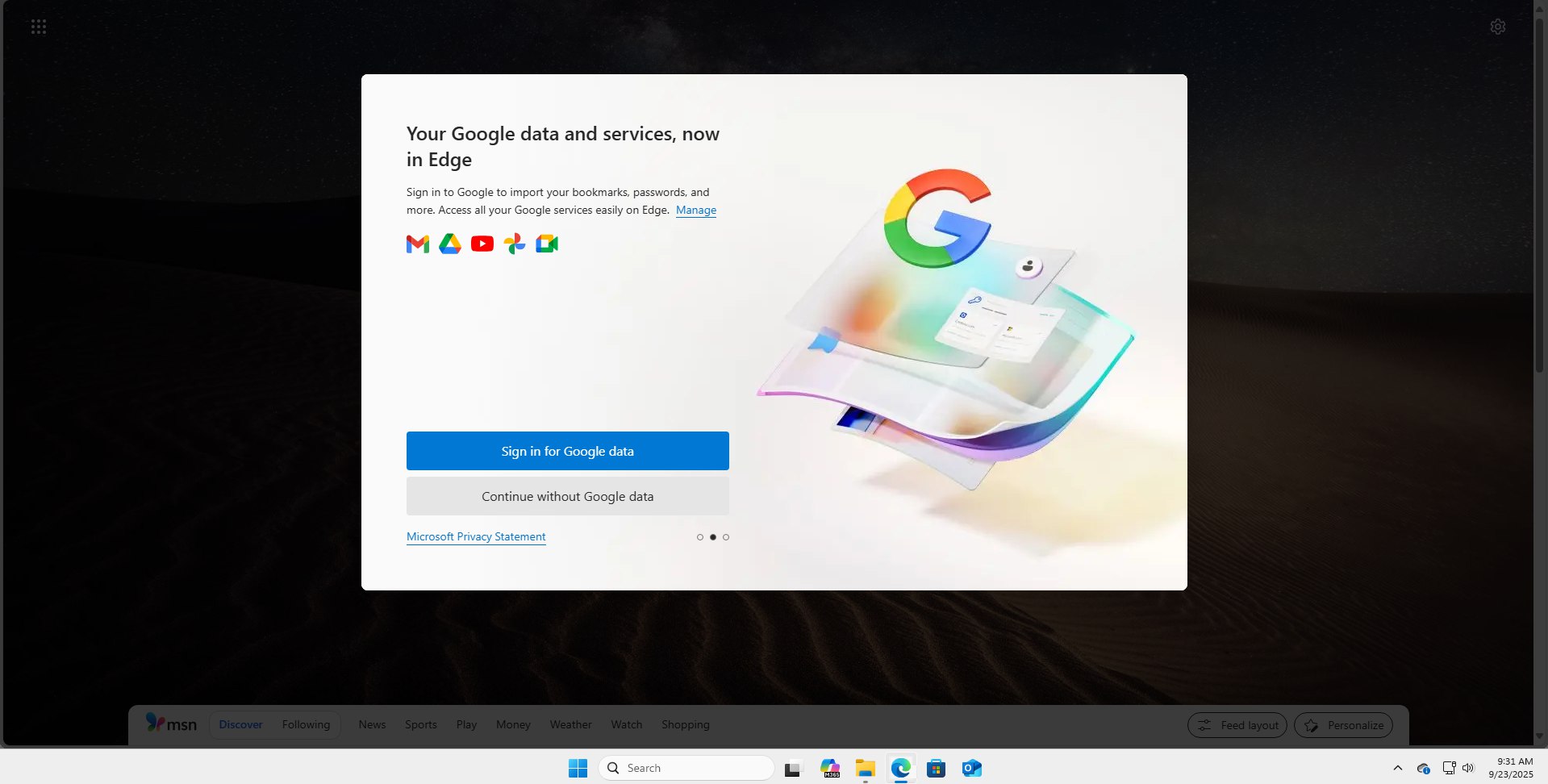
The upcoming Google account sign-in takes that a step further. Instead of just importing Chrome data, users can now anchor their Edge profile to a Google account, making the transition even more seamless for the hundreds of millions of Chrome users.
You could already create a Microsoft account with a Gmail address
There is a lesser-known detail that I feel is worth saying here. Microsoft’s account sign-in page already accepts Gmail addresses. If you type a Gmail ID into the Microsoft account sign-in field and follow the prompts, Microsoft creates a Microsoft account associated with that Gmail address. A Google account with a gmail.com domain becomes a Microsoft account!
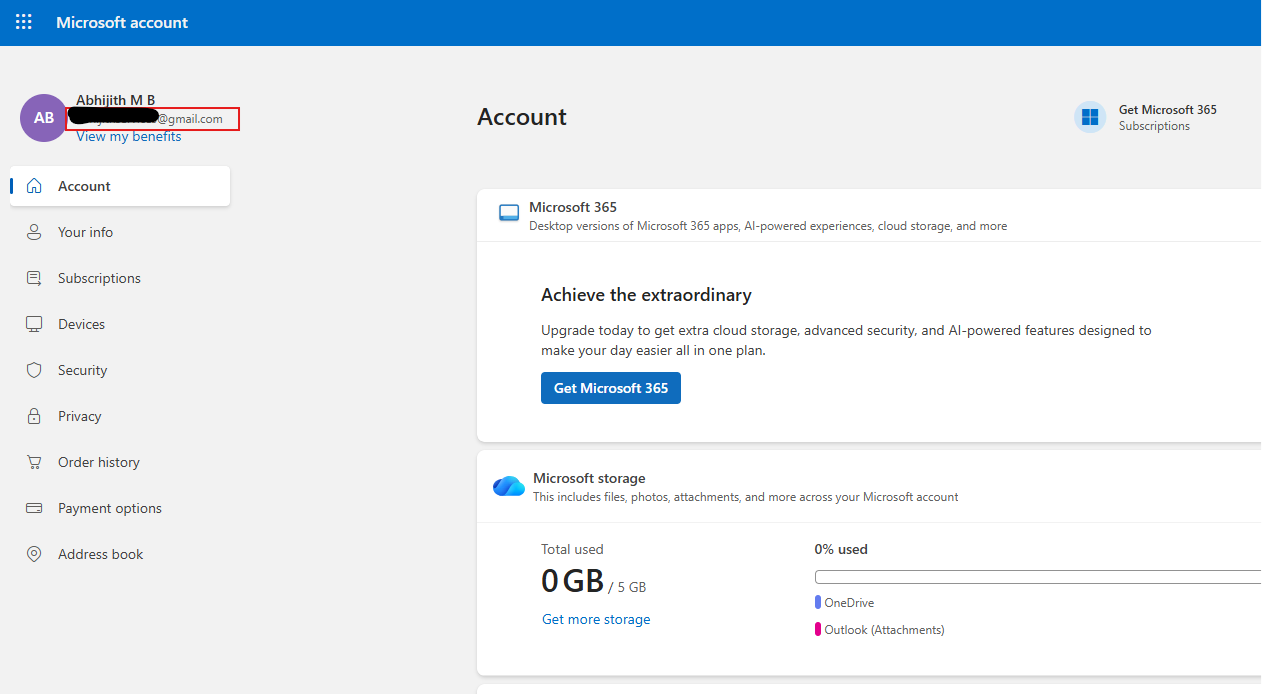
So, in a way, Microsoft has been quietly lowering the Gmail barrier for some time. The only issue was that people did not know about it, or they did not want to create an account of any kind. The upcoming Edge Google sign-in option neatly sidesteps both problems.
Microsoft is also rethinking the forced MSA sign-in during Windows 11 setup
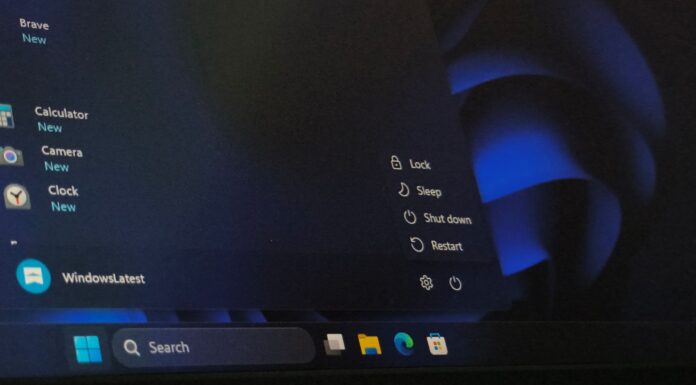
What’s interesting is that Edge not being strict about a Microsoft account is part of a broader pattern. As we reported three months ago in March 2026, Microsoft is considering dropping the forced Microsoft account sign-in requirement during Windows 11 setup (OOBE).
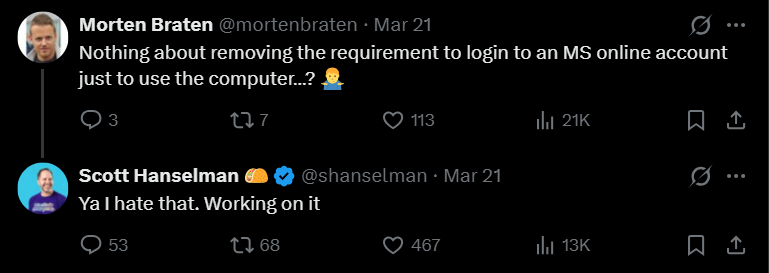
Right now, setting up a fresh Windows 11 PC without a Microsoft account is almost impossible.
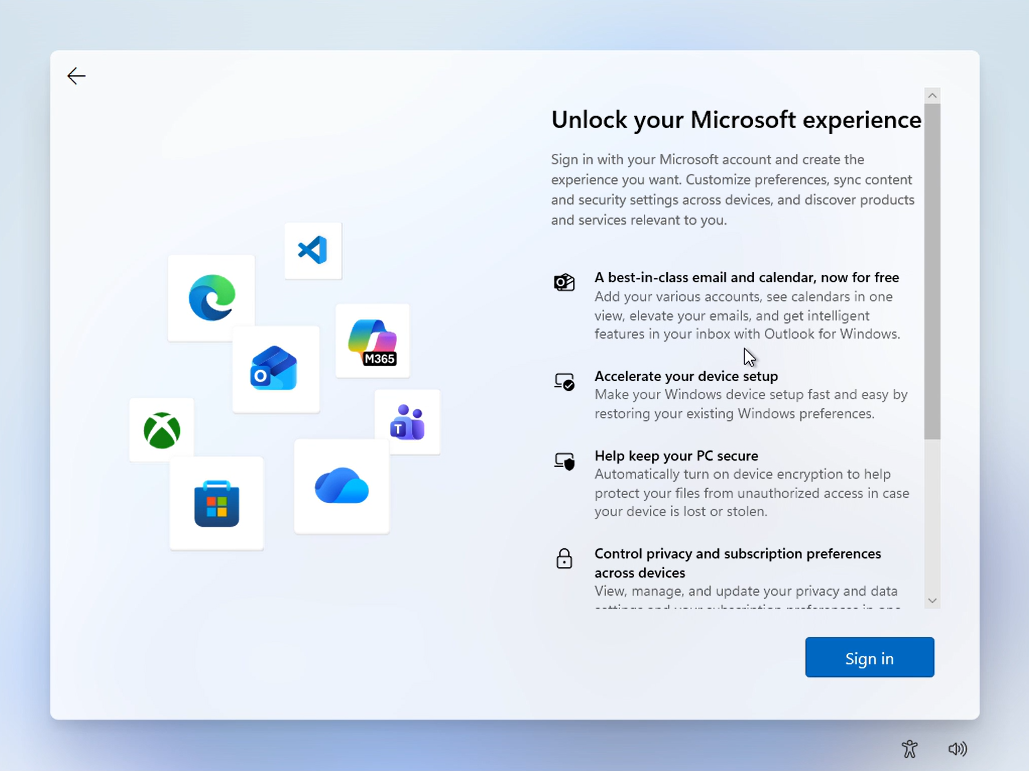
Windows 11 OOBE had turned into an ad-cluttered slog, with Microsoft account prompts stacked on top of pitches for OneDrive and Copilot. Microsoft acknowledged that the setup needed to be faster and less intrusive. The move to loosen the MSA requirement fits squarely into that effort.
Of course, frustration with the forced Microsoft account in OOBE is not new. Back in November 2025, Epic Games CEO Tim Sweeney and Elon Musk both publicly pushed Microsoft to remove the MSA requirement from Windows 11. Fortunately for us, feedback has evidently made its way internally.
The irony of Microsoft opening the door for Google
Bing just crossed 1 billion monthly active users for the first time, as confirmed by CEO Satya Nadella during Microsoft’s Q3 earnings call. With Bing finally gaining footing, it is interesting to see Microsoft now enabling Google account sign-in in the same browser that had long been its vehicle for pushing people toward Microsoft services.
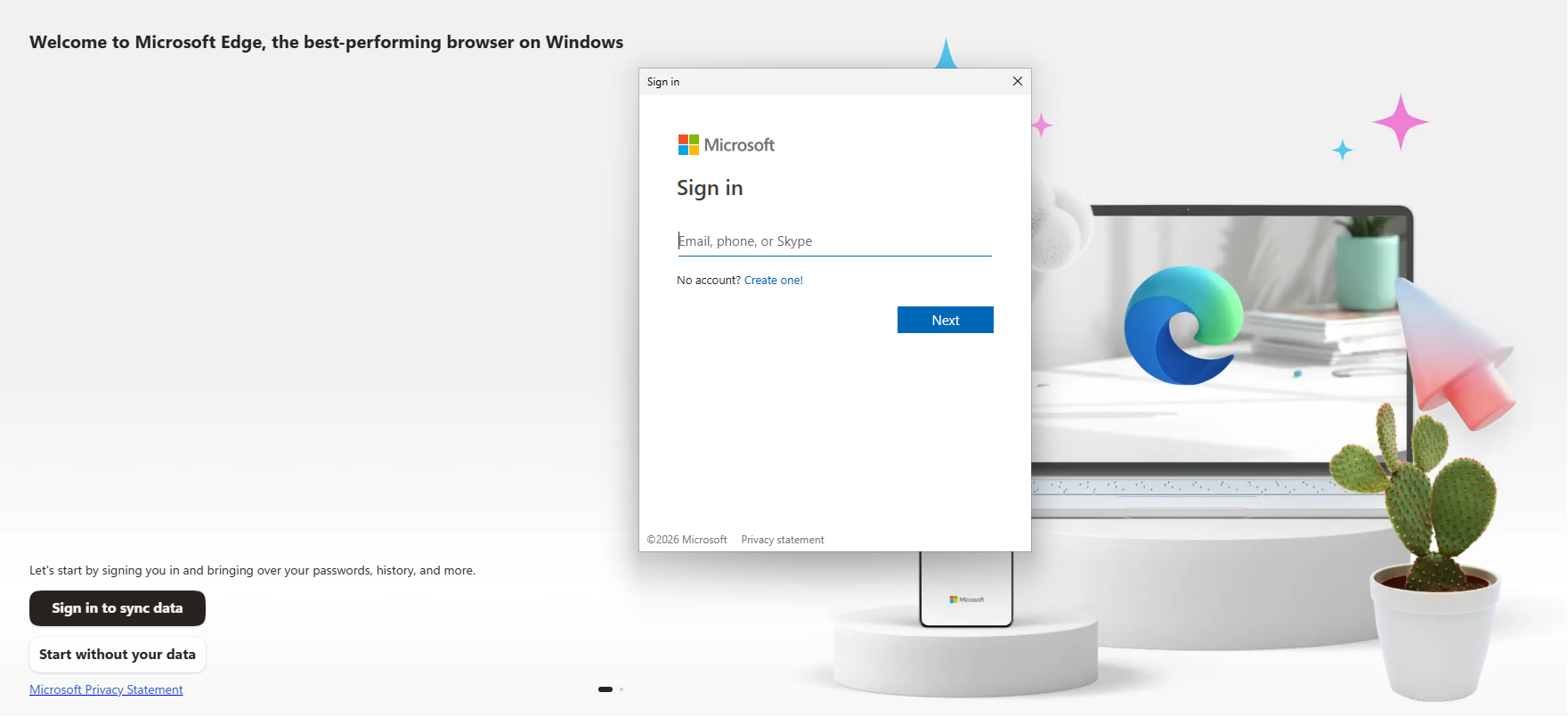
Microsoft has been faking Google’s homepage on Bing, paid users to switch to Bing through Microsoft Rewards, and has been leaning on every Windows integration possible to keep users in the Microsoft ecosystem. And yet here we are, with Microsoft officially inviting Google account users into Edge. The Edge team probably views this less as a concession and more as a pragmatic move to get Chrome users into Edge first, let them discover the Microsoft ecosystem at their own pace.
Meanwhile, Microsoft is also giving users the option to remove Bing from Windows 11 Search, something we have been asking for years, and the feature is now hidden in latest Insider build.
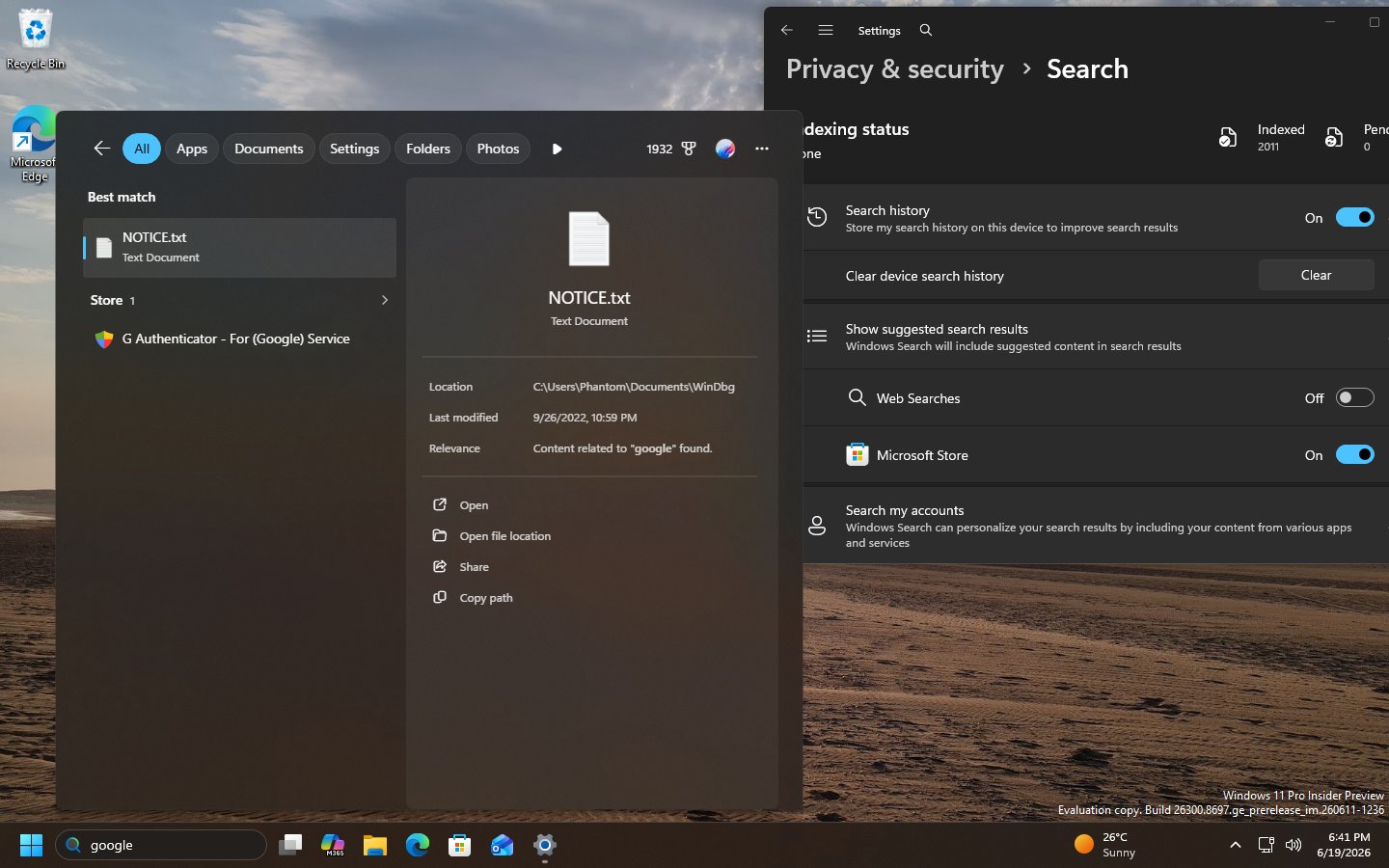
Between loosening Bing in Search, softening the OOBE MSA requirement, and now allowing Google account sign-in in Edge, the software giant is showing a clear shift away from the aggressive lock-in tactics that defined the past few years of Windows, and this gives me hope in the future of the OS.
That said, whether this shift holds or whether it is a calculated goodwill play before the next round of Copilot integrations remains to be seen.
For now, Chrome users who have resisted Edge because of the Microsoft account wall will have one less reason to say no, and that is probably what Microsoft is counting on.