










Apple’s WWDC 2026 keynote is generating a lot of buzz about Safari’s new tab-organizing feature. Apple is calling it intelligent, powered by Apple Intelligence, and presenting it with the kind of slick animation and confident marketing that Apple does well. But the credit for the innovation doesn’t belong to Apple.
Microsoft Edge has had an AI-powered Organize Tabs feature for a while now. Back in February, I spent time testing it with 40+ tabs open across multiple topics, and came away genuinely impressed. Apple saw the same potential, built its own version, gave it a polished demo video, and now half the tech community thinks Cupertino just invented something new.
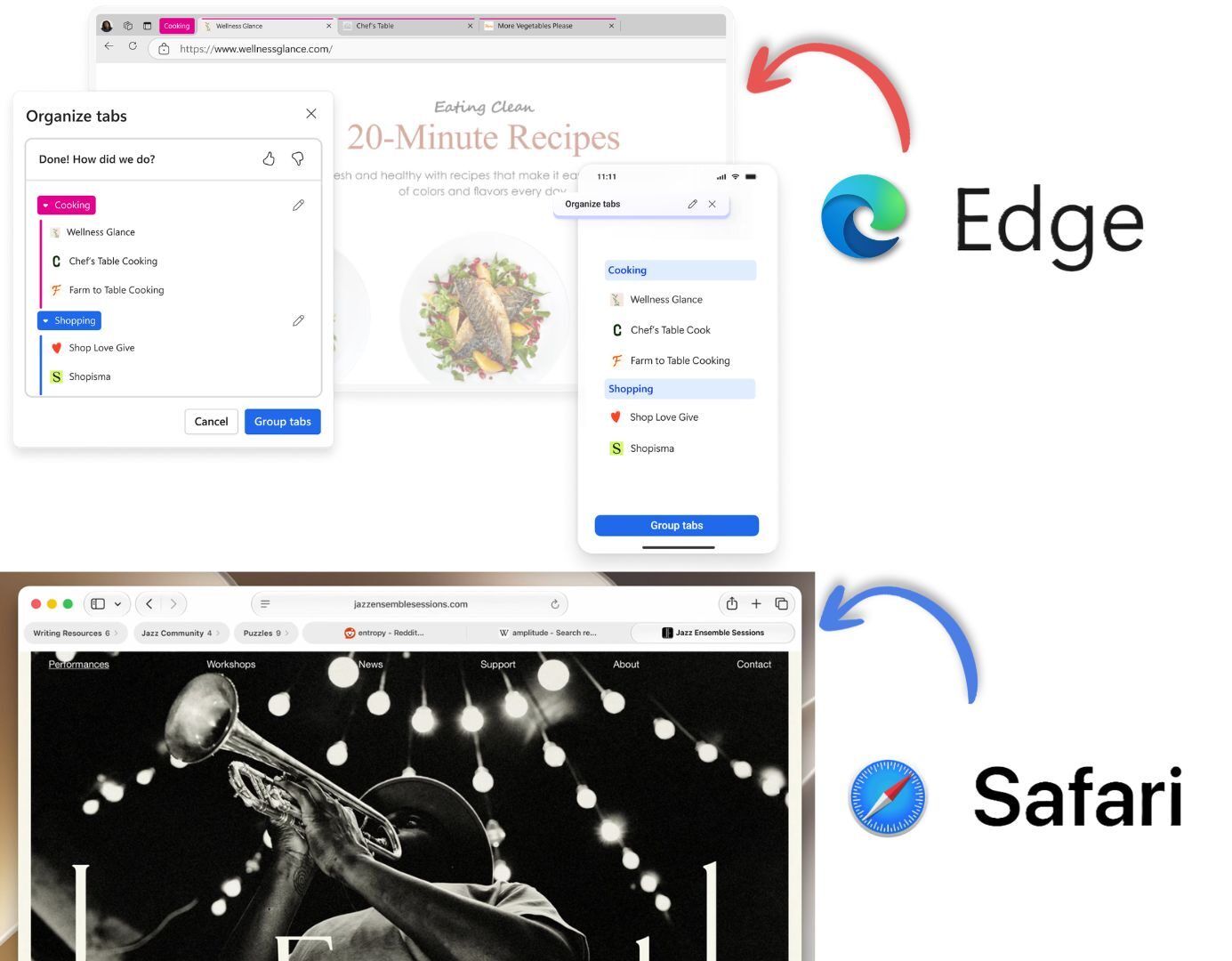
To be clear, Apple didn’t invent AI tab organization. Microsoft did. And the funny part is that Microsoft barely talked about it.
What is Microsoft Edge’s AI Organize Tabs feature?
Edge’s Organize Tabs feature uses AI to automatically group open tabs by topic, with color-coded Tab groups and names that the AI picks on its own. There is no Copilot branding here and zero intrusive prompts. You hit the Organize tabs icon from the Search tabs menu, and Edge does the work in under a second.

In my hands-on review of the feature, I threw 40 tabs at it, covering completely different topics, including an exclusive leak about the Lenovo ThinkPad X13 Detachable, the budget MacBook, Dell XPS 14, Samsung Unpacked, WhatsApp Resume from Android, Windows 11 26H1, and a couple of YouTube tabs mixed in for good measure. The AI sorted all of them into 8 properly named groups in under a second, including separating the Samsung Galaxy S26 Ultra from the main Samsung Unpacked group, which I genuinely did not expect.
I then ungrouped everything, shuffled the tabs around so similar topics weren’t next to each other, and ran Organize Tabs again. Same result. The AI didn’t need the tabs to be in order to figure out what they were about.
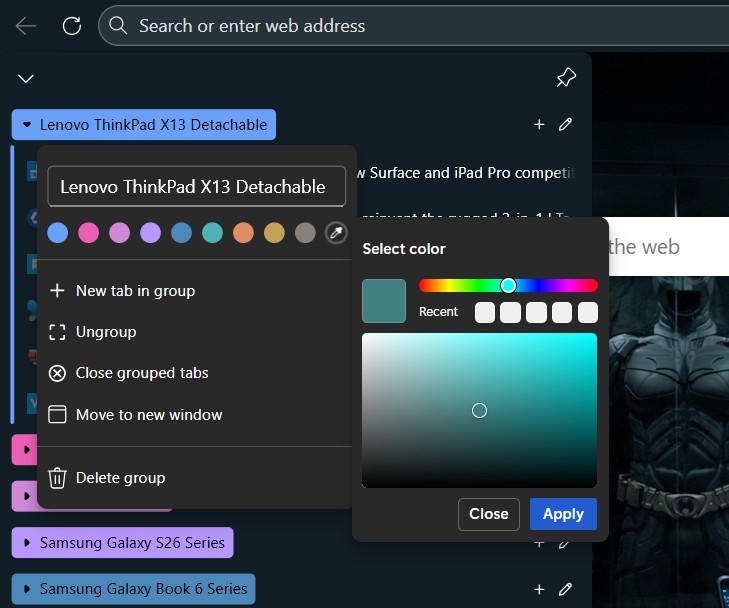
What I liked most was the customizability. After grouping, you can rename any group, change its color with a full color picker, move tabs between groups, or push an entire group to a new window. Chrome’s manual tab grouping looks barebones by comparison, because it is, as Chrome requires you to group every tab yourself.
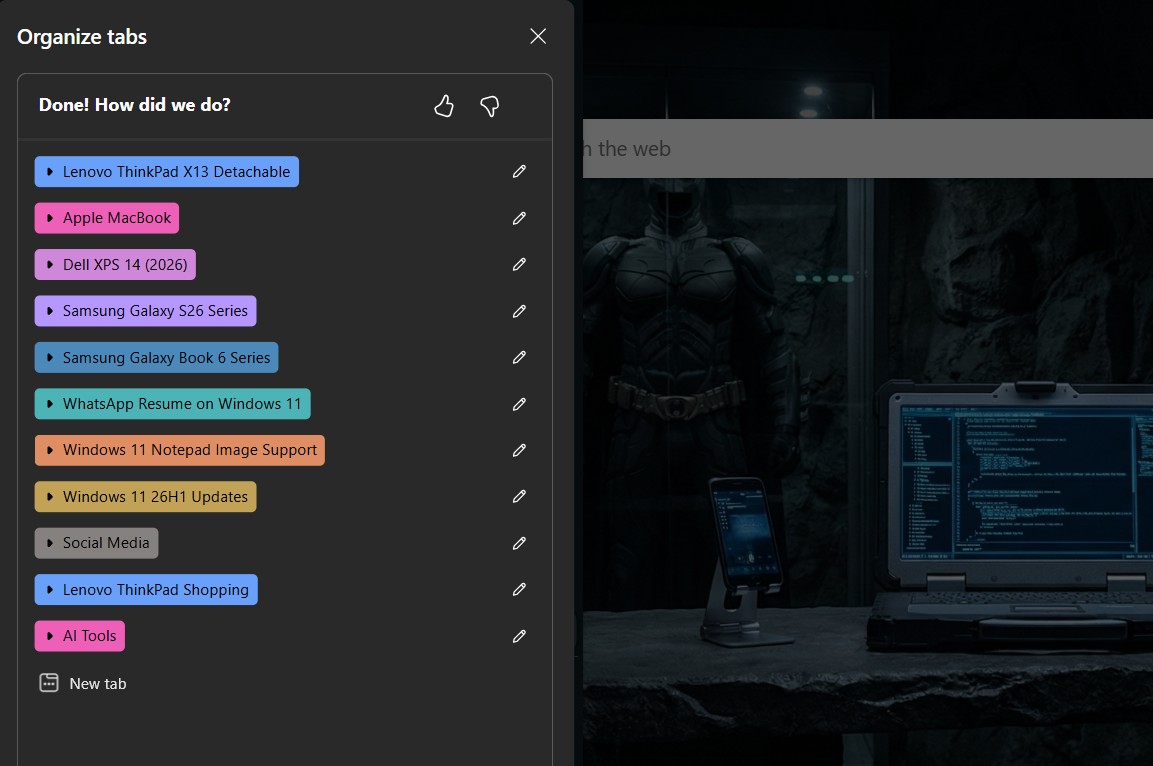
In my review, I concluded that no other browser had this feature at the time. My conclusion aged well for about four months, and then Apple announced it at WWDC 2026.

Apple calls it ‘intelligent.’ Microsoft never called it anything.
At WWDC 2026, Apple announced that Safari can now automatically organize tabs into relevant topics using Apple Intelligence. The demo showed fluid animations, clean transitions, and the kind of presentation that Apple has always been exceptional at. The tech community, predictably, went gaga over it.
Apple’s Newsroom described it as: “Safari can now simplify multi-tab browsing by automatically organizing a user’s tabs into relevant topics.” If you replaced “Safari” with “Edge” in that sentence, it would have been accurate since February.
Microsoft, on the other hand, quietly launched the same capability and never really pushed it. There wasn’t any keynote or flashy demo. I haven’t seen any marketing for this in social media either. At the time, the feature page on Microsoft’s site showed generic Tab groups like “Cooking” and “Shopping”, which didn’t exactly sell what the AI was actually capable of. Edge’s AI gives you contextually specific names like “Lenovo ThinkPad Shopping” when you have shopping tabs for ThinkPad models open. Apple’s messaging is better, and its presentation is better. But the idea isn’t Apple’s.
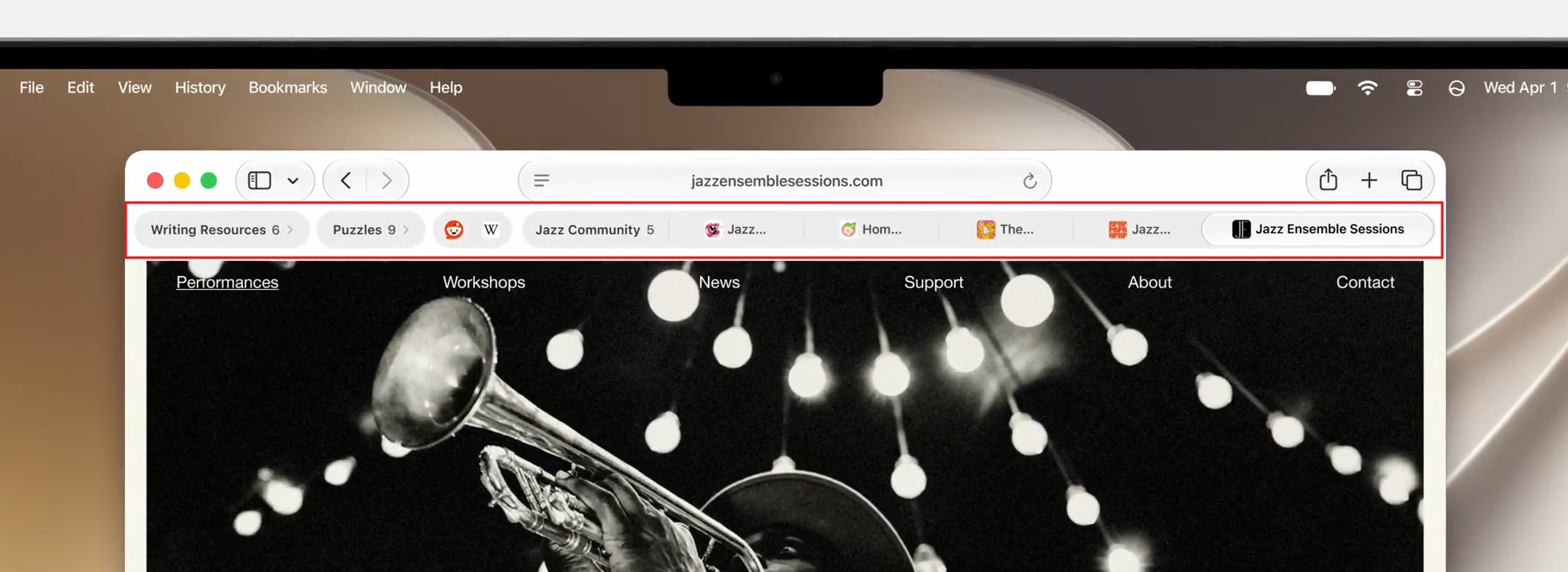
Also, Apple’s tab organizing feature with “Apple Intelligence” is just an auto-tab organizing feature, and doesn’t have the finesse of Microsoft Edge’s version, which has color-coded tabs and better customizable naming, making it look like a more polished version, as it should be, since it was Microsoft’s idea in the first place.
And here is the uncomfortable position Microsoft now finds itself in. If Microsoft starts promoting Organize Tabs more aggressively now that Apple has put it in the spotlight, a large portion of people who discover it will assume Microsoft was inspired by Safari.
Not the first time Edge’s innovations have been absorbed by a competitor
Earlier this year, Google announced Vertical Tabs and Immersive Reader Mode for Chrome, and the tech press treated it like Google had just reinvented browsing. Microsoft Edge has had vertical tabs since 2021, and Immersive Reader has been in Edge since 2019. I’ve been using vertical tabs on Edge for over four years.
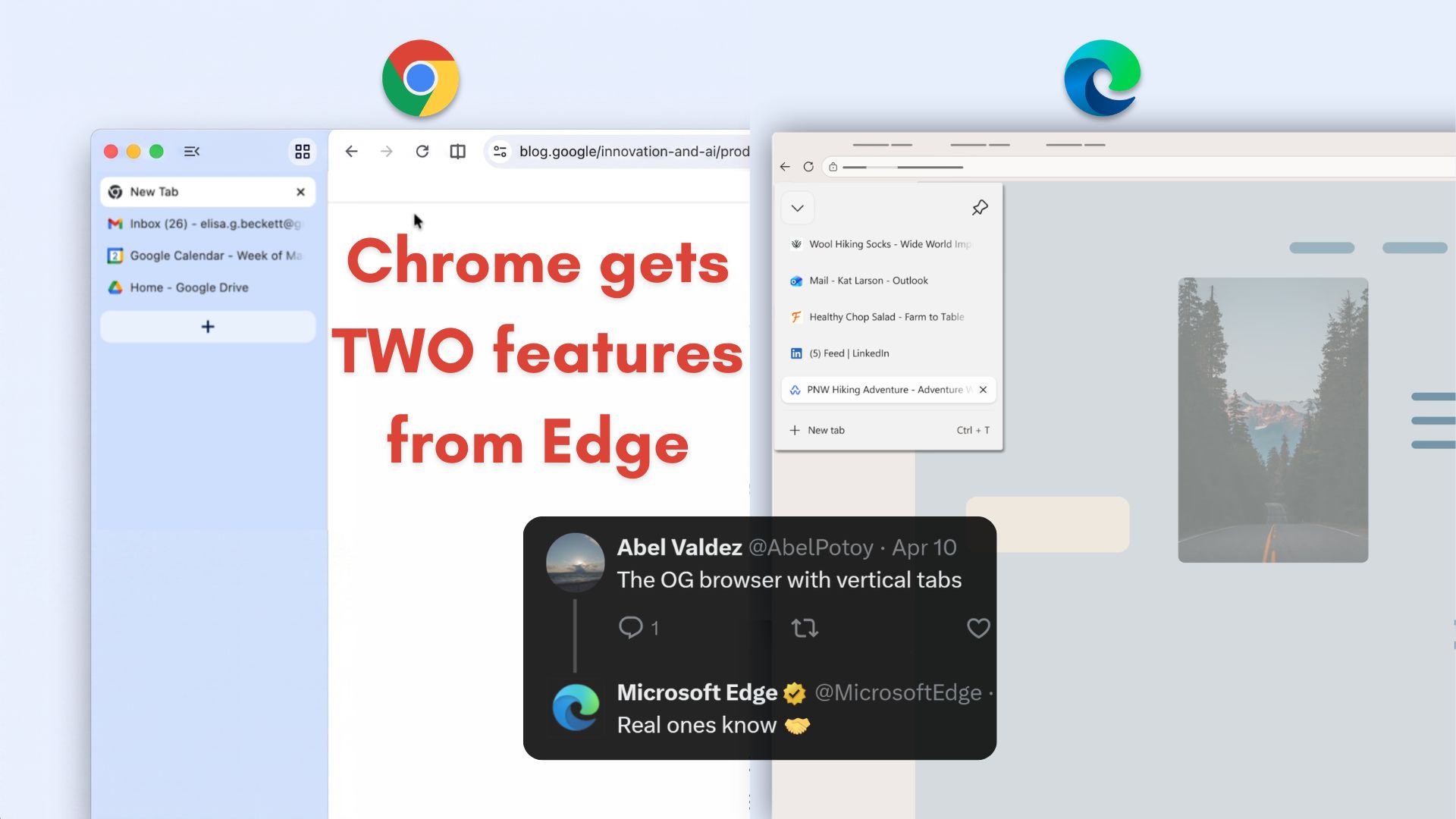
Two days after Google announced vertical tabs, the official Microsoft Edge account on X posted a poll asking users whether they prefer horizontal or vertical tabs. Microsoft was compelled to remind people that Edge already had a feature that Chrome had just announced as if it were brand new. Two days after. That’s where Edge’s market share has put them, which is reacting to Google’s announcements about Edge features.
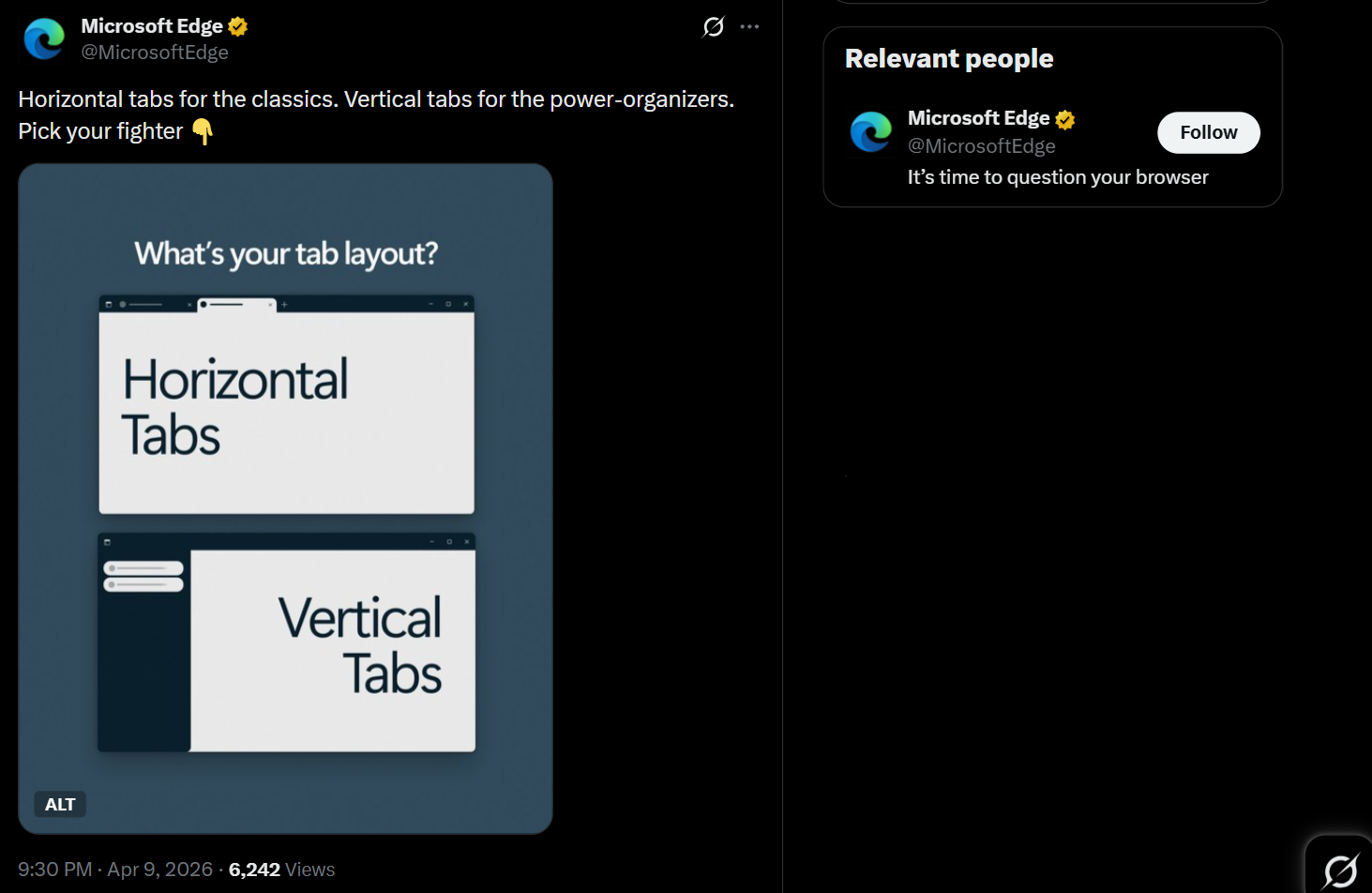
Edge has only around 5 to 8% market share, while Chrome commands 60 to 70%. Even with vertical tabs for five years, the innovation wasn’t enough to shift the needle. Now the same story is repeating with Organize Tabs, just with Apple in Chrome’s position.
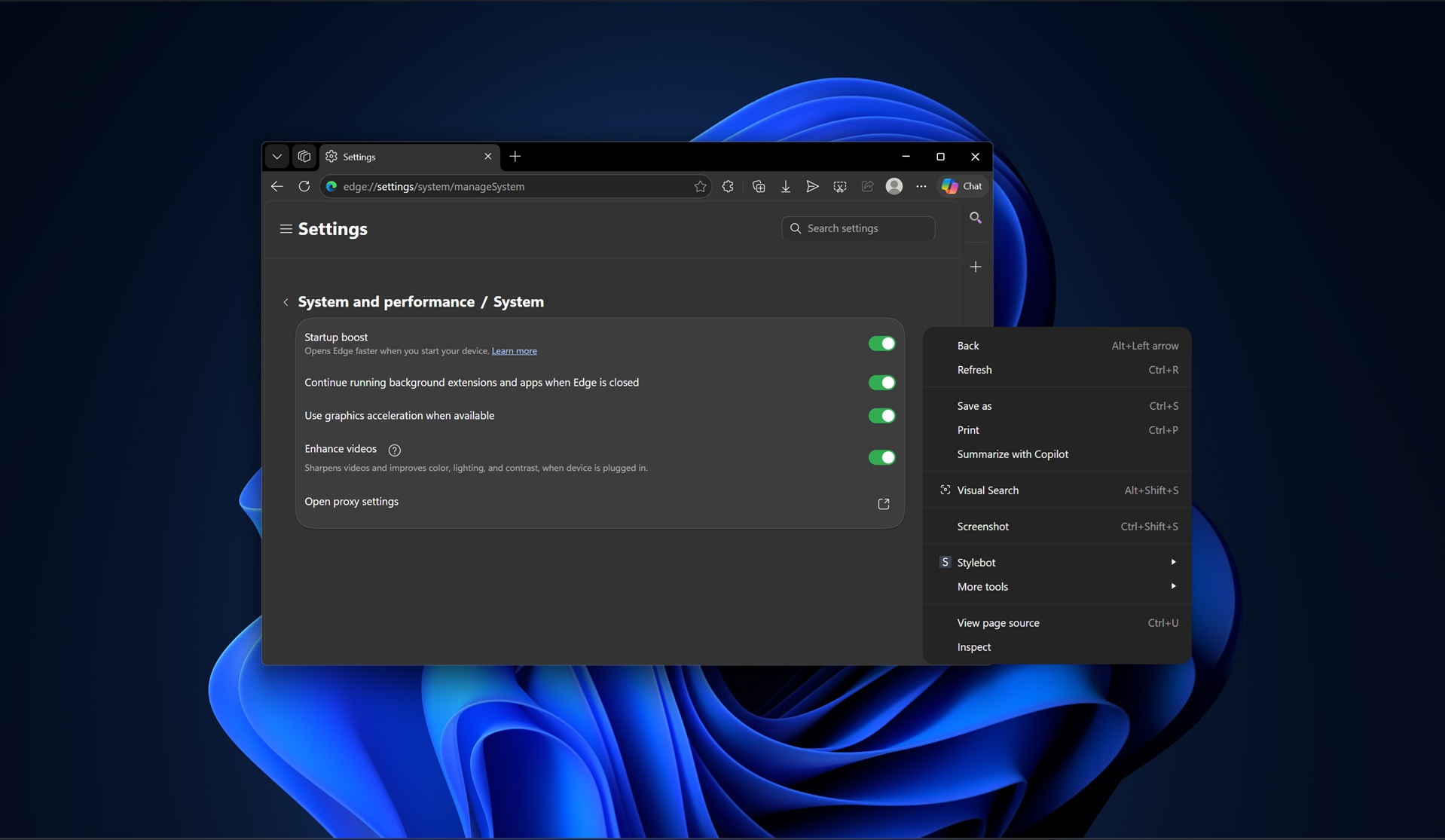
Ironically, at the same time Edge keeps losing unique features to competitors, it’s also losing its own identity. Microsoft has been removing icons from Edge’s right-click context menu, a change we noted when covering Edge’s design drift toward Chrome. Edge once had a distinct look and feel. Now, with Microsoft stripping out unique UI elements, it increasingly looks like a Chromium browser with a Copilot logo stamped on it.
What Microsoft should be doing instead
Apple announced two features at WWDC that are worth copying, and Microsoft should take note.
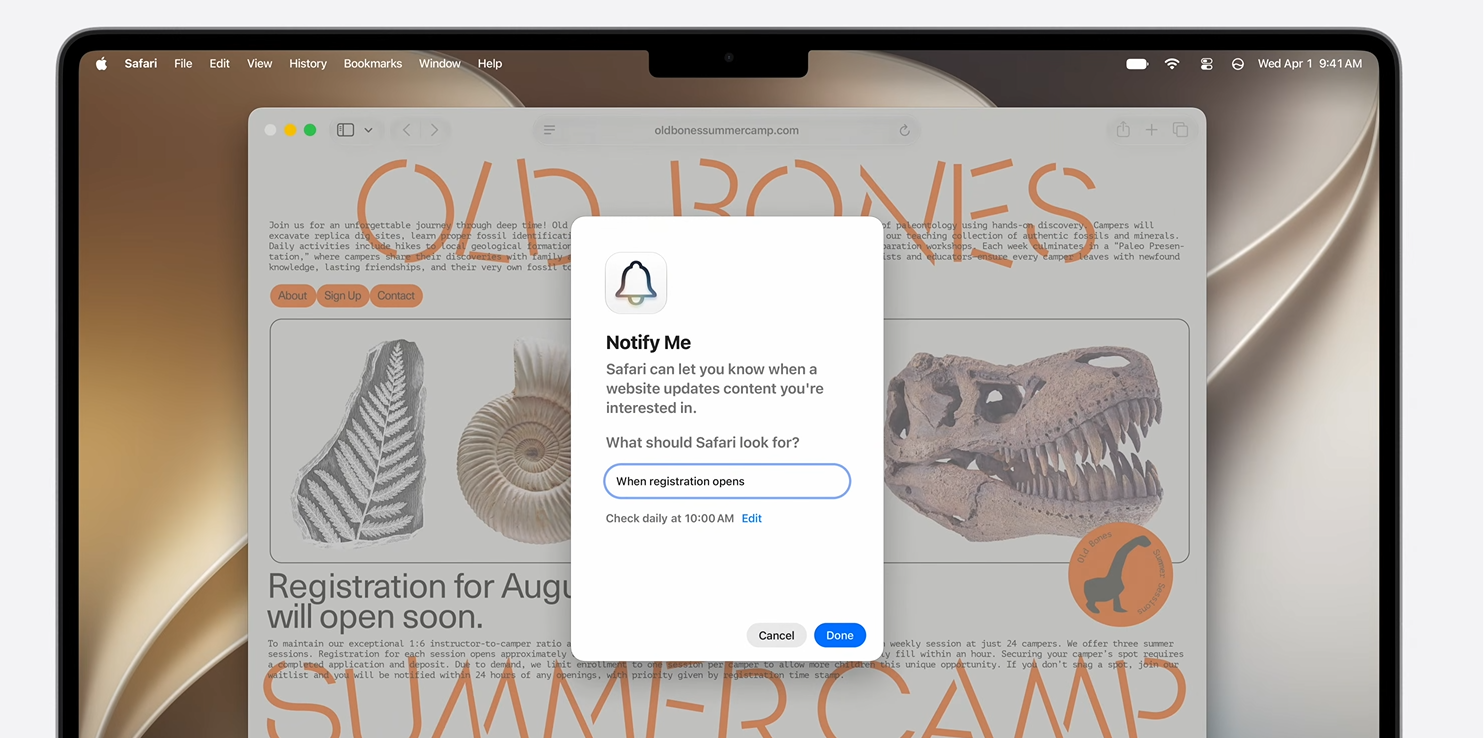
The first is Notify Me, which lets users ask Safari to monitor a web page for changes, such as a product restock or a price drop, and then sends a notification when it detects one.
The second is Describe an Extension, where you can describe what you want a Safari extension to do, and Apple Intelligence generates it for you. Building custom browser extensions has always required knowing JavaScript. A feature like this could open up browser customization to people who would never have written a line of code. It’s a clever use of AI in a browser context, and more useful than most things Microsoft has pushed under the Copilot banner.
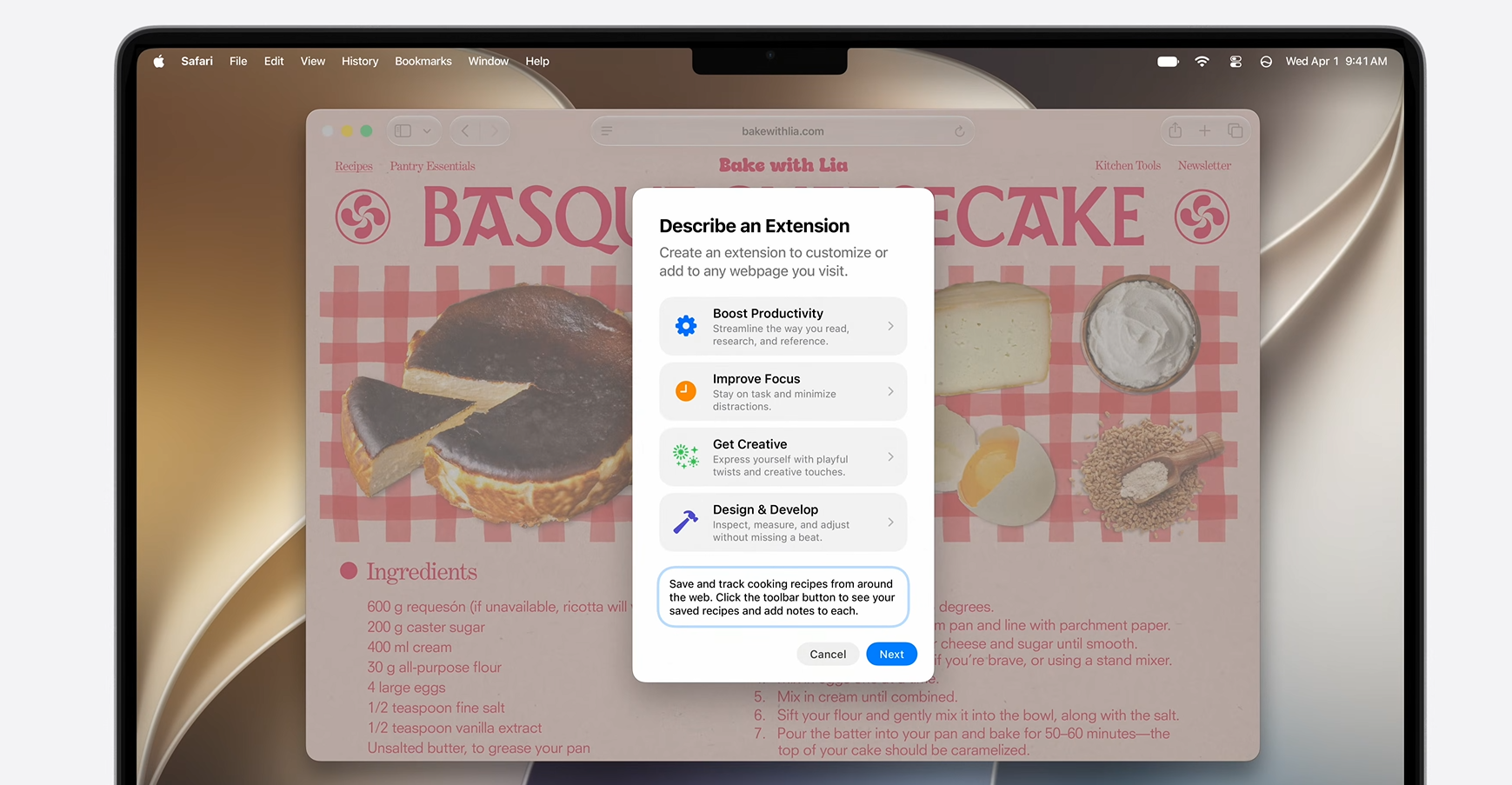
Speaking of which, one of the more telling things about Edge’s Organize Tabs is that there is no Copilot logo anywhere near it. It works without invoking Copilot, without a sidebar popping up, without a chatbot. Microsoft spent years plastering Copilot branding onto every feature in Windows and Edge, and the result was widespread resentment of the name among its own users. The one genuinely good AI feature in Edge doesn’t use Copilot branding at all, which, in my opinion, is the right approach. But Microsoft buried it anyway.
Apple wins because Microsoft doesn’t show up
Apple is exceptional at making people feel like they just saw the future, even when the future arrived elsewhere a year earlier. Funily enough, the MacBook Neo showed off Microsoft Office, which even Redmond isn’t doing these days. The WWDC Safari demo with its smooth tab-grouping animation looked great. But the capability of AI grouping your open tabs into contextual topics was already in Edge, working well, and being used by almost nobody because Microsoft never made anyone care about it.
Google copied Immersive Reader. Apple copied Organize Tabs. At some point, the pattern stops being about competitors catching up and starts being about Microsoft not doing enough to hold its lead.
Apart from the occasional mishaps, Edge is a good browser with some really useful features that most people never try because they never switch from Chrome in the first place. Until Microsoft figures out how to make people care about what Edge can do, it will keep watching its best ideas get picked up, polished by a competitor, and celebrated as innovation.