

Windows on mobile has been a dream for many since Microsoft killed off Windows phones, and there’s no indication the company will ever make Windows phones again. But that doesn’t mean it’s impossible to run the OS on existing form factors, and some developers are making insane progress with Windows on Android.
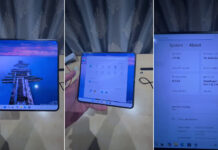
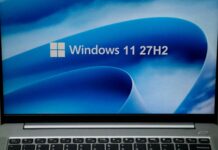
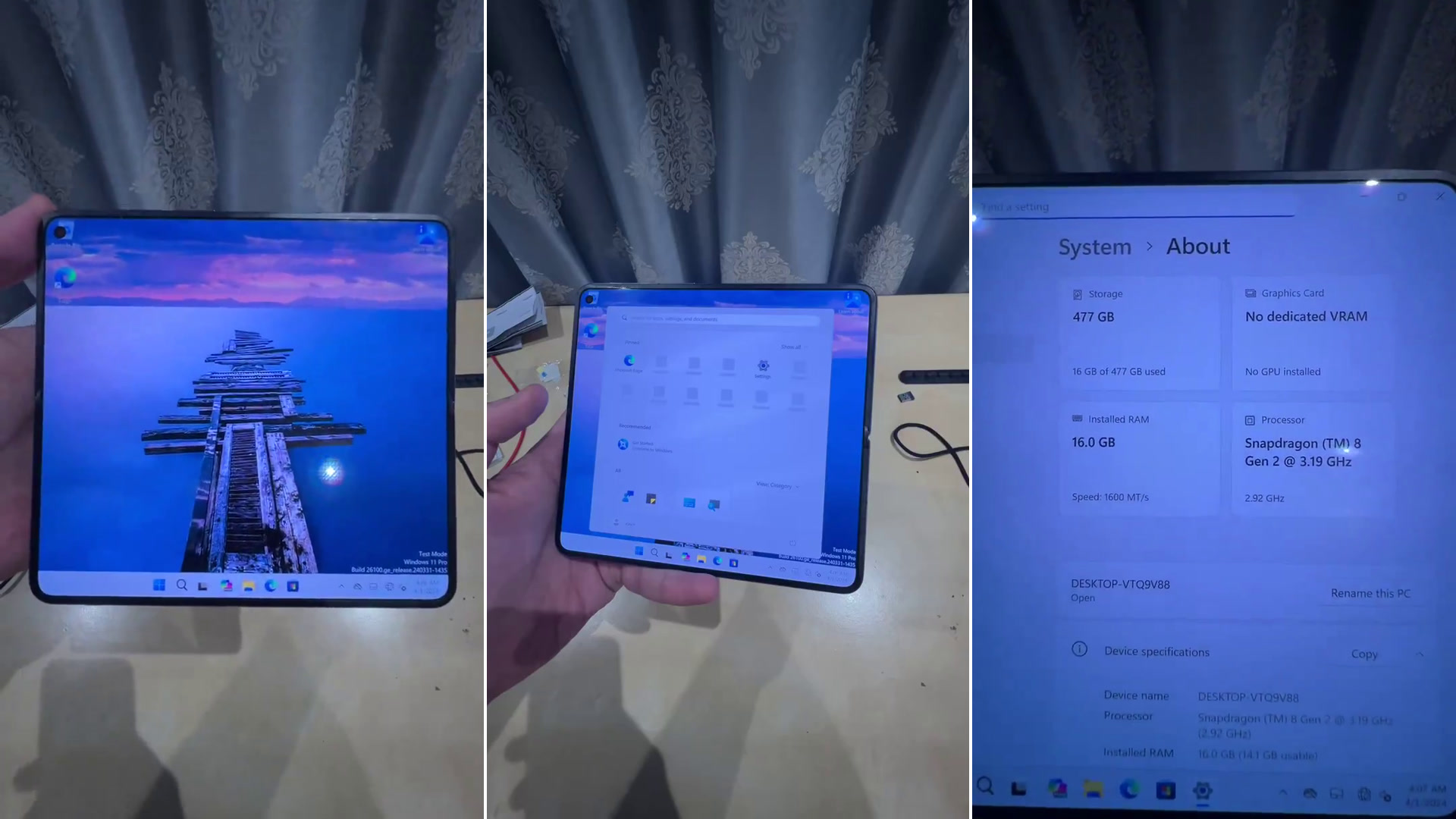
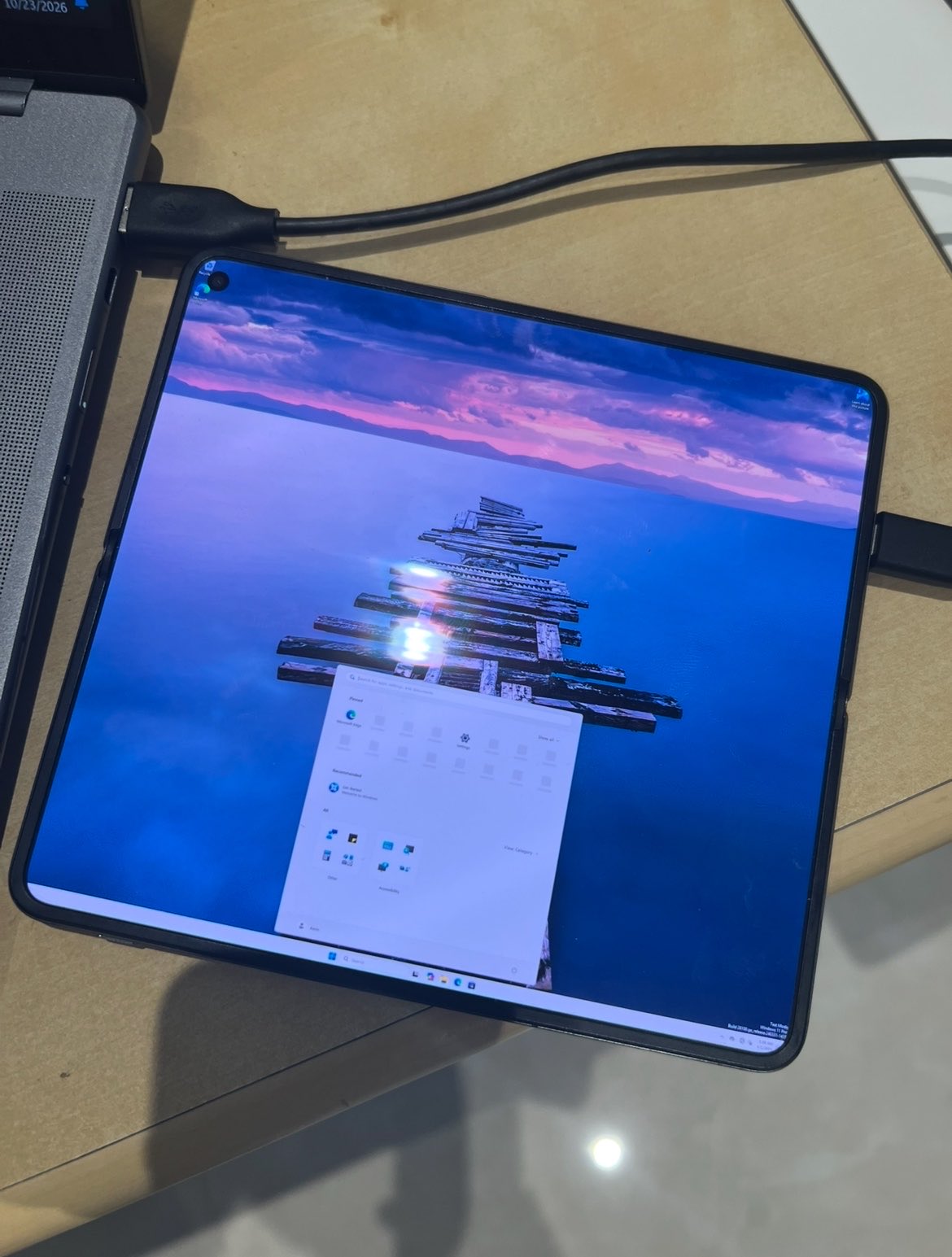
There’s a new project that shows Windows 11 running natively on the OnePlus Open, a foldable Android phone. According to developer Kevin Shroff, who pulled this off, Windows is installed on the phone’s internal storage and runs directly on its hardware.
If you’ve been following the idea of bringing Windows back to mobile, you might remember that we’ve had similar projects in the past. Many previously installed Windows 10 on Android when one of the first Windows 10 ARM64 builds was published, but those ideas barely gave us a phone that could properly run the desktop OS.
Windows 11 feels “really good” on the OnePlus Open
Windows itself is quite a versatile operating system, and Windows 11 is no exception, as proven by this project. Now, you can’t just randomly buy a Snapdragon phone and run Windows 11 within minutes, even though it has an ARM-based chip and Windows 11 supports the architecture.
Windows needs a lot of work before it boots on a mobile device. For example, it needs drivers for the touchscreen and even basic components like memory. You’d need to adapt these components to work with Windows, as everything from the cellular connection to Wi-Fi and storage on the phone was designed around Android.
How you can actually force Windows to boot on an Android phone
Kevin says running Windows on the foldable required “device-specific UEFI/ACPI, interrupt, DMA/MMU, power and driver integration.” You can’t run Windows on a phone if you can’t get these right. For example, ACPI is needed because it allows Windows to understand the phone’s hardware and resources.
Kevin used some existing firmware features of the OnePlus Open and added device-specific components himself. He used a custom UEFI and built ACPI components himself. He also likely used AI to help hand everything off to the Windows Boot Manager, and that is when Windows actually booted!
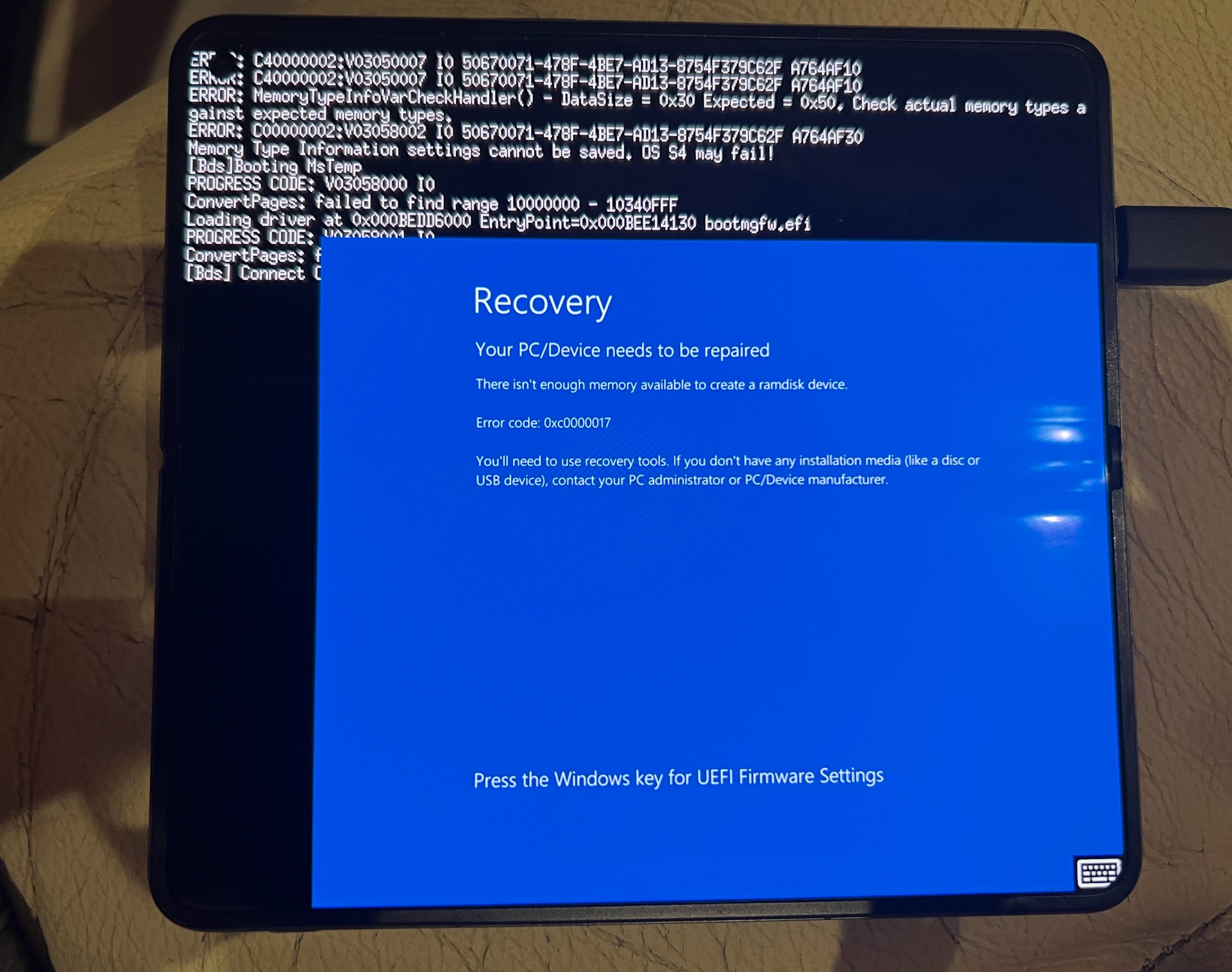
Of course, nobody needs to rebuild Windows to work on a Snapdragon phone, as the existing Windows ARM64 components for the processor, storage, and USB can still be reused. As a result, Windows is able to use the phone’s 16GB of RAM, along with all eight processor cores.
Kevin also managed to make touch work on Windows, but that needed its own engineering, so he included the code for communicating with the touch controller and reporting input to Windows.
The OnePlus Open is a foldable phone, so it has a larger inner screen that unfolds into a tablet-like display, and Windows 11 is actually able to make use of it. To get Windows to look better on the foldable, Kevin set its scaling to 300%.
“Currently set the UI to 300% scale and it is genuinely really good, feels perfect,” he wrote in a Reddit post.
We haven’t benchmarked Windows 11 on the phone ourselves, but the fact that it boots from internal storage and responds to touch is already impressive for a device that was designed to run Android.
Kevin confirmed that he wiped Android from his test device, so it currently boots Windows as the primary operating system. There are hopes for the ability to dual-boot Windows and Android, but that hasn’t been demonstrated yet.
Touch works, but Wi-Fi and GPU acceleration don’t
Even with AI, you can’t make everything work when you’re running Windows on an Android phone. Wi-Fi is still broken, even though the firmware loads and some initial exchanges work.
GPU acceleration is also missing, so you’re stuck with framebuffer rendering, but theoretically, it should be possible to add support. Kevin says Windows is already fast without GPU acceleration, and he’s working on it in parallel.
Cellular, Bluetooth, audio, and cameras aren’t working either.
Windows 11 is also running on an iPhone Duo
A few days ago, we noticed that Google AI Studio’s Ammaar Reshi managed to run Windows 11 on an iPhone Duo using Gemini, which itself is a great feat, as the phone was not jailbroken.
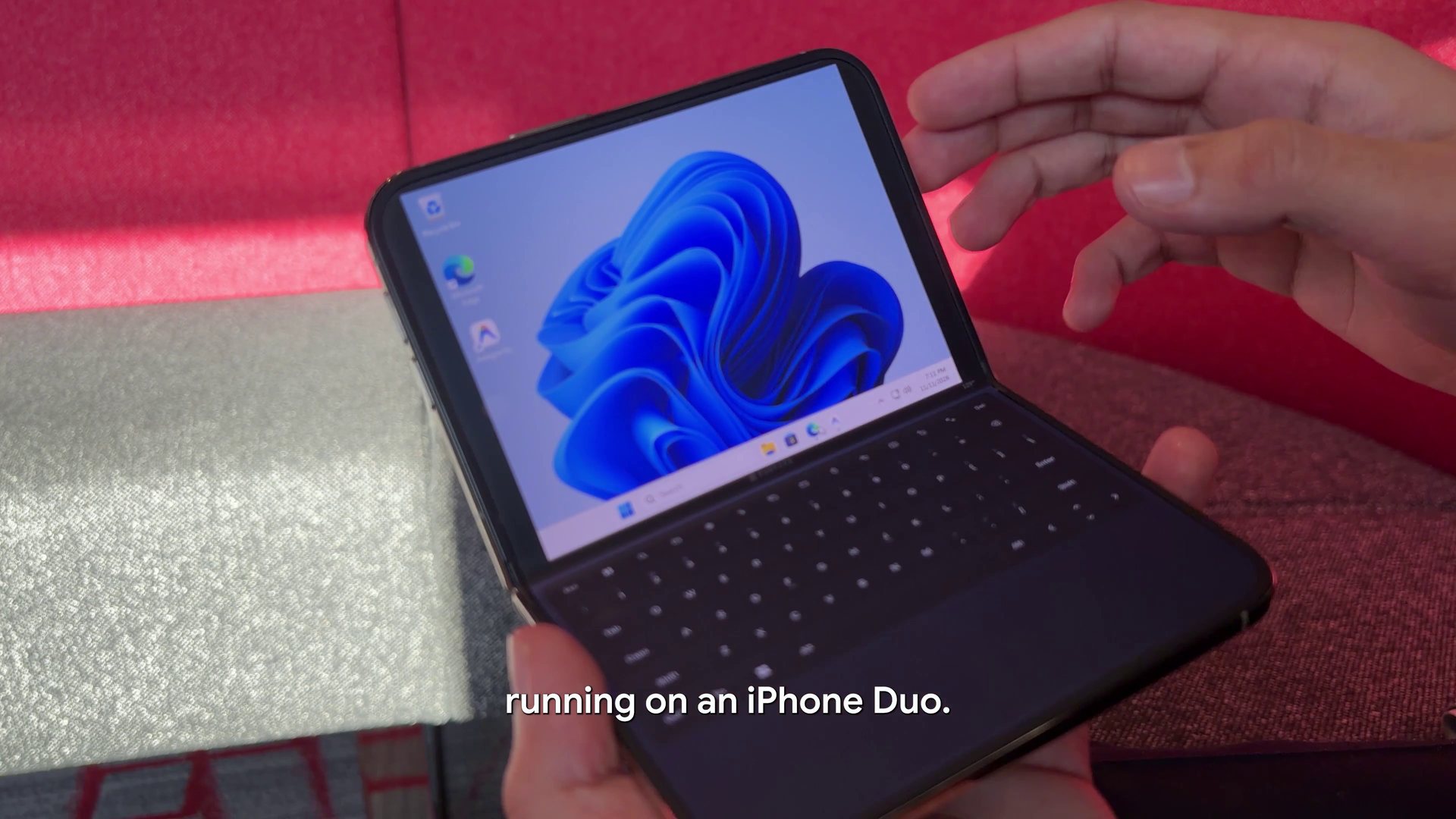
On the iPhone Duo, Windows runs locally in a virtual machine inside an iOS app, which is far less interesting and different from running Windows natively on the OnePlus Open.
Ammaar’s project also makes use of the iPhone Duo’s folding screen. When the phone is partially folded, Windows can appear on the top half, while the bottom half becomes an on-screen keyboard and trackpad.
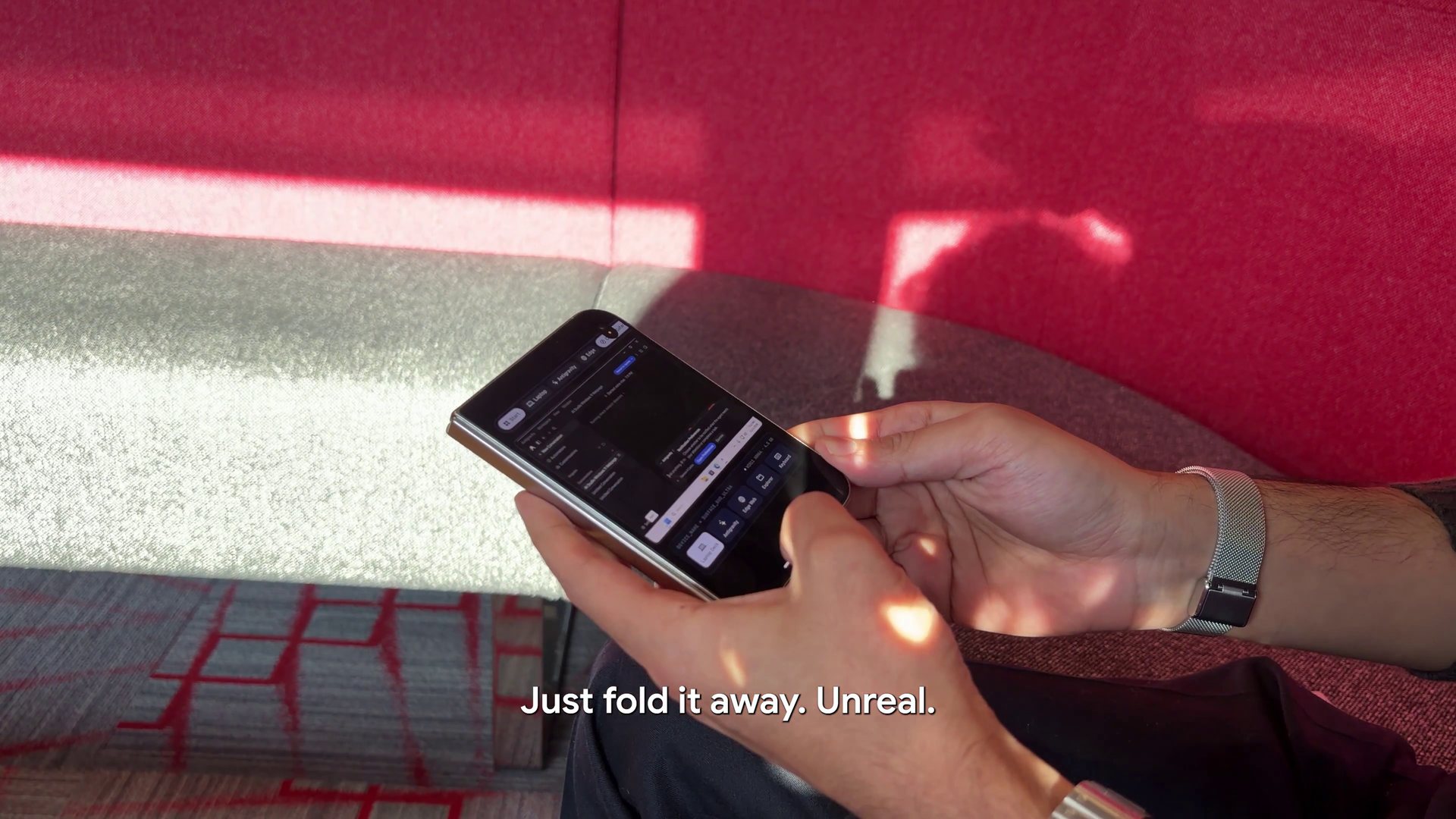
At the same time, somebody also managed to use AI and port iOS to Surface Duo, which shipped with Android.
Given how AI is accelerating everything, I think it’s only a matter of time before someone pulls off an installer that makes it easier to replace Android with Windows 11. This project is still in development and doesn’t offer a ready-to-flash installation package.