



Microsoft’s next Xbox handheld reportedly sparked a fight between the Windows and Xbox teams over whose software it should run. But Xbox CTO Scott Van Vliet says the two teams are working closely together, and that “Helix OS” is being built on Windows.
So, did Xbox reject Windows, or is this a fight about who controls the gaming experience in Microsoft’s upcoming gaming console?
Xbox CTO says Helix OS is built on Windows, despite reports of a clash
The info comes from a Fortune profile of Asha Sharma, who took over as CEO of Microsoft Gaming after Phil Spencer retired in February. According to Fortune, Windows leaders wanted the upcoming handheld to run a “trimmed-down version of Windows Home,” while Sharma’s team wanted to build and control its own software for better gaming performance. It’s only reasonable considering the countless background processes in Windows.
People who were briefed about the clash told that a senior Xbox executive threatened to scrap the handheld project instead of adopting Windows. The name the executive is unknown, but reportedly Xbox now largely controls the direction of the operating system.
A day later, Van Vliet, who became Xbox’s CTO in May after working on Azure AI infrastructure, replied on X to a post about the alleged claims, writing, “Helix OS is being built on Windows, and the XBOX and Windows teams are working closely together on the next generation of devices. The account cited here misrepresents both the technical work and the relationship between the teams.”
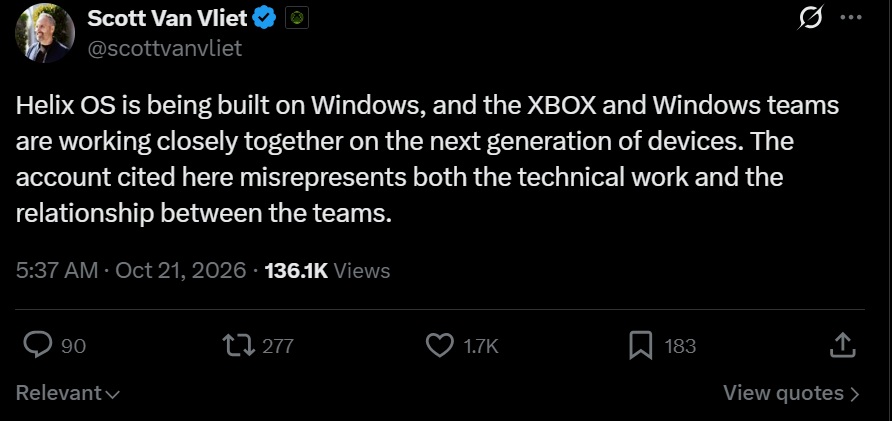
To be clear, Van Vliet didn’t deny the threat happened, and he didn’t explain what the disagreement was about. He disputed how the story was told, and confirmed that whatever Xbox is building has Windows.
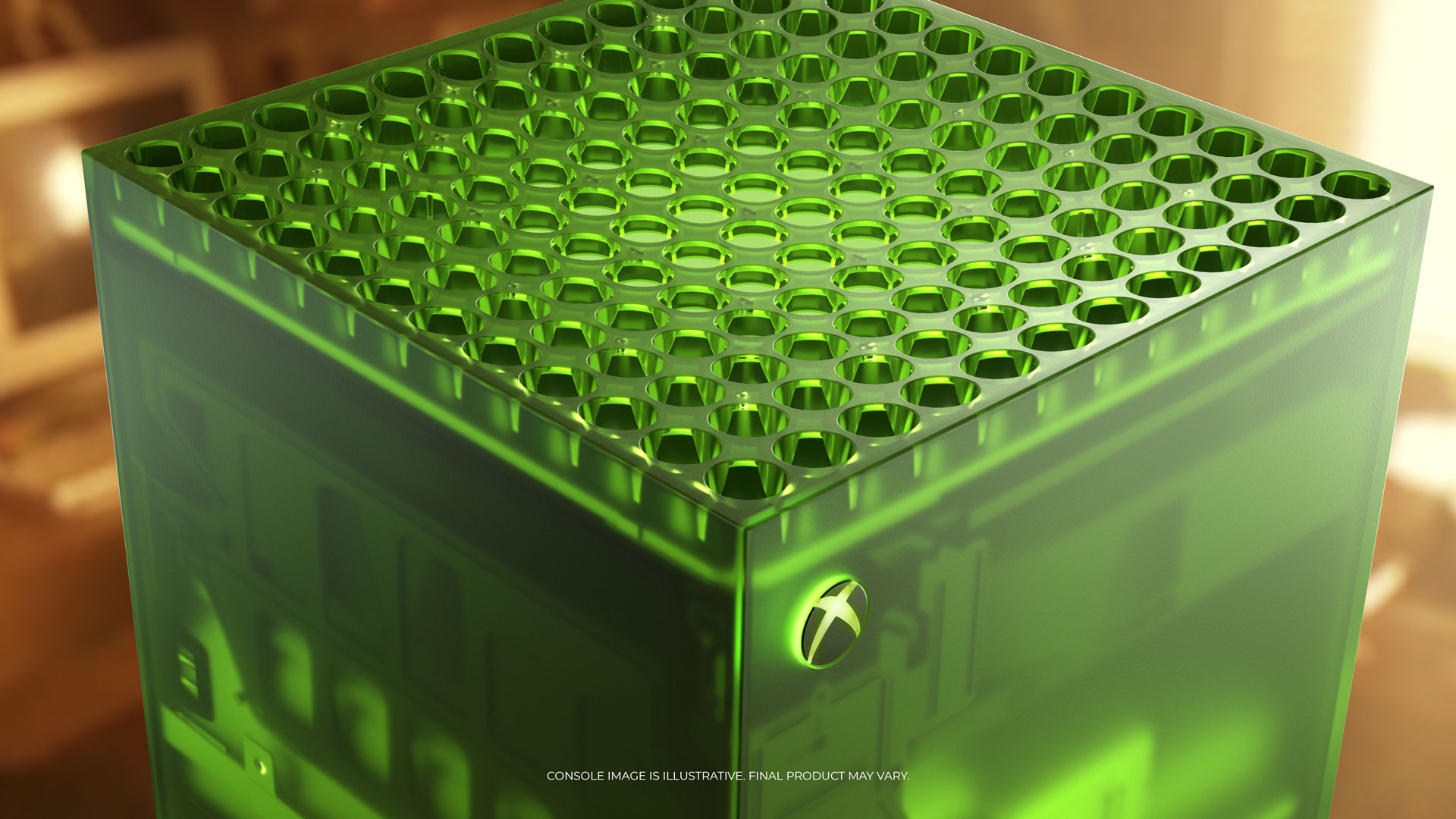
Of course, “built on Windows” doesn’t mean the handheld will boot to the Windows 11 desktop with an Xbox app. Your Xbox Series X already runs on the Windows core, and you’ve never seen a Start menu on it.
If anything, the report and the CTO’s reply can exist in parallel. Xbox can want control over the gaming experience while still building it on Windows, which is how Xbox has worked historically.

Xbox has run on Windows code for 25 years, but not the Windows on your PC
The original Xbox launched in 2001 with a custom operating system based on Windows 2000, heavily cut down for a console that only had to run games.
Xbox 360 followed in 2005, and its OS drifted even further. Microsoft’s MSDN Magazine later described it as “Windows NT, but it was a 10-year-old fork so wildly divergent that it, too, was a distinct code base.”
Xbox One brought the two closer. “In 2013, Xbox One launched and with it an OS core shared with Windows 8,” the article explains, but Microsoft “was still servicing three distinct OSes” across Windows, Windows Phone and Xbox. Even then, the console split its work between a game OS and a Windows-based OS for apps, running side by side on a hypervisor.
In November 2015, Xbox One moved to the Windows 10 core, as part of Microsoft’s push to make Windows “the small footprint, one core OS that runs on every device family.”
Handhelds changed everything and not in a good way. The ROG Xbox Ally launched in October 2025 came as a full Windows 11 PC with an Xbox full screen experience, which no one wants on a handheld, but Microsoft had their explanation: “Because these handhelds run Windows, you have access to games you can’t get elsewhere,” said Xbox’s Roanne Sones, hinting at other storefronts, Discord, Twitch and mods.
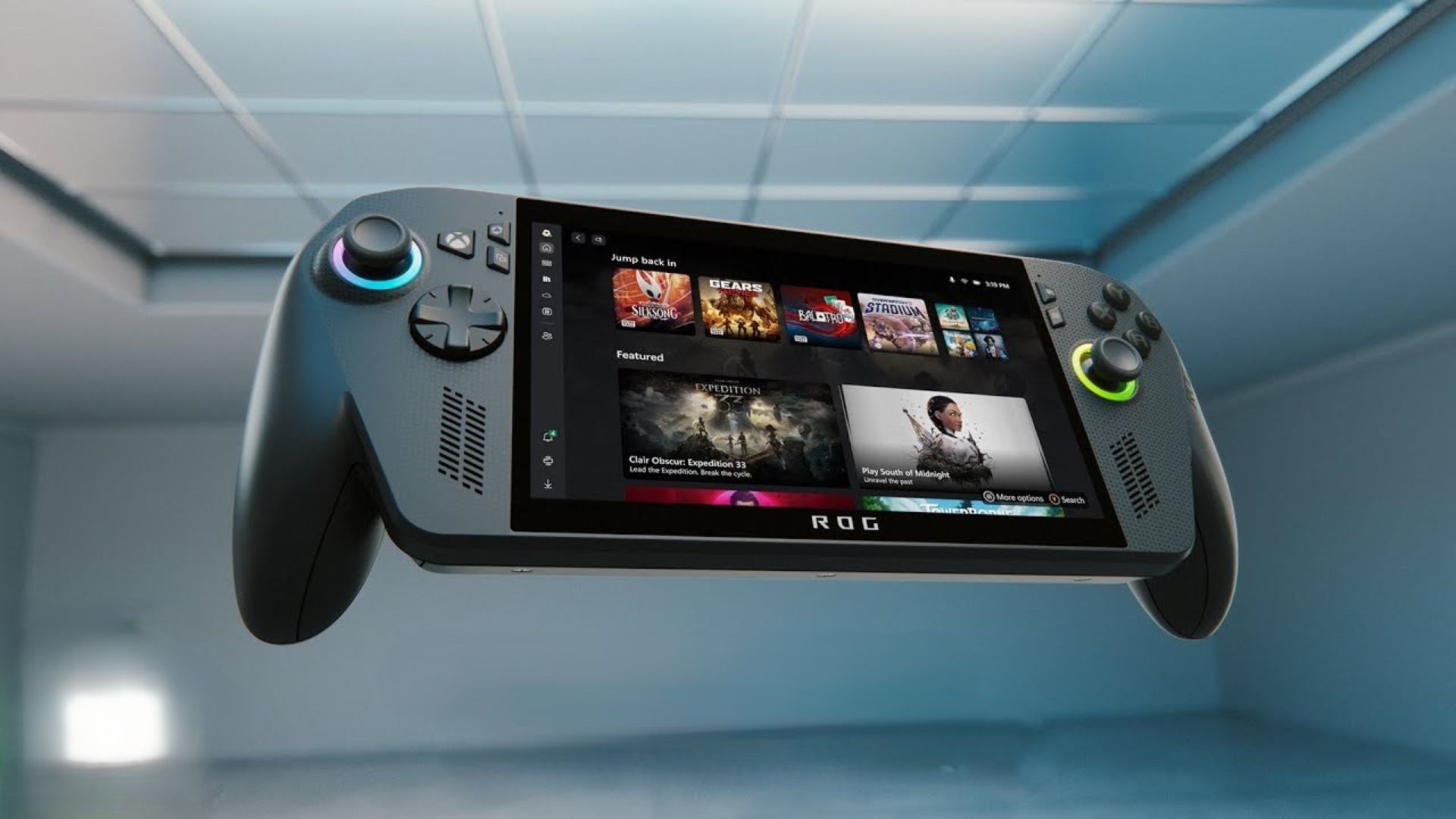
Microsoft then brought that interface to other handhelds and PCs, and it reached Windows 11 PCs as Xbox mode in May 2026. When I tested it in March, it freed up around 1GB to 2GB of memory by turning off parts of the desktop, which tells you how much Windows has to get out of the way for gaming.
Microsoft wants one Xbox across screens, but the handheld is the hardest part
At GDC in March, Microsoft announced Project Helix, a next-generation console that’s “designed to play your Xbox console and PC games,” powered by a custom AMD chip, with alpha hardware going to developers in 2027. Xbox’s Jason Ronald also said the company is “taking everything we’ve learned about building a leading gaming OS and bringing it directly into Windows.”

The handheld is planned for the 2027 holidays and the console for 2028, though Microsoft hasn’t confirmed either date.
A handheld is where Windows and Xbox pull in different directions. Windows has the power to bring every PC game, launcher and app, while Xbox reportedly wants better gaming performance, which on a handheld usually means fewer background tasks, longer battery life and an interface built for a controller. The ROG Xbox Ally is proof that Windows can work on a handheld, but it can’t play Xbox console games, and a first-party Xbox handheld presumably would.
Sharma doesn’t seem to want a divorce, either. “We can’t build Helix on our own,” she told Fortune.
Last week, she also set up Xbox Labs, led by Van Vliet, after seeing games “decompiled and rebuilt to run on hardware they were never originally designed to support.” In that note, she said Xbox remains committed “to our hardware,” which is reassuring for anyone worried Xbox will become just another Windows app.
In my opinion, Xbox running on Windows was always a given, and Microsoft’s challenge is getting Windows to stay out of the way long enough for an Xbox handheld to feel like an Xbox. Would you prefer a Windows handheld with an Xbox mode, or an Xbox handheld that happens to run on Windows?