


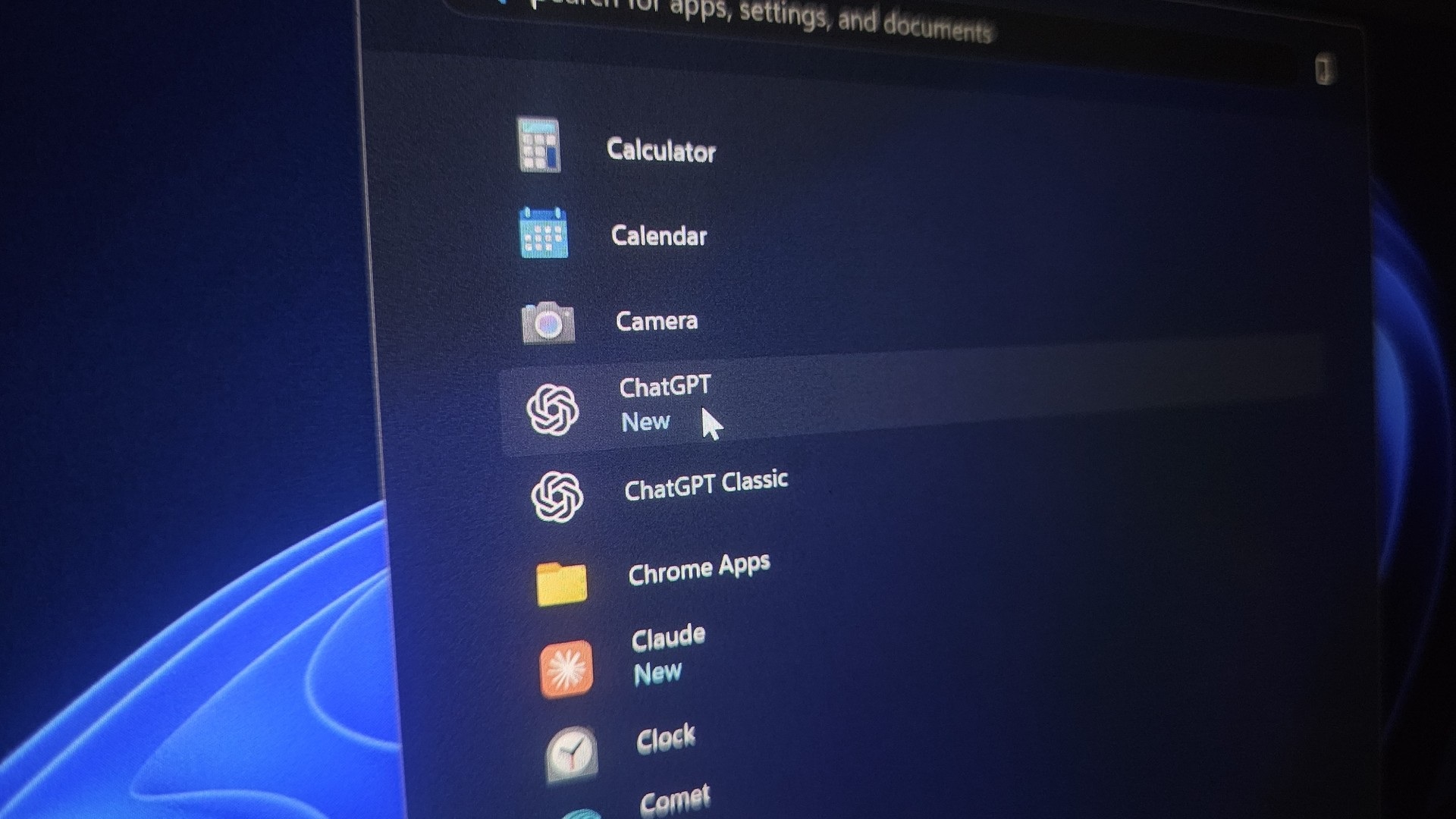
You can live with 8GB of RAM, but not without ChatGPT, if Lenovo’s new promotion is anything to go by. As first spotted by Windows Latest, Lenovo is pre-installing ChatGPT on select new Windows 11 PCs. It only appears to be business PCs, which might be the Think lineup, but it’s too early to predict if most of its lineup will be stuffed with new AI bloatware in the future.
ChatGPT can be useful, and more than a billion people use it every week, granted, but that doesn’t mean a PC maker should pre-install it, especially a company like Lenovo that ships millions of PCs in a quarter. I believe this could be the beginning of a new normal where PC makers install their favourite AI chatbot.
Copilot already comes pre-installed with Windows 11 because it’s owned by Microsoft, and Lenovo PCs are no strangers to bloatware.
OpenAI is offering businesses up to $100 per seat if they buy an eligible Lenovo PC
In a support document spotted by Windows Latest, OpenAI confirmed that it’s offering promotional credits to businesses using eligible Lenovo PCs where ChatGPT is already installed.
If you already have a ChatGPT Business workspace, signing in through the pre-installed app on an eligible PC can add $100 in total to the workspace. But if you create a new Business workspace through the eligible offer, you can receive $100 per qualifying seat.
“The new workspace can receive $100 per qualifying seat purchased during its first 90 days, including seats bought at checkout and later additions,” the company explained.
This promotional offer is strictly for businesses, and we don’t know when consumers will be offered something similar. The credits are added to the workspace’s shared balance and expire 60 days after they’re added.
OpenAI also says the credits “do not reduce subscription fees or provide API credits.” And if you were wondering, the two offers cannot be combined.
You need the pre-installed ChatGPT app to claim the offer
OpenAI says the promotion is available only on eligible Lenovo devices that came with ChatGPT pre-installed. It is worth noting that installing ChatGPT yourself on another Lenovo device doesn’t qualify you for the offer.
“Look for ChatGPT in Start,” OpenAI says. “You may also see it in Lenovo Now or Lenovo Vantage. Contact Lenovo if you’re unsure whether ChatGPT came preinstalled on your device.”
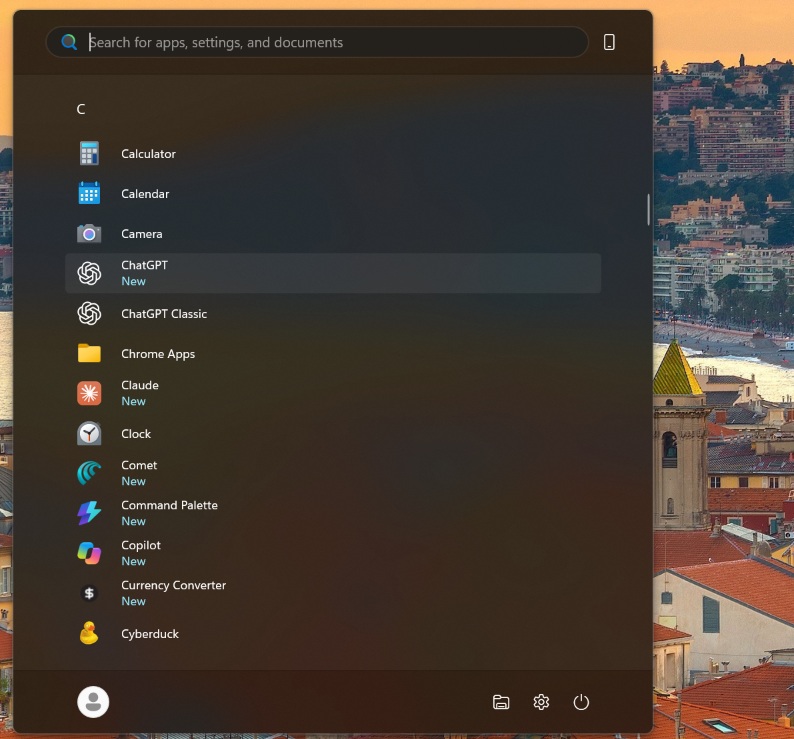
It’s unclear how many PCs come with ChatGPT, as OpenAI is refraining from sharing the details, but it makes sense if there are plans to preload it across millions of units. I wouldn’t be surprised if Lenovo and OpenAI’s partnership expands over time, and more PCs, potentially even the Legion, Yoga, and other lineups, could have AI apps.
You also need version 26.1117.31558 or later of the ChatGPT desktop app. To claim the existing-workspace offer, you’d open the pre-installed app and sign in to your Business workspace. For a new workspace, you’d need to start the upgrade from your personal account in the pre-installed app.
ChatGPT would then check if you own eligible Lenovo hardware before adding the credits to the workspace.
Windows PCs have a bloatware problem, and HP keeps pushing Bing
Ads and bloatware have been around on PCs for a long time, but I still remember when Xiaomi started showing ads in its own apps, even the File Manager. Its phones were cheap enough that, for a lot of people, putting up with a few ads wasn’t a bad deal. But we don’t get that trade-off on a PC. You can still pay over $2,000 for a PC with 32GB of RAM, for example, and end up with bloat or ads.
I can give countless examples of bloatware on Windows, and I’m not even talking about Microsoft’s apps. HP Support Assistant, the pre-installed app HP wants us to use to check our warranty and update drivers, keeps nagging users to switch to Bing.
Back in July, I was playing a game on my Spectre when HP interrupted me with a Bing pop-up.
If you don’t use an HP PC, here’s what the pop-up looks like:
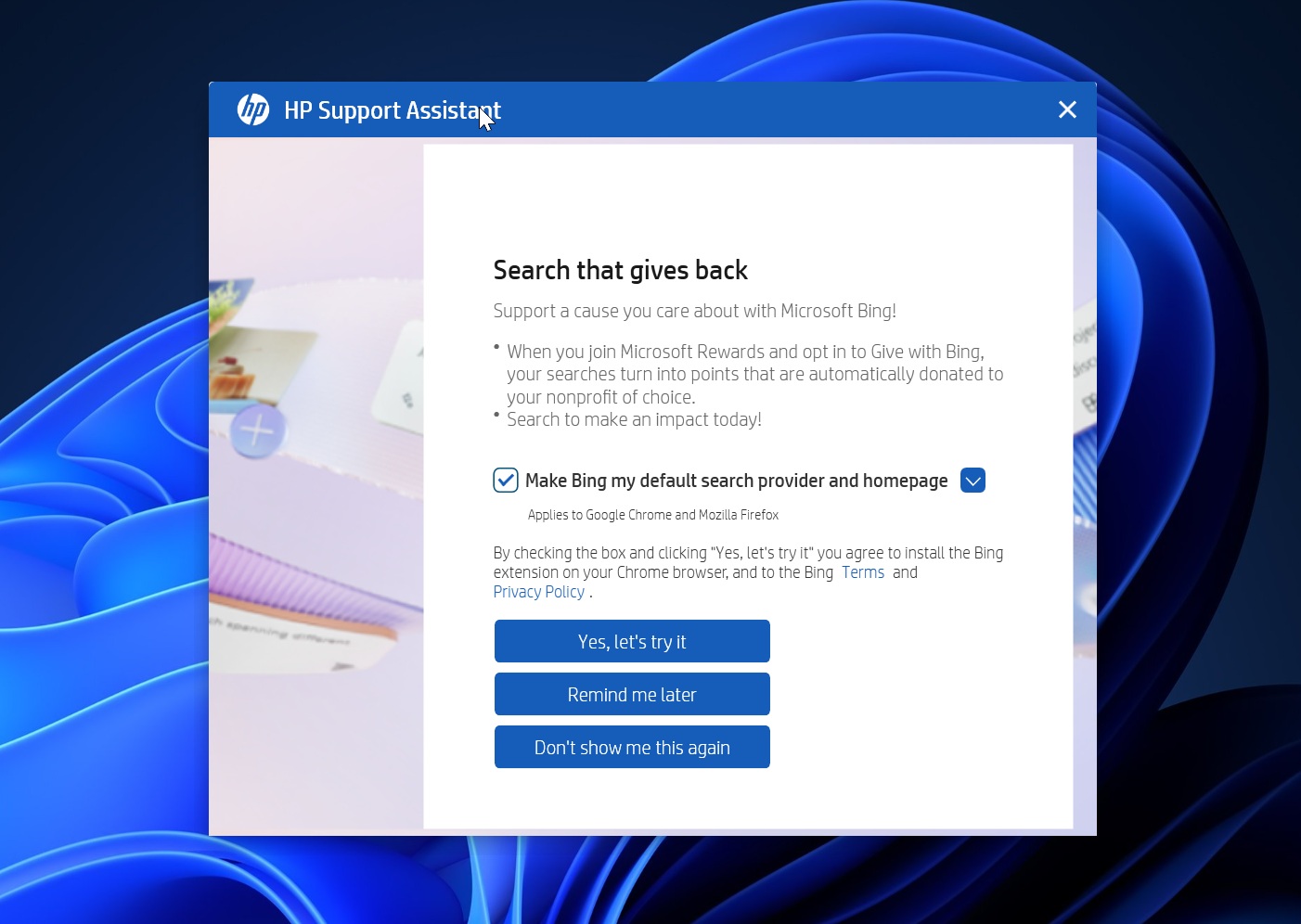
As you can see in the screenshot, HP argues that Bing is a search engine that gives back, which isn’t entirely false. Bing does plant trees when you use it enough, as part of Microsoft Rewards. But HP is using that as a way to emotionally manipulate you into using a search engine you did not sign up for.
“Support a cause you care about with Microsoft bing,” HP’s pop-up reads. “When you join Microsoft Rewards and opt in to Give with Bing, your searches turn into points that are automatically donated to your nonprofit of choice. . Search to make an impact today.”
You’ve got the option to try it, which immediately installs a Bing extension across all browsers and flips the search engine. Google is apparently aware of Microsoft’s game, so Chrome attempts to block the unexpected search engine settings change.
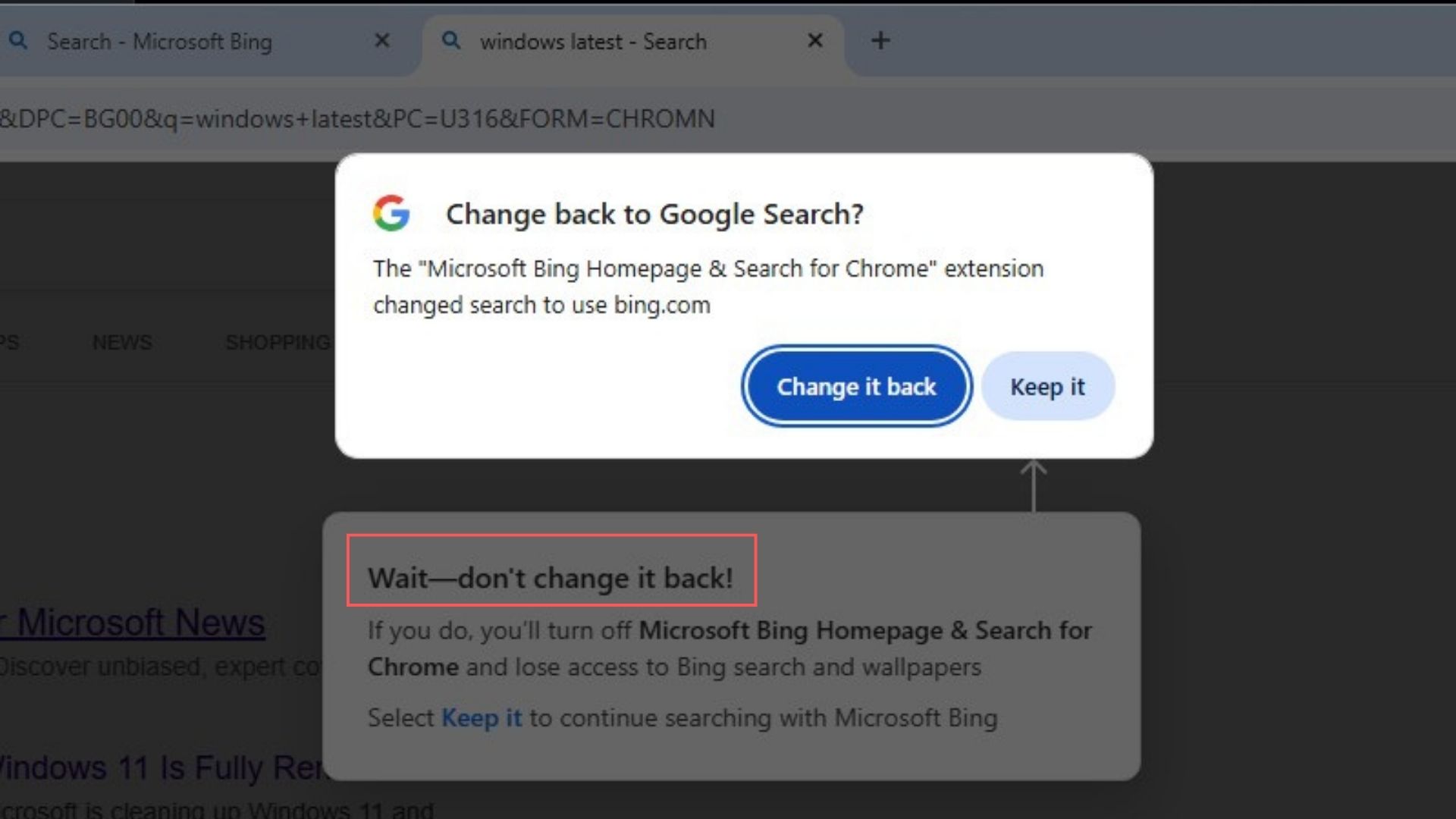
It is worth noting that this feature isn’t specifically built to target Bing, but any malware that suddenly changes your search engine.
If you come across the HP pop-up, you’ve got the option to dismiss it or select “Don’t show me this again.” But I’ve already clicked “Don’t show me this again” more than once, and the pop-up keeps coming back.
Even plugging in a monitor can get you an antivirus ad on Windows 11
We’ve also had LG pushing a McAfee pop-up on the Windows 11 desktop when users plugged in a monitor. This was observed on flagship monitors, including the famous $1,200 LG UltraGear.
In July 2026, when LG monitor owners plugged their displays into a Windows 11 PC, Windows Update would quietly install an app called LG Monitor App Installer without any notification. The app was supposed to help set up the hardware.
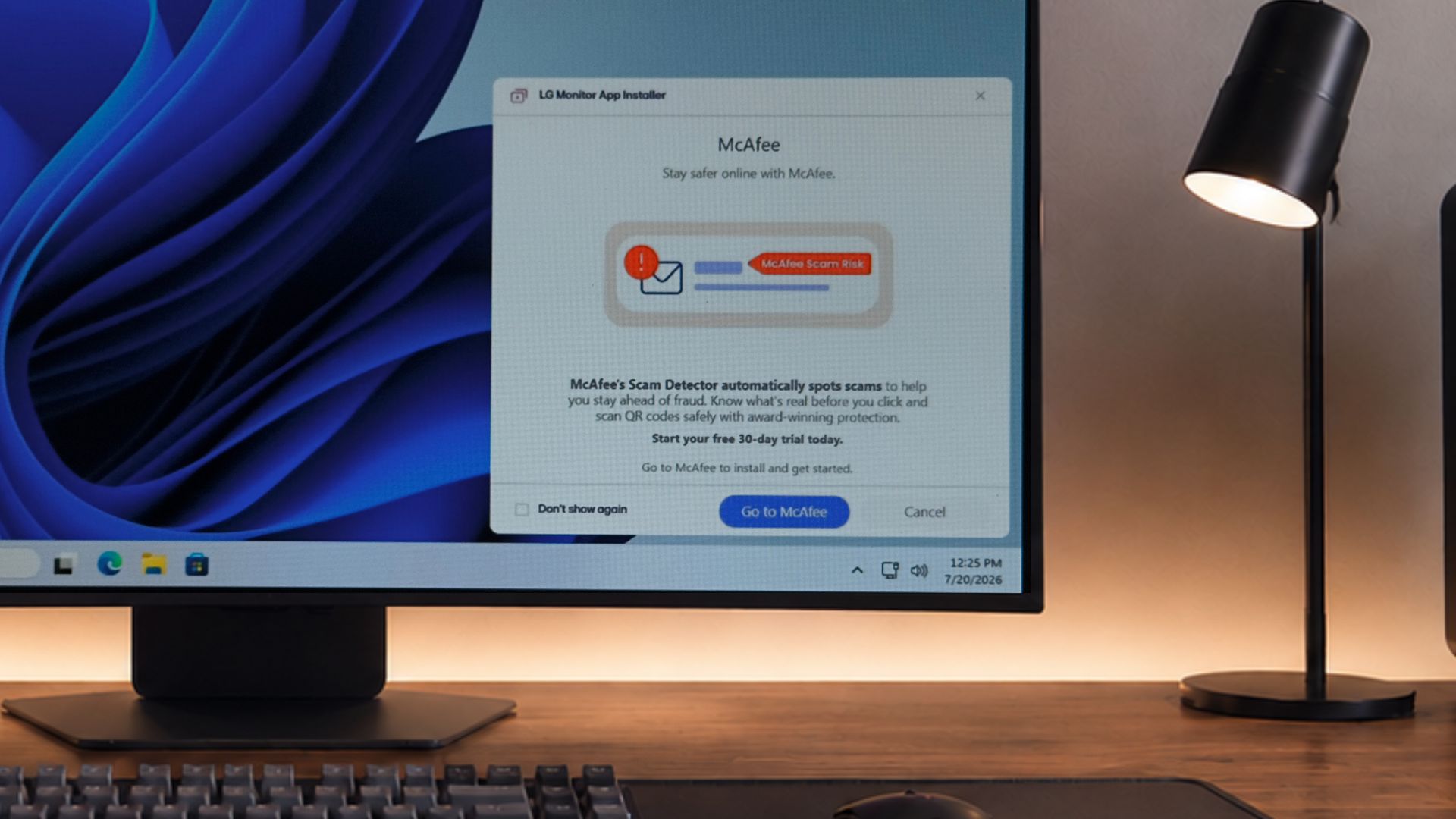
That means LG’s monitor app wasn’t supposed to be bloatware itself, but the company apparently sneaked in a McAfee promotion with it. The app pushed a 30-day McAfee trial alert on 31 of the next 32 boots.
LG said you still had to agree to install McAfee, so it wasn’t exactly a forced install, but you can see why people were annoyed about getting an antivirus ad from their monitor in the first place.
Eventually, the outrage led to Microsoft’s intervention, particularly after Epic Games CEO Tim Sweeney tagged Windows chief Pavan Davuluri. Three days later, Davuluri said Microsoft had spoken to LG and “they have agreed to disable the McAfee pop-up from their app.”
I understand that companies like Lenovo, LG or HP need to make money, but it’s about time we draw a line between an actually useful app and bloatware. At this point, the industry has normalized bloatware, ads and pop-ups, and nobody seems to understand the fact that consumers pay thousands of dollars to own the device. This expensive hardware is not rented.
I’d really hope Microsoft sets quality guidelines for OEMs. I mean, Lenovo and other companies should ask at Windows 11’s setup screen (OOBE) if users would like to have ChatGPT, for example, installed on their PC immediately. If people have heard about its capabilities and they love the idea, they wouldn’t dismiss it and would choose to install it because it’s free anyway.
But we don’t have greater control over bloatware in Windows, and Microsoft has only made a little progress with reducing bloatware and adware in its own OOBE process.