



HP Support Assistant is running a paid Bing campaign on Windows 11 PCs, and Microsoft isn’t intervening this time.
All HP PCs come pre-installed with an app called HP Support Assistant, which allows you to install drivers, verify system specifications, and check your warranty status. It’s useful for managing an HP PC, but it also appears to serve as another way to push Microsoft Bing.
While I was casually playing a game on my HP Spectre, a supposed flagship laptop that costs $2,000, HP Support Assistant suddenly interrupted me with a pop-up asking me to make Bing my default search engine and homepage.
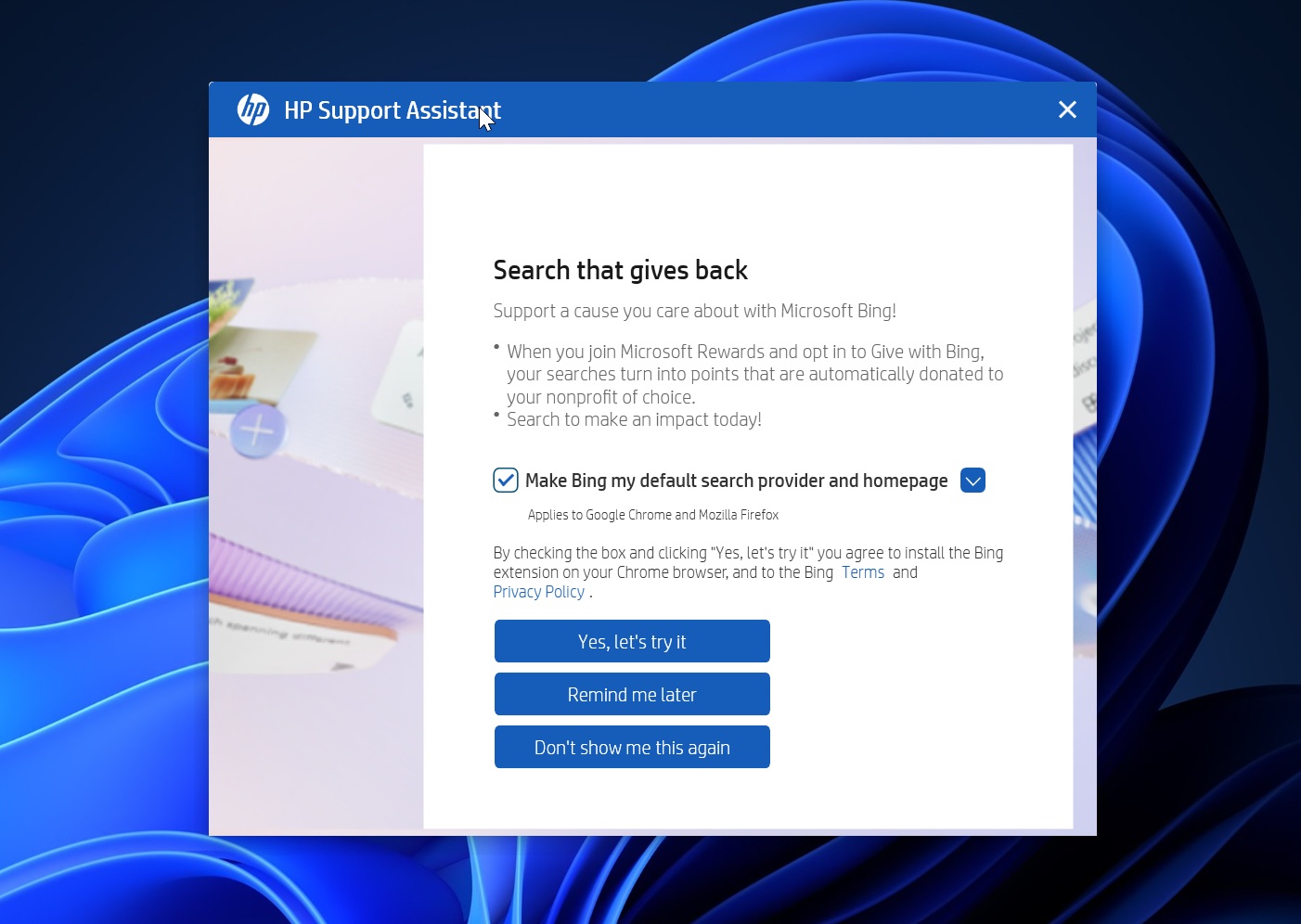
The pop-up literally says “Search that gives back,” suggesting that you should use Bing because it supports a cause you care about.
As you can see in the screenshot, the option to “Make Bing my default search provider and homepage” is already selected. If you look closely, you’ll notice that clicking “Yes, let’s try it” installs a Bing extension in Google Chrome or Mozilla Firefox and changes your default search engine and homepage.
You can also choose “Remind me later” or “Don’t show me this again,” but I’ve selected the latter multiple times, and these pop-ups keep showing up.
Why does HP Support Assistant say Bing “gives back”?
When you use Bing, you can earn Microsoft Rewards points, which can be used toward subscriptions such as Xbox Game Pass. Bing’s Rewards program also allows you to donate your points to nonprofits, including organizations involved in tree planting, which is why HP says using Bing can help support a cause.
“When you join Microsoft Rewards and opt in to Give with Bing, your searches turn into points that are automatically donated to your nonprofit of choice,” HP noted in the pop-up rolling out to Windows 11 PCs. “Search to make an impact today.”
You’re then given three options:
- Yes, let’s try it.
- Remind me later.
- Don’t show me this again.
This time, I chose to install the extension, and HP immediately opened both of my browsers, Firefox and Chrome, and tried to apply the Bing extension.
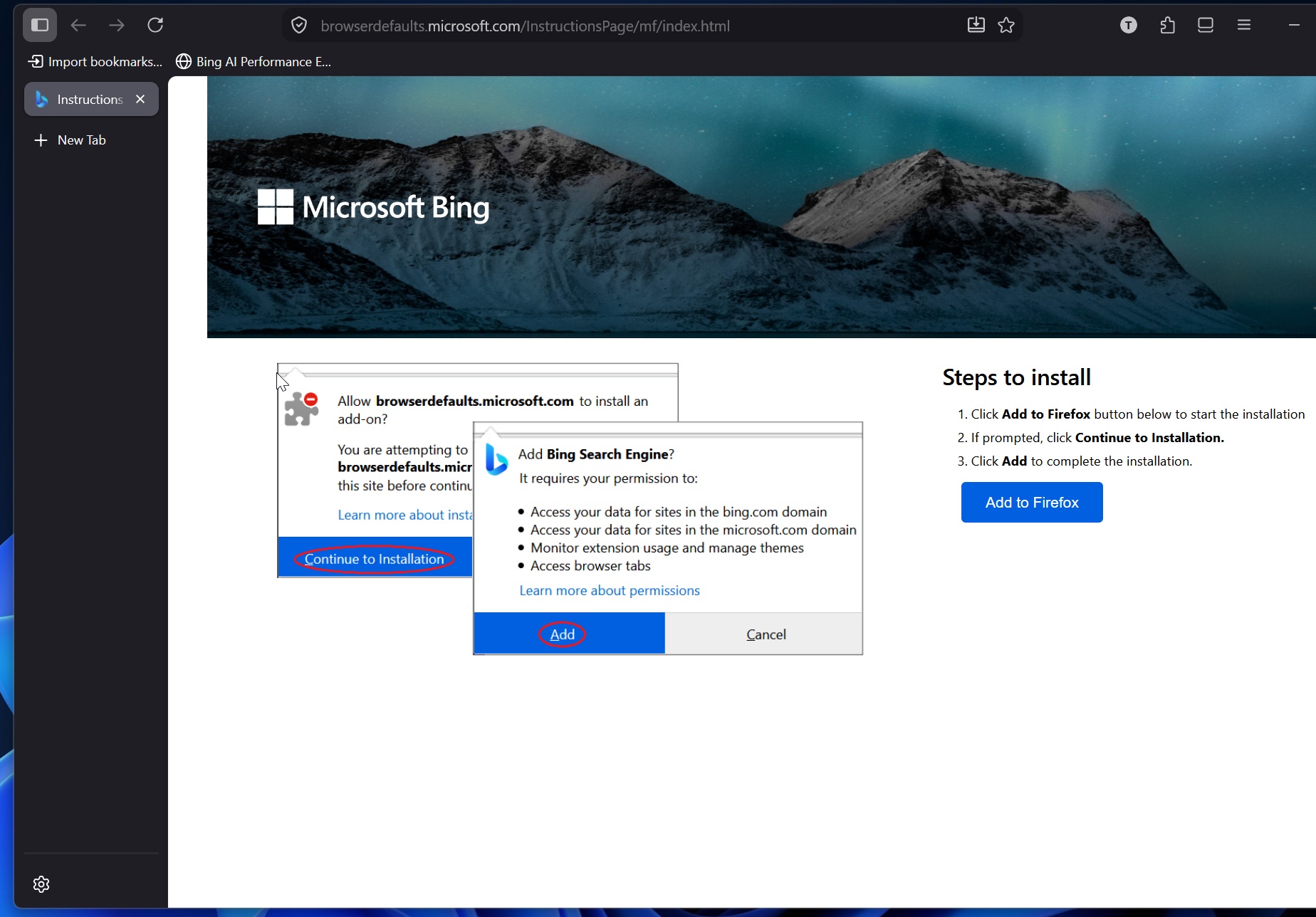
While the extension was installed, it looks like Chrome and Firefox blocked Microsoft from making Bing the default search engine. Microsoft appears to be aware of this, which is likely why the extension also opens a new tab with a guide that helps you change your default preferences manually.
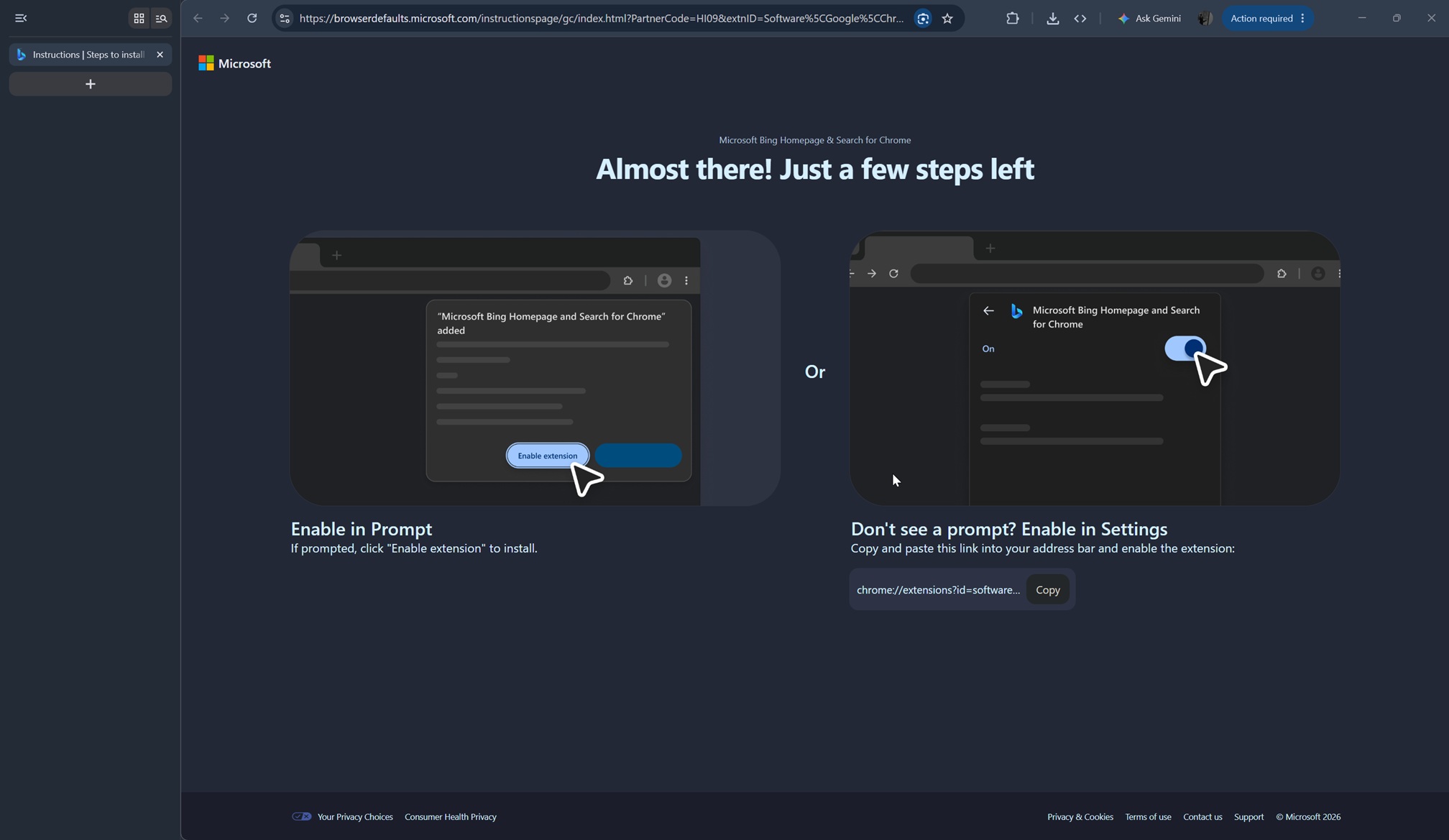
While it isn’t entirely false when HP says Bing “gives back,” it’s worth noting that this does not happen automatically. You need to join Microsoft Rewards and opt in to Give with Bing.
At the same time, Bing is still a for-profit search engine that generated $13.88 billion in net advertising revenue in 2025, so simply using it does not necessarily mean you’re supporting a cause. Ecosia, an environmentally friendly search engine, supports tree-planting projects through searches by default.
If you don’t want HP to nag you with these alerts, you’ll need to remove HP Support Assistant and make sure it isn’t installed again through Windows Update.
Microsoft cracked down on LG, but HP’s Bing pop-up remains
A few days ago, LG was caught offering to install McAfee on PCs connected to the company’s monitors, which caused a massive backlash.
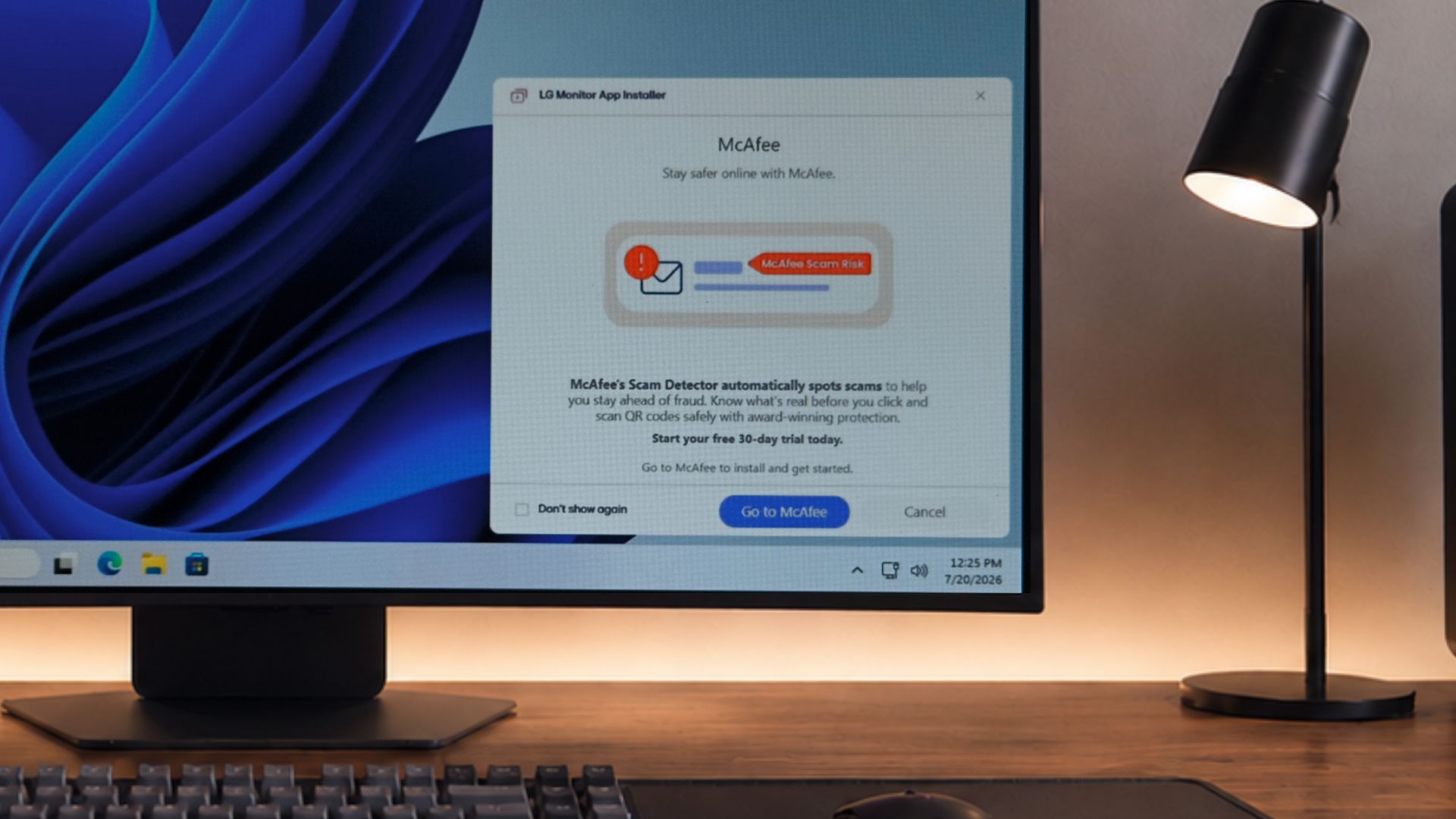
LG argued that it wasn’t installing the McAfee app automatically because users had the option to reject it. The company also pointed out that the LG Monitor App Installer was distributed through Microsoft’s official Windows distribution process.
Ironically, LG had already acknowledged bundling McAfee in updated release notes on the Microsoft Store and claimed that it would help users secure their PCs.
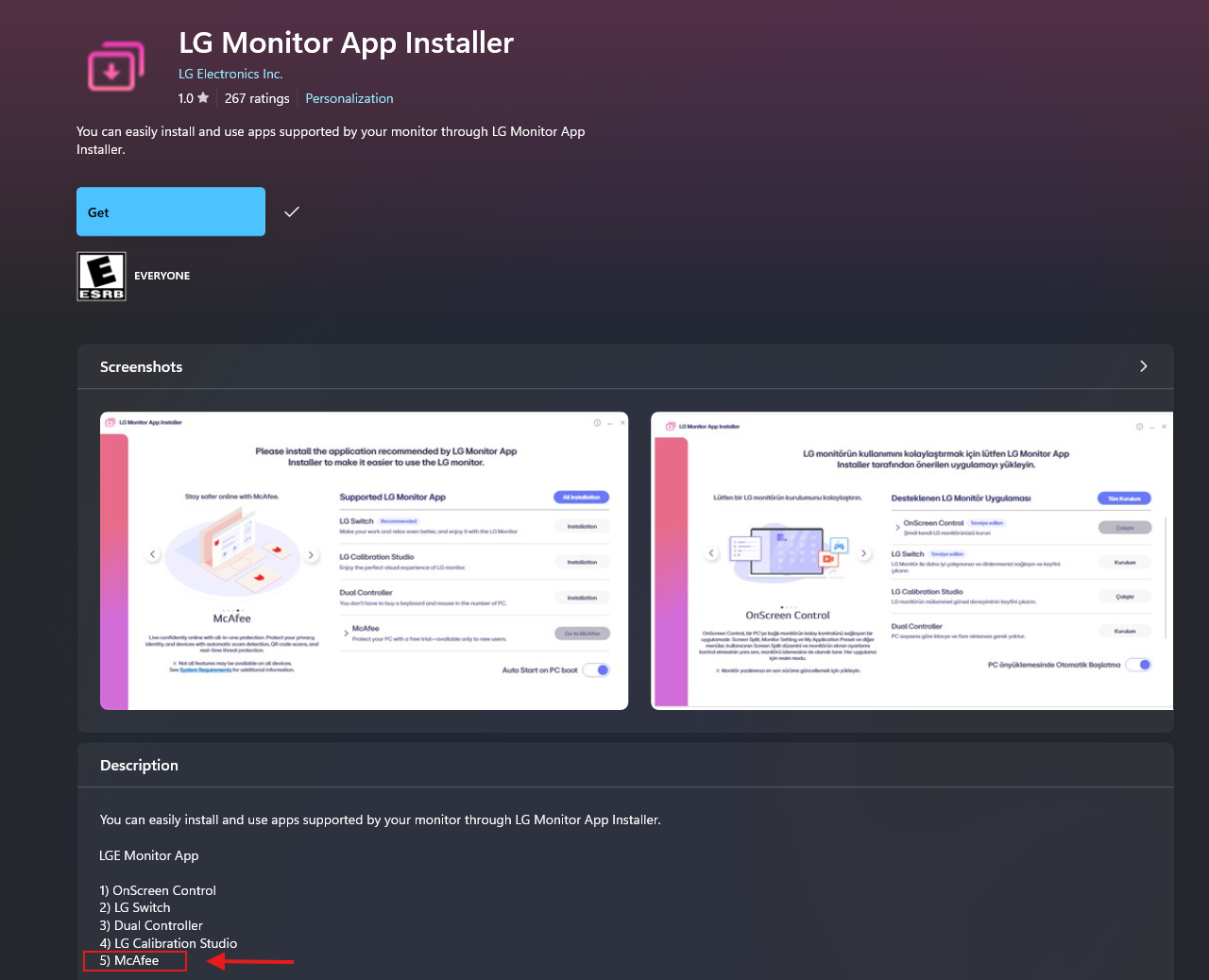
LG still insisted that the installation was optional and shared the following statement, which isn’t exactly false but exposes a wider problem within the Microsoft ecosystem:
“LG Electronics reiterates that McAfee is not installed automatically and is never installed without the user’s explicit consent. The LG Monitor App Installer is distributed through Microsoft’s official Windows distribution process, which included McAfee as an option. McAfee will be installed only if a user actively chooses to proceed with the installation and provides consent. Under no circumstances is McAfee installed automatically or without user authorization. The LG Monitor App Installer does not access, collect, or transmit any customer personal data.”
Pavan Davuluri, Microsoft’s EVP of Windows and Devices, eventually stepped in and confirmed that Microsoft had worked with LG to remove McAfee from the Monitor App Installer.
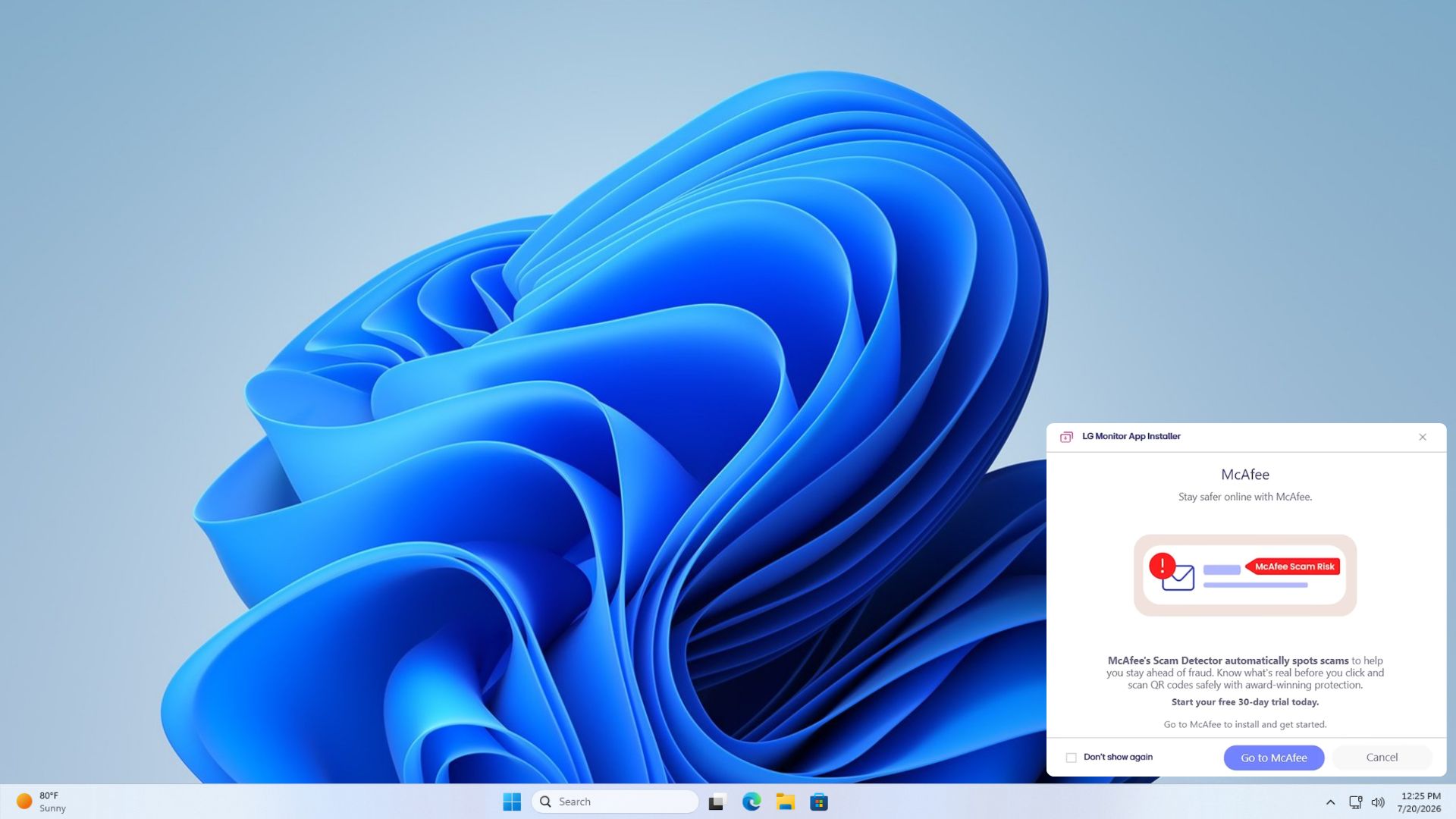
“We’ve connected with the team at LG and, as an immediate next step, they have agreed to disable the McAfee pop-up from their app. We appreciate LG working with us toward a shared goal of a better experience for our mutual customers. We will keep improving here with our ecosystem partners,” Davuluri wrote in a post on X.
LG clearly messed up, and Microsoft stepping in was a great move. At the same time, HP Support Assistant is still repeatedly pushing Bing through a pop-up that returns even after you select “Don’t show me this again.”
HP is unlikely to be showing the Bing promotion out of charity. It’s likely part of a commercial arrangement with Microsoft, although neither company has publicly disclosed the terms.
It may take a similar level of outrage before this behavior changes.