





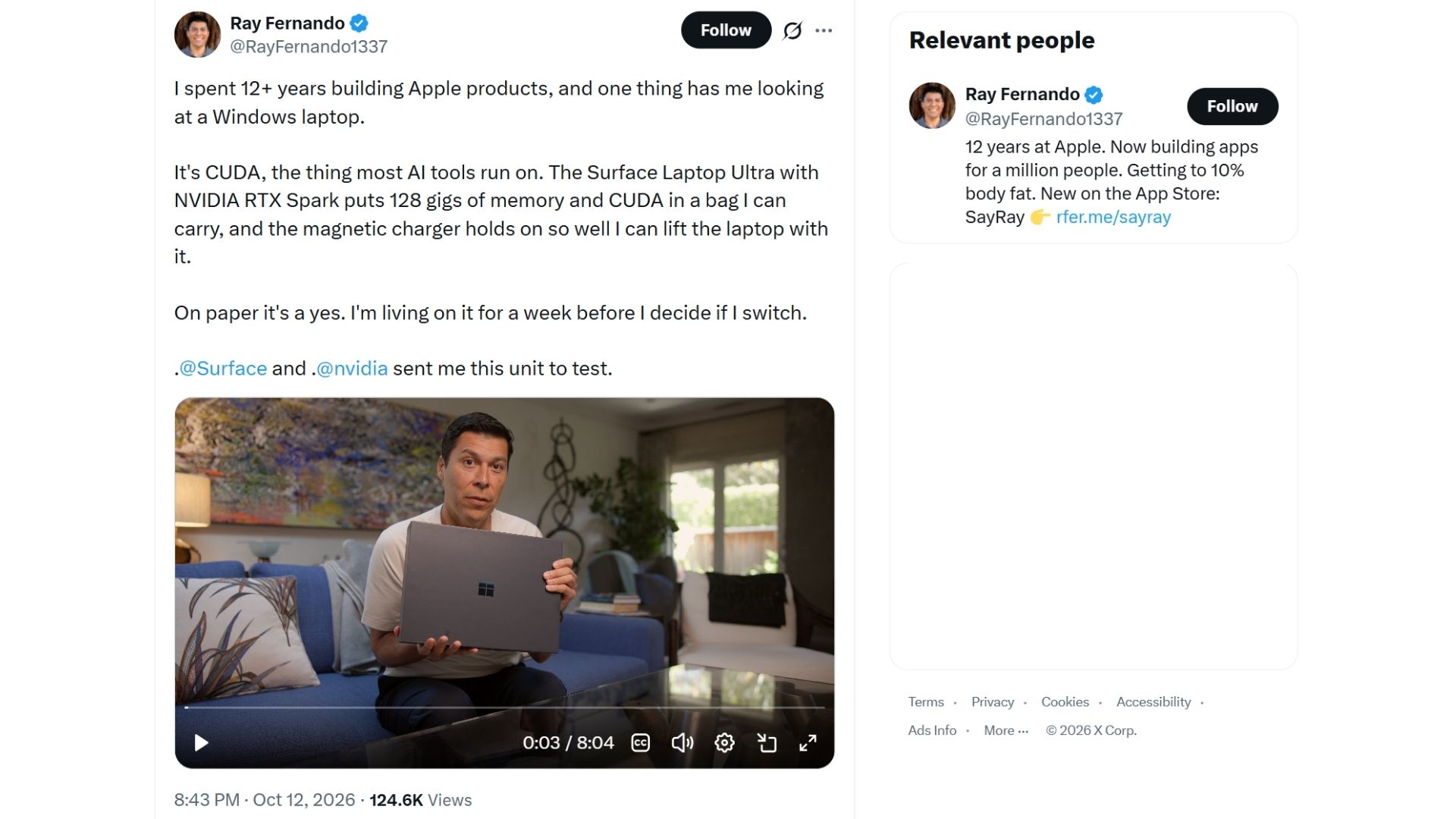
Ray Fernando, who has spent more than 12 years building Apple products, is giving a Windows laptop a serious look for the first time, and he credits NVIDIA’s CUDA for it.
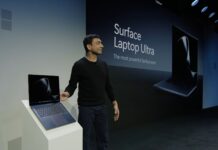
Microsoft and NVIDIA sent him the Surface Laptop Ultra, and he plans to live on it for a week before deciding whether to switch. His post, spotted by Windows Latest, also drew a response from former Windows president Steven Sinofsky, who compared NVIDIA’s RTX Spark strategy to the graphics API wars of the 90s.
Why CUDA has a 12-year Apple veteran looking at Windows
In his X post, Fernando says one thing has him eyeing a Windows laptop. “It’s CUDA, the thing most AI tools run on,” he wrote, adding that the Surface Laptop Ultra puts that power “in a bag I can carry.”
For those unaware, CUDA is NVIDIA’s platform for running general computing work on its GPUs, with libraries, debugging tools, and support for frameworks like PyTorch. Obviously, not every AI tool needs CUDA, so “most” is Fernando’s shorthand for how much of AI development depends on NVIDIA’s software stack. Microsoft is betting on that too, promising “CUDA-accelerated PyTorch” on RTX Spark PCs.
Macs haven’t had that option for years. NVIDIA made CUDA 10.2 the last version for macOS back in 2019, and Apple has its own Metal and MLX frameworks instead. Interestingly, Fernando’s Hugging Face profile lists him in the MLX community, so he knows Apple’s side of the fence well.
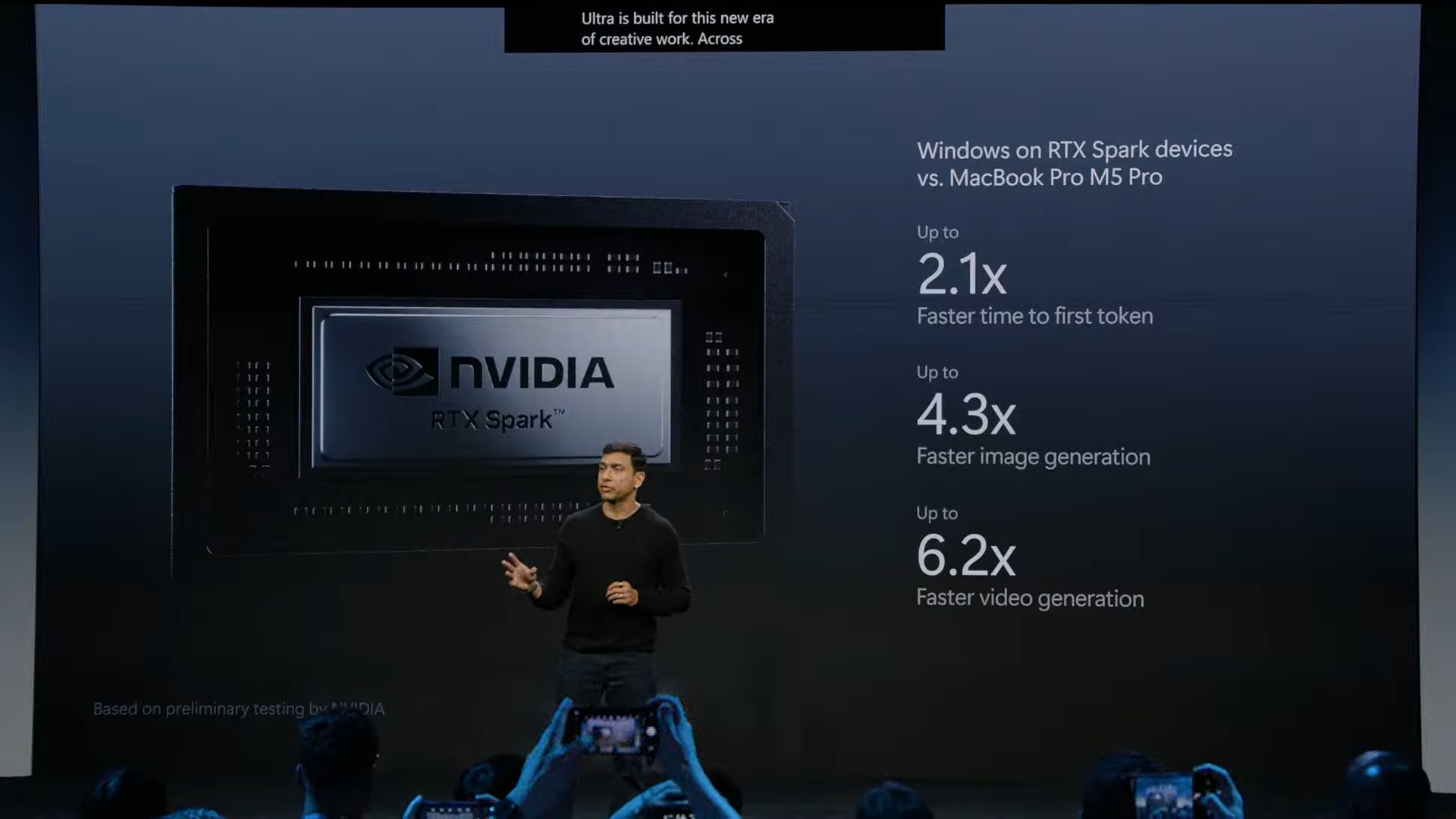
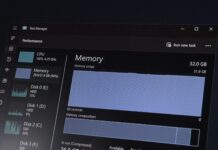
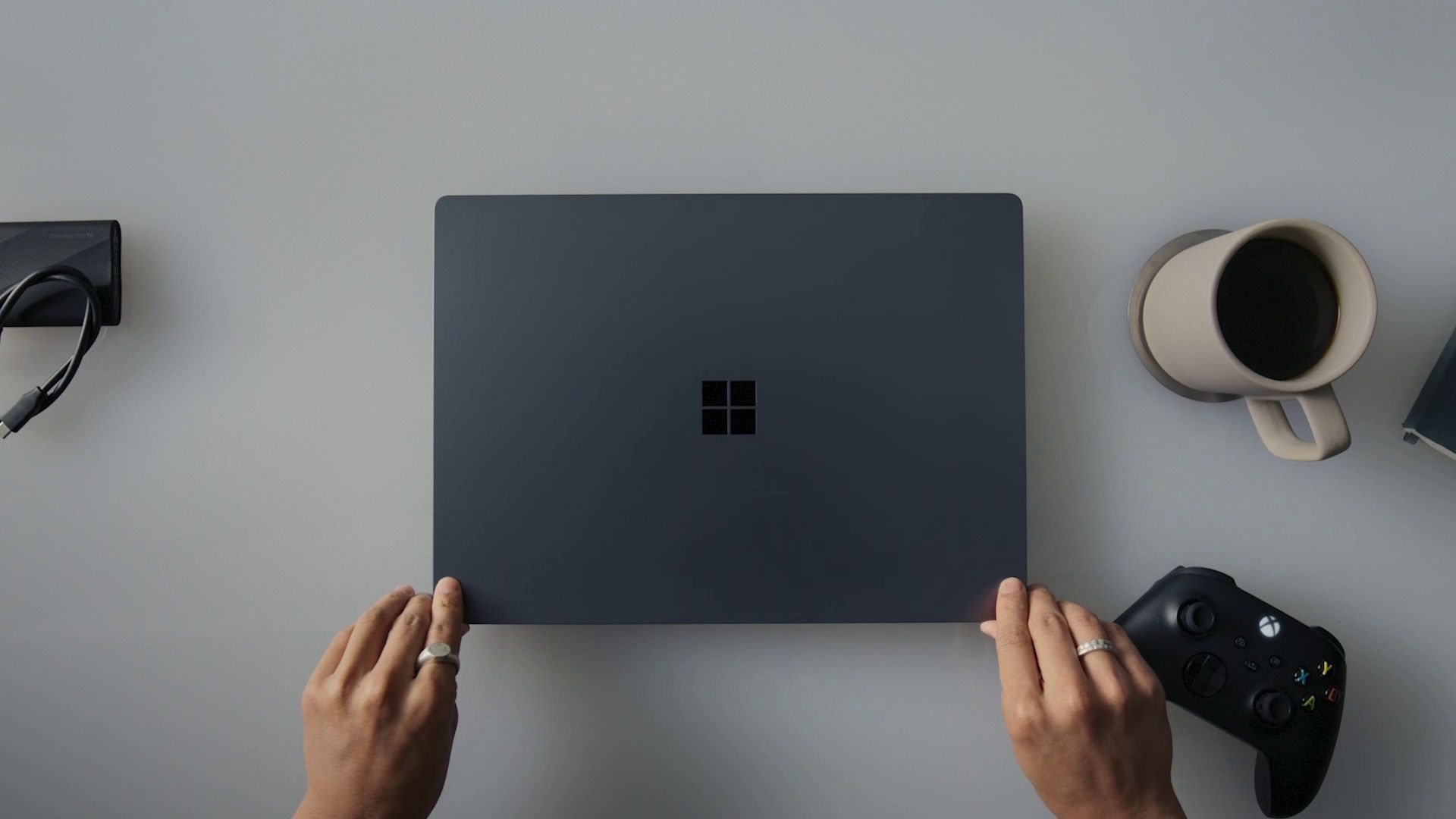
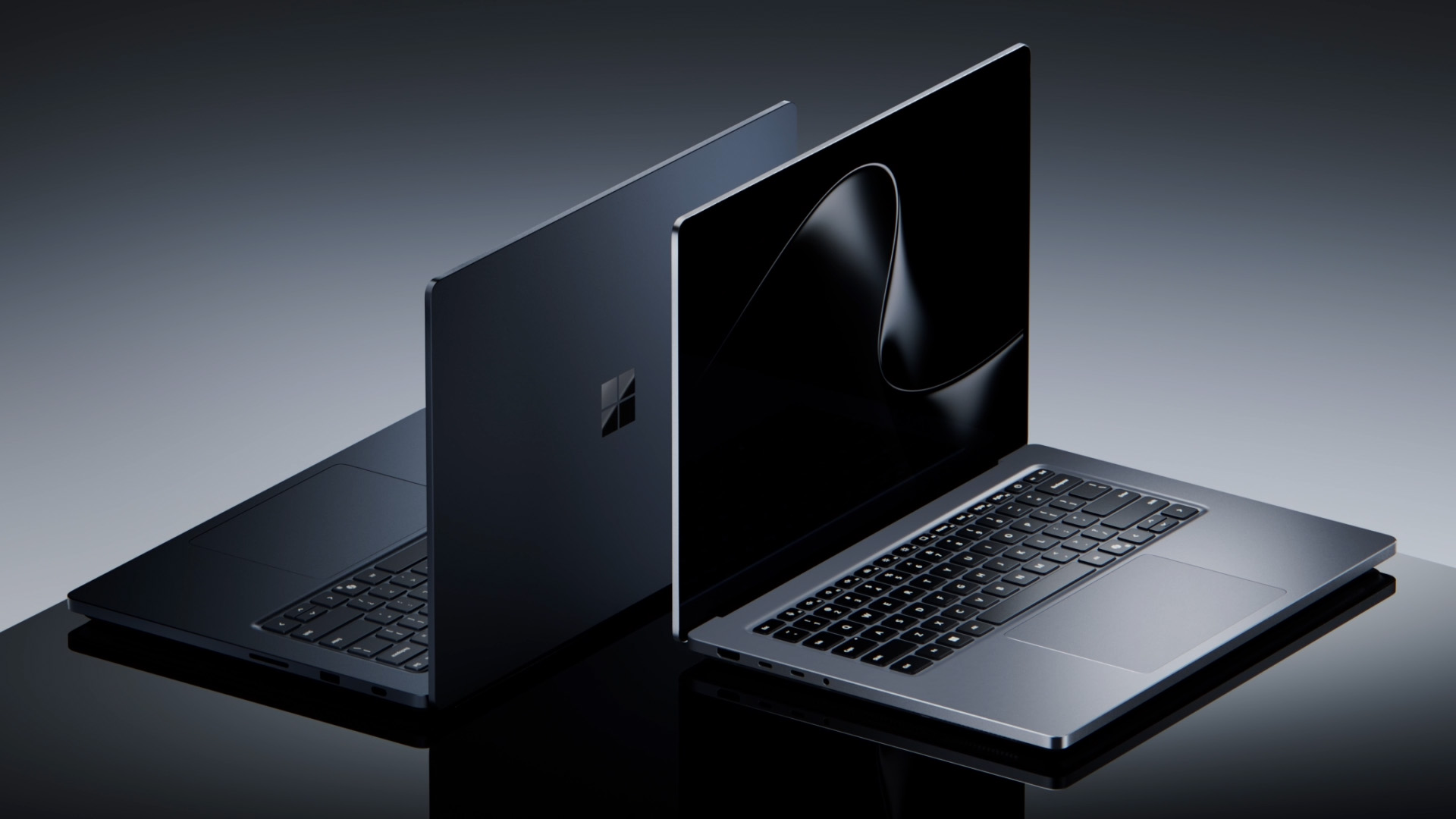
In his unboxing video, Fernando shows the top-end Nightfall model with a 20-core CPU, a 6,144-core GPU, 128GB of unified memory, 1TB of storage, and Windows 11 Pro. Microsoft sells that configuration for $5,899.99, and Fernando says it should handle AI models with over 120 billion parameters.
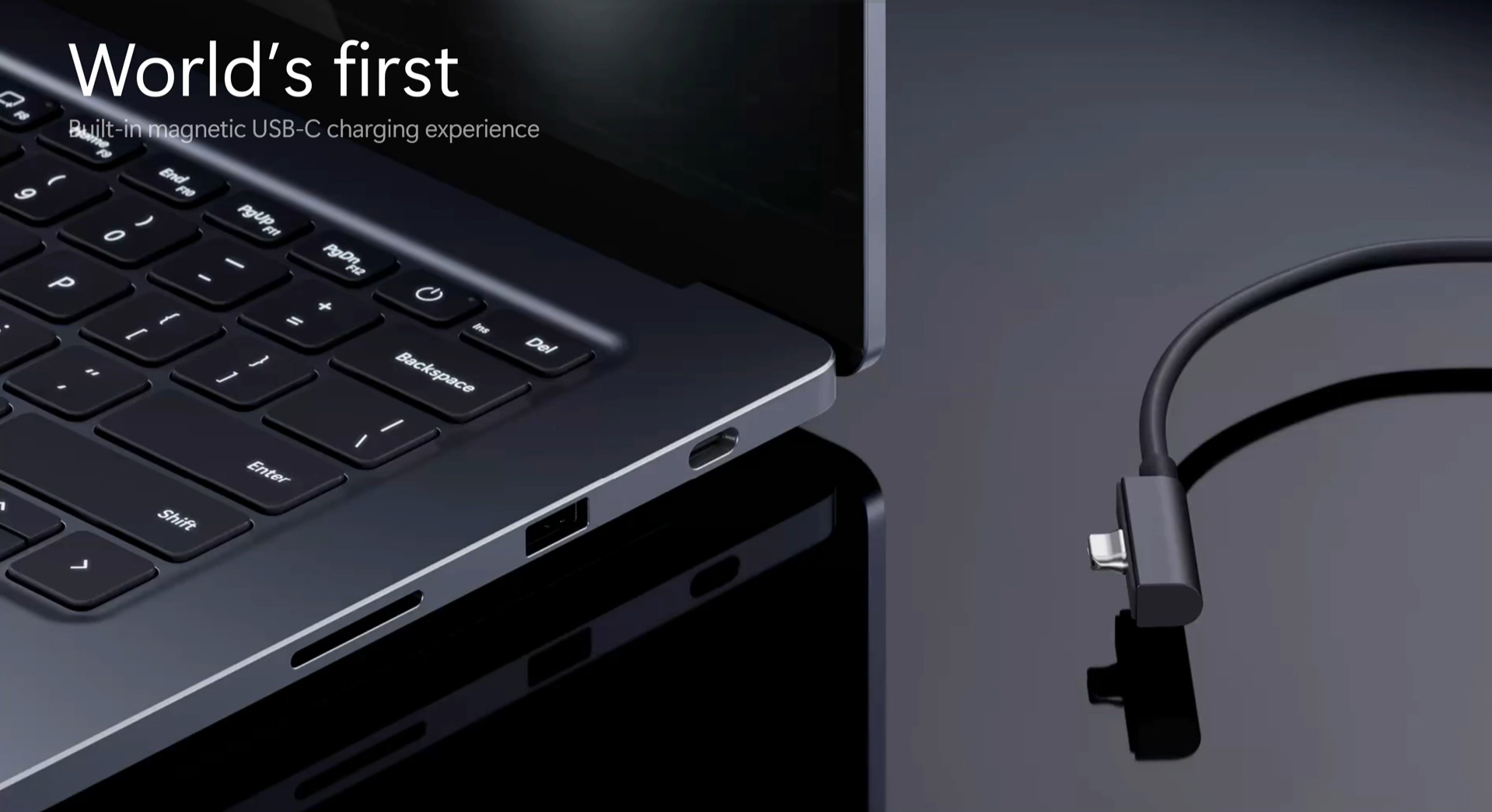
He liked the keyboard, the large trackpad and the build quality, but Magnetic Connect impressed him the most. Fernando lifted the laptop by its charging cable, then pulled the cable off with a quick yank. He says the laptop weighs 4.41 pounds, about 0.3 pounds lighter than another 16-inch laptop of his with 128GB of RAM (no points for guessing the model).
“On paper it’s a yes,” he wrote, but the verdict, along with a look at the software, comes very soon, as his video is 6 days old as of writing. His YouTube description says the video isn’t sponsored and the opinions are his own.
Former Windows boss Steven Sinofsky calls it a replay of the OpenGL war
Sinofsky, who ran Windows through Windows 7 and Windows 8, quoted Fernando’s post, saying it’s why “the Spark strategy is playing out well,” and compared it to a fight he watched from inside Microsoft.
“It’s a replay of the OpenGL war SGI started. Nvidia embraced. Microsoft took on w/D3D. Quake rebuffed. Apple warmed up then split; went its own way w/Metal.”
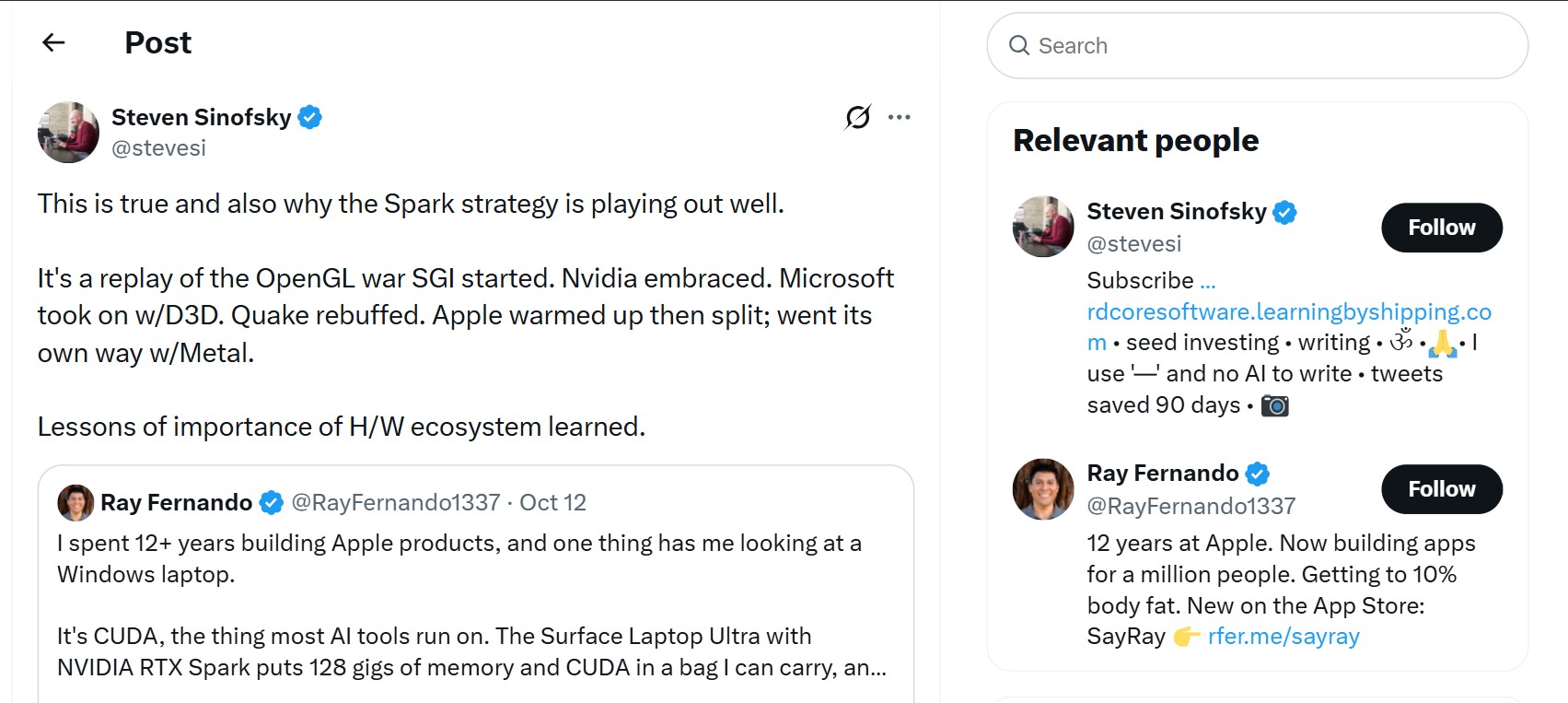
SGI introduced OpenGL in 1992 as a cross-platform graphics API, and Microsoft answered with Direct3D on Windows. id Software’s Quake famously went with OpenGL, while Apple supported OpenGL for years before deprecating it in 2018 in favor of Metal.
Brad Silverberg, who led Windows 95 at Microsoft, added his own memory of that era. “I remember meeting with Jensen in the early days to get him to support DirectX. He did and it worked out great for both him and msft,” he wrote, noting that OpenGL had its fans inside Microsoft too.
In my opinion, Sinofsky’s point is that developers follow the tools they already know, and hardware wins when it ships with those tools on day one. Thirty years ago, NVIDIA backed Microsoft’s API. In 2026, it’s Windows that needs NVIDIA’s CUDA to win over developers like Fernando.
RTX Spark is not just a Surface strategy
Of course, it’s not just Microsoft’s Surface division that’s getting a spark (pun intended). The fact that all major Windows OEMs are handing out review units of their versions of RTX Spark-powered PCs shows that this is, in fact, “the strategy for Nvidia,” as Sinosfky said. But as one user put it, Microsoft also gains by selling Windows licenses with every one of those laptops. However, we know it’s the full Windows AI stack that Microsoft hopes to sell here!
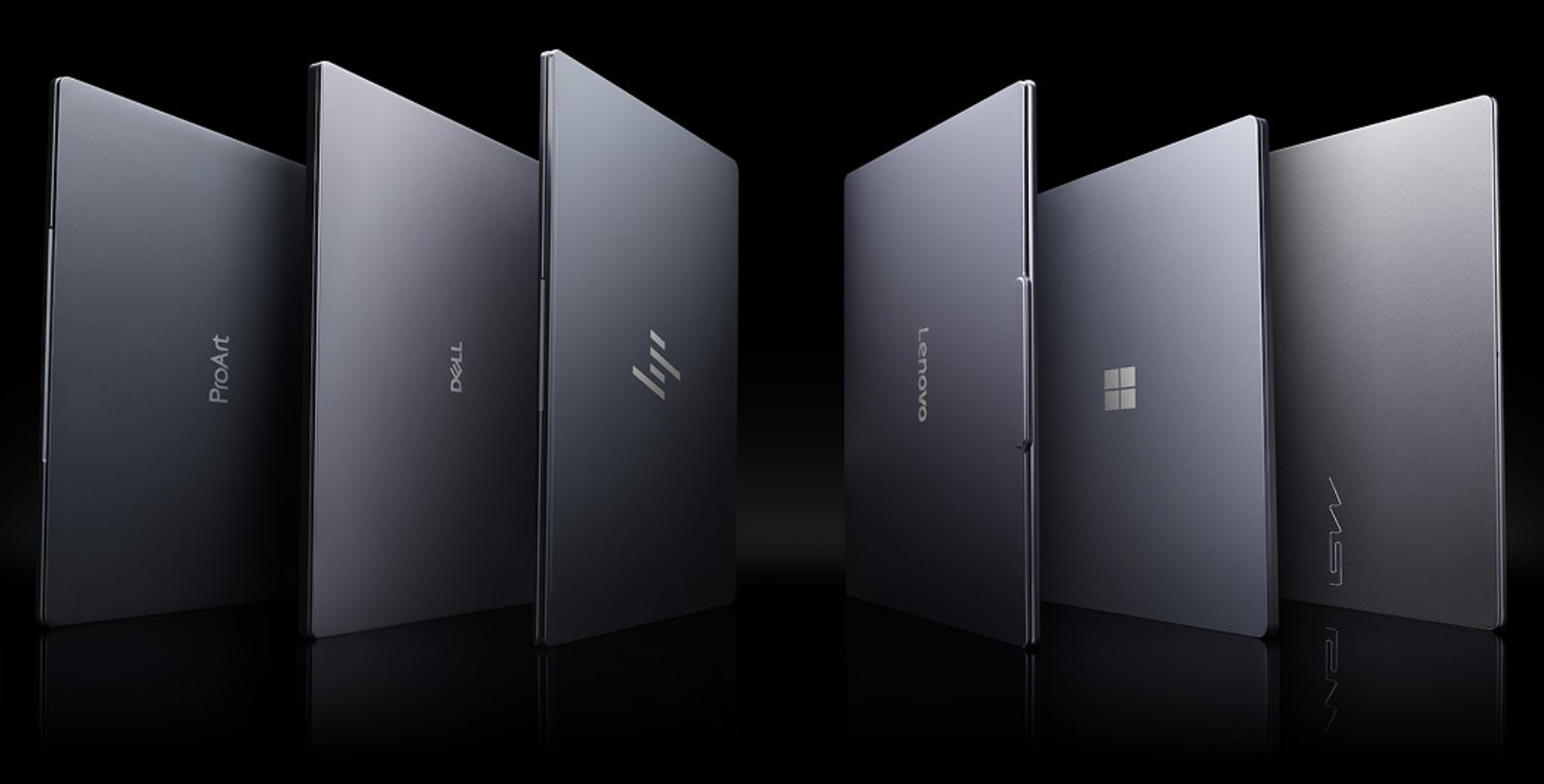
Microsoft named ASUS, Dell, HP, Lenovo and MSI along with Surface, and NVIDIA’s list also includes Acer and Gigabyte. Since every RTX Spark PC runs Windows on Arm, app compatibility is the other half of the story, and Fernando hasn’t shown the software yet.
Funnily enough, Copilot doesn’t come up once in Fernando’s video, and Microsoft even dropped the Copilot+ PC branding for this laptop. Whether CUDA can outweigh years of macOS muscle memory is what Fernando’s week with Windows 11 will tell us.