








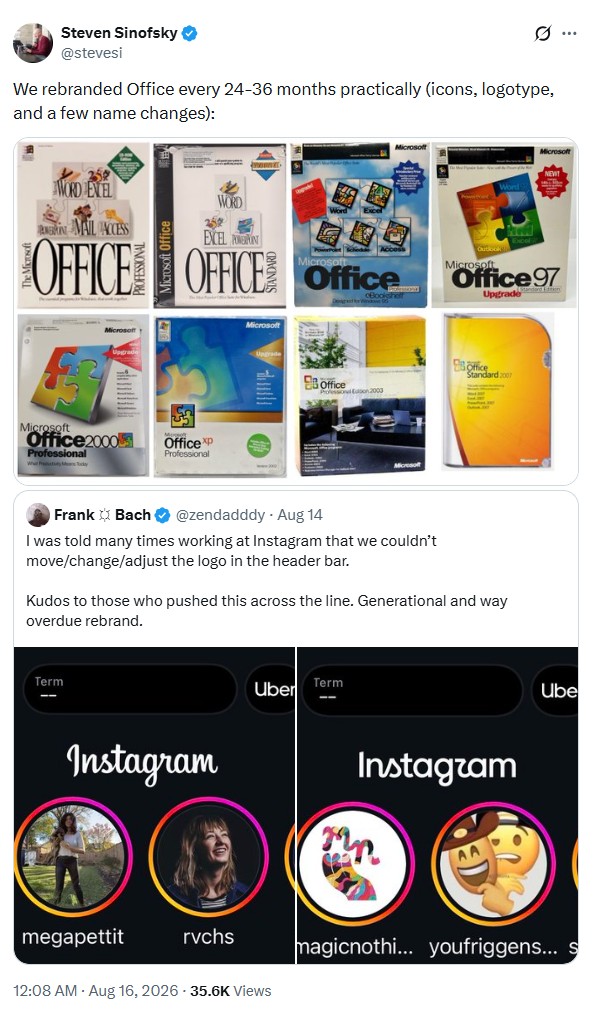
“We rebranded Office every 24-36 months practically (icons, logotype, and a few name changes)”, said Steven Sinofsky while reposting an X post about Instagram finally letting its design team change the logo in the header bar after years of internal resistance.
Sinofsky spent 23 years at Microsoft, joined the Office team in 1994, ran Office product development through six major releases, and later became president of the Windows division.
In those early days, Office branding used to carry some weight, because Microsoft sold software differently. New names, icons, and a never-before-seen box on a store shelf were the whole point!
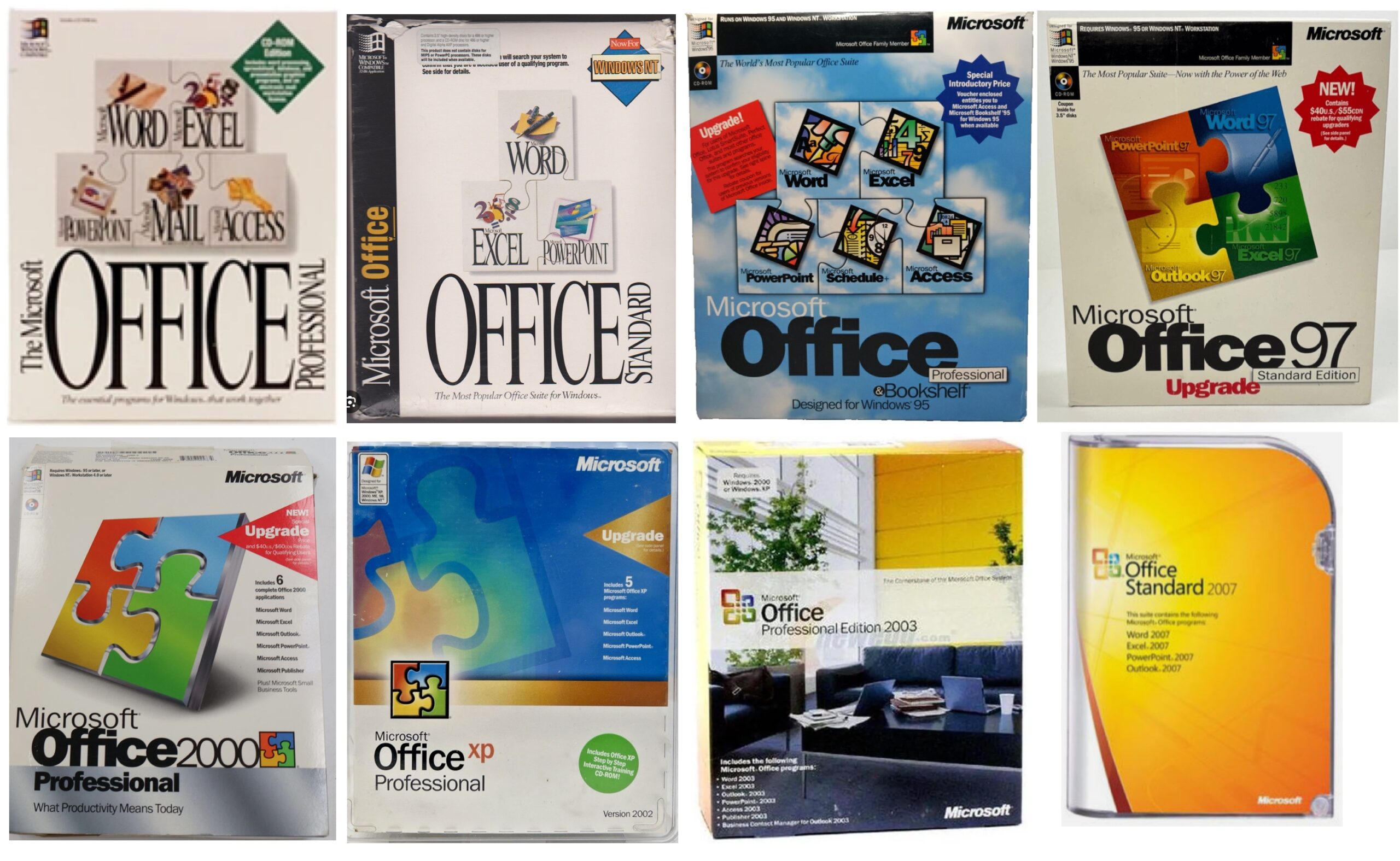
But according to Sinofsky, the real reason was rarely a designer wanting something fresh to put on a slide. It was retail sales, and later, something a lot messier (hint: enterprise contracts).
Microsoft really did rebrand Office every 24-36 months
Sinofsky’s quote-reposted the post from Frank Bach, a former staff product designer at Instagram, who wrote about finally getting the header logo unstuck after being told for years it couldn’t move.
The former Microsoft executive mentioned his own Office history, and the replies that followed turned into a rare public account explaining, on the record, why his old employer kept changing the face of its most recognizable product every couple of years.
Office94 and Office96 show how deliberate the cadence was
In Sinofsky’s Hardcore Software newsletter about the Office94 and Office96 releases, he mentions Microsoft planned two major Office releases about 12 months apart, timed around the still-unfinished Windows 95, then known internally by its codename, Chicago. Office94 was supposed to sync with Chicago’s launch. Office96 would follow a year later.
Sinofsky describes Office94 as partly a “strategy tax,” a release Microsoft needed to ship mostly to prove Office could function as its own product organization, instead of being just an accessory to Windows. Only about 15 percent of the relevant engineering resources went to Office94. The other 85 percent were building Office96.
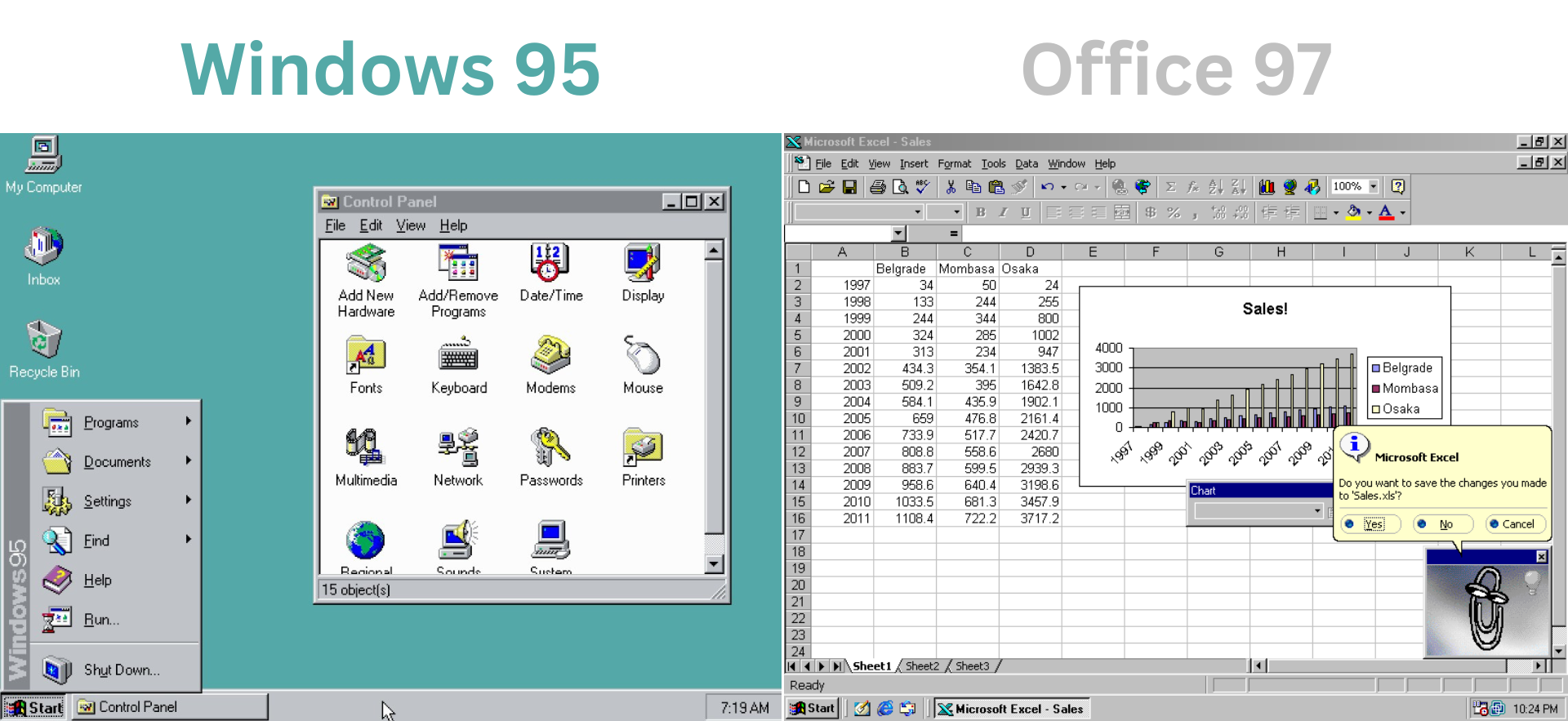
Microsoft marketed the two hero products cleverly too. The company emphasized the dedicated Chicago effort if anyone talked to the Windows team. To the marketing or the rest of the applications division, it was the 85 percent going to Office96 that got the spotlight. Two different pitches, and Sinofsky admits as much himself: “See what was done there? Everyone got something.”
Microsoft wanted Office to feel like an annual product
Sinofsky says that the year-based naming was from a push inside Microsoft leadership to move Office toward an annuity relationship with customers, borrowed loosely from how car companies use model years to make last year’s vehicle feel outdated. Office 4.x ended up being the final version-numbered release before Microsoft switched to year-based names.

However, Microsoft hadn’t built the infrastructure to support that idea yet (Classic Microsoft!). There was no reliable way to distribute software that fast, and no subscription billing system waiting in the wings. What Redmond did have was a plan to make people feel like their copy of Office was aging, whether or not anything functionally important had changed.
Why Microsoft kept making Office look new?
“Until about 2000 the primary driver was retail sales and a big portion of that were people upgrading to a new version. The branding was a key element of point of sale and print-based marketing, ” said Sinofsky
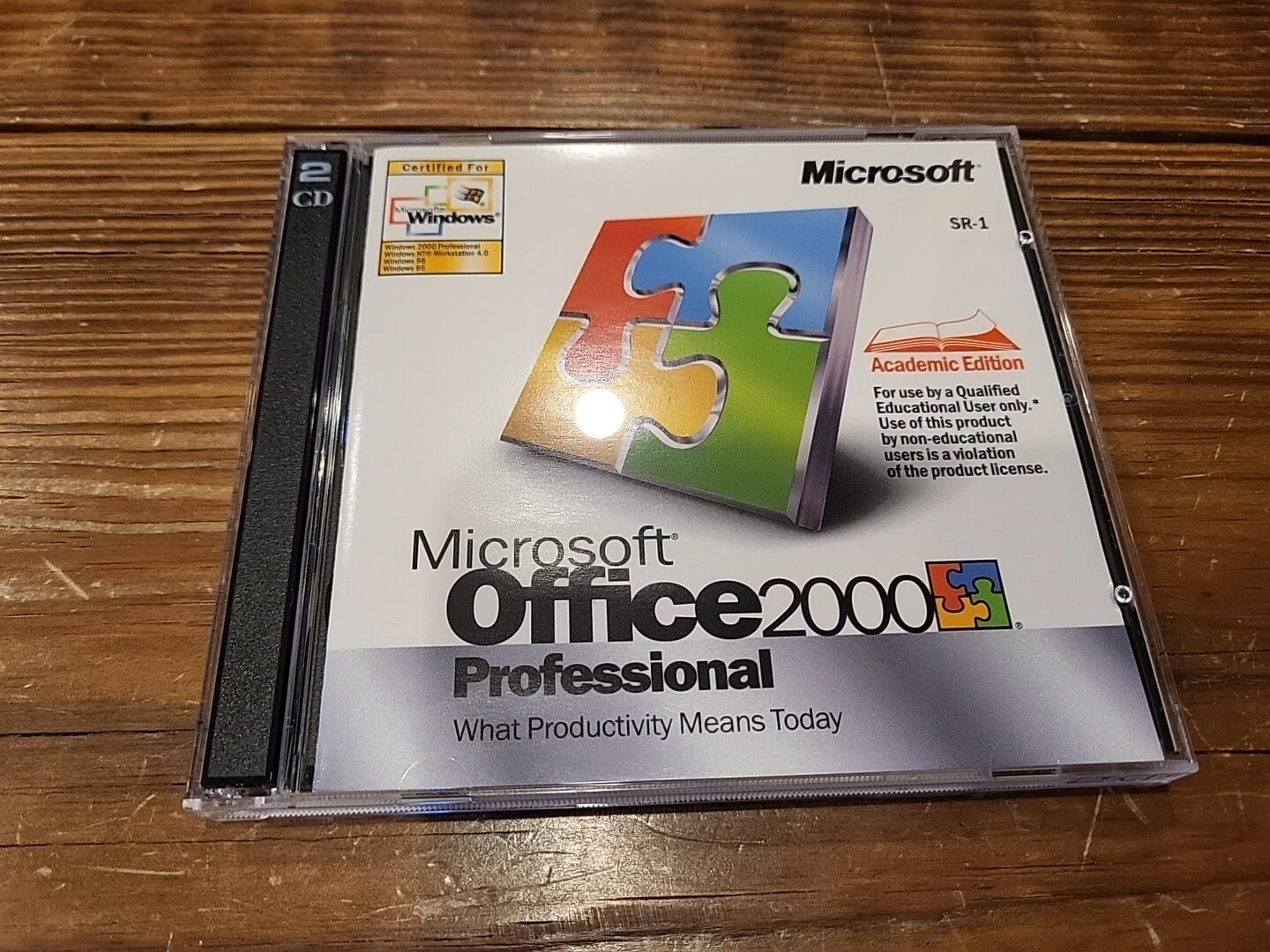
Microsoft’s sales problem back then looked very different from today’s. Office wasn’t quietly updating in the background. Someone had to walk into a store, notice a new box on the shelf, and decide it was worth paying for.
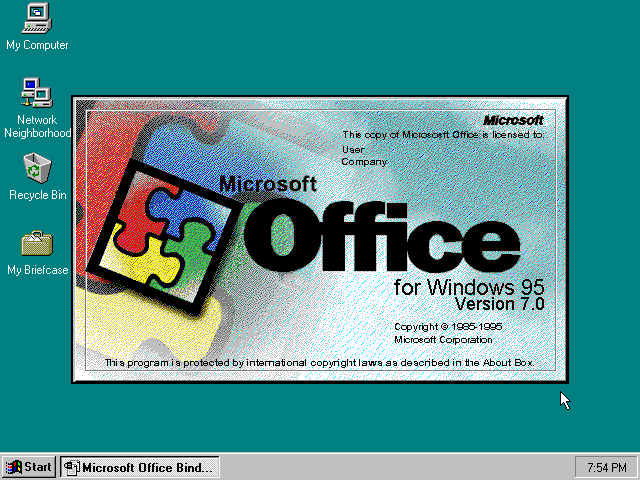
A new icon and a new name gave Microsoft something to put on that box, in magazine ads, and on the shelf talker beside it. Without a visible change, there was little reason for anyone to believe the new version was worth buying.
Enterprise customers made the problem worse
For Microsoft, retail was the easy part. Sinofsky explains that as the company’s enterprise business grew, large customers signed roughly three-year agreements that gave them the right to deploy whatever Office release shipped during that term.
If a company didn’t bother deploying the new release, it started to feel like it hadn’t gotten its money’s worth. But deploying a new release across a whole company is an expensive and time-consuming affair, and businesses weren’t thrilled about retraining thousands of employees on a slightly different Excel every year.
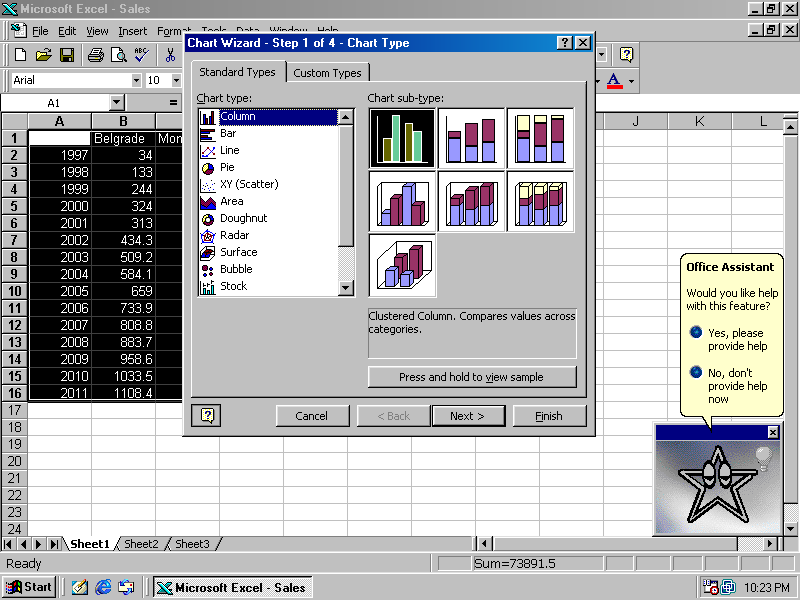
Microsoft needed Office to look new often enough that customers felt they were getting something for their money, but not so often that deploying it became a burden.
Interestingly, Office94 kept the same .DOC and .XLS formats as the prior release, partly because building a new one took time Microsoft didn’t have, and partly because a shared format created its own kind of lock-in. Everyone needed the same version of Word to reliably open everyone else’s documents, so upgrading wasn’t just a personal decision. Thank goodness for that discretion!
Microsoft eventually stopped selling Office the old way
Today, Microsoft 365 does the opposite of what a 24-month rebrand cycle was built for. Instead of one visible jump every couple of years, subscribers get continuous feature and security updates with no separate box, or new icon, and no reason to wait for a “new” version because there technically isn’t one.
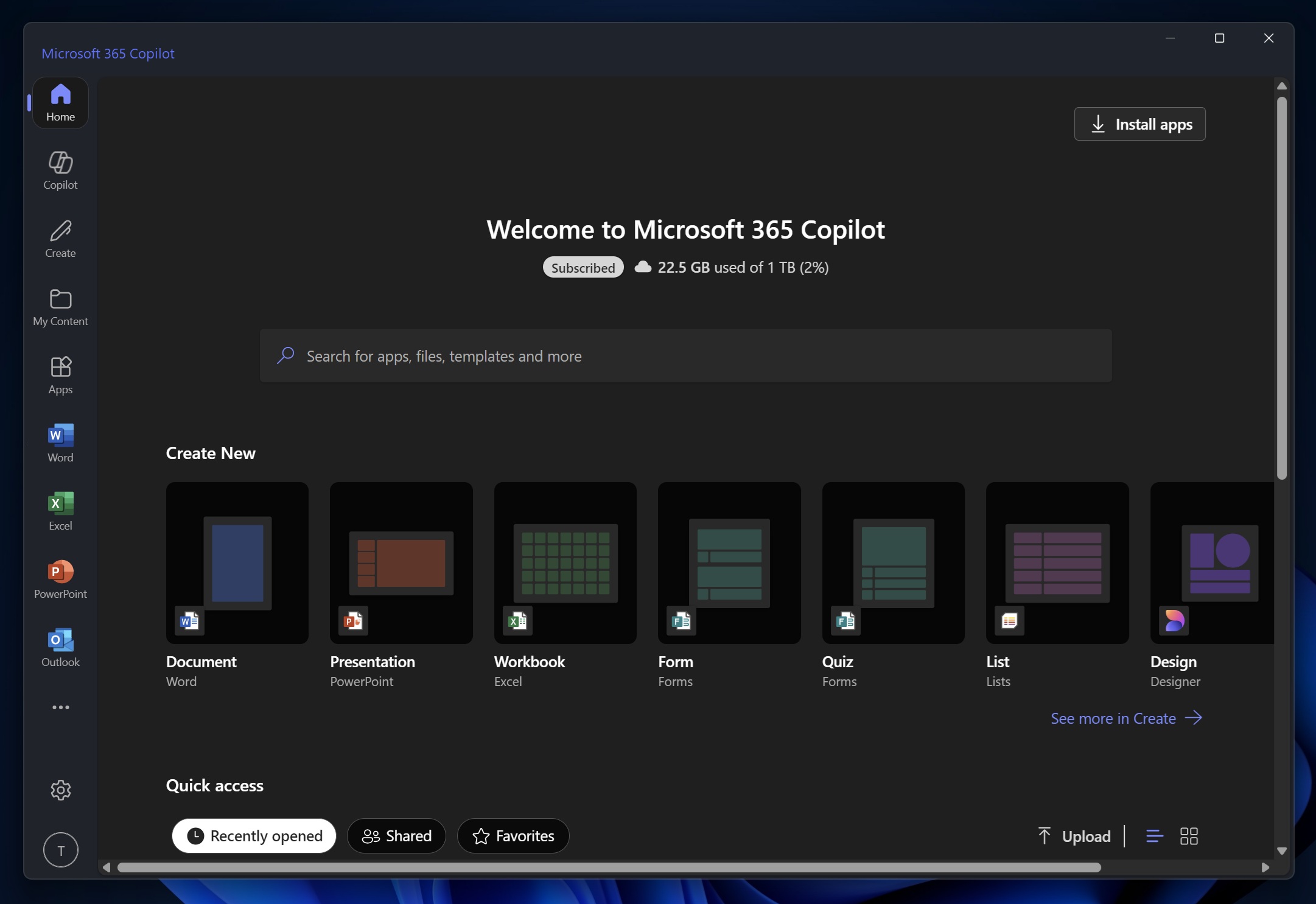
And Microsoft blew it with app names. The Microsoft 365 app went from Office, to Office 365, to Microsoft 365, and then got renamed again to Microsoft 365 Copilot last year. The urge to rename things whenever Microsoft needs people to notice something new stuck around. It switched targets from selling boxed upgrades to selling the idea that Copilot is everywhere now.
Sinofsky makes it clear that these unwarranted branding attempts weren’t just cosmetic. It was doing sales work at a time when software distribution, pricing, and upgrades all worked differently than they do now, back when a logo on a box had to convince someone their old software wasn’t good enough anymore.
Instagram getting a new header might look like a tiny decision by comparison. But Sinofsky’s reply is a reminder that a company the size of Microsoft used to treat a rebrand as a business lever. Now, the software giant doesn’t need to rebrand Office every 24 months. With a subscription, the upgrade cycle became the product.