

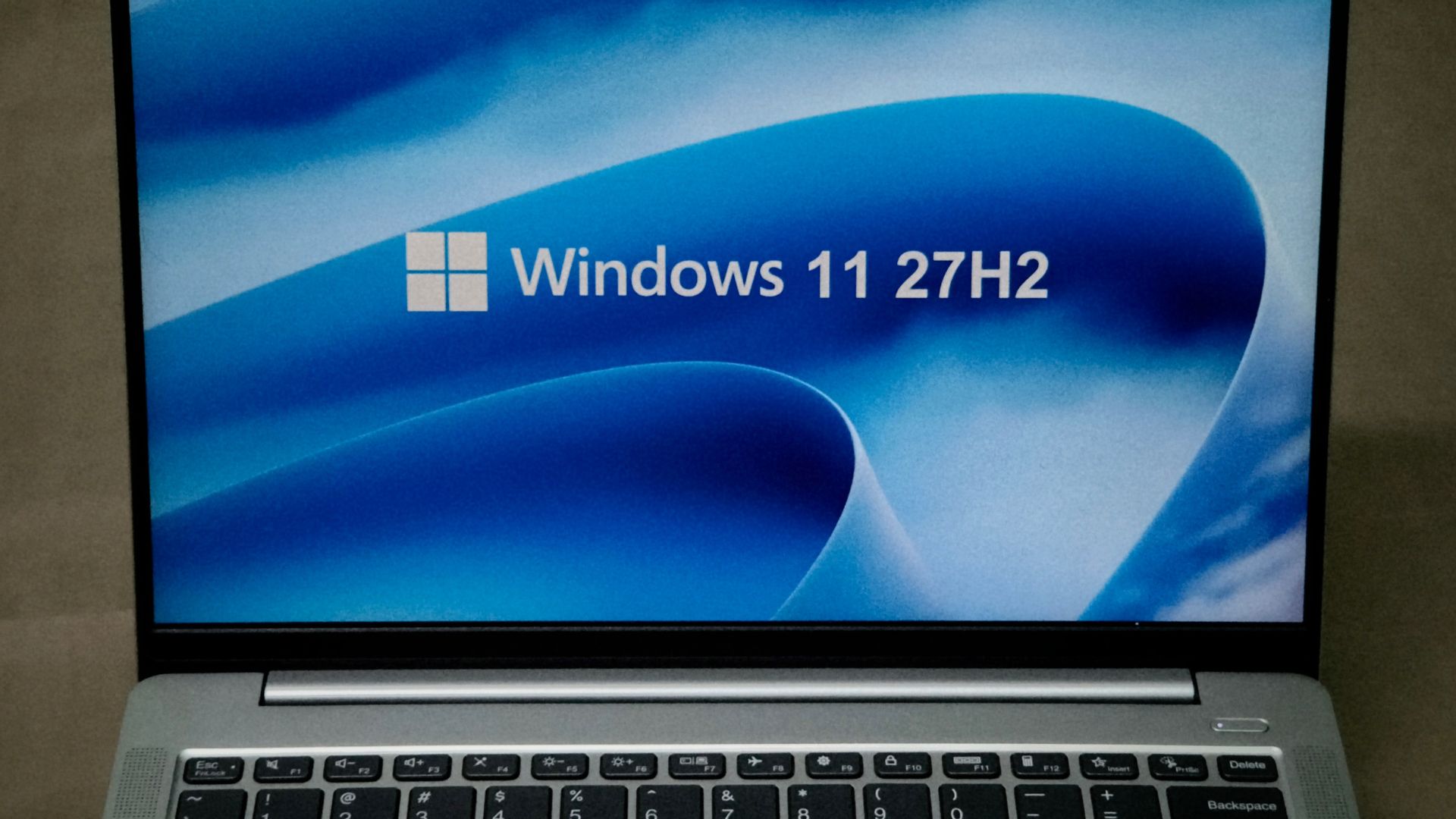
Microsoft hasn’t spilled the beans about Windows 11 27H2 yet, but a “Windows 11, version 27H2 or later” label has already turned up in the Group Policy files of the newest preview build. And unlike Windows 11 26H2, which flipped on features your PC already had, 27H2 is expected to be a full operating system upgrade, the first for everyone since 24H2 in 2024.
As of now, Windows 11 is split into two versions that can’t update to each other. New Snapdragon X2 laptops come with 26H1, which is built on a newer Windows core, while every other PC is on 26H2, which reuses the core from 2024 (also called Germanium). We expect 27H2 to bring them onto one version, and that’s why your PC could be in for its biggest Windows update in three years.
Windows 11 27H2 has appeared in Microsoft’s Administrative Templates
Xeno (@XenoPanther), a Windows sleuth who once dug up Microsoft’s internal StagingTool for hidden features, spotted the reference on November 14 and posted it on X, saying “This could be our first mention of Windows 11 27H2 inside Windows.” The attached screenshot shows Windows.adml inside the PolicyDefinitions\en-US folder of Build 29708, the Experimental (Future Platforms) preview that Microsoft released on November 13.
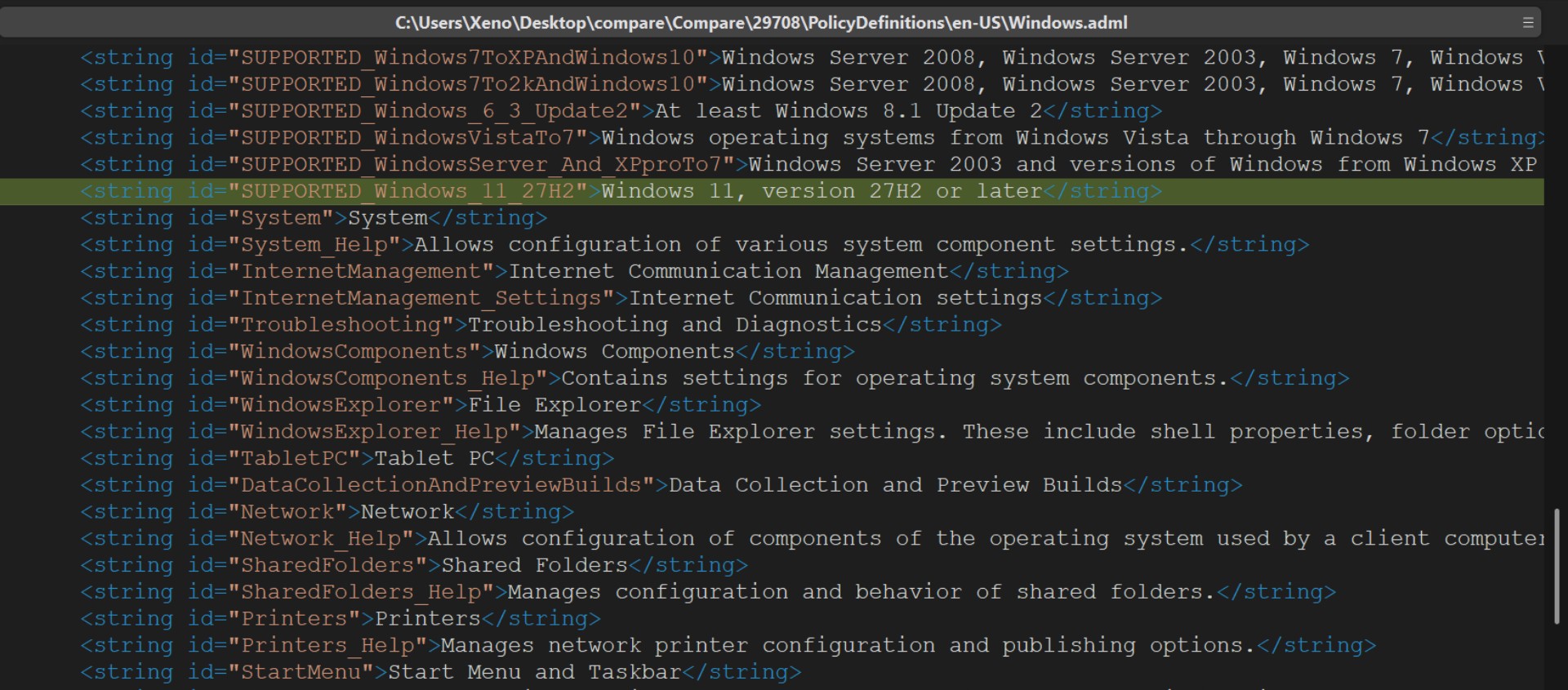
In case you didn’t know, Group Policy settings are defined in language-neutral .admx files, while .adml files carry the language-specific text and are stored in folders like en-US.
Windows.adml holds the text for windows.admx, the Windows base file that other policy files refer to for their “Supported on” label, which tells admins the minimum Windows version a policy needs. So, the new SUPPORTED_Windows_11_27H2 entry appears next to old labels like “At least Windows 8.1 Update 2”.
To be clear, the screenshot doesn’t show which policy uses the new label. Xeno also pointed out that 26H1 and 26H2 are missing from the file, so it could be a typo, and Microsoft says Future Platforms builds are not aligned to any retail release. Either way, the string is an early marker, and it doesn’t prove that 27H2 is anywhere near finished.
Windows 11 27H2 could finally replace the platform behind 24H2
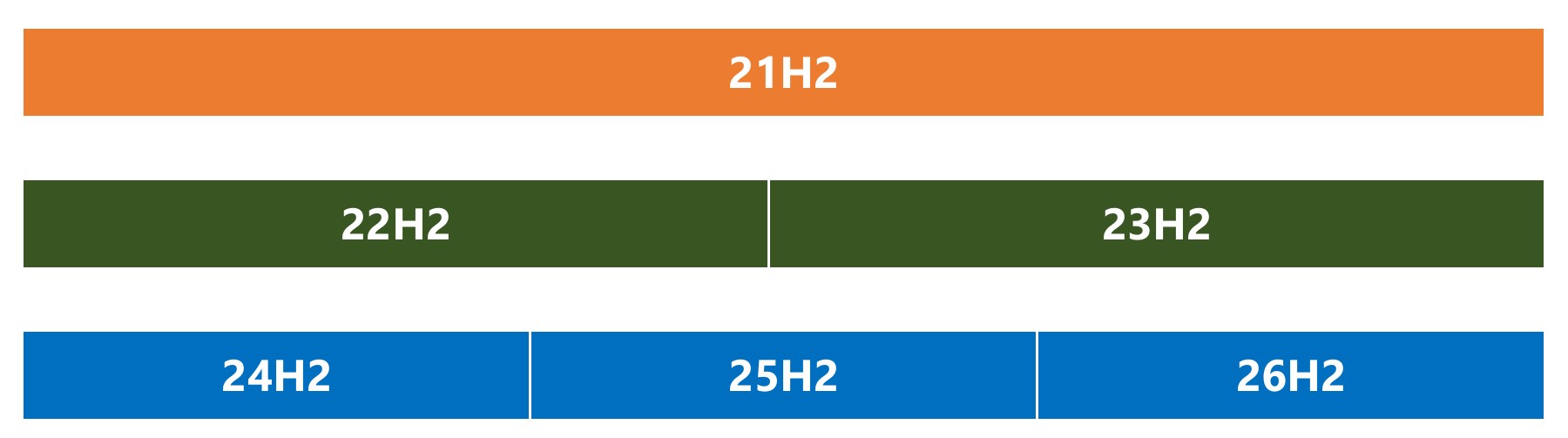
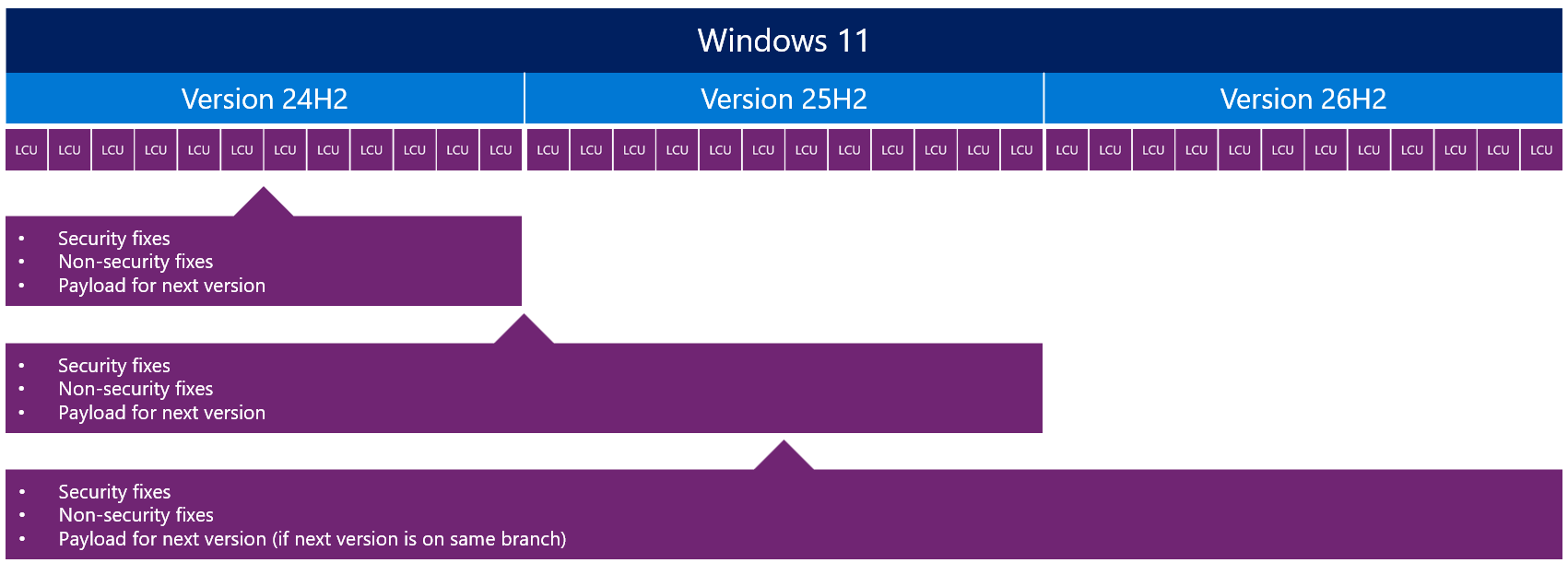
Windows 11 26H2, which began rolling out on September 29, didn’t change the core of Windows. Microsoft confirmed in August that 24H2, 25H2 and 26H2 “use a shared servicing branch,” so the new features were already on your PC through monthly updates.
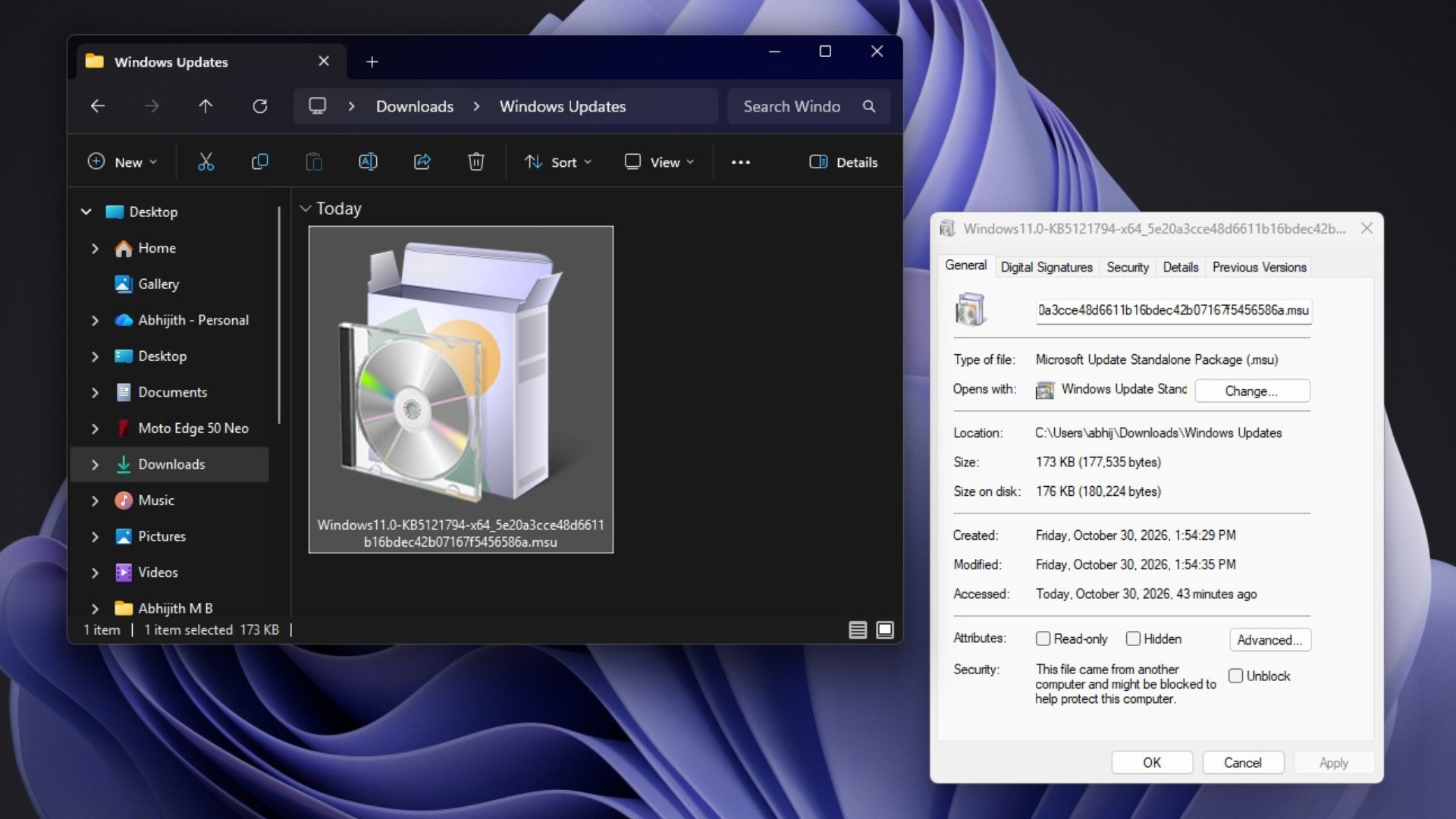
Our download of the 26H2 enablement package was just 173KB (smaller than most photos on your phone), and Microsoft’s John Cable said installing it is “similar to a monthly update.”
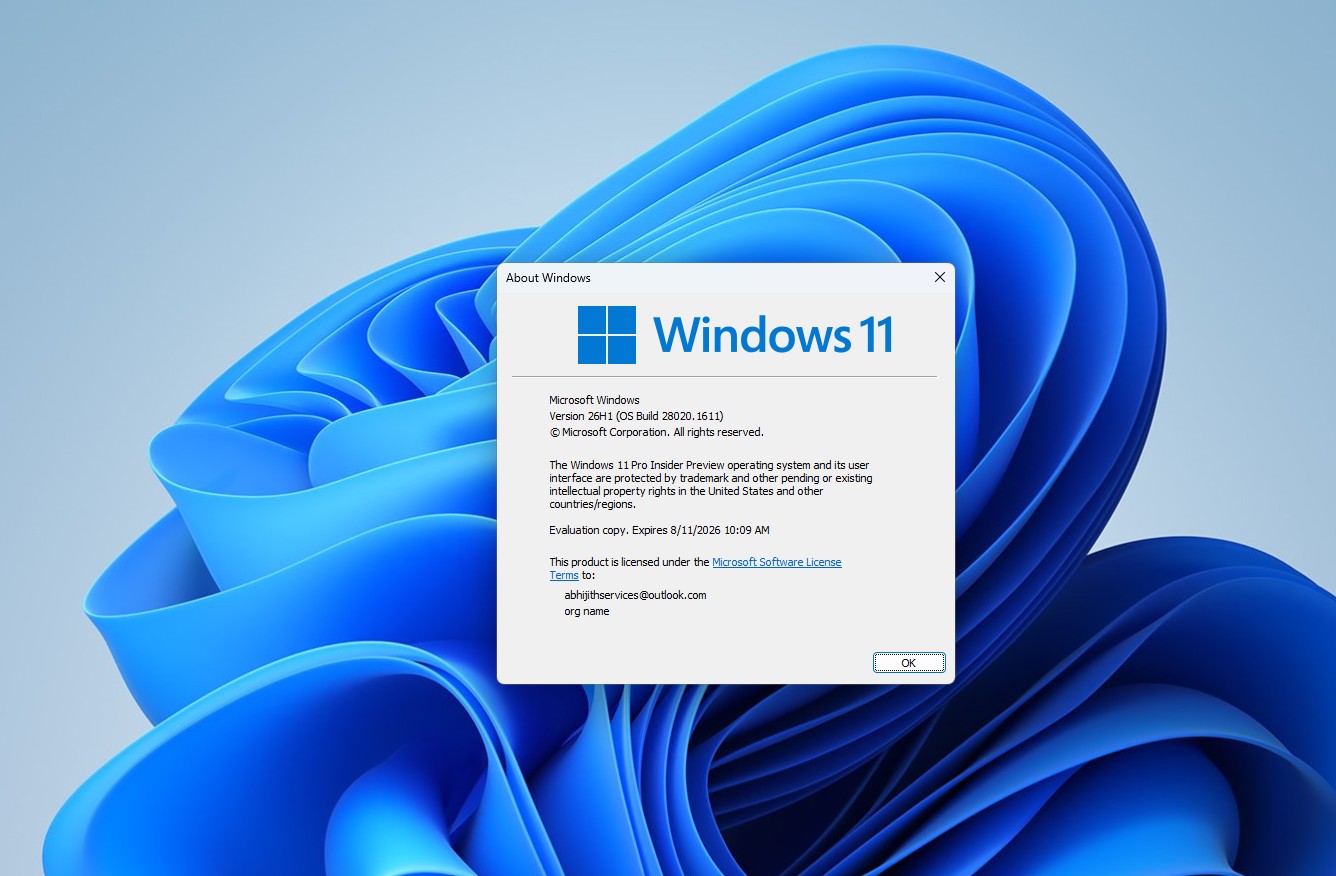
However, Windows 11 26H1 chartered a new course. It ships only on select new PCs, starting with Snapdragon X2 laptops, and Microsoft says it is “based on a different Windows core” than 24H2, 25H2 and 26H2. Because of that, 26H1 PCs can’t upgrade to 26H2, and Microsoft only promises that “These devices will have a path to update in a future Windows release.”
In case you’re wondering, 26H1 is the higher of the two cores, so Microsoft can’t simply push those Arm laptops back to 26H2.
Back in February, we learned that Microsoft plans to move both 26H1 and 26H2 PCs to 27H2 in the second half of 2027. Merging two Windows cores isn’t possible with an enablement package, which is why 27H2 is expected to be a full OS swap like 24H2, where Windows replaces its core files and keeps your apps and data. However, Microsoft hasn’t officially named 27H2 as that release yet.
What Windows 11 27H2 means for your PC, compatibility and Windows 12
As 27H2 is a full upgrade, expect a multi-gigabyte download and a much longer install, similar to the 6.5GB update PCs still on 23H2 need to reach 26H2.
Compatibility is what worries me. Microsoft says moving between versions on one branch “greatly reduces the risk of application or hardware compatibility issues,” and 27H2 won’t have that luxury. The last platform swap, 24H2, had compatibility holds for Intel Smart Sound Technology drivers, wallpaper apps, and even the ever-so-popular Asphalt 8, so I wouldn’t be surprised to see Microsoft roll out 27H2 in waves.
As for hardware, there’s no sign of new minimum requirements, so Microsoft’s current Windows 11 requirements still apply. The one exception we know of is the Snapdragon 850, as Microsoft’s lifecycle page says 26H2 is the last version to support it.
Does 27H2 rule out Windows 12 in 2027? Not really. It shows Windows 11 development continues, but Microsoft also shipped Windows 10 21H2 in November 2021, about six weeks after Windows 11 launched. Anyway, as things stand, the chances of Windows 12 in 2027 are close to zero, and it would be unwise of Microsoft to launch a new OS when their current one still has a bad rep for all its nagging issues.
Also, just like 26H2, don’t expect a pile of exclusive features for 27H2, since Microsoft no longer saves them for version upgrades. And if you’re after a fresh look, the new Windows 11 wallpapers for 2027 replacing Bloom are expected early next year, long before 27H2.
Windows 11 26H2 mostly reset the support clock. 27H2 could be the release that puts every Windows 11 PC back on one core, and after 24H2’s rocky launch, I hope Microsoft takes its sweet time testing it.