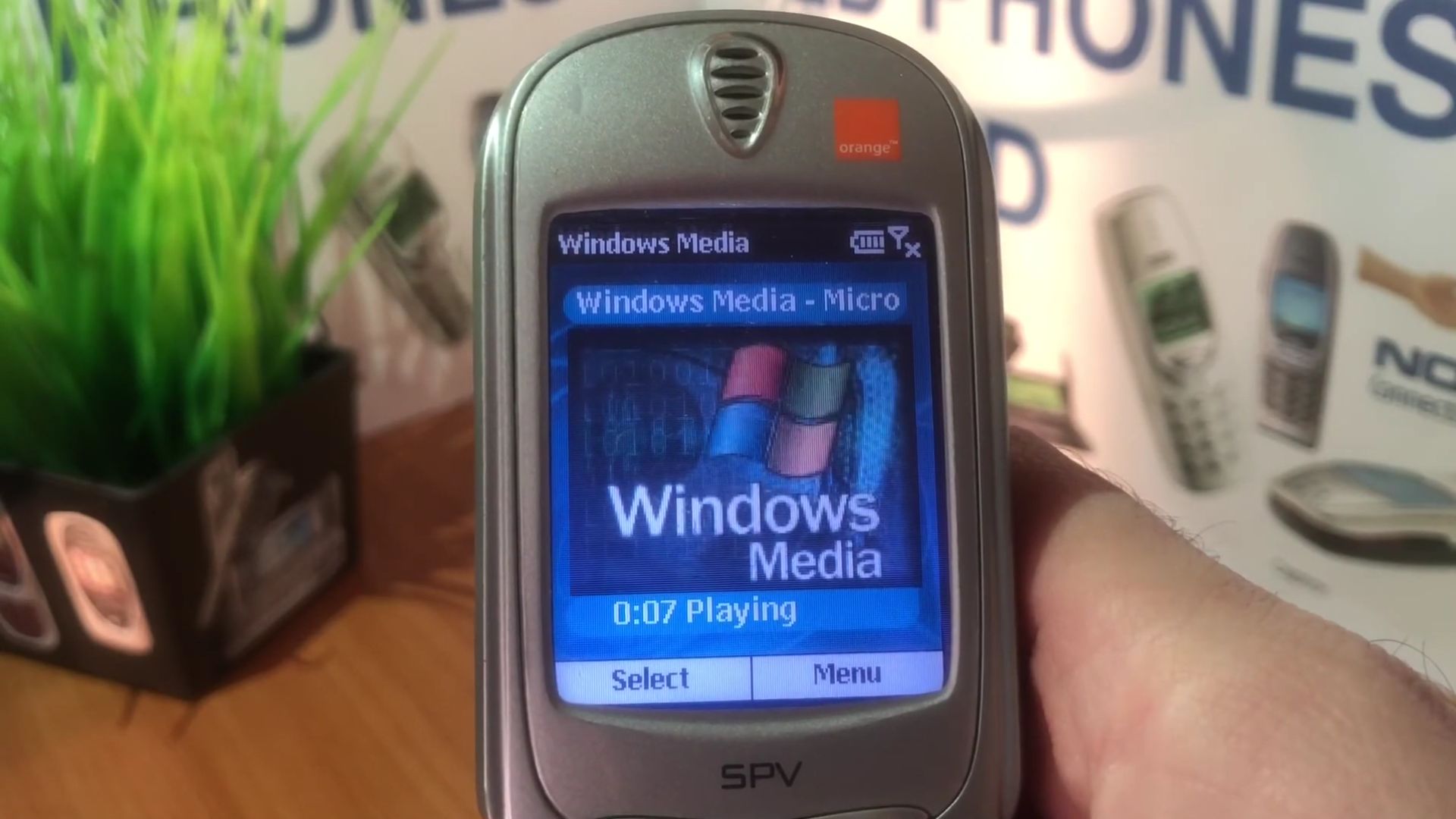
Microsoft had quite a bit of momentum in the early days of mobile software, before Android and Apple dominated the scene. Most – if not all – of its competitors in the day have all but disappeared – Palm (after multiple takeovers ended up as part of HP), RIM BlackBerry (now a software company), Symbian (born out of PSION, a cross-party effort to build a mobile OS).
Since the late 1990s, Windows CE was built as a highly modular operating system that could run on multiple hardware architectures and could be heavily customized by OEMs building very different types of hardware. The first handhelds built with CE were like miniature laptops, flip-top devices with a screen showing a familiar-looking Windows environment, Start menu and all.
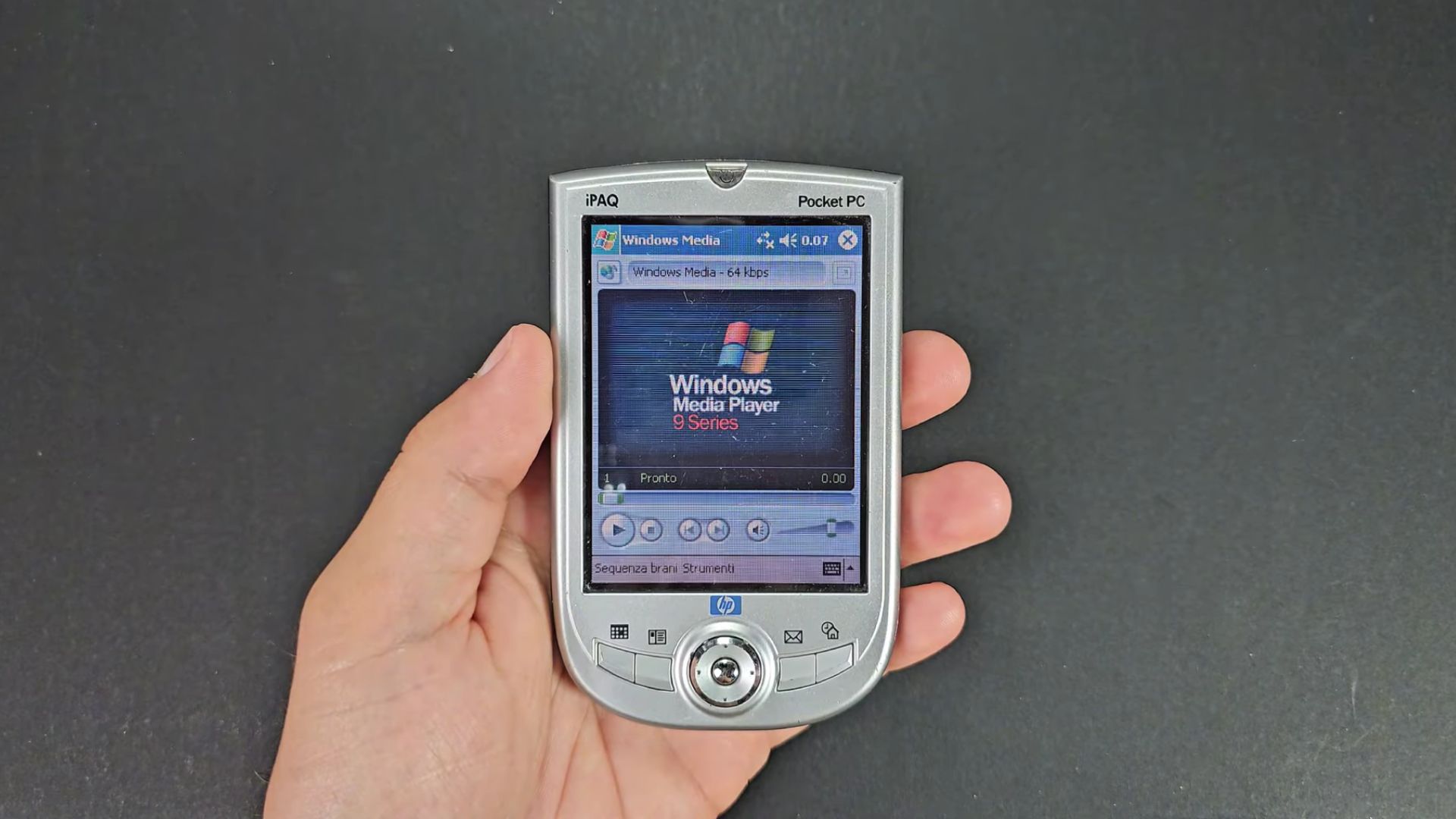
Examples of what CE (or WinCE if you like to poke fun at it) was used for varied from in-car stuff like the 1998 AutoPC, to the Sega Dreamcast console, all the way up to headless embedded control systems and software running on mobile phones.
The original promise with CE was really to appeal to the huge number of Windows developers, who could use the same Visual Studio dev tools and similar APIs to write software for both a PC and a mobile device.
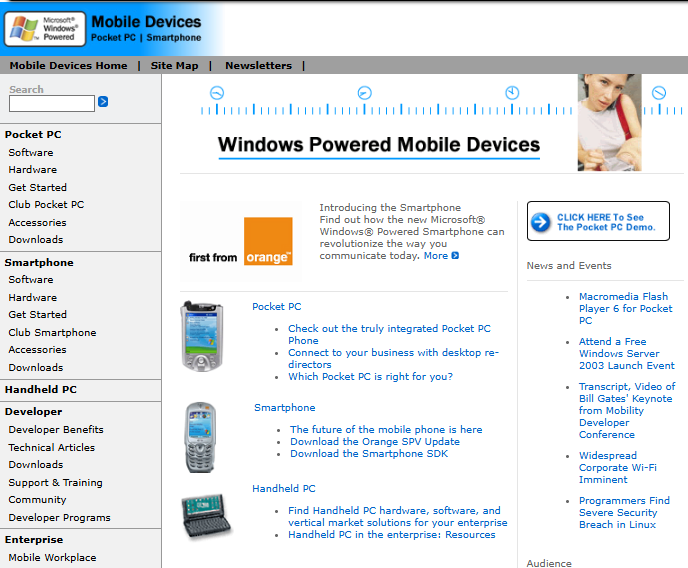
In the early 2000s, most people would get their mobile phone from the network they chose, and it was often subsidized and controlled by that network. Microsoft had to deal with a minefield of complexity when it came to releasing CE-based mobile devices that would be supported by different networks all over the world, with devices produced by a small number of OEMs like HTC, being branded and customized by a variety of networks who got to control how the software on their phone behaved. They also had to sign off updates, meaning if you were unlucky, you could have a device that the carrier had stopped supporting, even if the software could have been updated to later versions if they had allowed.
Microsoft’s first Smartphone
Microsoft dallied with writing software for other phones previously – like the short-lived effort to put Internet Explorer on Sony phones in 2000…
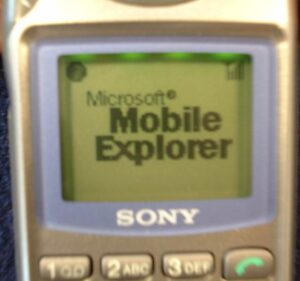
… but the real efforts went into writing a whole new phone OS.
Five years before Apple unveiled the iPhone, Microsoft and the French/UK comms network Orange launched the “Orange SPV” – a new device running Smartphone 2002 software (on Windows CE). In many ways it was really ahead of the rest of the industry, especially when it came to integrating with email, calendar and contacts as provided by Microsoft’s Exchange Server that was becoming the default business email system.
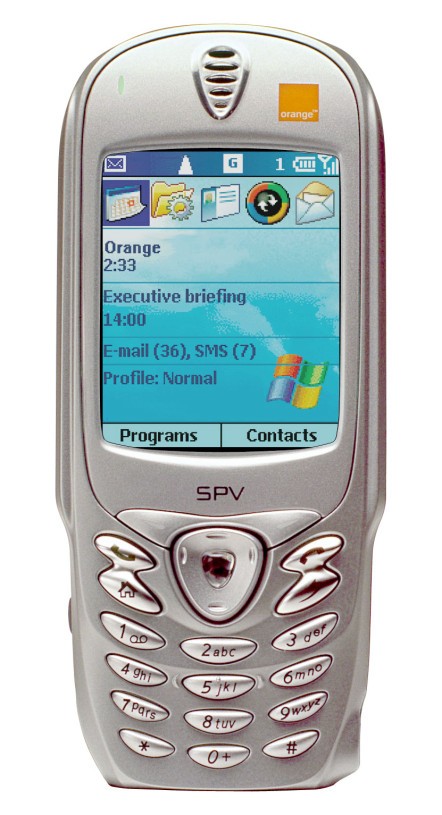
Take a trip down memory lane with some details of the SPV device (an HTC “Canary”, running “Stinger” software) and the optimism of the launch event. They loved codenames then… Stinger was, in the military sense, a surface-to-air missile particularly aimed to taking down planes – so was effective against pilots (remember the PalmPilot?).
Before the “Smartphone”, the first-gen “Handheld PC” largely faded away to be replaced by “Pocket PC” as the main Windows CE mobile device. That was a device category that sat in the PDA world, originally dominated by Palm and popularized for Windows fans with the likes of the Compaq iPaq, the first Pocket PC.
Six months before the SPV launch, Microsoft and another UK network, O2, came out with the O2 XDA – a Pocket PC that had built-in wireless comms and could be used as a phone too.
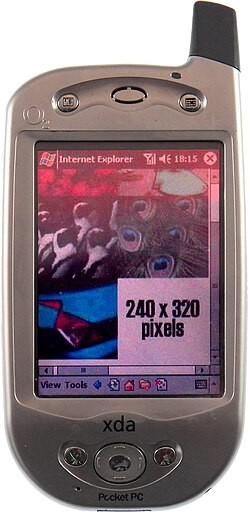
It even used “Pocket PC Phone Edition” software. The community that built around tweaking and hacking that device, XDA Developers, is still around today though has long since moved on from Windows CE…
Both the SPV and XDA were capable and arguably ahead of the rest of the industry at the time. Though it’s debatable how many people needed to run Excel on a device in their pocket, if you knew how to use a PC then you’d have an idea of how to use the XDA with its stylus. They were really limited in mobile network speed, though – this is before the dawn of 3G, so connection speeds via GPRS were measured in a few kilobits/sec. The dream of video messaging and streaming movies was still very much in the future.
The Windows Mobile “candybar” smartphones had evolved and pretty much peaked with the HTC Typhoon, aka Orange SPV C500, by 2005. Bigger devices, akin to the XDA, with larger screens and faster connectivity – including Wi-Fi – were starting to look like what people really wanted, especially business customers.
Enter the Dragon, Apple’s “Project Purple”
When the Apple iPhone (“Purple”) came along in 2007, Microsoft was still plugging away with evolutions of Windows CE based systems, which had gotten larger and heavier over the previous years.
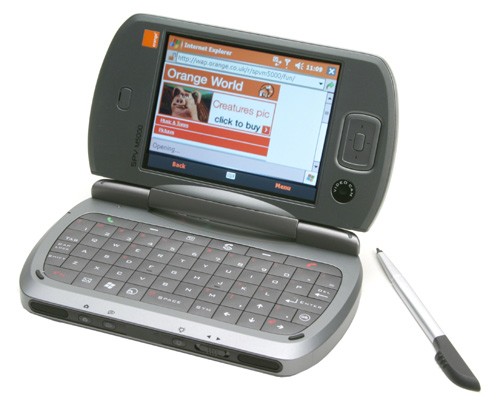
Devices like the Orange SPV M5000 – based on the HTC Universal hardware – took the Pocket PC concept as far as it could go, with a folding/twisting clamshell design, a resistive touchscreen and 3G/UMTS capabilities with a forward facing camera so it could be used for video calling. It was heavy, expensive and limited – the quality of video calling over 3G was nowhere near good enough to be compelling and battery life was poor.
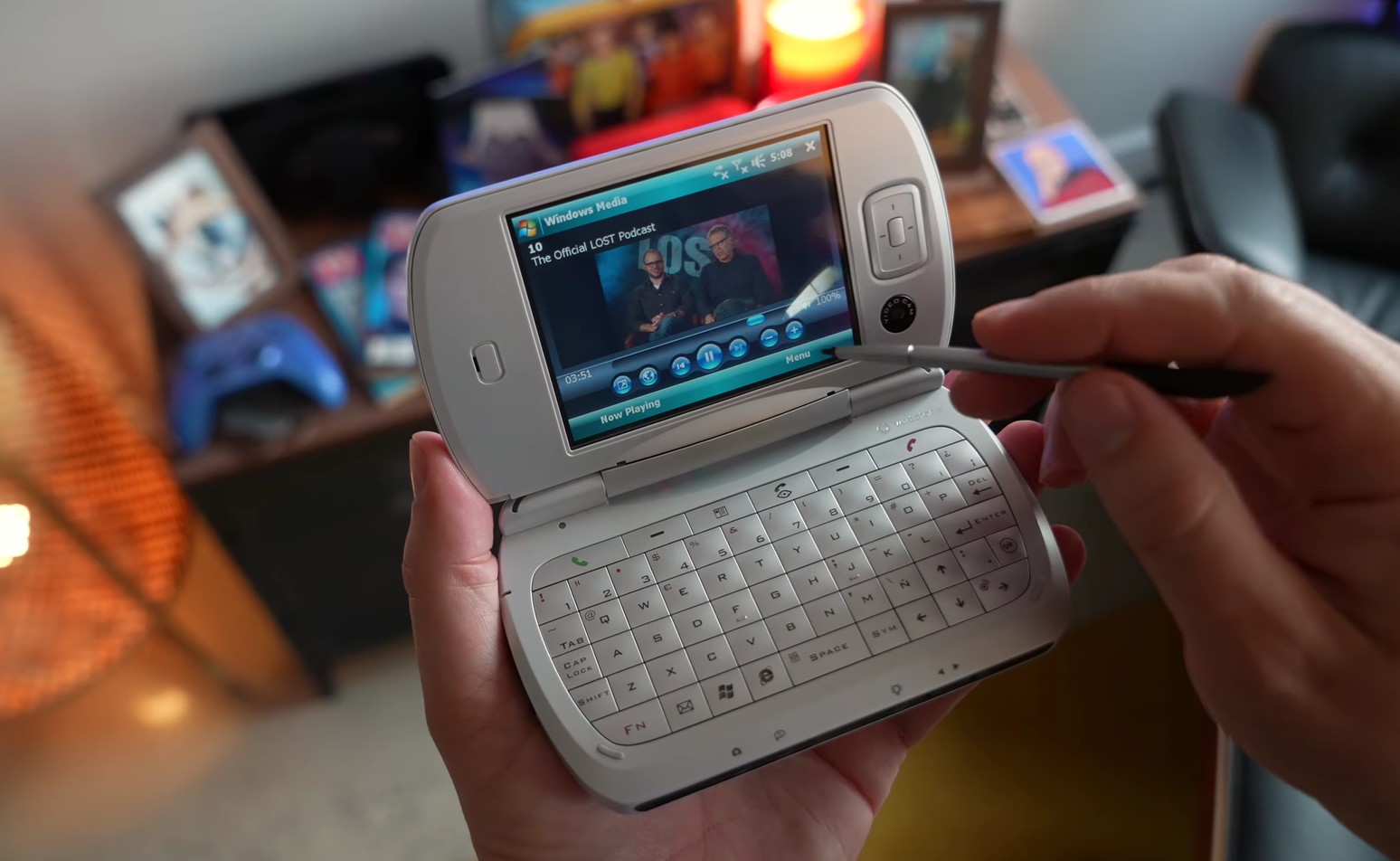
Weird-looking hybrid devices which looked like candybar phones or full-screen PDAs but with slide-out keyboards started appearing (see HTC S710 or HTC Herald). The software of early 2007 was Windows Mobile 6.0, codenamed “Crossbow”, and their primary target was the heavily used business email device, RIM’s BlackBerry (or “crackberry” as people called it). Almost entirely coincidentally, Crossbow is a brand of weed-killer known for its effective dispatching of… blackberries…
Steve Ballmer famously scoffed at the original iPhone because it didn’t have a keyboard. As it turns out, the schism over what to do with the phone business was a big contributor to Steve leaving Microsoft.
The App Store for iPhone didn’t arrive until a year later, and even though it used a different set of tools and technologies from what existing devs were used to, the ease of distribution of apps and the early success of the v1 iPhone meant there was pent-up demand for apps.
The iPhone might have been revolutionary in design and operation, compared to every other phone that existed up to that point, but it was the App strategy that really hammered nails into the coffins of BlackBerry, Windows Mobile, Symbian and nearly everything else.
Windows Mobile evolved to 6.1, and eventually 6.5 before the whole thing was thrown out (along with the underlying Windows CE), to begin again with Microsoft’s counter to iPhone and Android, but years late – Windows Phone 7. We’ll come back to that next time.