





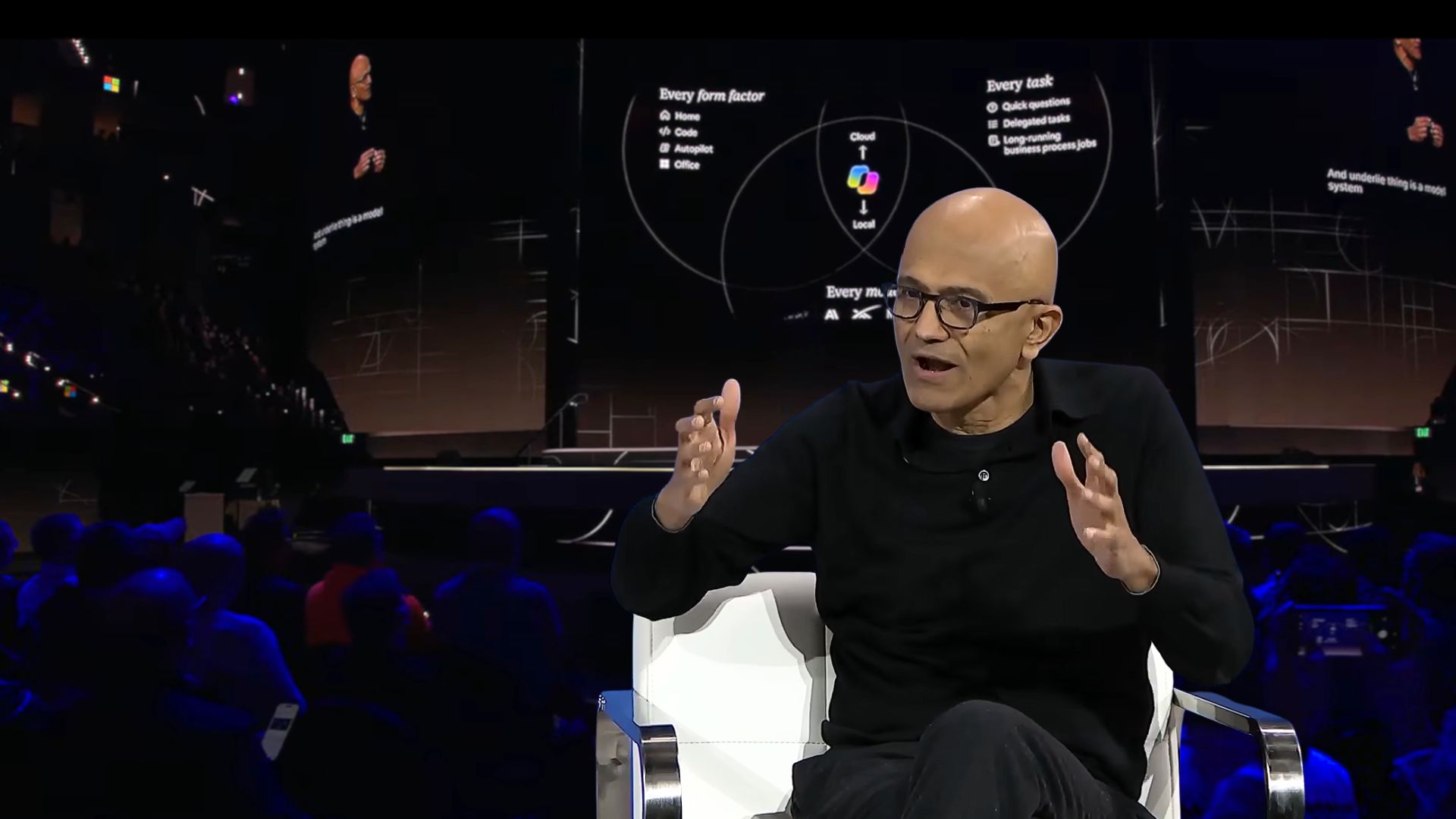
Microsoft CEO Satya Nadella says Microsoft’s in-house MAI models can trail OpenAI and Anthropic by three to six months, as long as they’re built with 5% to 20% of the computing power. At the New York Times DealBook Summit, he also revealed that Copilot already decides between OpenAI, Anthropic and Microsoft’s own models for each task, with most users leaving that choice on Auto.
While OpenAI and Anthropic fight over who has the smartest model, Nadella is bragging about whose model is cheaper. “Outcome per dollar is the frontier,” he wrote on X days later, pointing to seven new MAI models, a 2.8 trillion parameter base model and an in-house training system called Rocket. If you’ve only used ChatGPT or Claude, Microsoft’s alternatives are mostly tucked inside Copilot, GitHub and Foundry, where automatic model selection often decides when they run.
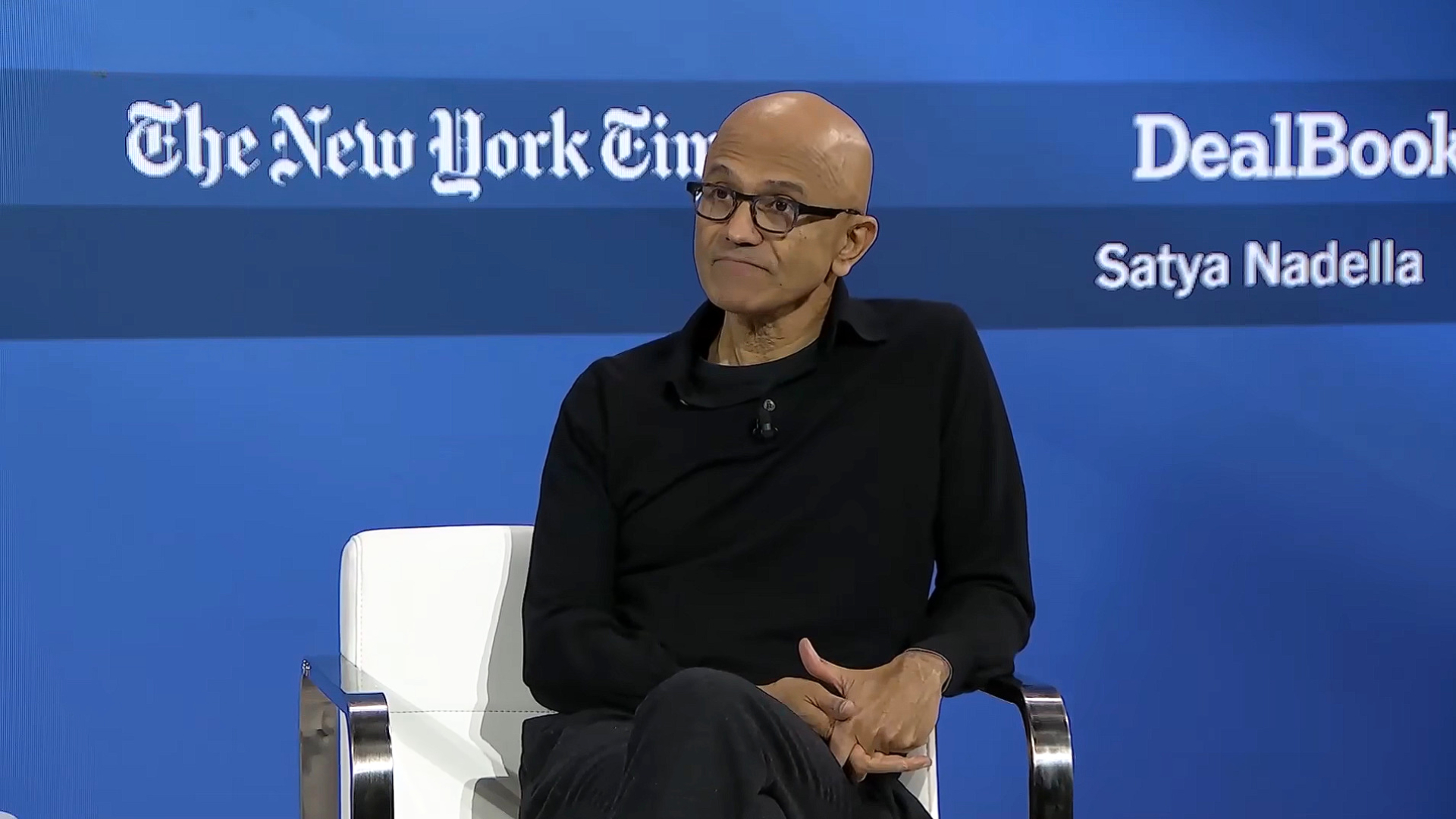
Satya Nadella says MAI models can trail the frontier because Microsoft already has one
Andrew Ross Sorkin asked Nadella whether the early OpenAI bet made Microsoft slow to build their own models. Well, it was Nadella’s decision and as expected, he called the partnership one of the things Microsoft got right, adding: “you could even say we got lucky,” since the commercial deal gives Microsoft royalty-free access to a frontier model until 2032.
“So that means I’m trying to be very compute flops efficient even in how we’re building MAI models,” Nadella said. “So therefore 3 months behind 6 months behind is a great place to be if you’re spending 5% 10% 20% of the same compute flops and then be even token efficient when it comes to deployment.”
I agree that Microsoft doesn’t need MAI to beat the newest GPT or Claude on launch day, because Copilot can call those models anyway. It needs a model that gets close while costing far less to train and far less to run. Of course, this is Nadella giving a range, and not a target for any specific MAI model.
The other advantage is where Microsoft trains them. “I’m not learning on some benchmark I’m learning in Microsoft 365 or in GitHub Copilot or in security Purview what have you,” Nadella said. This isn’t the first time Nadella highlighted the cost-to-performance ratio. Back in July, he wrote, “We are now seeing MAI models outperform general-purpose frontier models in many use-cases while using a fraction of the tokens.”
Even with $5 billion in Anthropic, Nadella sees models the way Azure sees chips: with Intel, AMD and Microsoft’s Cobalt (custom Arm chips for cloud-native workloads in Azure) running side by side. “We’ll have all the models that are popular at any given day,” he said, while Microsoft keeps “hill climbing” on its in-house model. Truth be told, I think this is a genius move.
You can watch Nadella’s full DealBook interview on YouTube.
Copilot chooses between OpenAI, Claude and MAI models, and most people let it pick
According to Nadella, people will come to Microsoft for Copilot because it offers chat, Cowork and Autopilot, and “all the models whether it be OpenAI, Claude or us.”
He argues that regular office work doesn’t need the smartest model anymore. “I don’t think you need the Navier-Stokes or the next big breakthrough sort of reasoning capability to do simple workflows,” he said. So, Copilot has what Nadella calls a decision engine, which asks, “for the task and for that trajectory should I use in fact OpenAI, Anthropic or MAI our own model.” He added that “most people just select auto and it just selects the right model.”
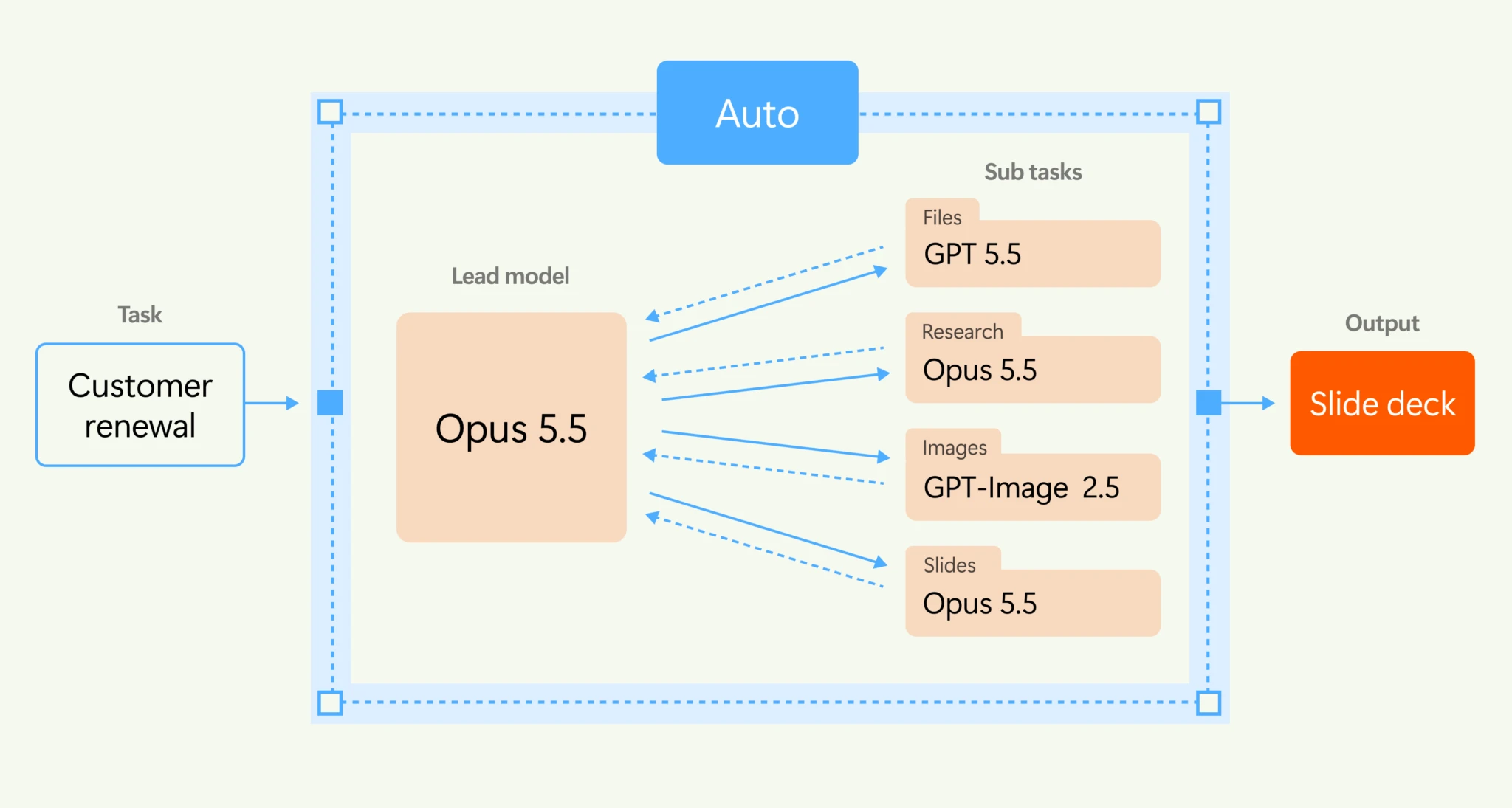
You would expect Microsoft to push their own models, but Nadella didn’t say Auto picks MAI most of the time, and the company doesn’t publish how often it does. The Copilot Cowork documentation that I found says Auto reads your first message, judges what kind of request it is, and picks from the models your organization allows. You can check the model badge on each response. The listed models are GPT, Claude and Grok, with no MAI, but the page adds that Microsoft “might deploy other AI models for Microsoft Copilot to use that are hosted and operated by Microsoft.”
Developers get a similar deal in GitHub Copilot, which I’m told many prefer. It lets you pick Claude, GPT or MAI models by hand, or let Copilot Fusion choose and combine them. Nadella said Fusion “outperforms claude,” and GitHub added MAI Code 2 to Fusion Standard on November 17. In another recent interview, Nadella said he wants Copilot to “have this router pick the models for the task”.
These are the seven MAI models Microsoft wants doing the cheaper work
Microsoft AI announced seven models at Ignite on November 17, and they aren’t the typical chatbots you’d open, like ChatGPT.
| Model | What it does | Where you’ll find it |
|---|---|---|
| MAI Code 2 | Complex coding, debugging, refactoring | GitHub Copilot |
| MAI Code 2 Flash | Quick fixes and routine coding | GitHub Copilot, Foundry (limited preview) |
| MAI Cyber 2 Flash | Finding and fixing security flaws | Microsoft security products (MDASH) |
| MAI Image 2.7 | Image generation and editing | Microsoft Foundry |
| MAI Realtime 1 | Live speech-to-speech | MAI Labs (sign-up) |
| Dragon Copilot Transcribe | Clinical transcription, built on MAI Transcribe 2 | Dragon Copilot |
| Decision 1.1 | Routing, classification, yes/no decisions | Foundry, OpenRouter, Vercel |
MAI Image 2.7 also has a cheaper Flash variant, while the Maia 200 in the Ignite post is an AI chip. MAI Thinking 1, the reasoning model from Build in June, isn’t part of this batch. Honestly, it’s pretty hard to keep up with all these models.
The company says MAI Code 2 “reaches 98% of the coding quality of GPT-6.1 Sol at about 40% of the price,” and against Claude Opus 5.5, “it reaches 96% performance for just 5% of the price.” These are seriously good numbers (if true, because these are Microsoft’s benchmarks).
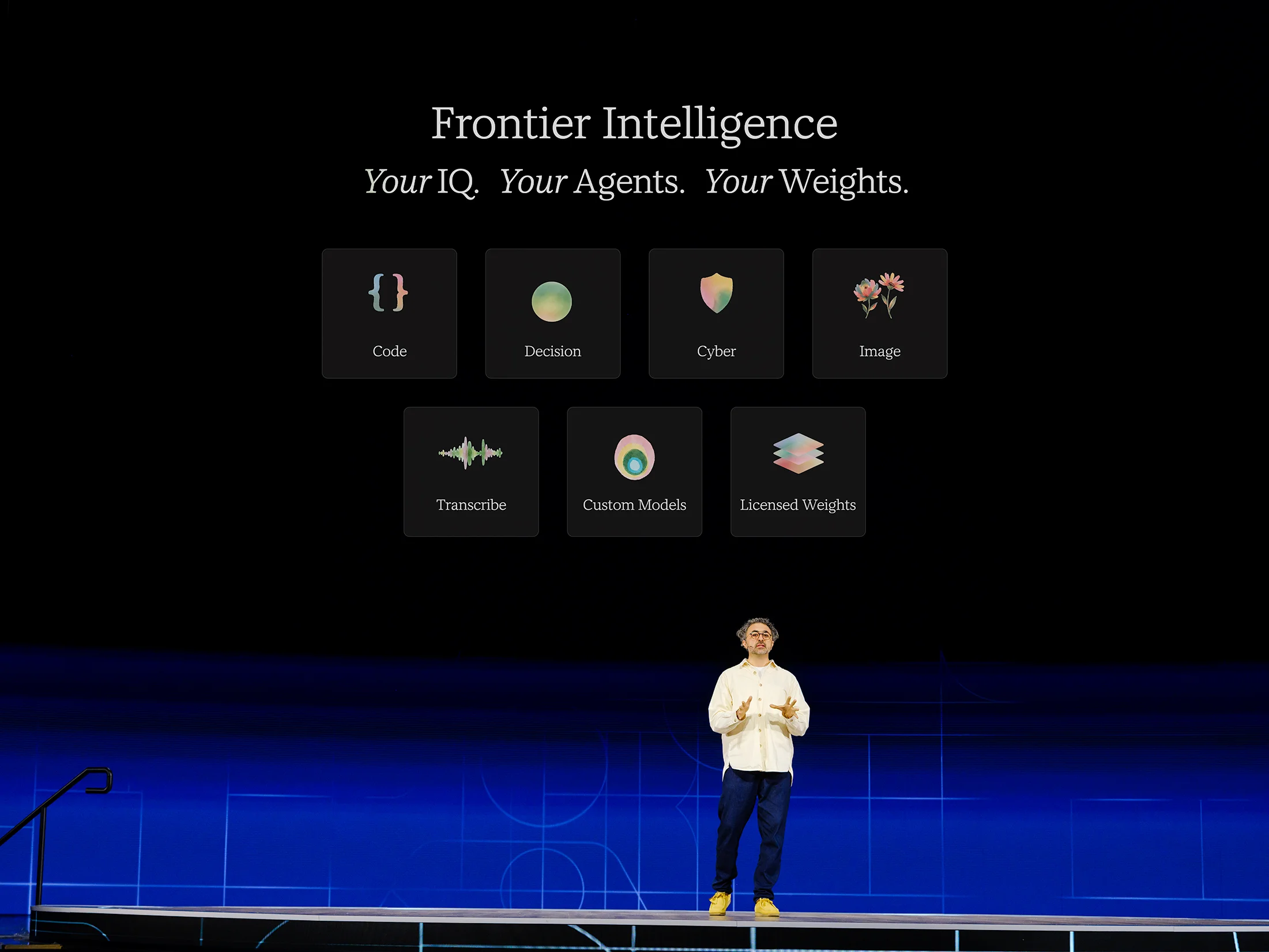
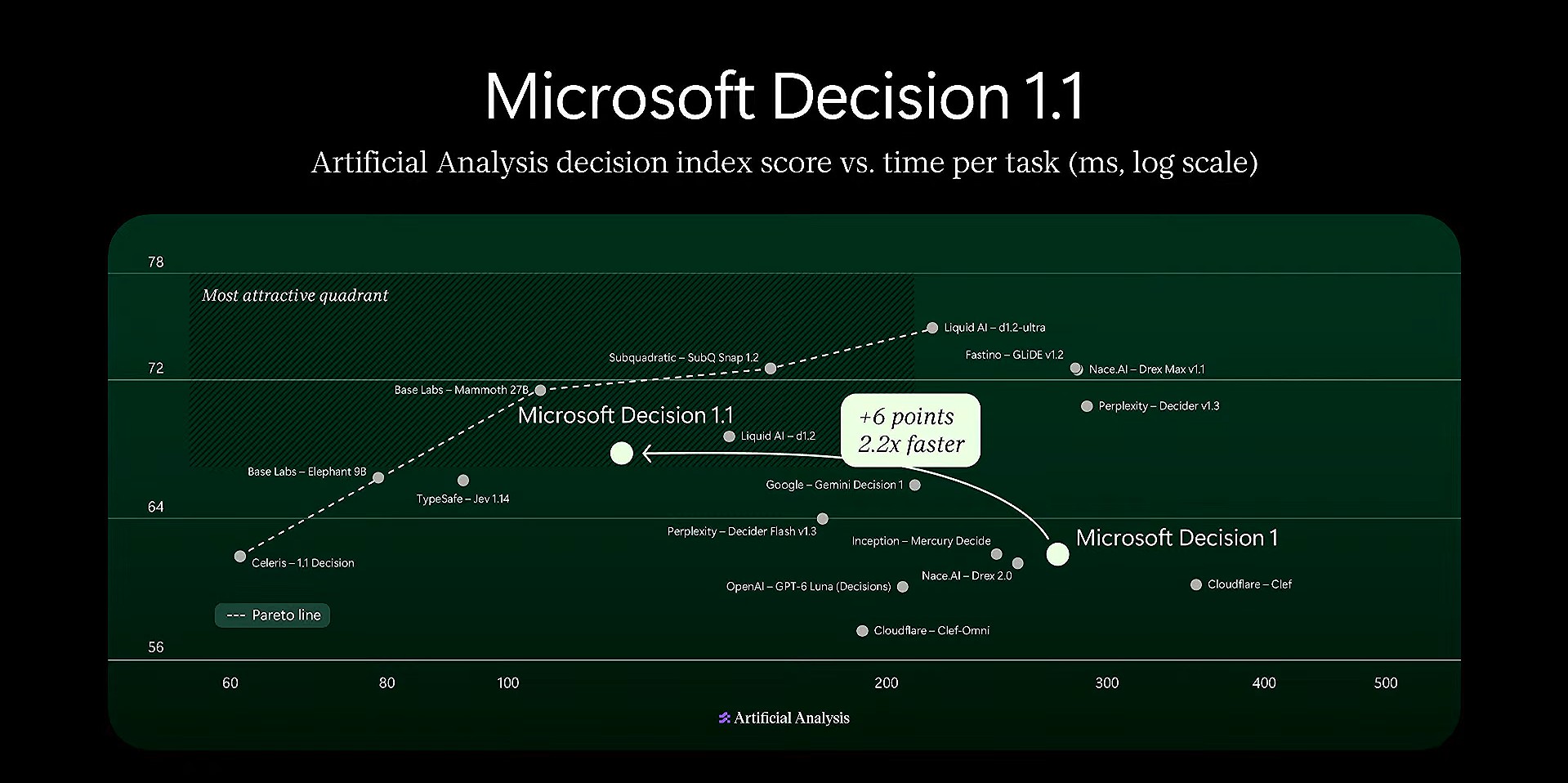
Decision 1.1 is mentioned as “50x faster and 79x cheaper than GPT-6.1 Sol.” The company admits its Code models are “explicitly not yet tuned for harder problems, like fundamental science research and very long horizon agentic work.”
Personally, I’m not switching yet. I use Opus 5.5 every day, and MAI may not be at that level for me, even though I’m not a scientist. No matter how close 96% sounds, I’m not comfortable taking a risk. But Opus 5.5 is also token hungry, and if/when an MAI model matches it while burning a fraction of the tokens, I don’t see a reason not to move everything over. And I think that’s the bet Nadella is making.
Microsoft AI said in July that it trained specialized Excel models from its GitHub Copilot coding model, and it’s now extending that approach “to train efficient models across Microsoft’s family of agentic products,” naming Copilot Chat, Outlook and PowerPoint.
Microsoft’s Rocket trains MAI models for weeks to close the gap without paying frontier prices
Rocket is Microsoft AI’s in-house reinforcement learning (RL) framework, a training system that keeps handing a model tasks and rewarding the ones it gets right. In their November 23 post, Microsoft explained, “We aim to climb capabilities from the base model through RL itself, which means runs of many thousands of training steps spanning weeks to months on thousands of GPUs, rather than a short RL phase at the end of post-training.”
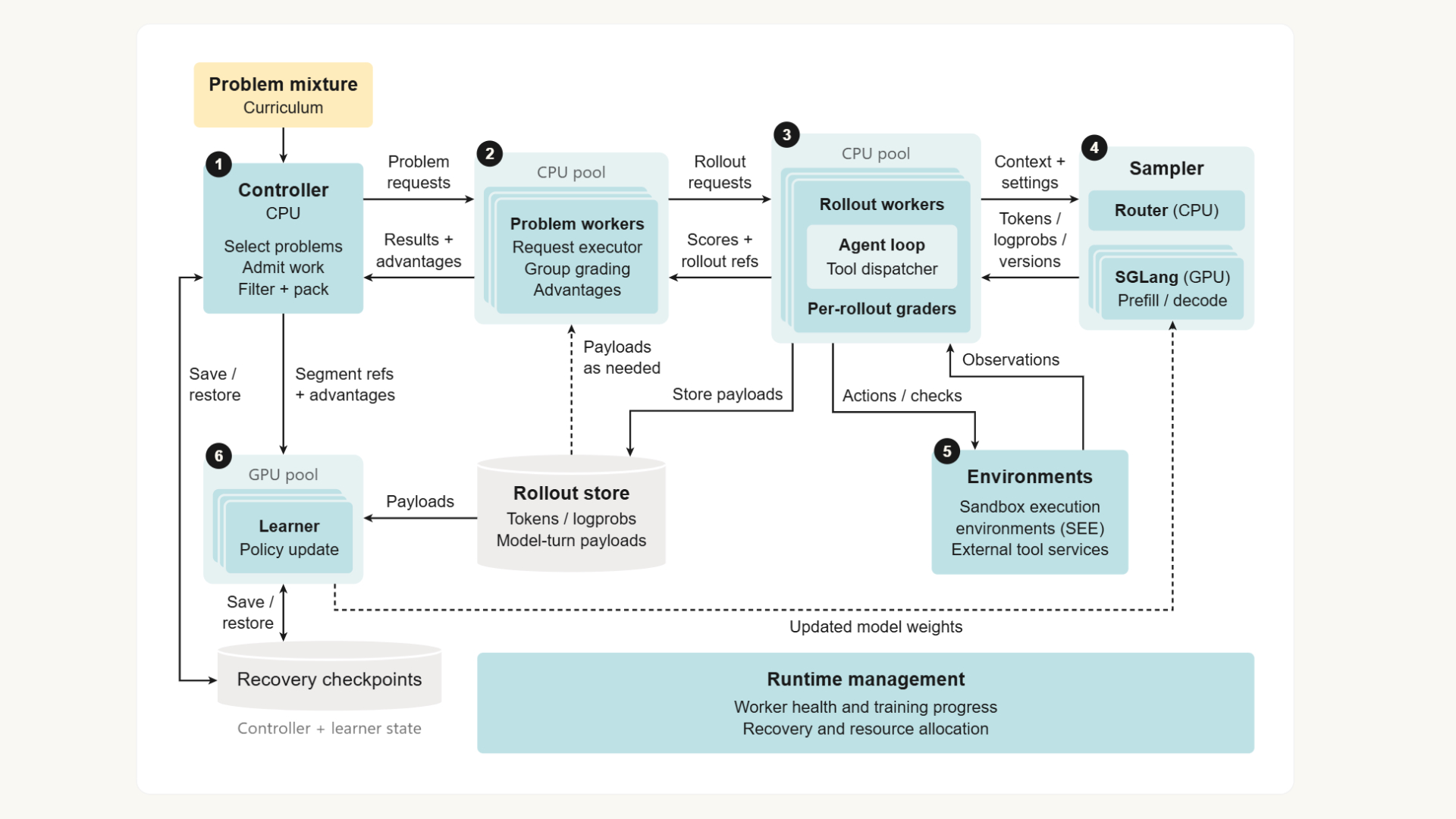
The model making that climb is MAI Base 2, which Redmond finished pretraining in October. It’s a mixture-of-experts model with 2.8 trillion total parameters but only 80 billion active for each token, trained on 16,000 GB200 GPUs over 38 days. The company claims it was 4x to 12x more FLOPs-efficient to pretrain than DeepSeek-V4-Pro-Base, which is Nadella’s compute argument in practice.
Microsoft says Rocket is post-training MAI Base 2 “without distillation from third-party models,” so it isn’t copying answers from GPT or Claude, and the work is separate from MAI Code 2. It’s not rare for Runs this long to crash, and Rocket rebuilds the failed part from the last checkpoint instead of restarting, which saved over 7% of GPU hours in a recent run.
Funnily enough, Microsoft says the model recently passed Claude Opus 4.8 on their aggregate reasoning benchmark and is on track to overtake GPT-5.6 Sol within a few weeks. Of course, these aren’t the latest models from each company. Besides, Copilot already offers Opus 5.5 and GPT-6.1 Sol.
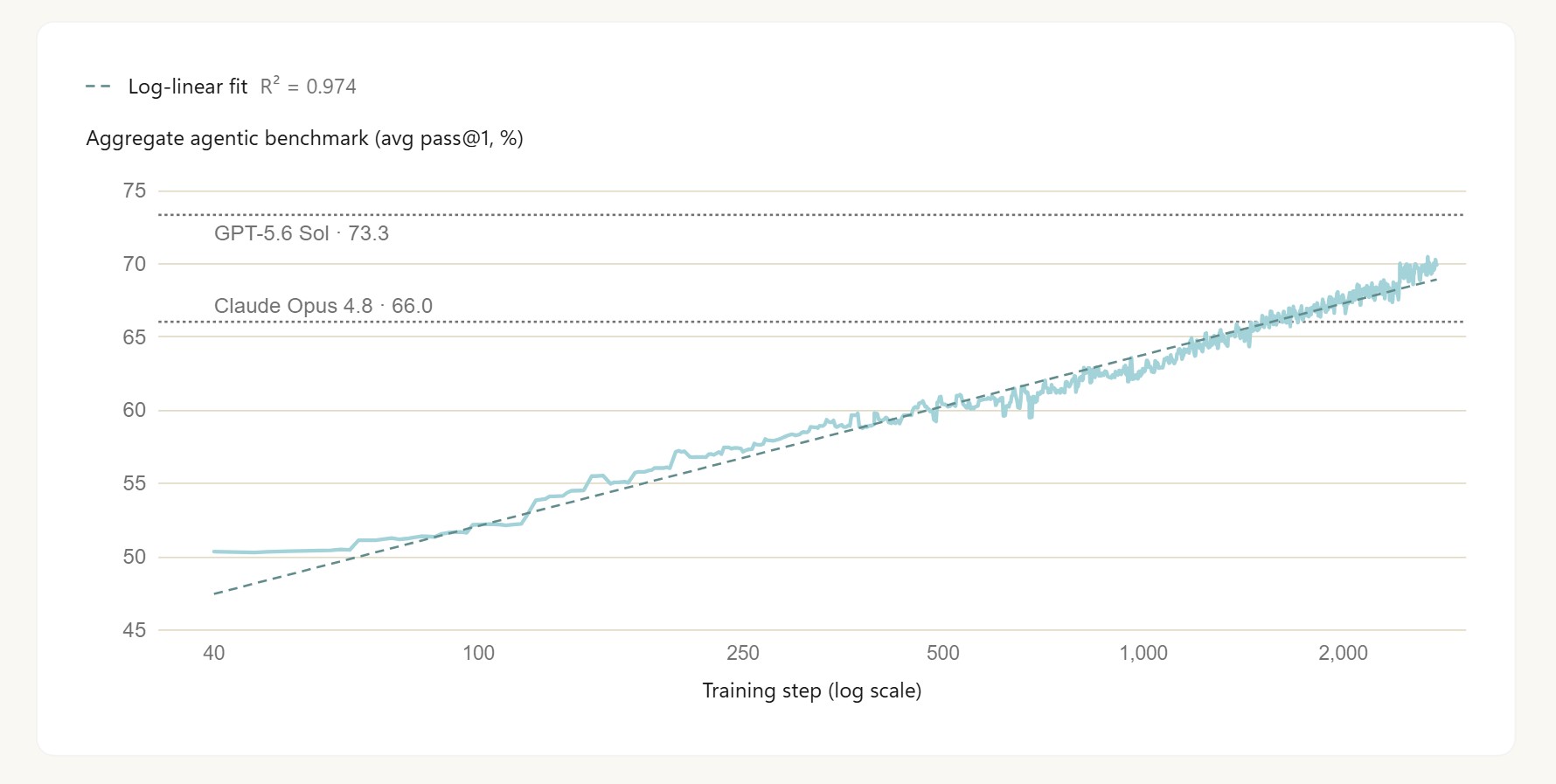
Months behind, just like Nadella promised.
Nadella is playing a “model system game” while OpenAI and Anthropic sell the whole stack
“They’re playing a vertical stack game. I am playing a model system game,” Nadella said. OpenAI and Anthropic build the model and the apps that use it, and Sorkin was quick to point out that Anthropic is now building Claude Sheets to take on Excel. Well, Microsoft’s idea is to own the place where models get picked, because Nadella believes enterprises want multiple model suppliers, the way no enterprise sticks to a single cloud. Don’t put all your eggs in one basket type of thinking.
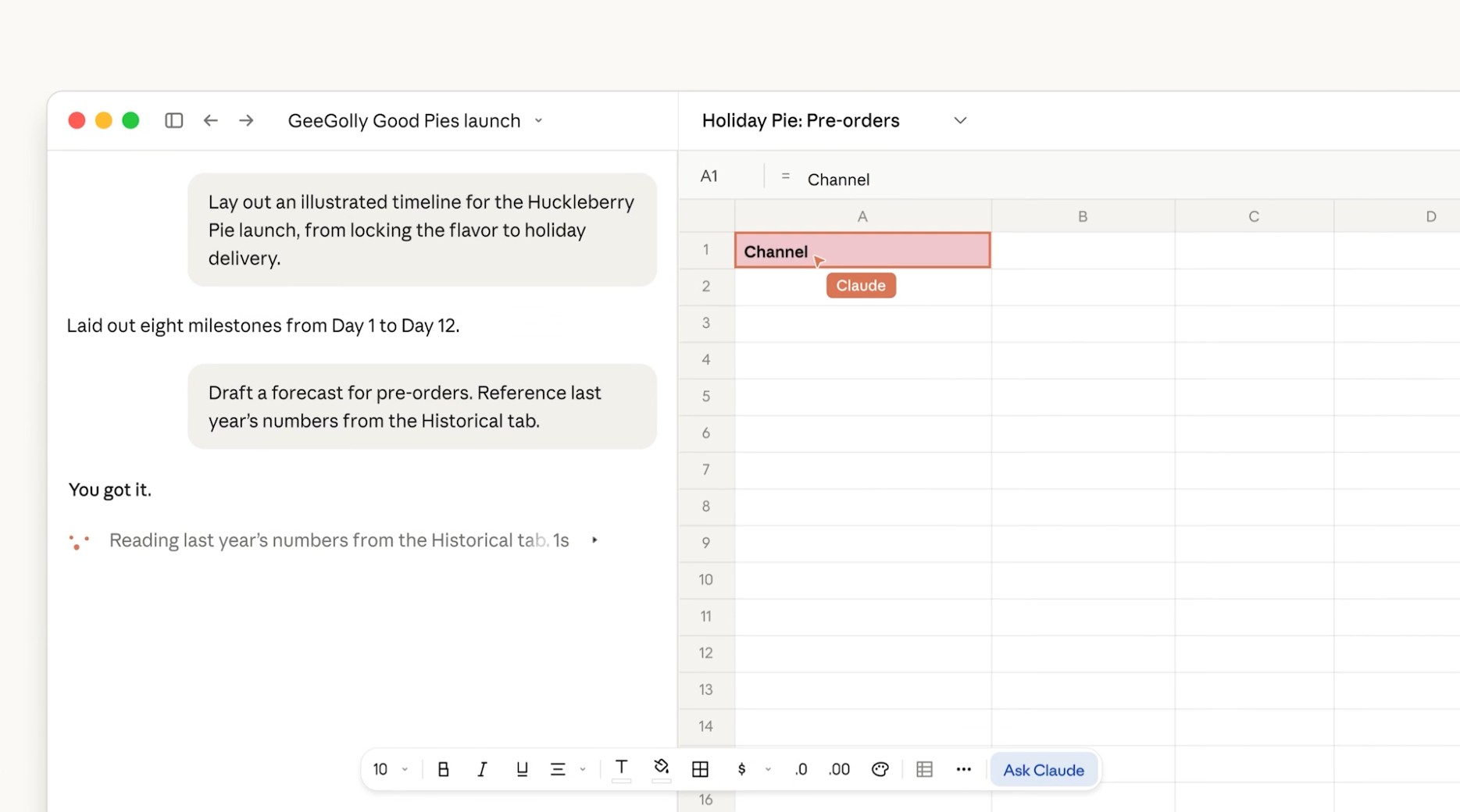
He also has little patience for expensive tokens. “At some level arguing for some massive pricing power of tokens is betting against somehow US GDP,” Nadella said. “I would rather say let us have this become like the cloud a commodity and let the world use it at scale.”
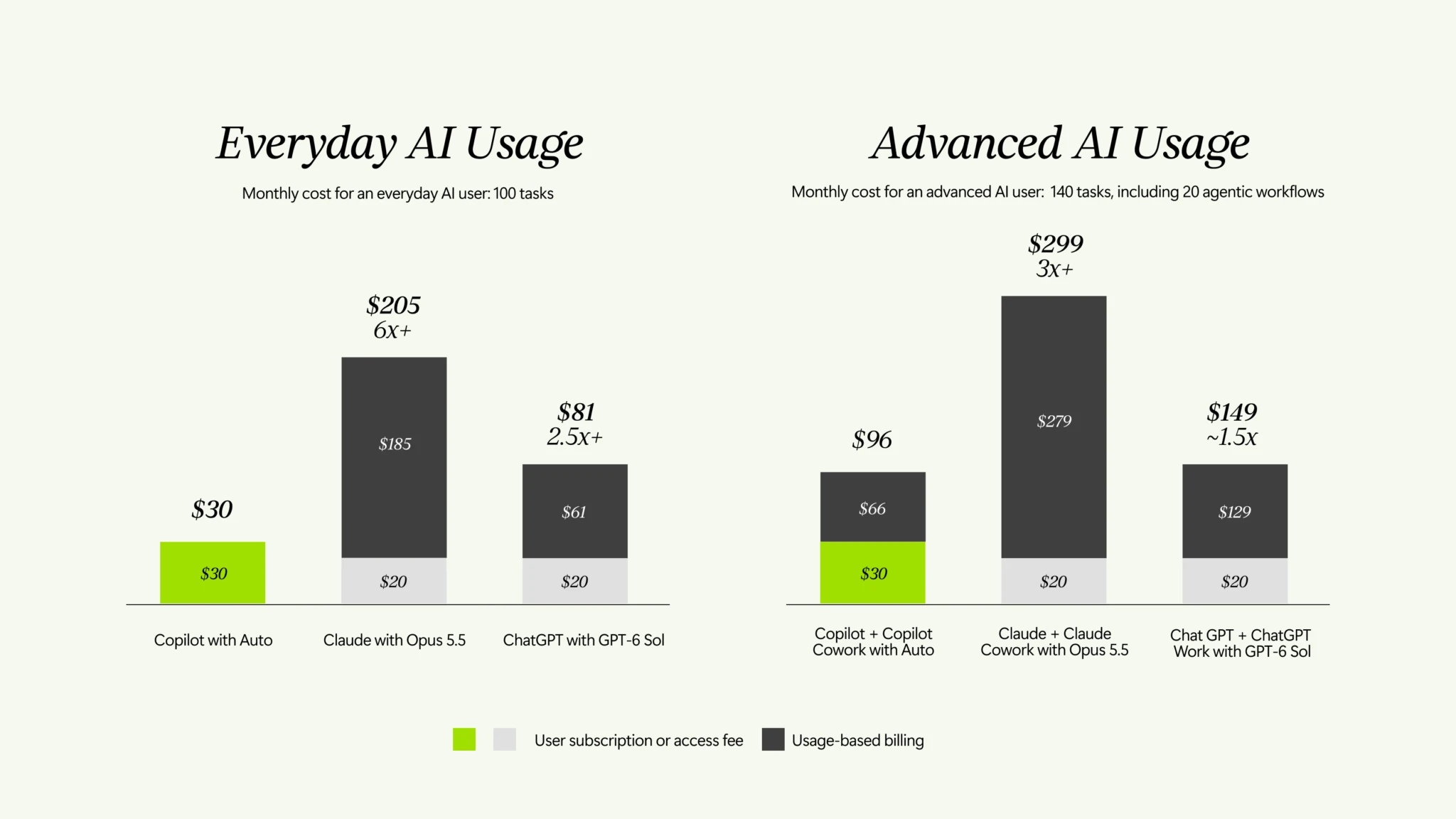
Cheap tokens help the $3.8 trillion company. Nadella has talked about 20 million AI agents working at Microsoft, and Copilot boss Charles Lamanna recently said agents are “very harsh customers”. Agents running all day make far more model calls than people do, so a slightly worse model that’s 20 times cheaper compounds quickly.
Nadella’s post says Microsoft is “passing the gains directly to customers.” I’m not so sure about that, as Microsoft recently increased prices of seemingly everything they offer. I’d want to see a cheaper Copilot subscription before trusting Auto with my work. Would you let Copilot pick a model that’s six months behind if it meant paying less?