



OpenAI CEO Sam Altman says it’s “quite terrible” for everyone to keep the world’s limited DRAM in their own PCs, used 5% of the time, when AI data centers could put it to better use. After a jab from Elon Musk and a new X name (Ram Altman, naturally), he now says he was taken out of context.
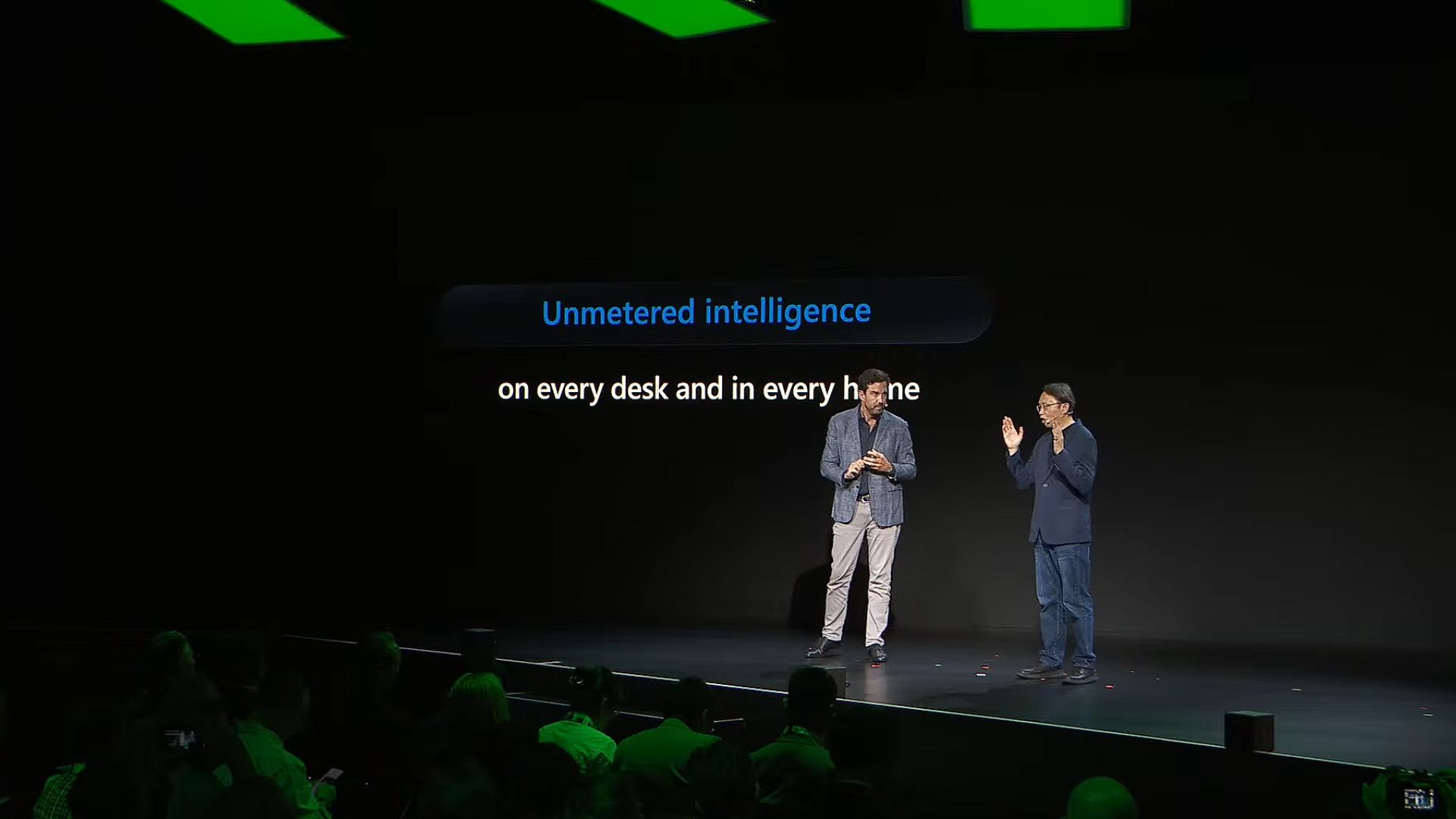
Meanwhile, Microsoft, OpenAI’s longtime partner, has been pitching the opposite. Satya Nadella wants “unmetered intelligence” on every desk, with AI models running on your PC and reaching the cloud when needed. Both CEOs want AI in everything, but are not on the same grounds when it comes to where it should run, and where the world’s RAM should go.
Why Sam Altman thinks your PC’s RAM is better used in AI data centers
Altman made the comment on the October 29 episode of Cheeky Pint, hosted by Stripe president John Collison. The two were discussing why the memory shortage isn’t fixing itself, right after Collison joked that Intel could get back into memory “as is tradition,” when Altman brought up local AI.
“A lot of people want local inference. And somehow, they assume that the problem is solved now. Because, we are going to have open-source models. We’re going to be able to run them on our computers. And so we’re not going to need all the stuff in the data center. But from a global allocation perspective, actually, it’s quite terrible to have everybody have a bunch of the world’s limited supply of DRAM sitting in their own computer. And, being used 5% of the time. You want maximum utilization in the cloud if you’re trying to deal with this very supply constrained environment.”

Sam Altman’s point is like publishing. Imagine if we wrote articles on paper, printed them, and sent them directly to your home like newspapers. It would be quite fun. But not efficient. Because we already have our website, the internet, social media, WordPress, and a highly efficient online publishing ecosystem.
However, gone are the days when local models weren’t good enough. And we have powerful systems that can handle such models.
He has a point if you’re building AGI and get to decide where every gigabyte goes. But nobody gets to decide that. The market does, and people buy RAM for games, video editing, or, in my case, nearly 100 Edge tabs for research. My 16GB laptop used to hover between 90% and 95% RAM usage, so Altman’s 5% is quite literally the opposite for me.
“Ram Altman” backtracks, but his argument hasn’t changed
The clip spread quickly among PC gamers already paying more for memory. On November 1, Elon Musk posted a meme of Hans Landa from Inglourious Basterds asking, “You are withholding DRAM from the cloud, are you not?”, adding, “The people deserve to have their RAM too!”

On November 4, Altman changed his X name to Ram Altman at a user’s request and wrote, “i actually do want the world to have tons of memory and people to put as much as they want in their computers, and it is f***ing annoying that this was taken out of context. i have been arguing for the world to ramp up memory production for a long time.” In another reply, he added, “i want you to have so much ram” and “lets build more.”
To be fair, Altman also blamed memory makers on the podcast for being too cautious to build more. But I saw the whole podcast, and the quote above is the context, and wanting more memory for everyone doesn’t change his view that scarce DRAM does more good in the cloud.
Satya Nadella wants unmetered AI on every desk and in every home
Microsoft’s old mission was “a computer on every desk and in every home,” and Nadella has given it an AI makeover. “Our goal is to deliver unmetered intelligence to every home and every desk with Windows,” he said in June.

In his 2026 annual report letter, Nadella writes, “Just imagine how much intelligence can effectively become unmetered as more and more capable models run locally,” with workloads moving between the cloud and your PC through “auto-routing.” Unmetered means your PC does the work, so you don’t have to pay for every token that a local model generates, though you still pay for the PC itself, which has gotten painfully expensive these days!
Microsoft calls this Hybrid Intelligence. In an October 7 blog post, Windows boss Pavan Davuluri describes Windows as “a platform where agents can run locally when it makes sense, reach the cloud when they need to.” With your permission, Copilot can read relevant content on your PC, take actions across Windows, and use local models for the right tasks, which Nadella says helps “your tokens go further.”
Obviously, Microsoft isn’t anti-cloud. Copilot’s Cowork and Autopilot run on usage-based cloud billing, and Microsoft has backed OpenAI since a $1 billion investment in 2019. Redmond just doesn’t want Windows to be a dumb terminal for someone else’s data center.
Microsoft’s 128GB Surface Laptop Ultra shows how much RAM local AI needs
For context, a local model runs on your PC’s CPU, GPU, or NPU, and Microsoft’s Windows ML documentation says it keeps “data private, eliminating cloud costs, and working without an internet connection,” but your PC needs enough memory to hold the model.
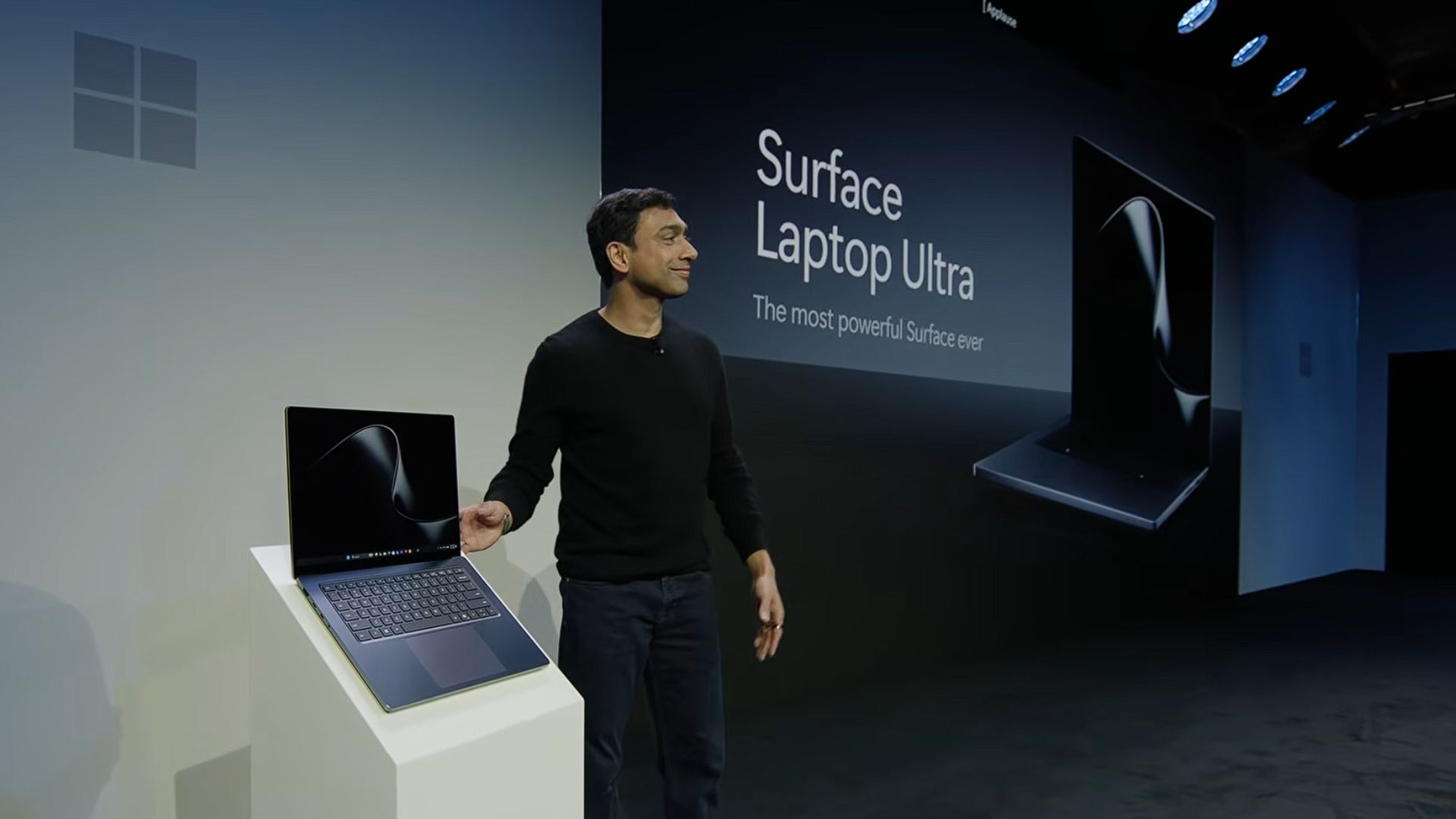
Microsoft’s best example is the Surface Laptop Ultra, whose NVIDIA RTX Spark chip shares up to 128GB of unified memory between the CPU and GPU, enough for AI models with up to 120 billion parameters. The 128GB model costs $5,899.99.
On November 4, while Altman was busy renaming himself on X, Microsoft engineers explained how they run MAI-Code-1.1-Flash on RTX Spark. The 137.9-billion-parameter coding model (6.8 billion active per token) needs 276GB at 16-bit precision, and quantization, which stores each weight in fewer bits, shrinks it to a 53GiB checkpoint. It still needs extra memory for the KV cache, which holds the context of your code.
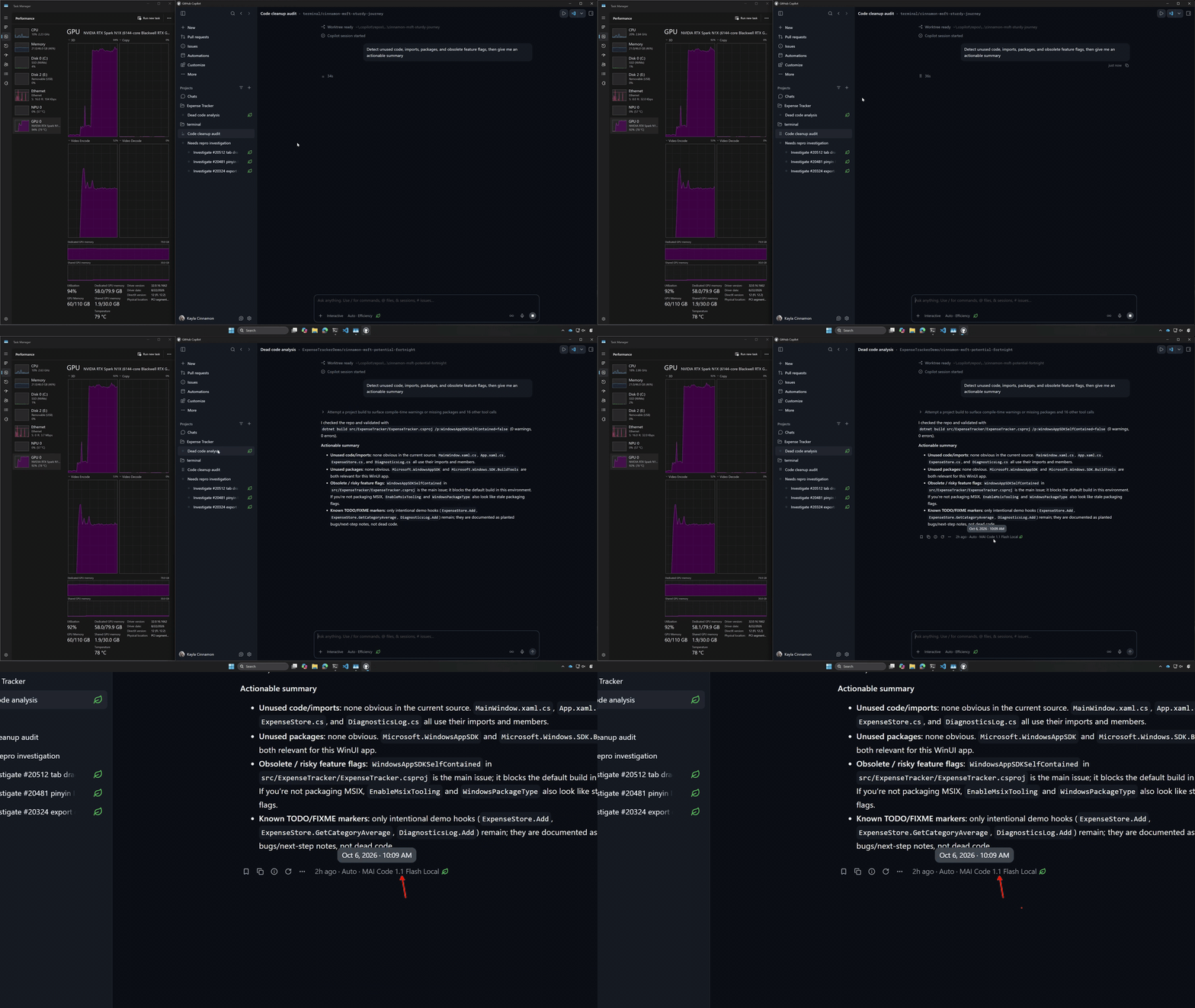
In Microsoft’s setup, it generated a median of 51.12 tokens per second with a 120K-token input. “The goal is more useful intelligence within the available resources, not fewer bits at the expense of accuracy or responsiveness,” the engineers wrote.
AI data centers are why your next PC’s RAM costs more
Altman’s comments came at a terrible time for PC buyers. TrendForce expects conventional DRAM contract prices to rise 10% to 15% quarter over quarter in Q4 2026, and says PC DRAM supply could decline in 2027 “as more capacity shifts to server applications.” The HBM in AI servers isn’t your laptop’s DDR5, but both compete for factory space at a handful of memory makers.
Note that PC shipments crashed around 20% last quarter.
Altman is right that a data center gets more out of every gigabyte than my laptop does, but I don’t buy a PC to maximize global DRAM utilization. I buy it to work and play on my own terms. In my books, Microsoft’s hybrid approach is the better idea, as long as “unmetered intelligence on every desk” doesn’t end up meaning a $5,899 desk.
Do you want AI running on your PC or in the cloud?