


Windows 11 KB5127648 is rolling out now, and it’s the first cumulative update for Windows 11 26H2, but it’s not a huge release compared to the previous update. It significantly improves Bluetooth, adds Emoji 17.0 support, and more. Microsoft is rolling it out via Windows Update, but it has also posted direct download links for offline installers for KB5127648.
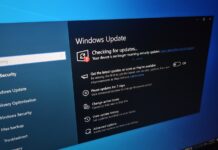
KB5127648 is an October 2026 Patch Tuesday update, and it’ll download and install automatically unless you’ve paused Windows Update. In my tests, the update showed up as “2026-10 Security Update (KB5127648) (26300.9711)” and began installing automatically.
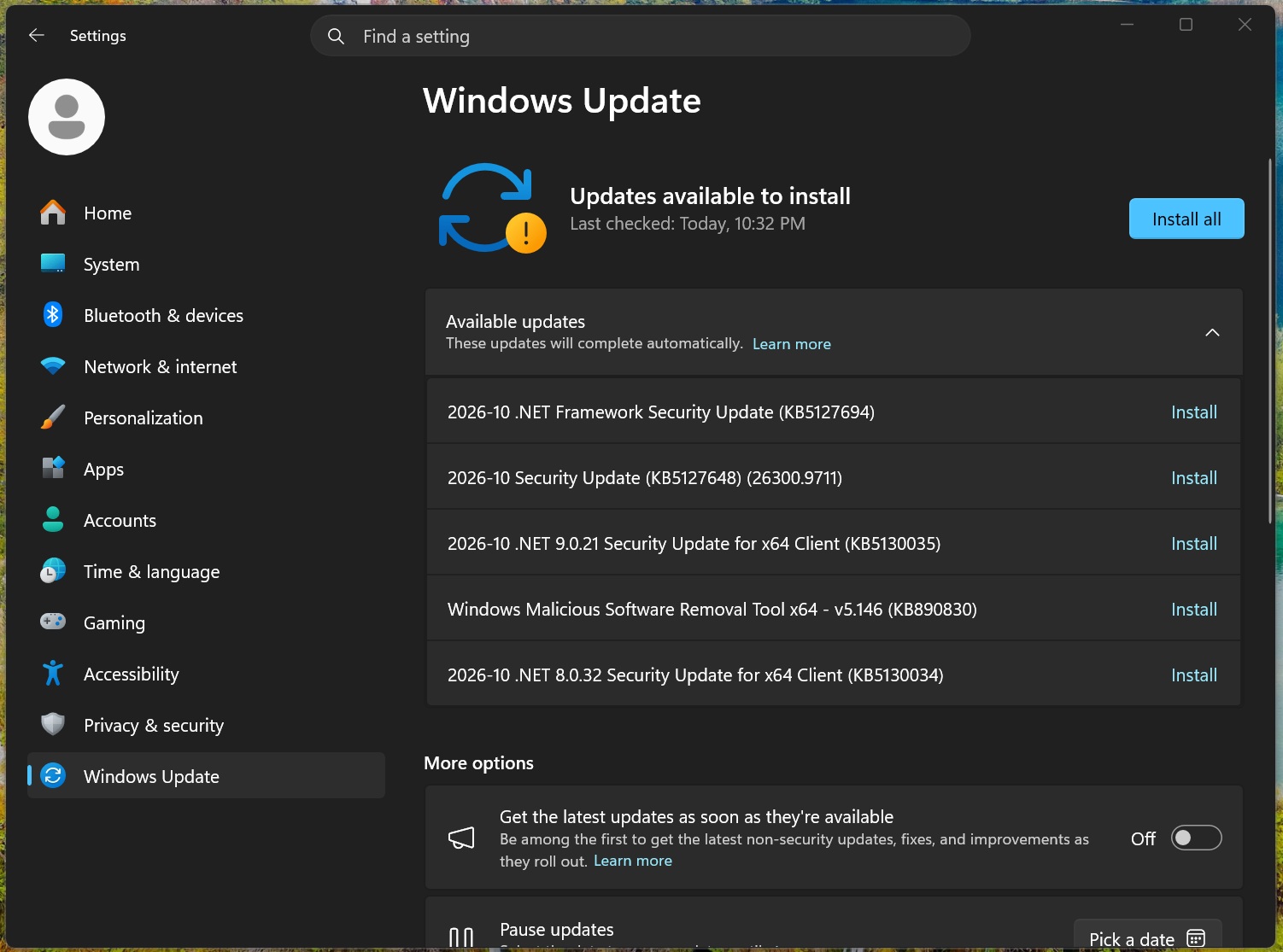
As I noted, this is Windows 11 26H2’s first cumulative update, and it bumps the OS to Build 26300.9711. If you’re on Windows 11 25H2, you’ll be getting 26200.9711. And for those still on Windows 11 24H2, 26100.9711 is what you’ll get today. Remember that it’s the last update for Windows 11 24H2; you’ll need to move to either 25H2 or 26H2.
Download Links for Windows 11 KB5127648
Windows 11 KB5127648 Direct Download Links: 64-bit and ARM-64 | Microsoft is still publishing the bits, but I’ve dropped the direct link to the Update Catalog if you want to download .msu installers. It’s always better to use Windows Update, but in case Windows Update is throwing errors, I recommend going with .msu files downloaded from the Update Catalog. It takes longer than usual and is huge in size.
Here are the sizes for the October 2026 Patch Tuesday update:
| Build Number | Size | OS Version | Architecture |
|---|---|---|---|
| 26300.9711 | 4934.9 MB | Windows 11 26H2 | x64-based |
| 26300.9711 | 4771.5 MB | Windows 11 26H2 | arm64-based |
| 26200.9711 | 4934.9 MB | Windows 11 25H2 | x64-based |
| 26200.9711 | 4771.5 MB | Windows 11 25H2 | arm64-based |
To download Windows 11 Build 26300.9711, open Settings > Windows Update and check for updates.
What’s new in Windows 11 Build 26300.9711 (26H2) / Build 26200.9711 (25H2)?
Here’s everything new in Windows 11 versions 26H2, 25H2, and 24H2 (KB5127648 – OS builds 26300.9711, 26200.9711, and 26100.9711). All the features are rolling out gradually, so they may not show up right away:
1. File Explorer’s preview pane finally works
I do not know how many of you care about it, but I frequently use the preview pane of File Explorer to quickly glance over the documents I have. And it’s actually super handy if you haven’t used it before. You can also zoom in, navigate pages, and almost easily read everything unless you totally hate the small screen space.
But an update in October 2025 made a change to improve the overall security of Windows, and that made it difficult to preview downloaded files, including PDFs. That means if you tried to preview a PDF that you downloaded from the internet, let’s say OneDrive or Google Drive, you’d be blocked from previewing it. And File Explorer would show an error message stating that it’s unsafe to preview the file.
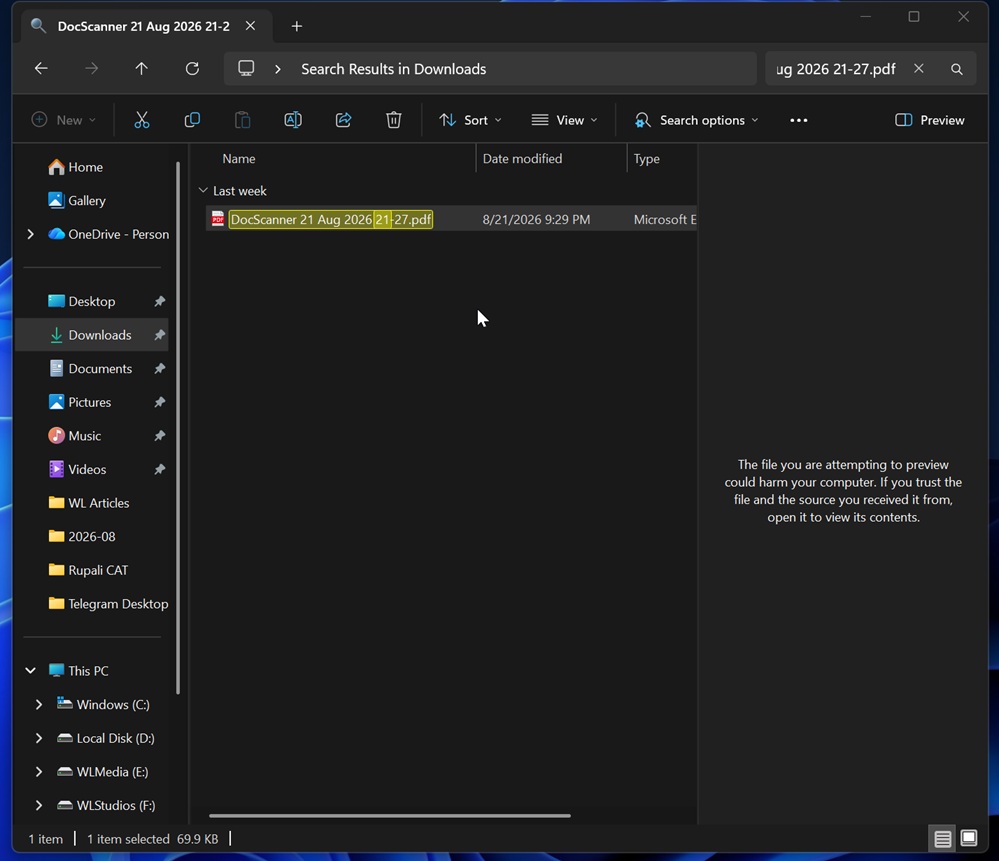
You’d need to open the properties of the file and unblock it in order to preview the file, but that defeats the purpose of quickly previewing documents you just downloaded.
Thankfully, it’s getting fixed today. Windows 11 KB5127648 now allows you to preview files downloaded from the web, so you can read most of the documents, but there’s still a catch. You cannot preview HTML files, and I don’t think that’s a big deal. For the most part, files such as PDFs are now previewed automatically!
Another notable change in today’s update for File Explorer is that now the “Home” tab remembers the state of sections (Recent/Favourites). For example, if you collapsed the Recent section, closed File Explorer or rebooted Windows, and reopened File Explorer, you’d notice that the section remained collapsed.
Microsoft previously rolled out a similar update for File Explorer where filter/sorting/view-related customizations started to apply across all folders and entry points. For example, if you changed how your files appear in a particular folder, and then accessed the same folder via another app, such as Chrome, you’d now notice that the customization is not lost and is retained.
You can now remap the Copilot key to Right Ctrl or Context Menu
After years of complaints, Microsoft is letting you remap the Copilot key without third-party tools. Go to Settings > Bluetooth & devices > Keyboard, and you can make the key work as Right Ctrl or the Context Menu key.

Microsoft says the change helps preserve familiar keyboard shortcuts and accessibility workflows, which is a polite way of saying a lot of laptops lost their Right Ctrl key to Copilot.
If you choose Right Ctrl, shortcuts like RCtrl + Win may not work as expected, so Microsoft recommends using Left Ctrl for those. If your laptop maker already has a remapping tool, use either that or the Windows setting, not both.
Open apps maximized is a new accessibility setting
Open apps maximized does what the name suggests. Turn it on in Settings > Accessibility > Visual effects, and every app opens maximized instead of at its last window size. Microsoft says it helps screen reader and magnifier users, people in tablet mode (which I agree with for smaller screens), or anyone who wants a consistent full-screen workspace.
When we tested it, it worked for every app we tried, including File Explorer. Keep in mind that turning it off doesn’t restore old window sizes, as apps remember they were last maximized. In my opinion, it’s most useful on 13 and 14-inch laptops, where you hit the maximize button for almost every app anyway.
The Bluetooth quick settings page is also easier to navigate with a keyboard, gamepad, or Narrator.
Bluetooth gets its biggest reliability update in a while
Microsoft acknowledged a long list of Bluetooth problems in September, and the fixes come with this update. My OCD brain loves seeing so many fixes at the same time:
- During voice calls, changing the volume on a Bluetooth Classic Audio headset shows the Windows volume flyout, so you can see the new level.
- Windows shows a more accurate connection state for accessories that have disconnected.
- The Bluetooth & devices page in Settings is more stable when managing Bluetooth and audio devices.
- The Bluetooth toggle in Settings no longer shows on when the radio is off.
- Microphones work better with certain Bluetooth Classic audio accessories.
- A crash with error code 0x139 while streaming Bluetooth audio is fixed.
- LE Audio accessories are more reliable and perform better.
- Shared audio is more reliable.
July’s update already made AirPods and Beats work better, and with these fixes, Bluetooth on Windows 11 should be a lot less frustrating.
Emoji 17.0 adds distorted face, fight cloud and hairy creature
Windows 11 now supports Emoji 17.0, seven months after Emoji 16.0 arrived in March. New emoji include distorted face, fight cloud and hairy creature, and you can find them by pressing Windows + . to open the emoji panel.
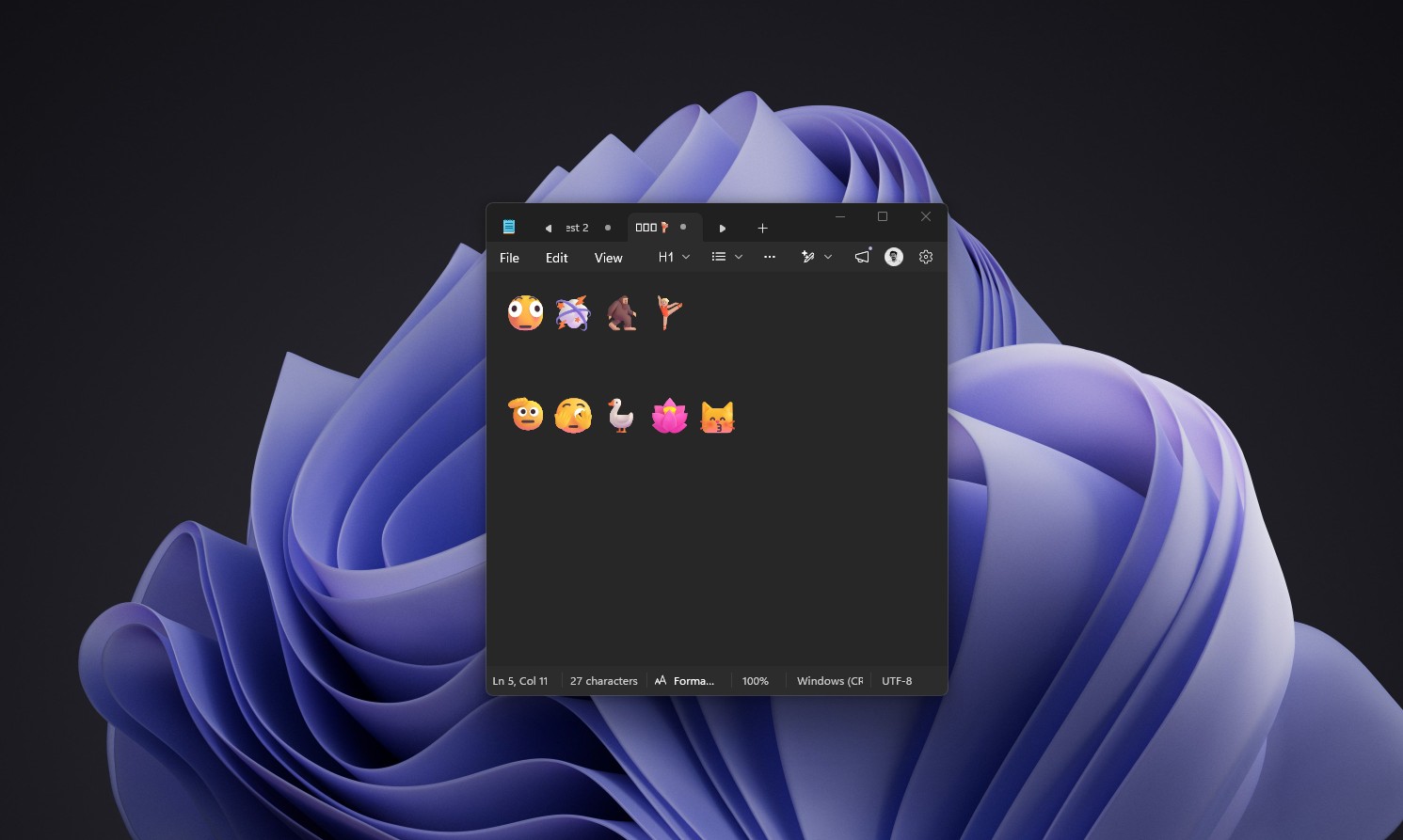
Microsoft also refined several existing designs for better consistency with other platforms, including saluting face, face with peeking eye, goose, lotus and kissing cat.