






Microsoft has finally admitted that Windows 11 requires more than just a faster Start menu, taskbar, File Explorer, and native code. According to the company, Windows needs drivers that are more reliable and cause fewer issues, including BSODs. But it’s soon going to get better, as Microsoft told Windows Latest that it’s working with OEM partners to minimize these issues.
Microsoft has always worked closely with hardware and silicon partners to optimize drivers for Windows. However, that effort has not been very visible in recent years. After Windows 11 launched, Microsoft’s focus shifted more toward rounded corners and now AI.
At the same time, there’s no denying that Windows has been on the back burner, as the company also stopped holding WinHEC, its Windows Hardware Engineering Conference. But the company recently had a change of heart, and it’s trying to “win back” Windows customers, according to CEO Satya Nadella.
Microsoft has confirmed up to 18 new features for Windows 11, including a faster Start menu, fewer ads in OOBE, a more reliable File Explorer, and a dozen UI/UX improvements, but that’s not all.
At WinHEC 2026, Microsoft said it’s raising the quality bar on Windows drivers and introducing a new Driver Quality Initiative (DQI). With DQI, Microsoft is hopeful that it can make Windows systems more stable, improve driver quality, and make apps run more reliably on all form factors.
Microsoft says Windows quality is linked to the full ecosystem
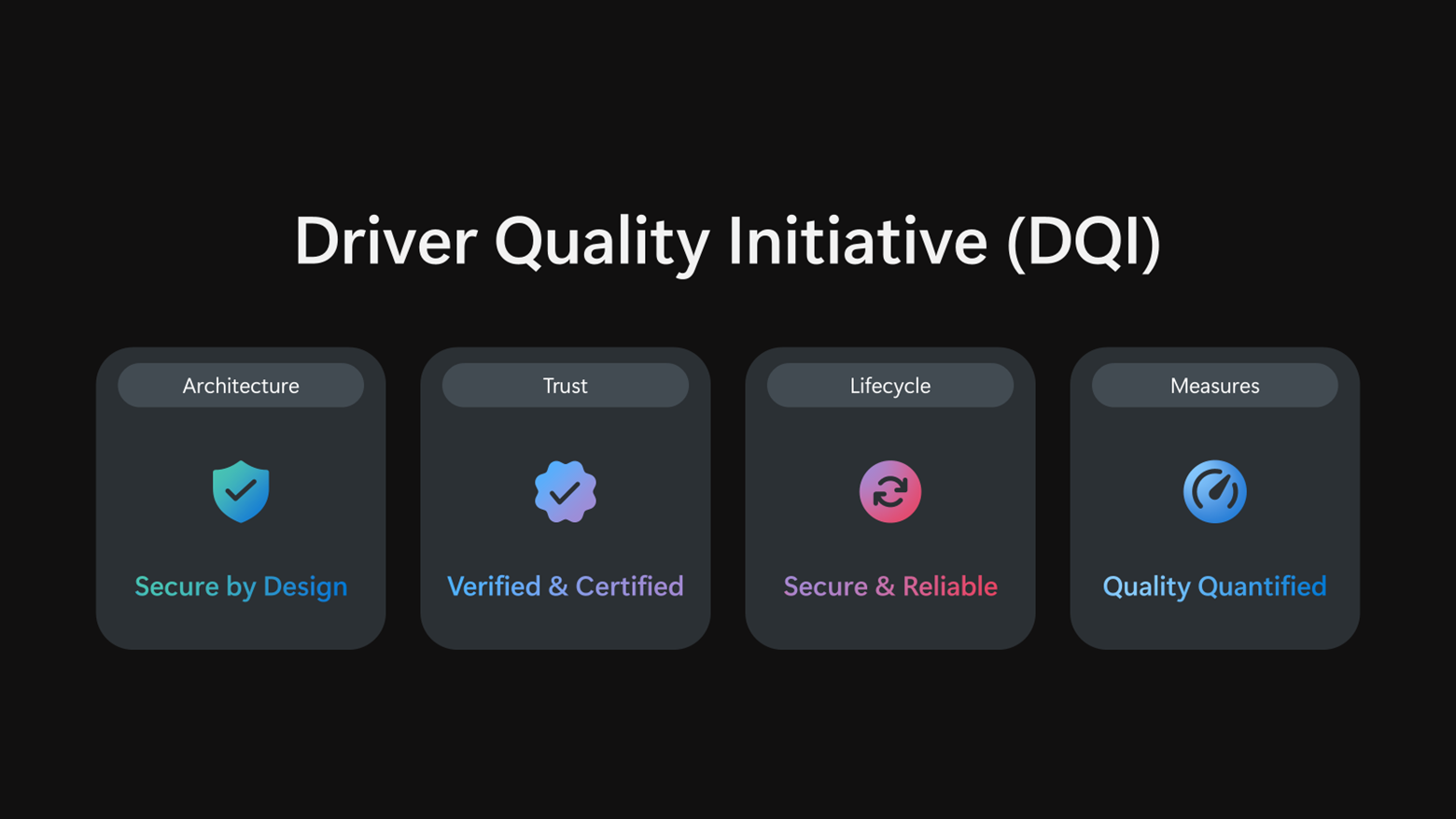
At WinHEC 2026, Microsoft reaffirmed that Windows 11’s quality is linked to the full ecosystem, and the fundamental component is drivers.
With DQI, Microsoft wants to lead a new ecosystem-driven effort to improve the quality of Windows drivers and address performance or security issues.
“By introducing the Driver Quality Initiative (DQI), a comprehensive, ecosystem-wide effort designed to fundamentally raise the bar on driver quality, reliability, and security across Windows,” Microsoft noted.
“Drivers sit at the heart of every Windows experience,” Microsoft argues, and it hopes that DQI can address the long-standing problems because it’s based on four principles:
1. Architecture
In internal tests, Microsoft found that Windows is more reliable and secure when OEM partners use Microsoft’s authorized class drivers and a user-mode driver structure that provides an isolated environment.
Microsoft hasn’t been strict with OEM partners, but that appears to be changing, and it’s also moving away from driver access to the kernel.
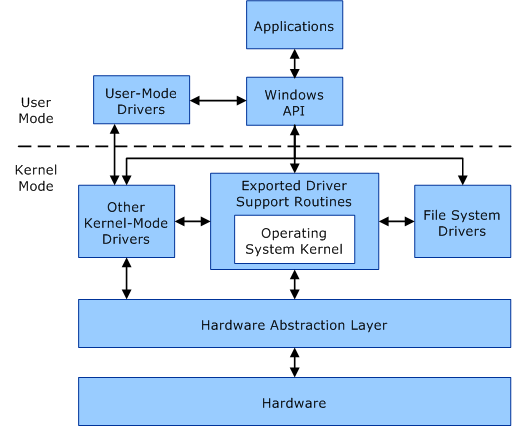
Traditionally, Windows drivers have had access to the kernel, which isn’t a problem until a major bug in a driver affects the entire operating system. With a user-mode driver, Microsoft says it’s blocking access to the kernel and making sure that a software bug or device malfunction is contained completely within its own process.
2. Trust
Microsoft is also tightening Windows Hardware Compatibility Program requirements, which should automatically raise the driver quality bar.
In other words, Microsoft will now carefully approve partners, authorize trusted drivers, and introduce stricter verification protocols to curb major driver issues.
3. Microsoft says it’ll remove outdated drivers from Windows Update Catalog
Right now, Windows Update Catalog lists all drivers published by the OEM, and that includes low-quality drivers, which might have newer versions.
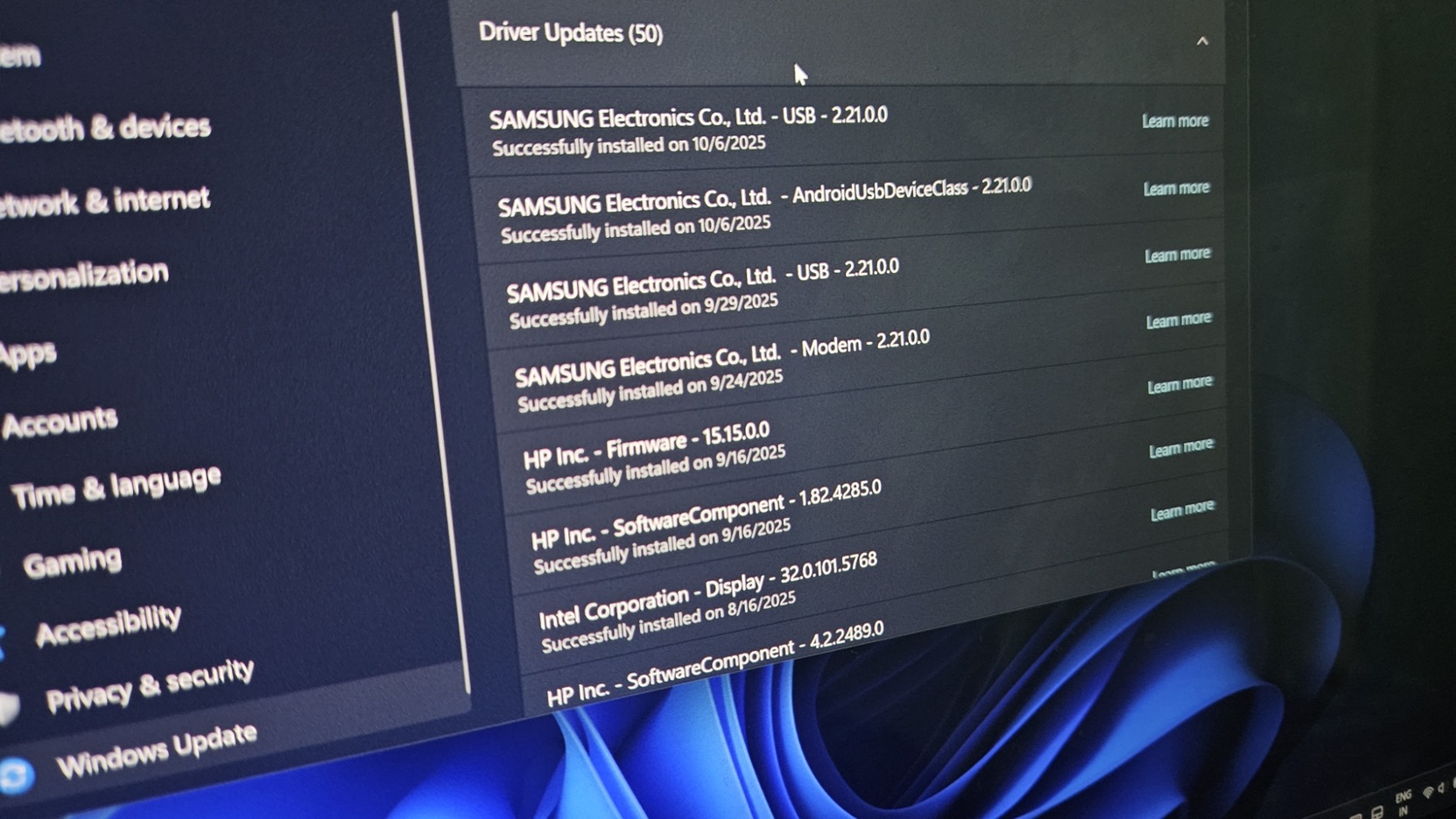
Microsoft plans to deprecate outdated or low-quality drivers and offer better lifecycle management through Windows Update. This change, if properly implemented, could help you identify drivers that are not really “high-quality” for your hardware and that you should skip.
Also, “quality” is getting a new definition at Microsoft. Until now, quality has been referred to as “crash frequency” for drivers, but that appears to be changing.
4. Microsoft says it’ll consider stability, performance, power, and thermal impact as new “quality factors.”
Microsoft mostly relied on “crashes” as a factor for determining quality, but now it’ll also consider the following factors:
- performance and stability
- functionality and power
- thermal impact
These are the new signals for the best Windows experience, and Microsoft wants OEM partners to adhere to the new guidelines or recommendations. It’s unclear if OEMs will be forced to follow the new quality standard, but if we were to make an educated guess, it’s going to be enforced across the ecosystem.
“We are expanding how driver quality is measured beyond crashes to include stability, functionality, performance, and power and thermal impact, giving partners clearer signals to improve the real customer experience,” Microsoft said.
AMD’s director of software engineering also agreed that Windows improvements, particularly for drivers, are a collective effort, and all stakeholders need to come on board.
“Delivering high-quality drivers and resilient platforms isn’t owned by any one company—it’s a shared commitment. Through our close collaboration with Microsoft, AMD is focused on building a culture of joint accountability to ensure security, stability and predictable performance for our customers at scale” said David Harmon, Director, Software Engineering, AMD at WinHEC 2026.
In the next several months, you’re going to notice better-quality drivers with fewer issues, and if Microsoft’s plan works out, we might see better battery, heat, and performance management after these new driver releases.
In addition, Microsoft has confirmed it’ll not downgrade the graphics driver, which was one of the most reported problems.
All these improvements will begin rolling out in the coming months.