





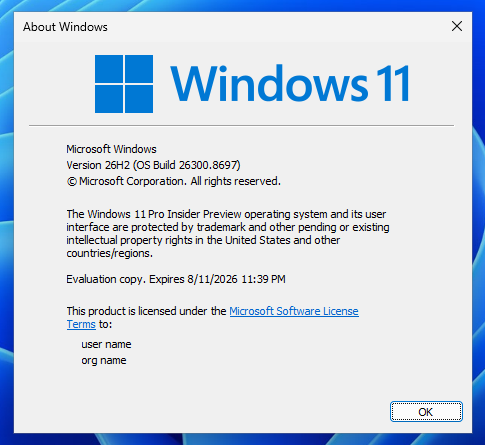
Microsoft has finally confirmed what we reported in February 2026: Windows 11 26H2 is shipping this year, and it’s not a major release, as the company is trying to make Windows updates more predictable. It means this year’s feature update will be similar to Windows 11 25H2 and install via an enablement package (eKB).
Windows 11 hasn’t received a major feature update since 2024. Windows 11 24H2 was the last major update, and it was released on October 1, 2024. In 2025, Microsoft rolled out Windows 11 25H2, but it was based on the same underlying platform code as version 24H2, which means it doesn’t come with additional features.
In fact, if you use Windows 11 25H2 or 24H2, you have access to the same set of features and improvements, including the monthly cumulative updates. But Windows 11 25H2 reset the OS life cycle, which means it’s supported for an additional year compared to version 24H2.
Windows 11 24H2’s support ends on October 13, 2026, while version 25H2 is supported until October 12, 2027.
We’re going to see the same approach repeated in 2026. As Windows Latest previously exclusively reported in February 2026, Windows 11 26H2 references have already begun appearing in recent preview builds as an eKB (enablement package), a 200KB update that simply flips the OS version and build number.
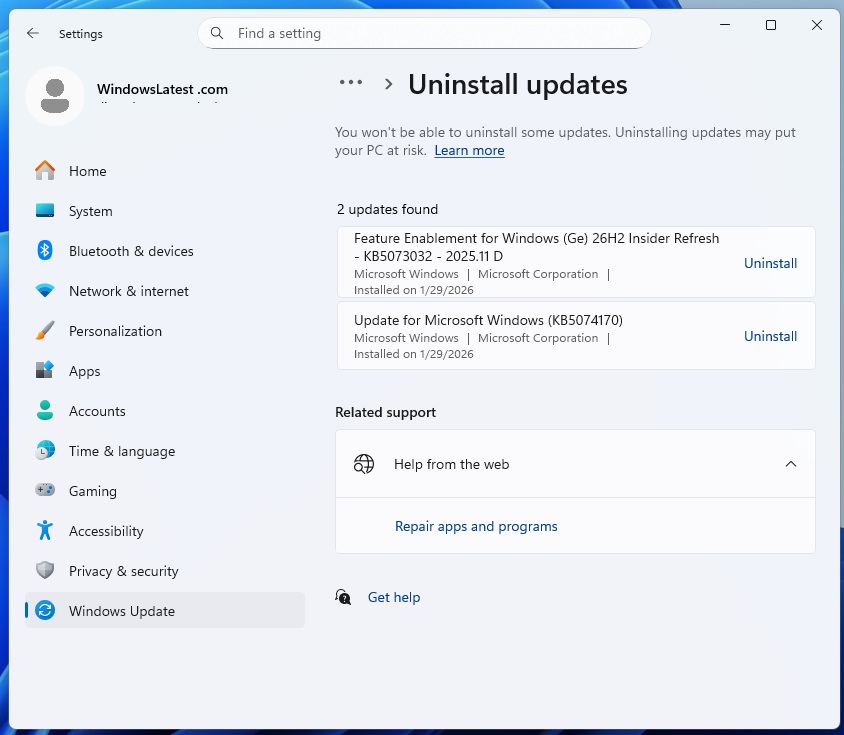
Now, in new documentation, Microsoft has said Windows 11 26H2 is being prepared for a fall 2026 rollout, which I believe is October 2026.
“The next annual update for Windows 11 is coming soon…. continues our focus on delivering a predictable, low-disruption update experience for organizations and IT professionals,” Microsoft noted.
Microsoft usually prefers releasing feature updates in October, but in some cases, it could begin shipping as early as the last week of September or as late as the last week of October, with the majority getting the update during the holiday season.
If you’re already on Windows 11 24H2 or 25H2, this year’s feature update wouldn’t feel any different, and it’ll install in less than 5 minutes. In fact, the size of enablement packages is typically under 500KB, so in most cases, you’ll have your PC updated to Windows 11 26H2 in just 2 minutes.
Windows 11 26H2 requires a single reboot to finish installing, and it does not come with any visible differences.
How long is Windows 11 26H2 supported?
Windows 11 26H2 is supported until October 2028 for Home, Pro, Pro EDU, and Pro for Workstations editions.
In the case of enterprises, if you have Windows 11 Enterprise, Education, or IoT Enterprise, you’ll continue to get updates until October 2029.
This is a standard update cycle where consumers get 24 months of support, while businesses get an extra year (36 months total).
Windows 11 26H2 system requirements
If your device is already on Windows 11 24H2 or 25H2, you’ll be upgraded to Windows 11 26H2 smoothly later this year. It does not come with any new hardware requirements. It still requires 4GB of RAM, 64GB of storage, and a 1GHz or faster 64-bit dual-core processor.
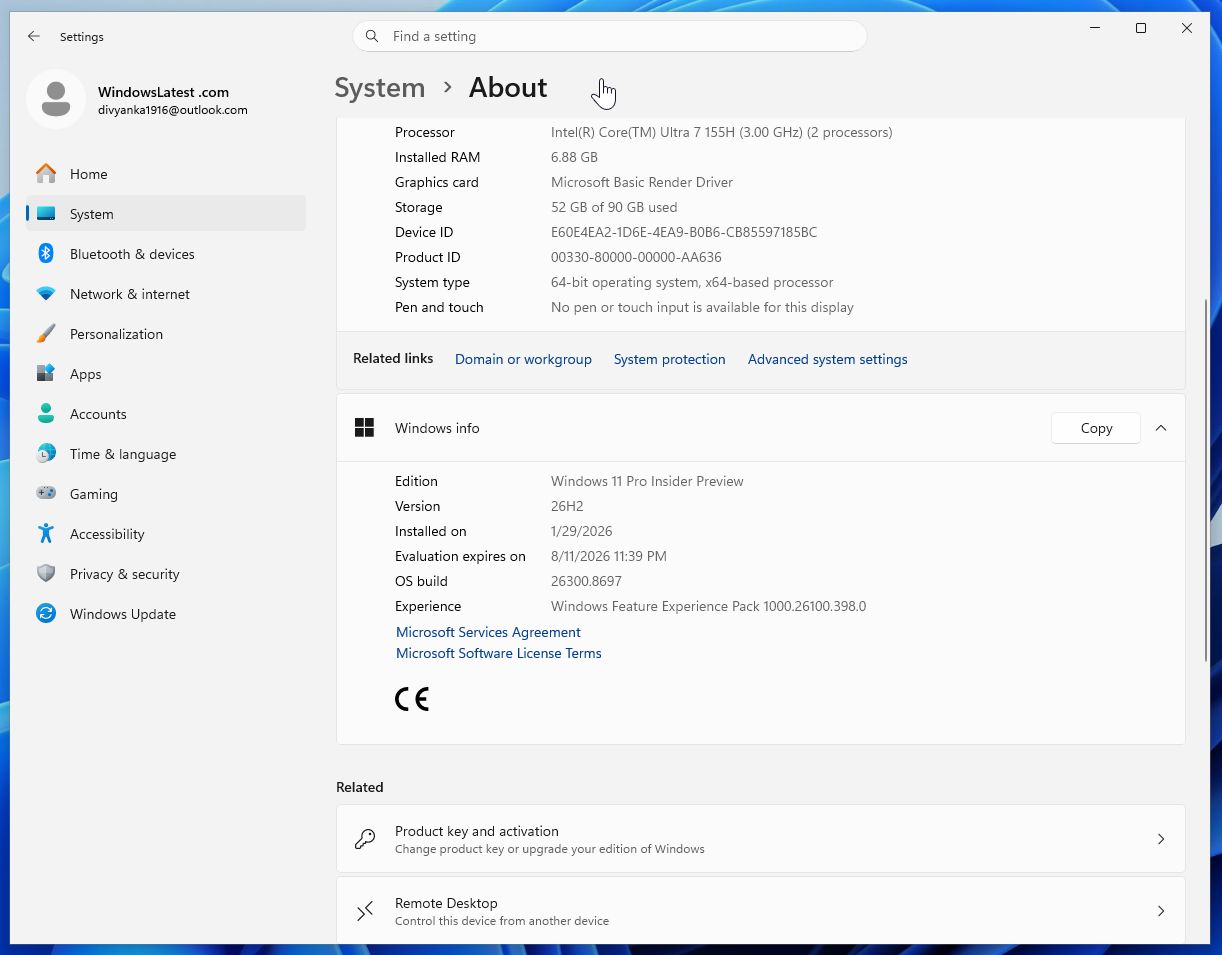
However, there’s another update called Windows 11 26H1, which requires new silicon, such as Nvidia N1 (RTX Spark) and Snapdragon X2. But don’t worry, you’re not really missing out on anything. Although Windows 11 26H1 is based on a new platform release, it’s different from 24H2, 25H2, or 26H2, but it doesn’t come with exclusive features.
In either case, there’s nothing really new. Windows will be getting new features, but not via these annual updates. Instead, all the major changes will ship every month via cumulative updates. For example, an upcoming Patch Tuesday update will add support for a movable taskbar. A recent Windows update added support for Low Latency Profile, which is a major change.
These types of major changes were previously shipped with annual feature updates, but now they’re bundled with monthly releases.
I asked Microsoft if there’s any particular reason why it’s been skipping “major” feature updates in favor of these minor enablement packages for the past two years, and it told me that it’s supposed to make it easier for customers, particularly enterprises.
As a follow-up, I asked if the trend would continue into 2027 with version 27H2, and Microsoft neither denied nor confirmed it.
Windows Latest understands that Windows 11 27H2 (2027’s big update) will be a proper feature update with major platform changes. We’re also expecting Microsoft to merge Windows 11 26H2 (all existing PCs) and 26H1 (New Arm) in 2027.