







When Apple dropped the $599 MacBook Neo, it sent an absolute shockwave through the global PC market. Offering a fanless, sleek, aluminum chassis powered by the highly capable A18 Pro chip at a sub-$600 price point was something the industry wasn’t prepared for.

We previously reported that ASUS and other PC vendors were actively scrambling to formulate a response to the aggressive pricing of the Neo. Now, Microsoft has officially fired its first major retaliatory shot, but this was not what I was expecting…
The tech giant commissioned an extensive testing report from the benchmark firm Signal65, setting out to prove a singular narrative: for the same price as Apple’s budget laptop, Windows 11 PCs offer drastically superior hardware, far better performance, and significantly more value.
I dug through the entire Signal65 whitepaper. While the raw data undeniably favors Windows, looking closely at the current state of the PC industry reveals a much deeper, more desperate reality. Microsoft is throwing raw specifications at a problem that requires premium design, and the timing of this report speaks volumes about the current crises plaguing Windows OEMs.
How Windows 11 crushes the Neo on paper, at least
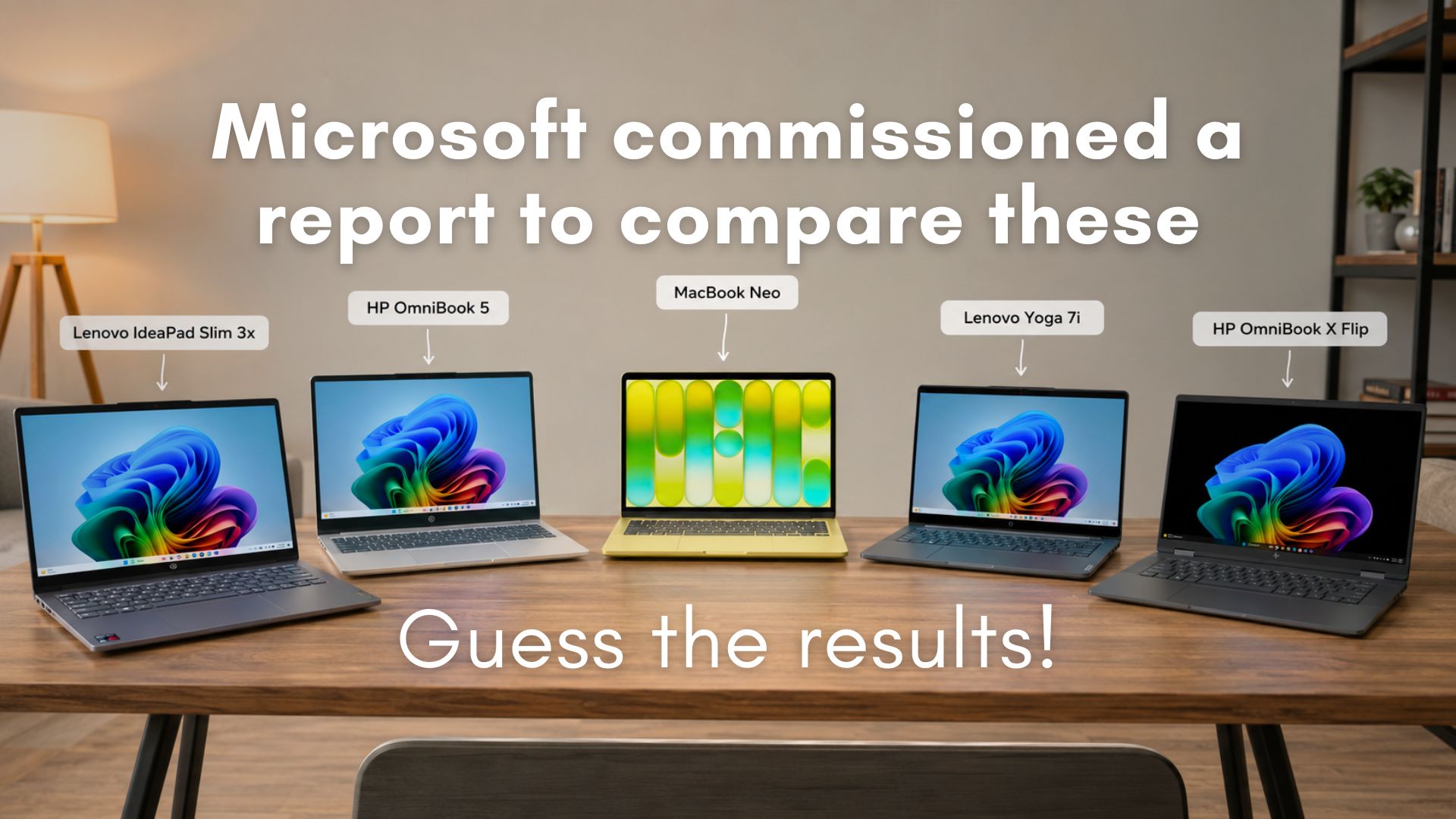
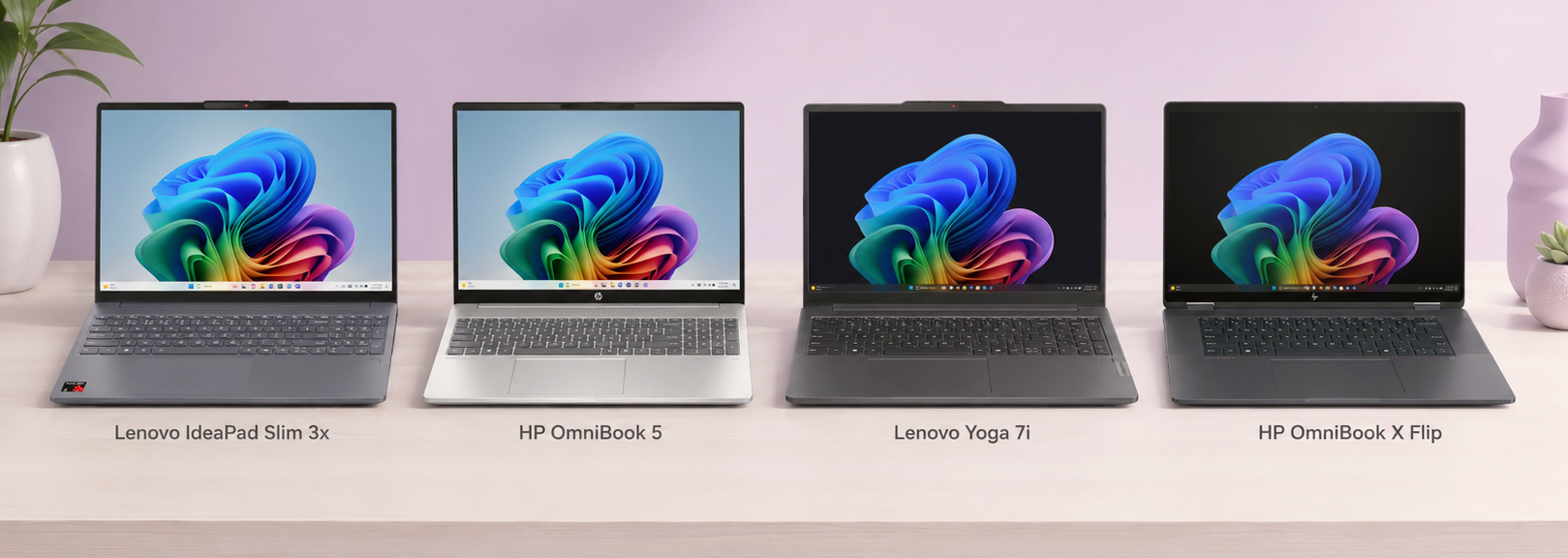
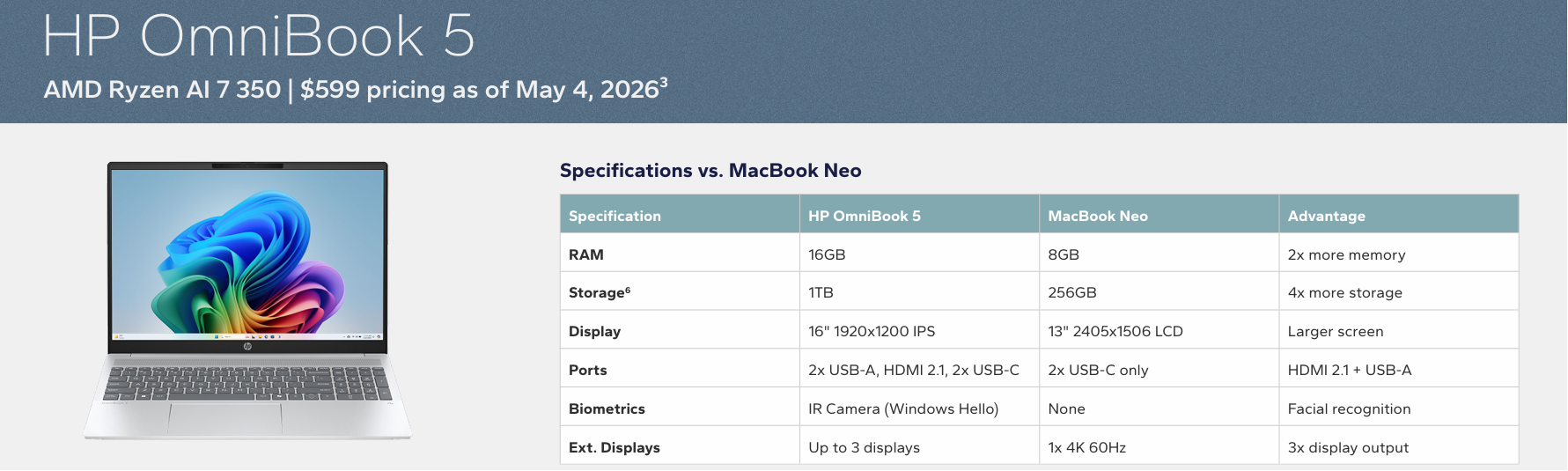
Signal65 pitted the 8GB/256GB MacBook Neo against four mainstream Windows 11 machines: the Snapdragon-powered Lenovo IdeaPad Slim 3x ($449), the AMD Ryzen AI-powered HP OmniBook 5 ($599), and two Intel Core Ultra 7 256V systems, the Lenovo Yoga 7i ($1,099) and HP OmniBook X Flip ($949).
When it comes to pure spec-sheet math, Apple gets absolutely obliterated here.
According to the report, every single Windows laptop tested ships with 16GB of RAM and between 512GB and 1TB of storage. For context, Apple is shipping the Neo with a paltry 8GB of memory and a 256GB SSD. To make matters worse, one of the Neo’s two USB-C ports is severely bottlenecked at USB 2.0 (480Mbps) speeds. Meanwhile, the Windows counterparts are offering full-sized HDMI 2.1, Thunderbolt 4, SD card readers, and multiple high-speed USB-A ports.
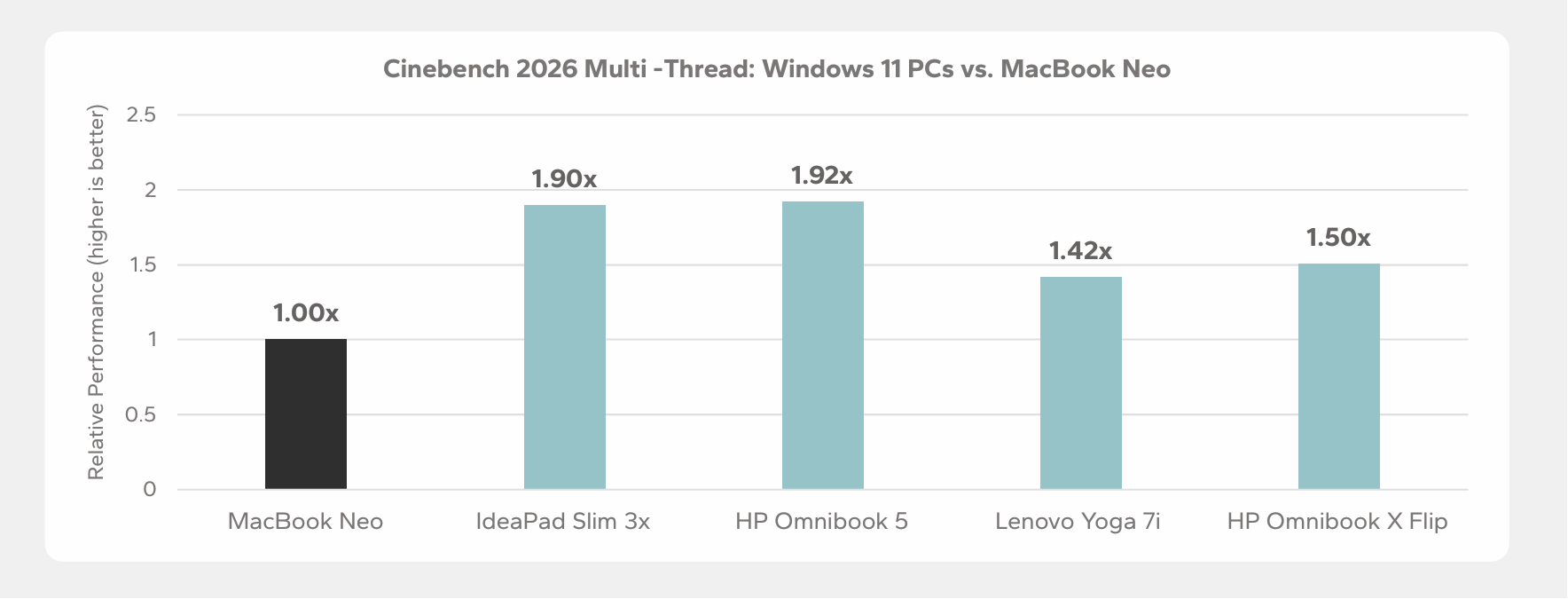
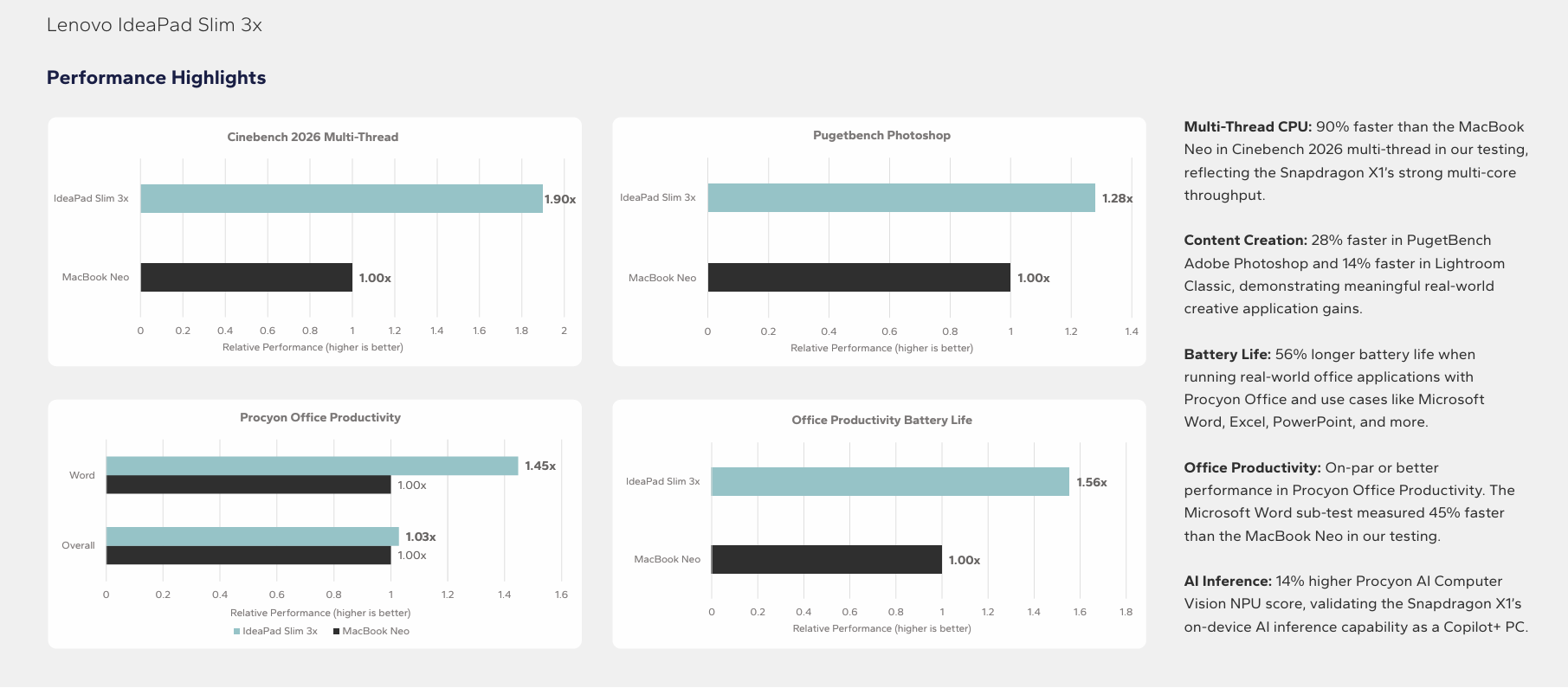
The multi-core performance metrics are even more punishing. While the MacBook Neo’s A18 Pro chip boasts incredible single-core speeds, it falls apart in multi-threaded workflows. Signal65 found that the $599 HP OmniBook 5 (Ryzen AI 7 350) and the $449 IdeaPad Slim 3x performed up to 92% faster than the Neo in Cinebench 2026 multi-thread rendering.
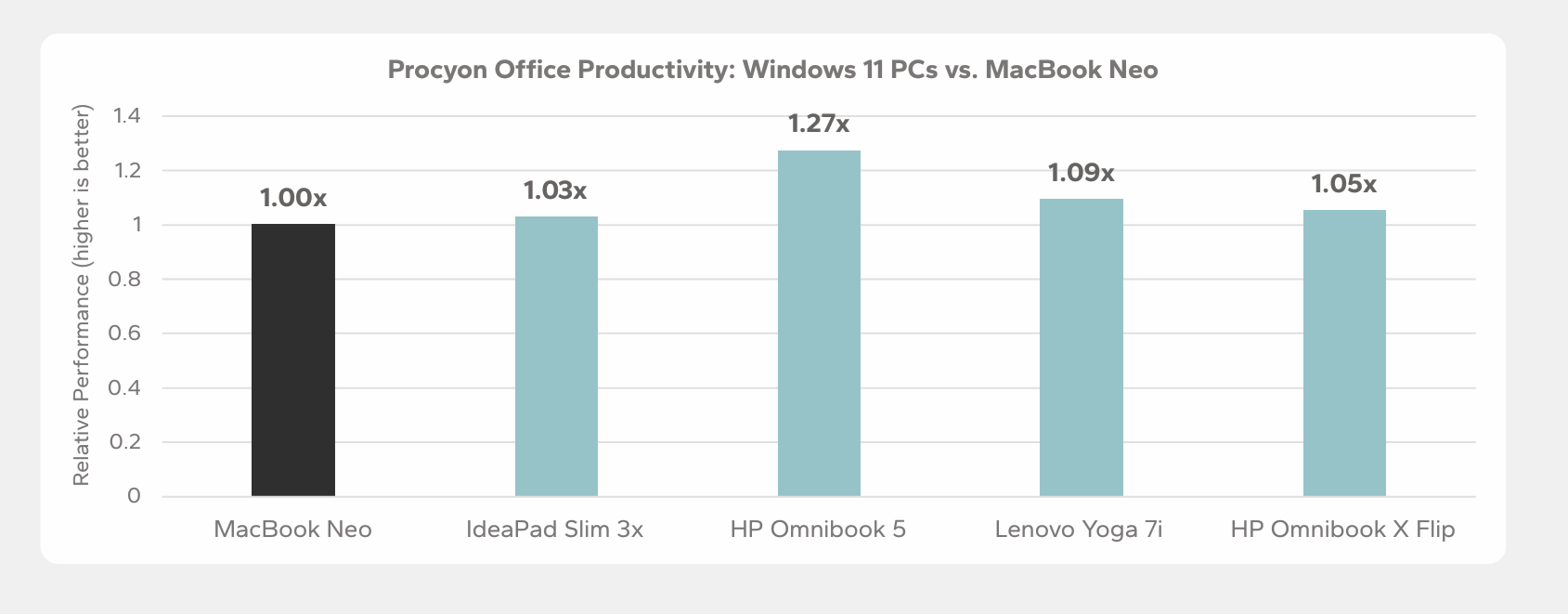
In real-world productivity, Windows maintained its lead. Signal65 reported that the OmniBook 5 handled Adobe Photoshop tasks 58% faster than the Mac, and the Windows machines routinely lasted 12% to 56% longer in Office Productivity battery life tests.
Microsoft is also sweetening the deal by actively subsidizing the purchase. The report heavily advertises the “Microsoft College Offer,” which bundles 12 months of Xbox Game Pass Ultimate, a year of Microsoft 365 Premium, and a custom Xbox Design Lab controller for eligible US students. Signal65 notes that this package adds over $500 in tangible retail value to the Windows machines.

Windows PCs are plagued by the RAM crisis and absence of premium design
If Windows laptops offer double the RAM, quadruple the storage, vastly superior multi-core processing, and $500 in free software, why are people still buying the MacBook Neo in droves?
Because Microsoft and its hardware partners are fundamentally misunderstanding the target demographic.
As we noted in our initial analysis of the MacBook Neo, the people buying a $599 Apple laptop do not care about Cinebench 2026 multi-thread scores. They are not rendering 4K video or running complex Photoshop batches. They want a laptop that feels incredibly premium, operates completely silently, features an industry-leading glass trackpad, and looks like a status symbol in a coffee shop.

The Neo delivers absolute premium CMF (Color, Materials, Finish). In stark contrast, a $449 or $599 Windows laptop usually features a flimsy plastic chassis, a wobbly hinge, a dim screen, and a terrible mechanical trackpad. Of course, there are exceptions, but the AI boom had other plans.
The problem is that Windows OEMs cannot afford to build a premium-feeling aluminum laptop at a $599 price point right now. The PC industry is currently suffering through a catastrophic RAM and component crisis. Market research firm Gartner recently reported that global memory costs are surging by a staggering 130% by the end of 2026. This component inflation is actively killing the sub-$500 entry-level PC market.
As component costs are so high, OEMs like HP and Lenovo are forced to cut corners on chassis design, trackpads, and display quality just to cram 16GB of RAM and decent processors into a $600 machine. Apple, on the other hand, vertically integrates its entire silicon stack, allowing it to eat the margins and deliver a beautifully crafted machine, albeit with a restrictive 8GB of memory.
Where is Microsoft Surface in the signal65 whitepaper?
Perhaps the most surprising part of this report, at least for me, was the omission of any Microsoft Surface device, despite the Surface Laptop 7 getting several deals online. But I digress, as this omission was done maybe on purpose to avoid bias.
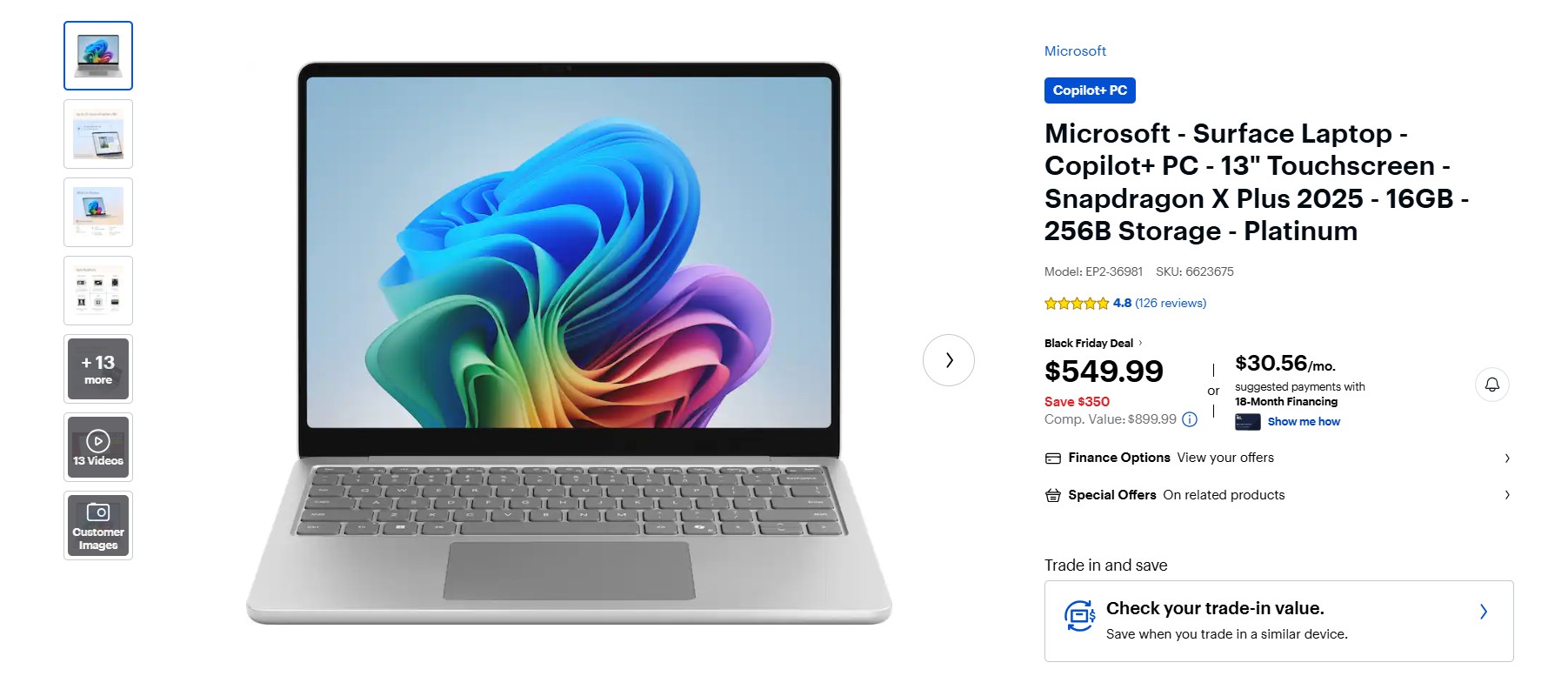
However, if Microsoft truly wanted to prove that Windows could compete with the premium feel of the MacBook Neo, they should have fronted their own hardware. But the post-Panos Panay era of Microsoft hardware has felt remarkably hollow. The company used to be the industry leader in bold, premium PC designs, pushing OEMs to innovate with devices like the Surface Book and Surface Studio.
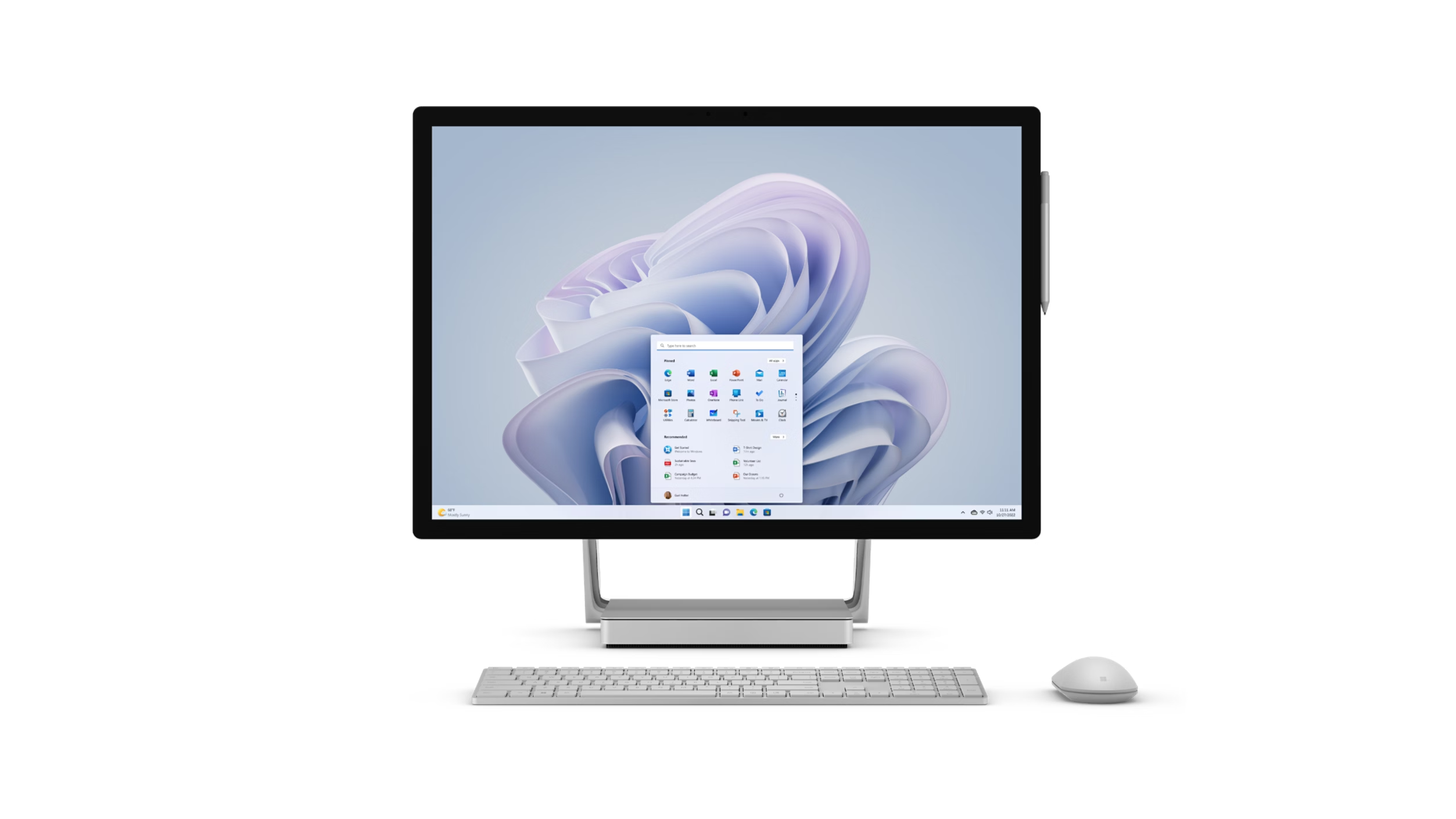
Today, despite Qualcomm’s Snapdragon architecture and Intel’s promising Panther Lake chips opening up a world of thin, fanless possibilities, Microsoft has no premium $600 Surface to answer Apple’s challenge. Instead, they have to rely on third-party laptops and $500 software bribes to convince students not to buy a Mac.
What Microsoft desperately needs is a Surface hardware revival to force the rest of the PC industry to rethink their CMF choices.
Windows 11’s reputation requires more than just 16GB of RAM
Hardware is only half the battle; the operating system itself remains a massive hurdle.
The MacBook Neo might only have 8GB of RAM, but macOS is famously efficient with memory management and fluid UI animations. On the flip side, having 16GB of RAM on a budget Windows laptop doesn’t mean much if the operating system feels sluggish. For years, Windows 11 has struggled with UI micro-stutters, legacy code bloat, and memory-hogging web apps.
Thankfully, Microsoft is acutely aware of this and is actively rolling out massive OS-level optimizations. We recently reported that Microsoft’s latest updates are finally fixing memory leaks, slow startup times, and File Explorer bugs.
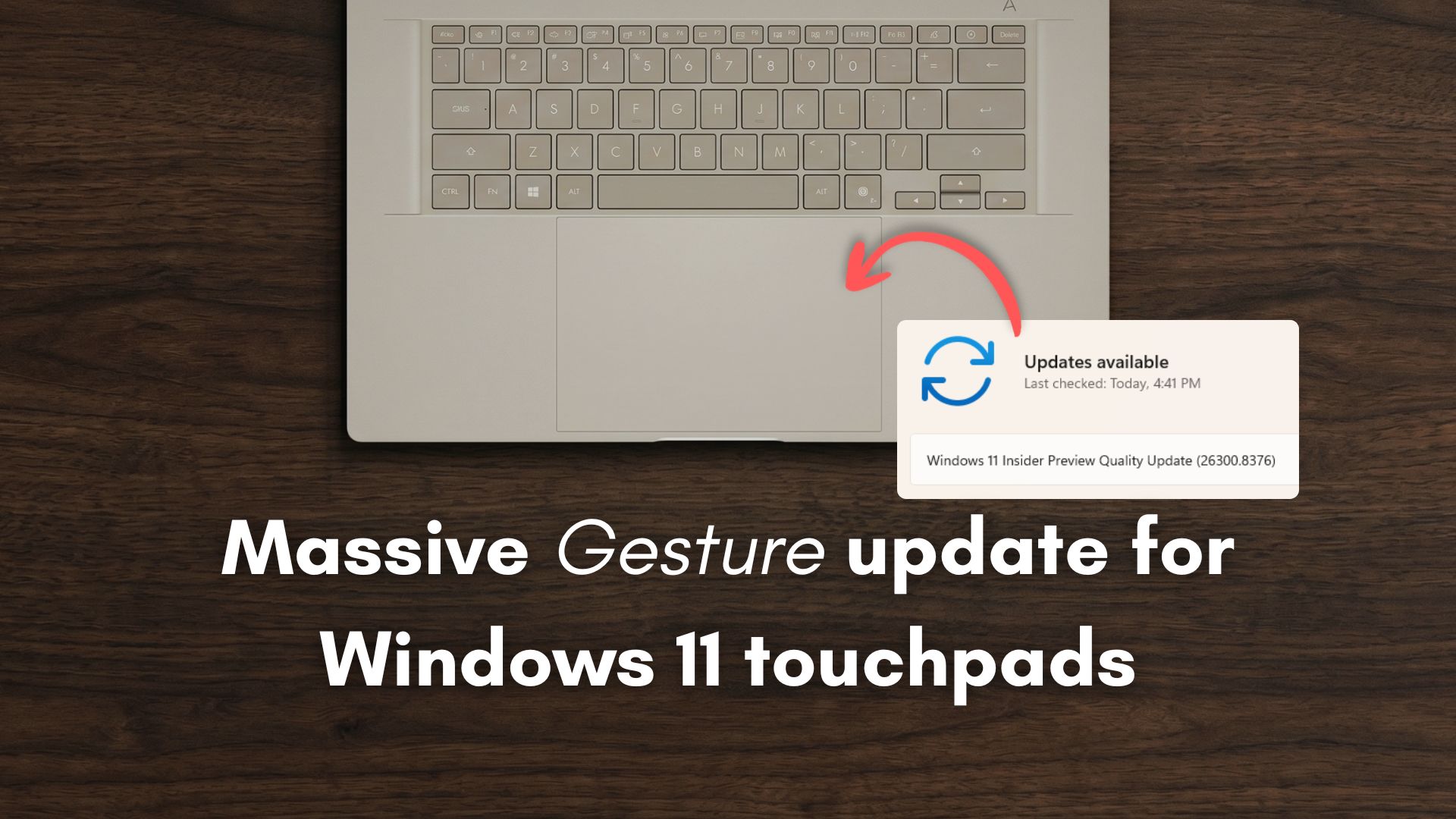
Microsoft is also working on several new touchpad gestures for Windows 11 PCs that would make the experience more premium.
Even more promising for budget laptops is the new CPU scheduler upgrade. As I found when I tested Windows 11’s hidden Low Latency Profile, Microsoft is introducing a feature that spikes the CPU to its maximum frequency for 1 to 3 seconds when opening apps or menus. This eliminates UI lag to an extent, making entry-level laptops feel remarkably snappy. Once these OS-level optimizations roll out globally, the raw performance gap emphasized in the Signal65 report will become much more noticeable in everyday use.
Windows PCs have the undeniable power of choice
Despite the MacBook Neo’s premium build quality, Microsoft’s core argument in this report still holds weight: Windows gives you choices that Apple never will.
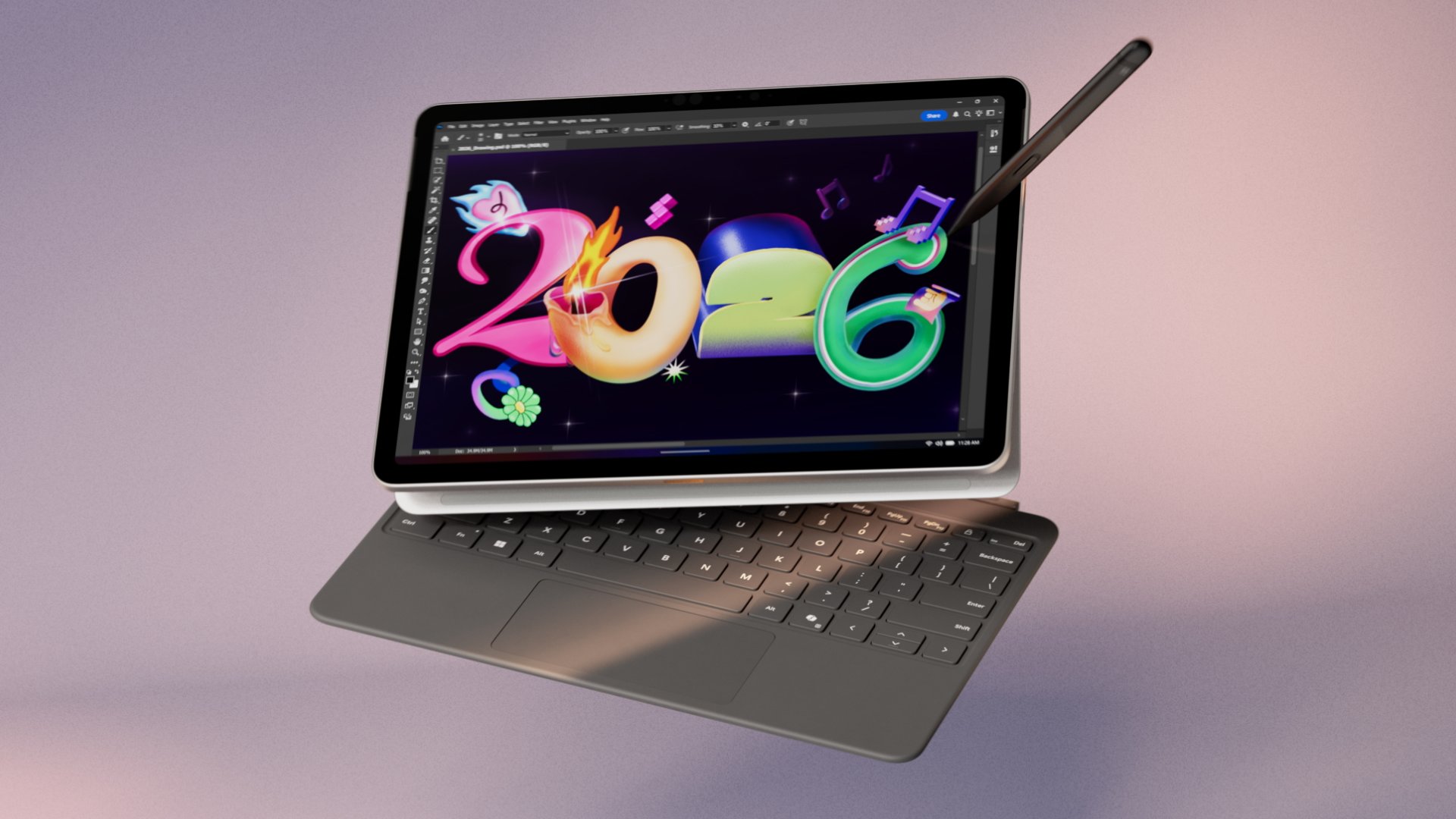
If you want a laptop that doubles as a tablet for digital art, the Lenovo Yoga 7i and HP OmniBook X Flip offer 2-in-1 convertible designs with full touch and pen support, which are features Apple strictly reserves for the iPad.
Furthermore, the MacBook Neo is an absolute non-starter for gamers. Apple’s ecosystem remains hostile to traditional PC gaming. Meanwhile, Windows 11 gives you native access to DirectX 12, Steam, Epic Games, and thousands of titles that will simply never run on macOS. The inclusion of Xbox Game Pass Ultimate in the student offer is a massive dagger to the Neo’s appeal for young buyers who want a device for both homework and entertainment.
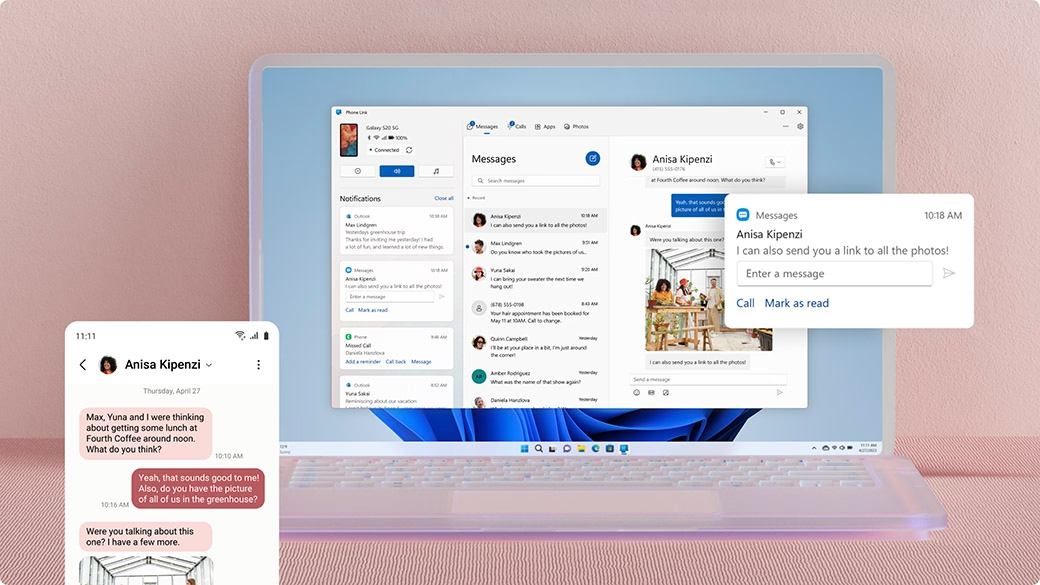
That said, the truth is that the Signal65 report is a reflection of a panicked PC industry trying to fight a design war with benchmark charts. The MacBook Neo is going to sell incredibly well because it looks and feels like a $1,000 laptop for almost half the price.
But for buyers who care about storage capacity, multi-monitor support, touchscreens, and PC gaming, Microsoft’s message that the Windows ecosystem still offers significantly more computer for your money still holds.
A simple explanation for this is that once you buy a MacBook Neo, you’ll be hard-pressed not to get an iPhone, and then an AirPods, and then an Apple Watch…and continue buying their next iterations while climbing the price ladder. Not to mention the subscriptions that Apple subtly pushes you into. Ecosystem is Apple’s play here, and it’s not exactly an industry secret.
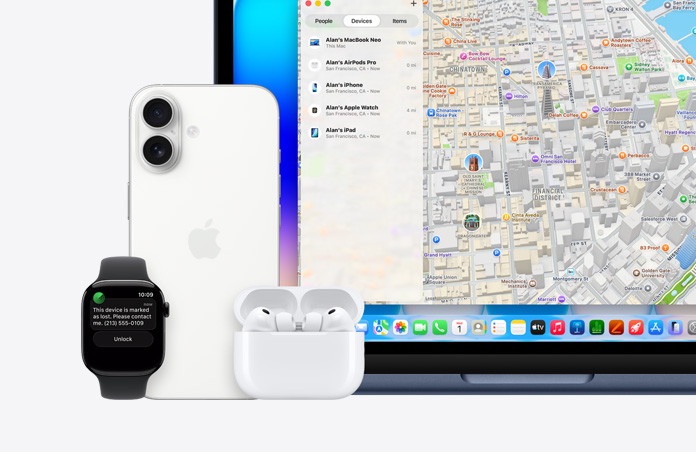
Of course, we’re not defending Microsoft or PC OEMs, but at least you have impeccable choices with Windows PCs. You don’t have to stick with a brand. You can choose any smartphone brand, Android or iPhone. You can even choose to build your own custom PC!
Microsoft has a lot of work to do. It starts with fixing Windows, and fortunately, 2026 is all about this. As for the next year, when or if MacBook Neo 2 launches, software optimizations alone can’t help the company.