




Microsoft’s social media pages aren’t ones to shy away from bold claims on platforms like X, but unfortunately, the comments and replies are usually negative towards the company, mostly due to people’s abhorrence towards AI in Windows 11, and the issues the OS had in 2025 didn’t help either.
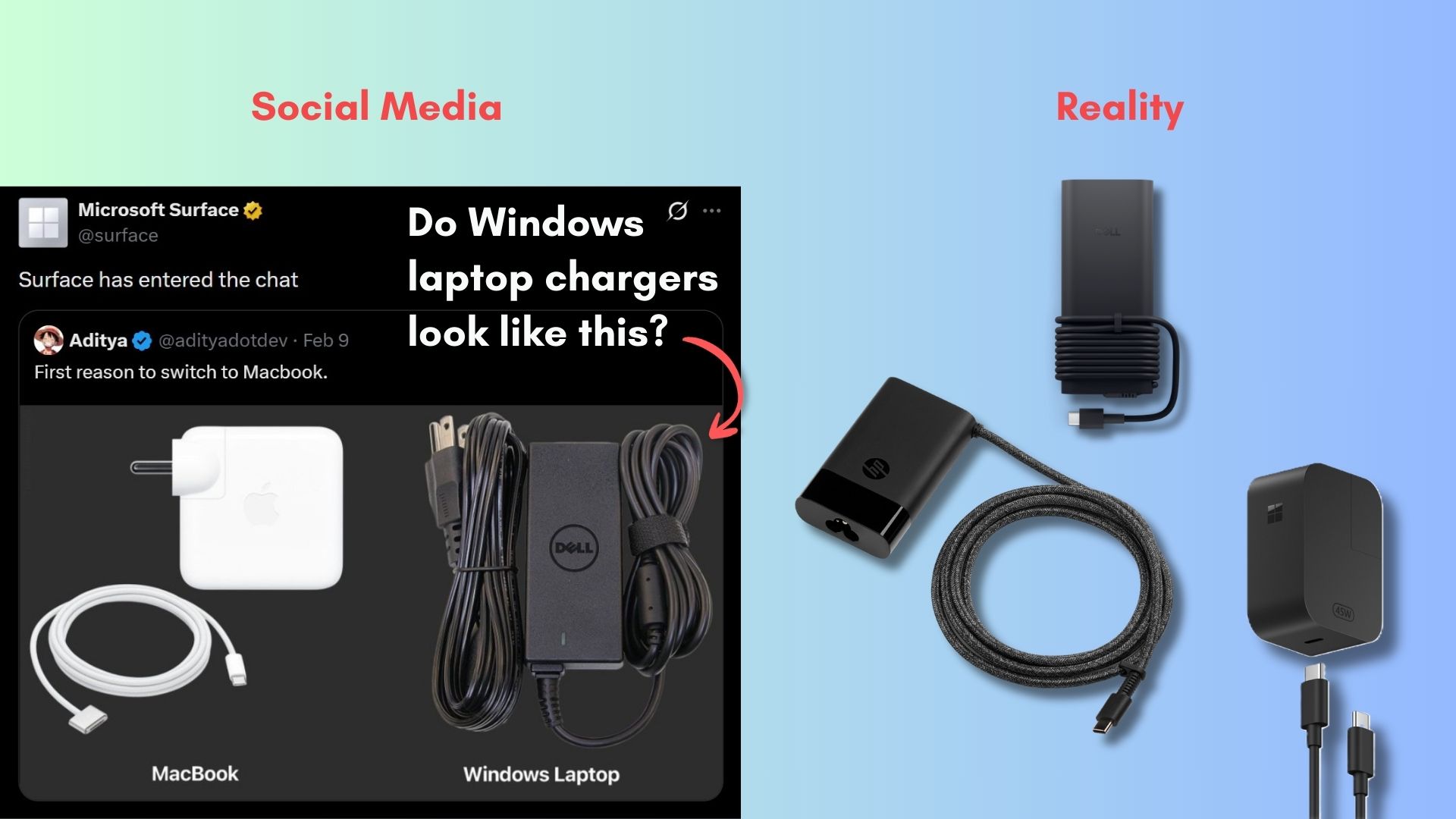
This time, however, the official Microsoft Surface account made a lighthearted jab that was far less controversial than the reaction it received. The original post by an X user, who is a developer, showed a side-by-side image of a new MacBook charger and an old Dell Windows laptop charger, with the caption “First reason to switch to MacBook”.
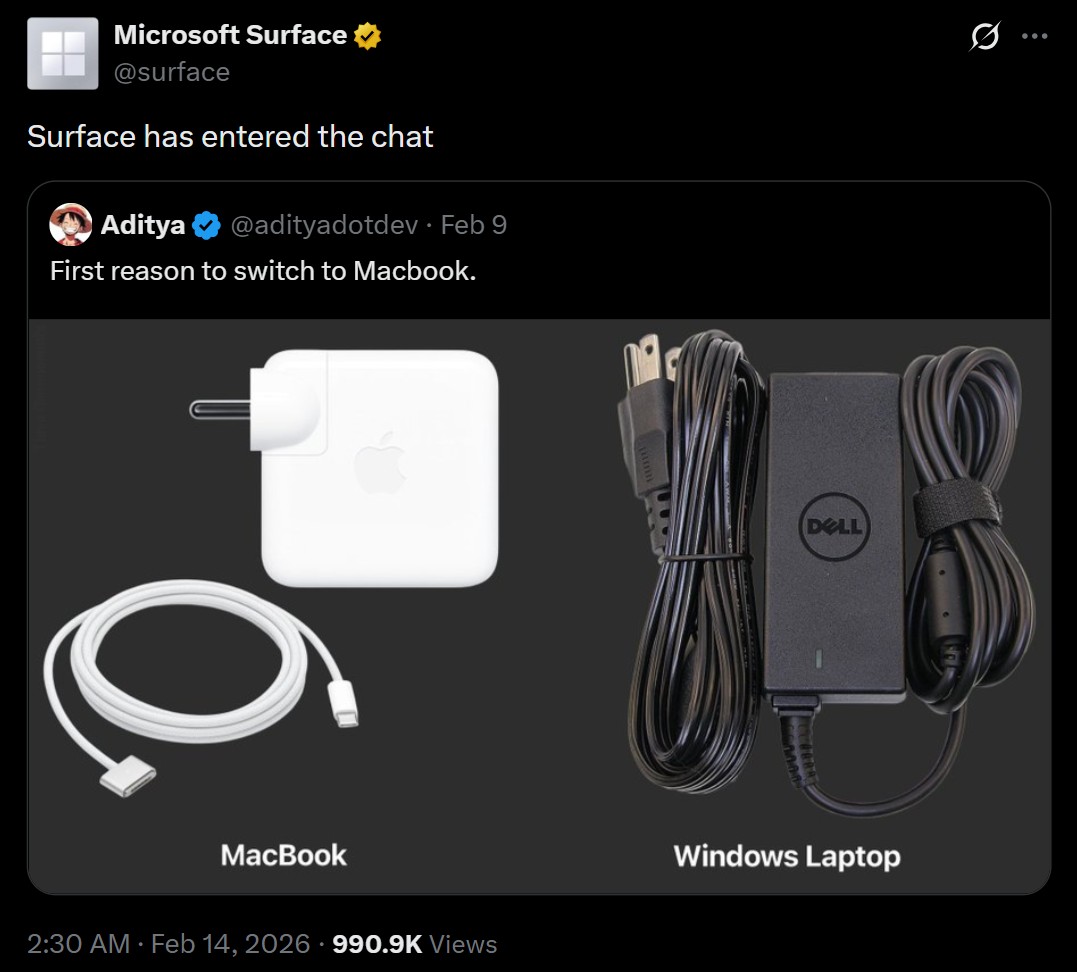
The Surface social media team replied with “Surface has entered the chat”, which hints at the compact chargers that all portable Surface PCs come with. And in all fairness, most Windows laptops ship with compact chargers these days, except the dirt-cheap ones and the powerful gaming laptops, both of which are understandable.
Microsoft’s reply has gone on to garner almost a million views, but sadly, despite saying the truth, the comments section is filled with hostility towards Microsoft and Windows, which isn’t new, to be honest. But the issue here is that the original post by the developer has reached a staggering 3.8 million views despite showing a false claim.
Of course, we are not denying the frustration many users feel toward Microsoft, and a lot of it stems from the rough patches Windows 11 went through over the past year. The company has already signaled that 2026 will focus heavily on performance tuning, reliability, and security changes to rebuild confidence in the platform.
But when criticism spills over into situations where the claim itself is accurate, it risks reinforcing outdated perceptions.
Someone casually coming across that viral post could scroll away thinking all Windows laptops still ship with bulky adapters and treat that as a deciding factor, just like the original poster said, without realizing that charger size is dictated by hardware class and power demand.
Most modern Windows laptops already ship with compact USB-C chargers
Over the past several years, most thin-and-light and mid-range Windows laptops have already moved to USB-C Power Delivery adapters that are very similar in size and output to what ships with a MacBook. In fact, Windows laptops in the price range of MacBooks have more compact chargers than what Apple provides, with even higher power delivery.
For example, the following image shows the charger that comes with a Dell XPS 14 from 2025. Yes, the developer in his X post also shows a Dell charger, but we’re not sure which decade it is from.
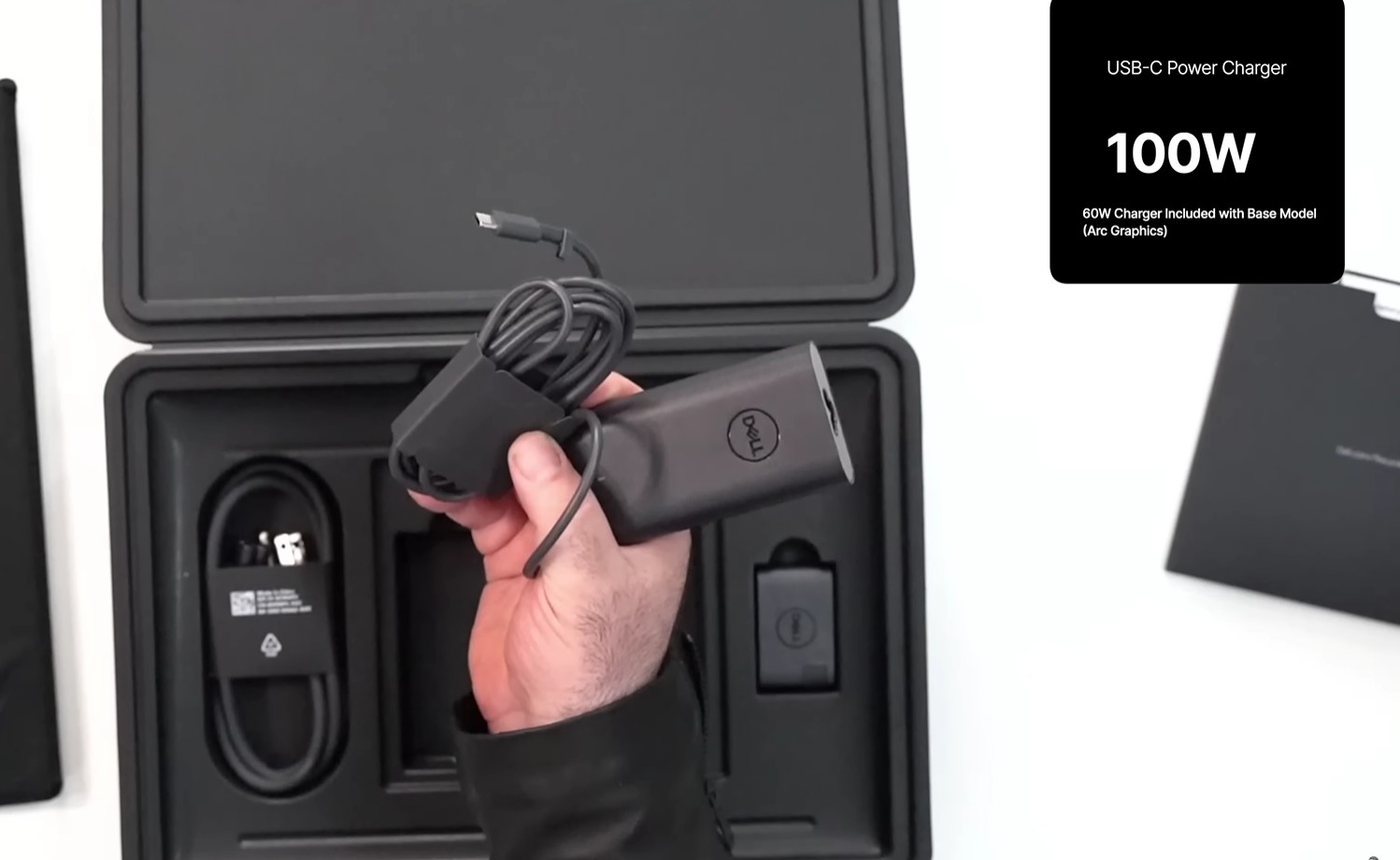
Note that this charger is already smaller than the MacBook charger shown in the X post, while also delivering 100W of power output. It’s neatly designed with a detachable power cord that connects to the mains, and the adapter can be safely placed on a table or wherever convenient.
In comparison, the following image shows a 96W USB-C Power Adapter by Apple. It’s not something that looks compact, and it connects directly to the mains, so it wouldn’t be ideal if there is furniture (desk, table, or sofa) right in front of the power outlet.
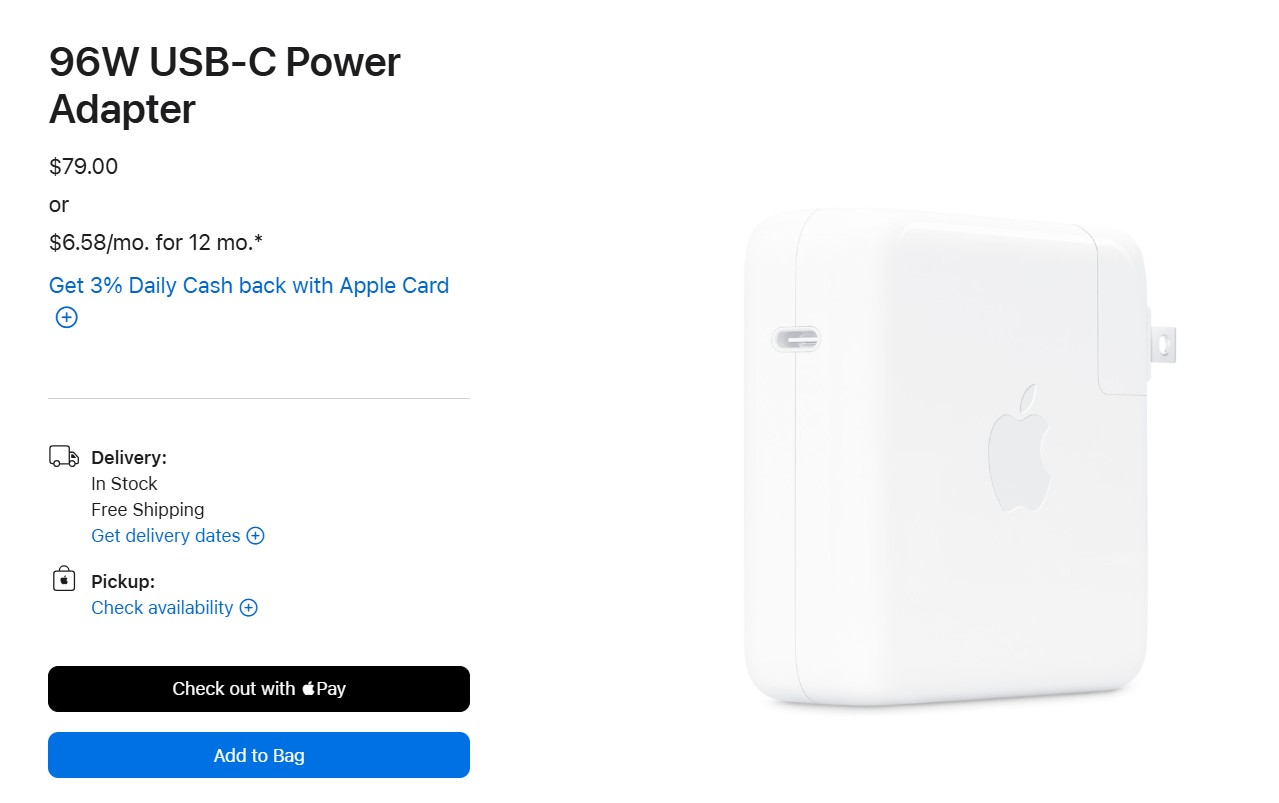
If you think that this is compact, then look at the absolute behemoth shown below.
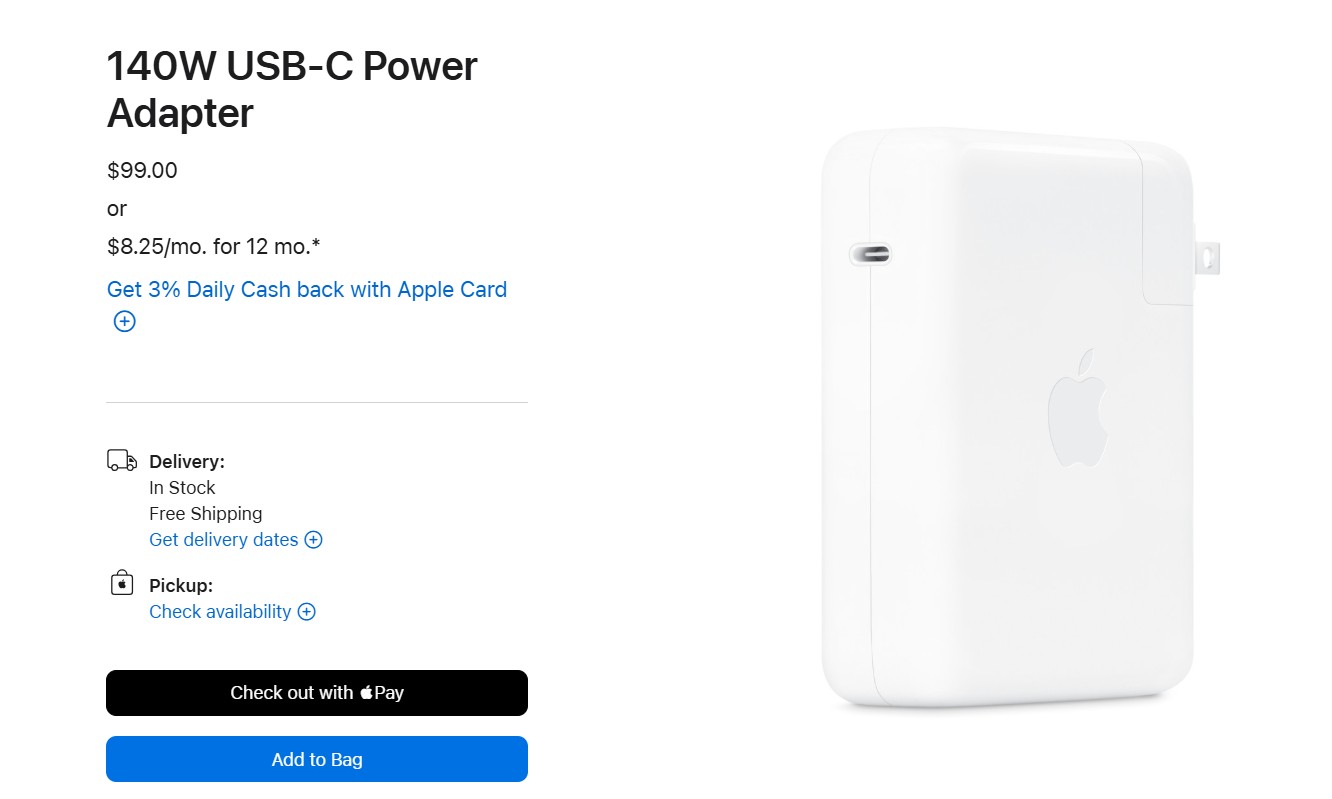
One look at the tiny USB-C port is enough to understand that this is a proper brick that Apple expects we connect directly to the power outlet. Honestly, not very practical. Apple is known for siding with form over function and this is one such example. Such a large adapter could’ve been better if it had a separate cable that can connect to the power outlet, like what dell did here:
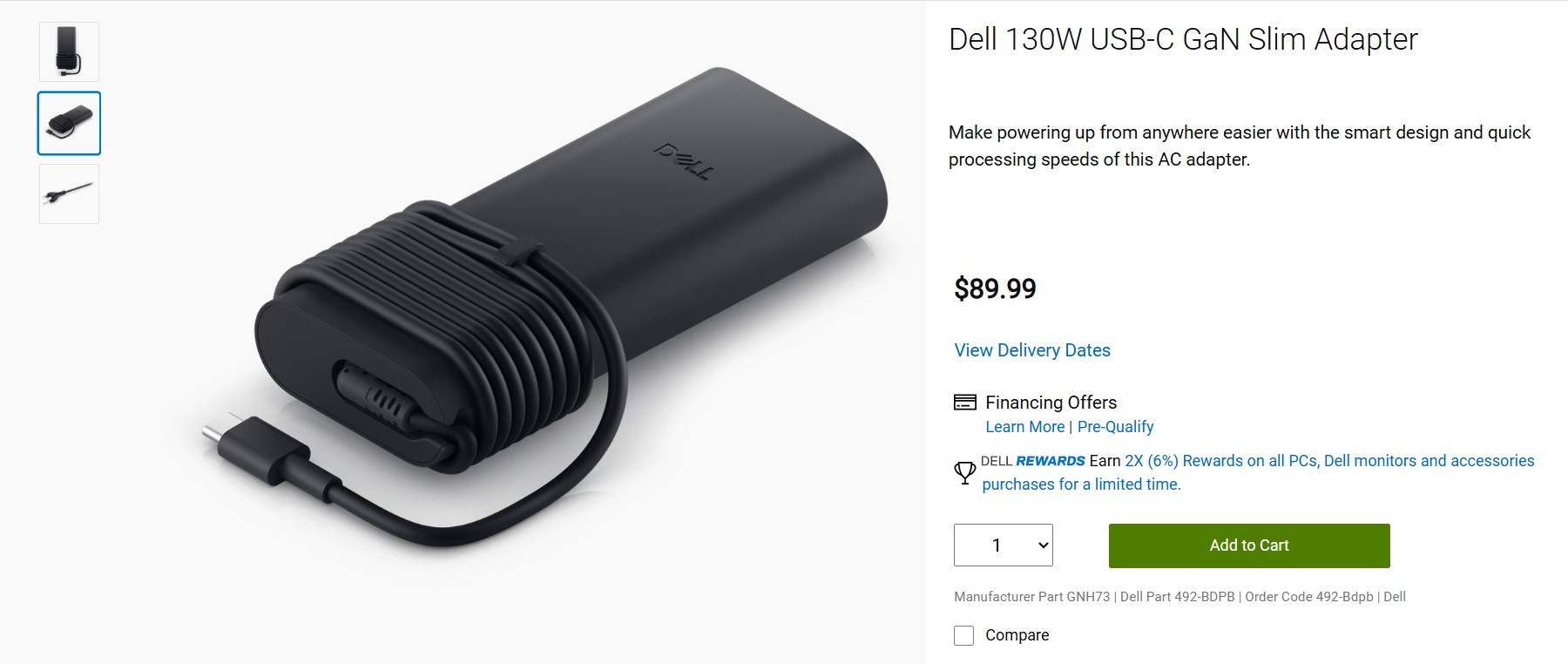
This is Dell’s 130W power adapter which is much more compact and practical to use. But Dell isn’t done here. The following image shows an incredible 280W power adapter from Dell. It’s double the power delivery of Apple’s charging brick, while still being actually compact.
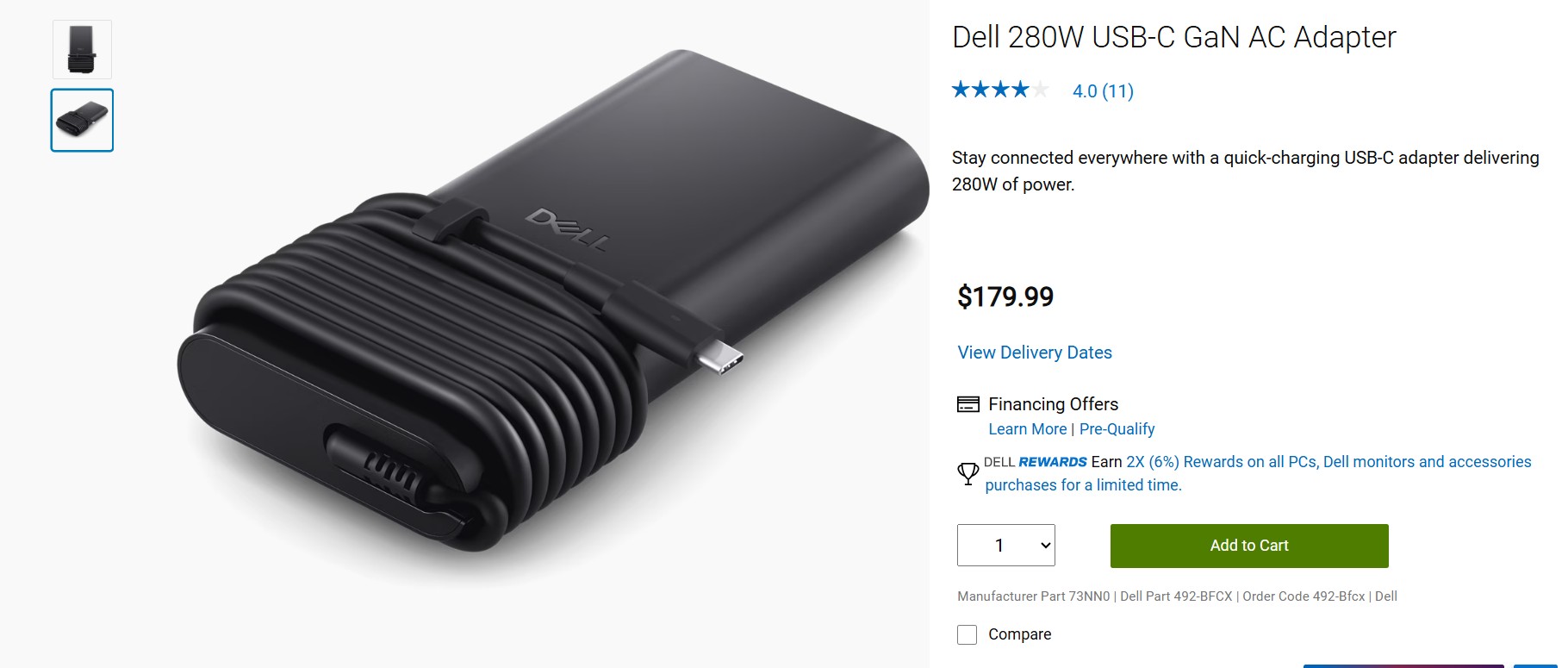
Yes, there are what Dell offers for their laptops priced similar to MacBook Pro. The company has even smaller ones, but you’ve seen enough of Dell already, so here is one from Samsung:
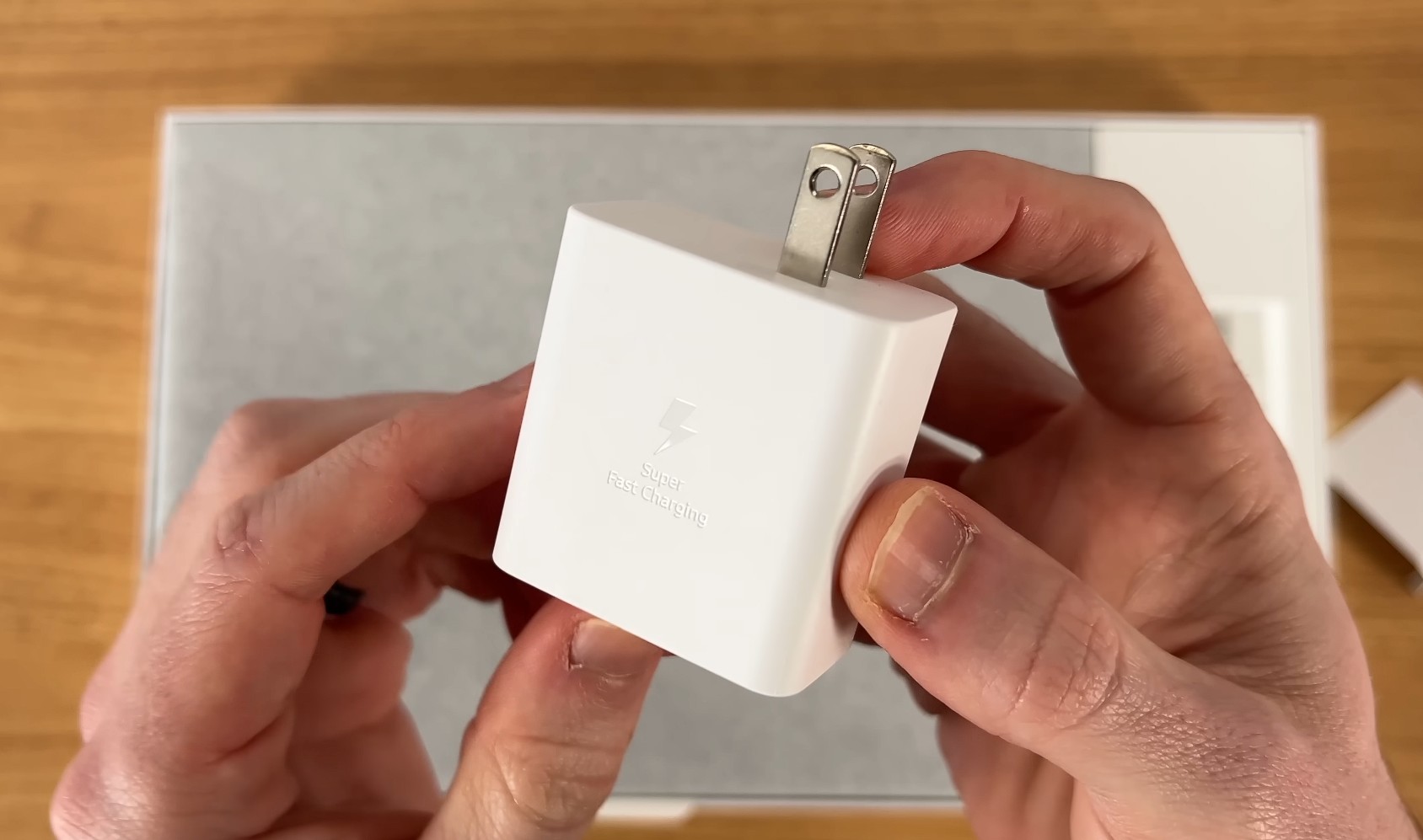
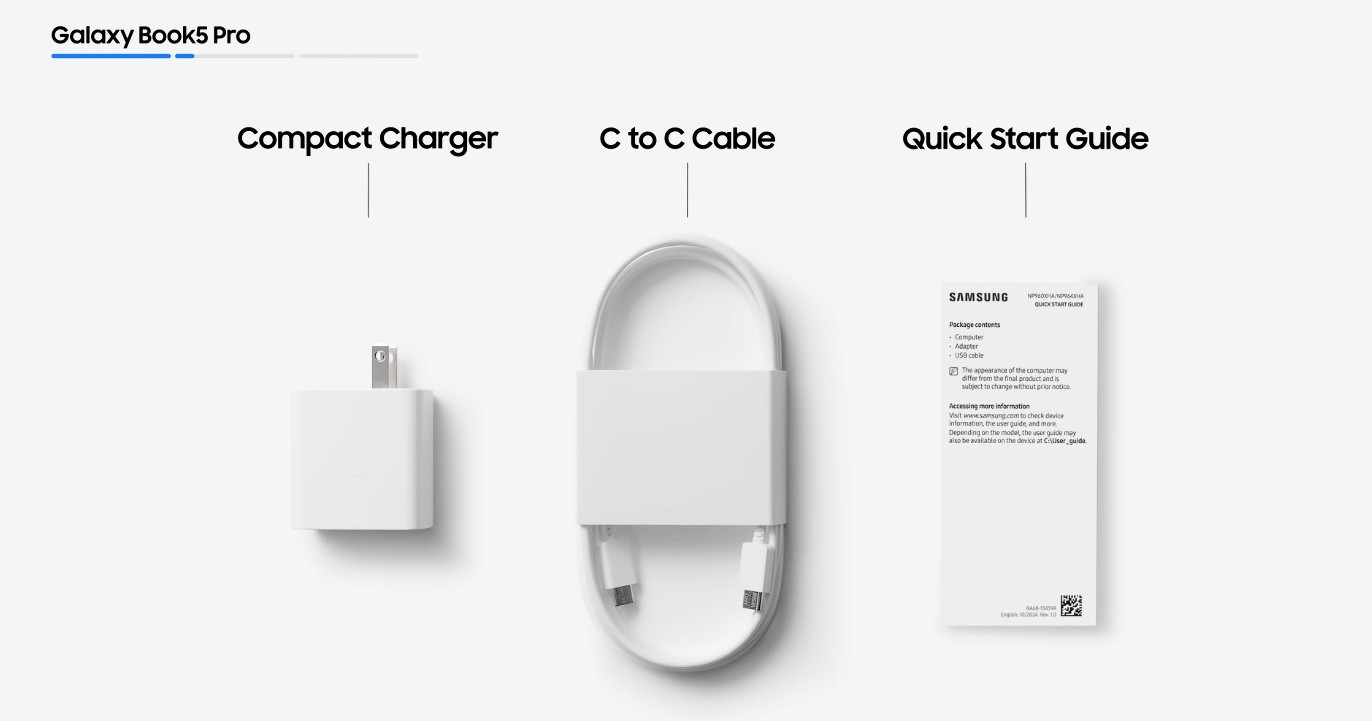
No further evidence is required to demonstrate how profoundly mistaken the original poster was. So maybe a short explanation of how the Windows laptop industry beat Apple in their own game of minimalist charging adapters would suffice.
How Windows laptop power adapters became compact?
While the change was gradual, Windows laptops have been shipping compact chargers for a few years now. So, it isn’t anything new.
- The industry standardized around USB Power Delivery, which allows devices and chargers to negotiate voltage and current dynamically, so the laptop asks for exactly the amount of power it needs, and the charger supplies it.
- The second reason Windows laptop chargers have shrunk is the adoption of GaN (gallium nitride) semiconductors. GaN components switch faster and waste less energy as heat than traditional silicon, which allows manufacturers to build smaller, lighter adapters without reducing output capacity.
Apple still doesn’t ship GaN power adapters with MacBooks, unlike Dell, Samsung, or pretty much all mainstream PC brands that sell laptops around the same price as MacBooks.
Of course, Apple certainly helped popularize the idea of minimalist laptop charging, but it would be wildly inaccurate to suggest Windows laptops still use bulky adapters, like how the original poster mistakenly claims.
Note that charger size is directly tied to how much power a laptop needs. A thin ultrabook designed for Office work and light development might draw 45W to 65W, which is easy to deliver through a very small USB-C adapter.
A high-performance laptop or gaming laptop can demand well over 140W sustained power to run high-performance CPUs and GPUs without throttling. That extra power has to come from somewhere, and physics still applies, which means larger components, more thermal headroom, and therefore a bigger adapter.
This is why gaming laptops from every brand, whether it is ASUS ROG, Alienware, Lenovo Legion, or MSI, still include sizeable power bricks. They are not designed to be minimalist travel machines. They are effectively portable desktops, so a comparison with MacBooks would be futile.
The official Surface account’s reply was spot on, but the conversation missed the context
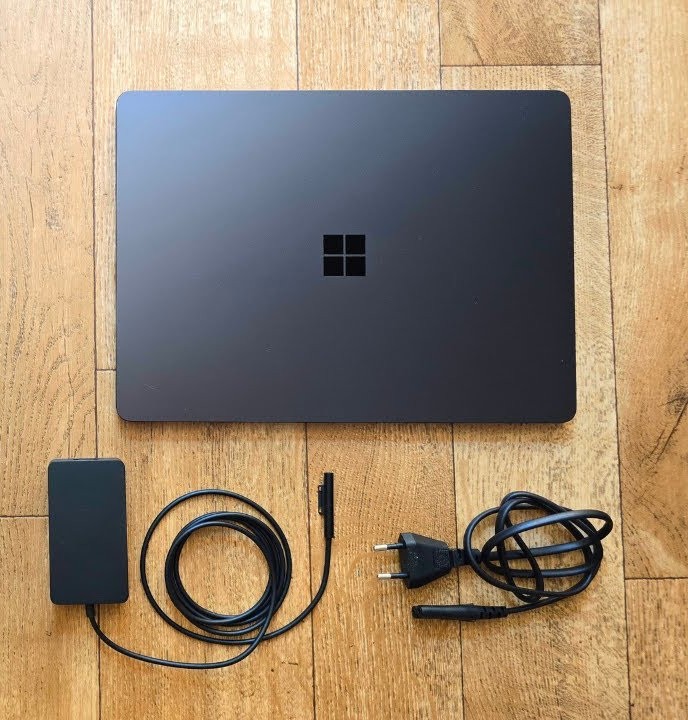
The Surface account’s response was pointing to the category it actually competes in. Surface Laptop, Surface Pro, and similar devices are thin productivity machines that already come with compact USB-C-based chargers (or the Surface Connect), very much in line with other premium ultraportables on the market.
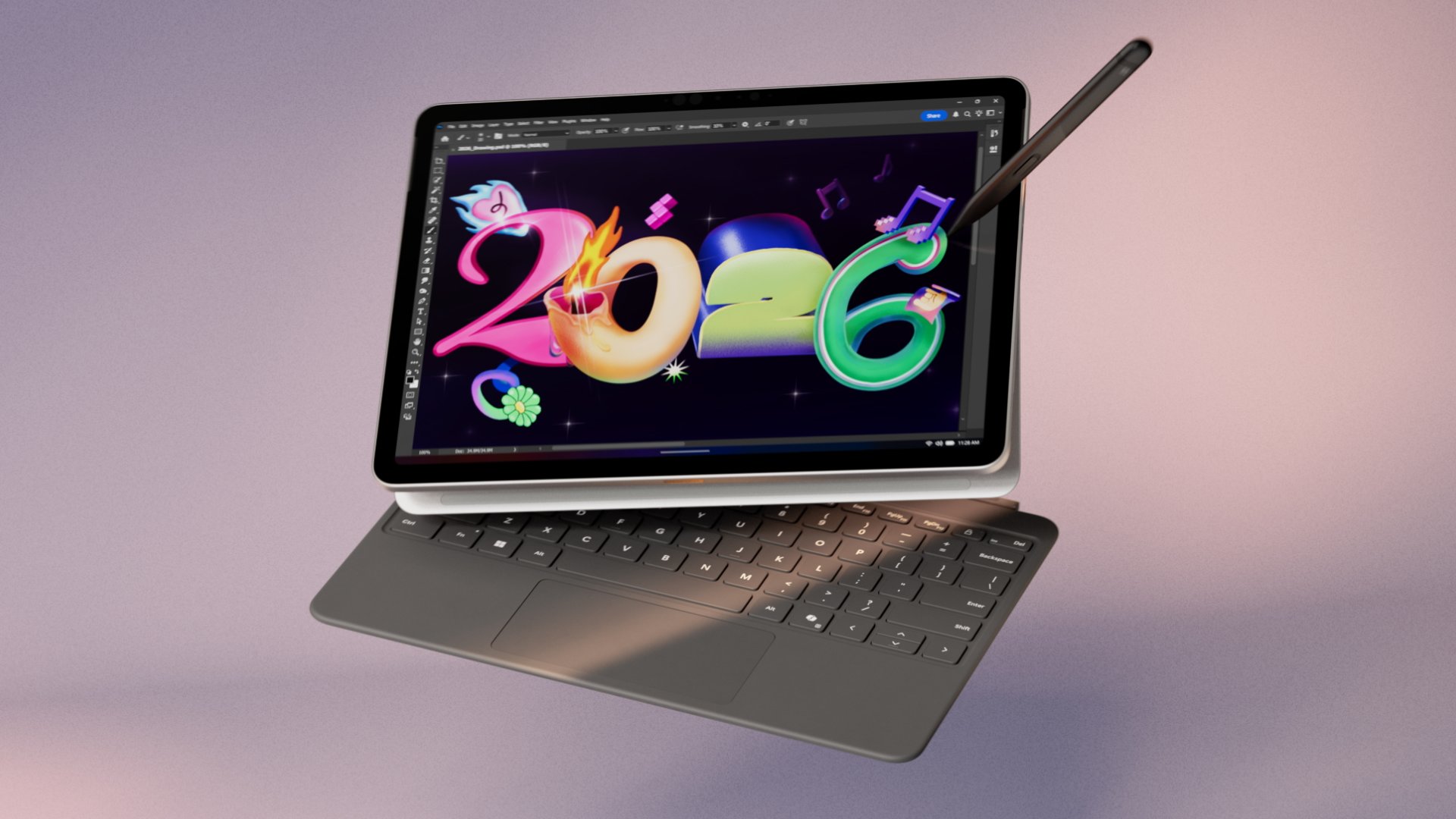
Microsoft’s socials team was highlighting that modern premium Windows hardware, including Surface devices, has already moved to the same class of compact, travel-friendly charging adapters people associate with MacBooks. The viral comparison used an older, high-wattage barrel charger that does not represent what most ultrabooks ship with today.
What followed online, however, showed a broader sentiment about Windows rather than the specific claim being made.
This lingering negativity toward Microsoft and Windows also means some genuinely important developments risk getting buried in the noise. The PC ecosystem is in the middle of a major hardware transition, with Intel Panther Lake processors and continued momentum behind ARM-based Windows PCs, all targeting better performance per watt and longer battery life. Those advances matter far more than the size of a charger, yet they rarely get the same attention when discourse is dominated by past frustrations.
At the same time, Microsoft has already said that 2026 will focus on stabilizing Windows, with work underway to address reliability problems, reduce AI interventions, improve File Explorer, and background behavior during gaming. The company has even begun reconsidering long-requested changes like a movable and resizable taskbar.
Microsoft undeniably dropped the ball in 2025. But the current roadmap suggests a course correction for Windows 11. If those promised improvements land as expected, 2026 may end up being remembered less for social media debates and more for Windows getting back to fundamentals.