


Microsoft has two conflicting statements on how secure AI is in Windows 11. In one document, the company says AI Agents on Windows 11 can hallucinate and perform “unintended actions like data exfiltration or malware installation.” Now, in a post on X, the company says AI can empower Windows users easily, securely, and confidently.
As first spotted by Windows Latest, there’s a new post on X that encourages developers to build AI features or apps for Windows 11 Copilot+ PCs, such as those that ship with a Snapdragon processor and have an NPU and chip.
“Windows is evolving to empower people to use AI easily, securely & confidently,” Microsoft wrote. “It is becoming the canvas for AI—built into the system, silicon & hardware so organizations can move from experimentation to execution at scale.”
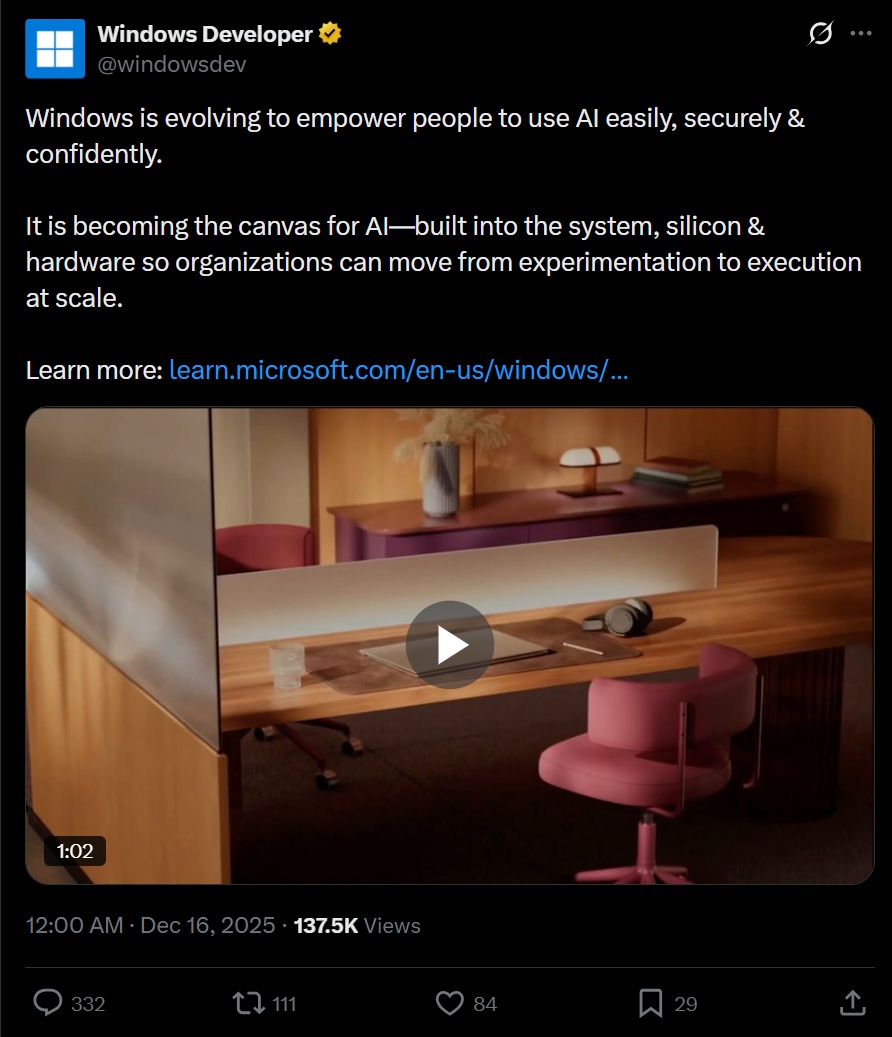
Microsoft also says that “Windows is evolving to empower people to use AI easily, securely & confidently.”
This phrase is quite interesting because Microsoft previously admitted that AI in Windows 11, particularly AI agents in the OS, is not the most secure feature.
According to Microsoft, “Agentic AI” is powerful, and it can execute tasks on your behalf. For example, “Actions” in Copilot has actions to your personal files or folders, and it automatically renames files for you, among other ‘agentic’ features. This AI experience is powered by “Agentic Workspace.”
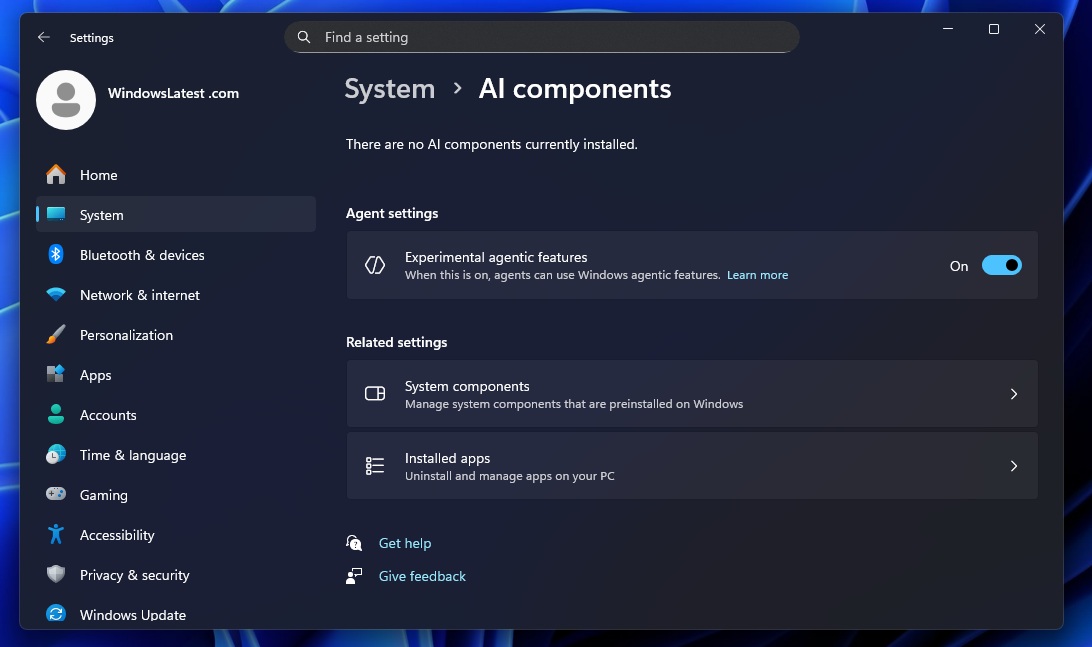
Agentic Workspace is an optional feature because of potential security issues. In a support document spotted by Windows Latest, Microsoft noted that AI can hallucinate and “produce unexpected outputs,” and it can be particularly dangerous when agents have access to your personal files or folders.
“Agentic AI applications introduce novel security risks, such as cross-prompt injection (XPIA), where malicious content embedded in UI elements or documents can override agent instructions, leading to unintended actions like data exfiltration or malware installation,” Microsoft noted.
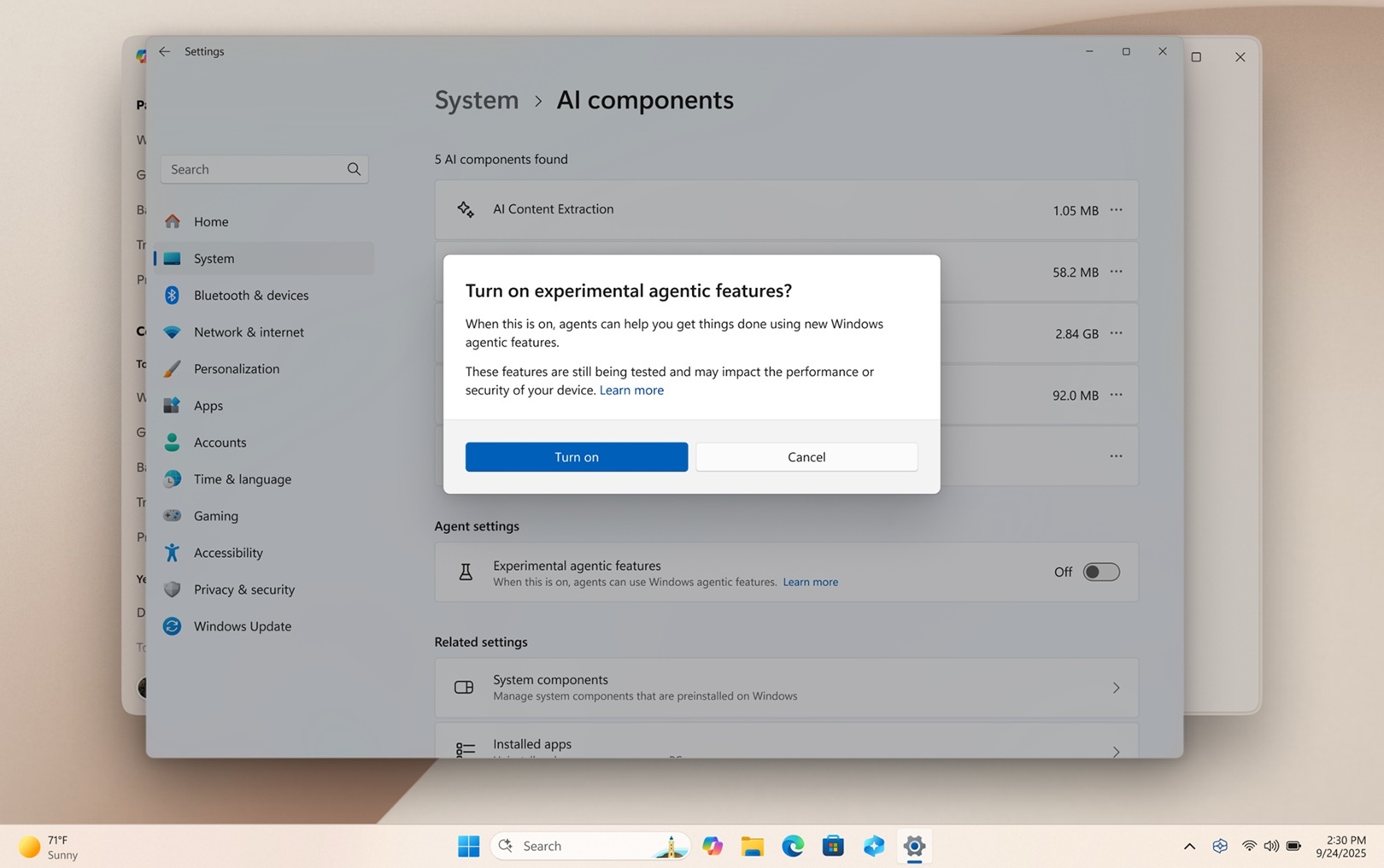
The threat is so real that we have a pop-up that warns of security consequences when you try to turn on Agentic experiences in Windows 11 preview builds.
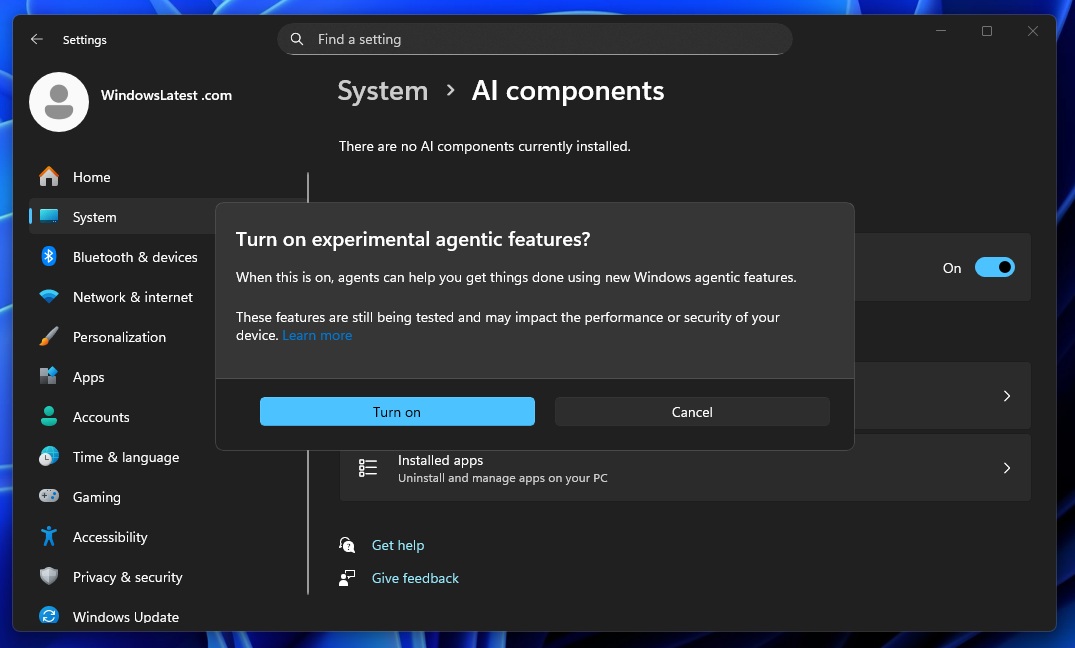
Yet, the company’s X post claims Windows 11’s AI empowers users securely.
Microsoft says Windows 11 is now a ‘canvas’ for AI
Microsoft also has a documentation titled “Develop AI applications for Copilot+ PCs.”
This document explains how Windows 11 is turning into a “canvas” for AI. Microsoft is also inviting developers to build AI apps for PCs that include a powerful NPU (Neural Processing Unit), which allows apps to run AI tasks locally on the device.
Microsoft says the recommended path has shifted to Windows ML (WinML) instead of manually dealing with DirectML and hardware-specific “execution providers.”
With Windows ML, Windows can detect the best accelerator (Qualcomm NPU via QNN, Intel via OpenVINO, etc.), load what’s needed automatically, and fall back to GPU or CPU if the preferred NPU isn’t available.
Windows is not an AI canvas, Microsoft. Stop this
You might ask me why Microsoft is so hell bent on calling Windows 11 a canvas for “AI.” Is it just a marketing gimmick? I beg to differ. I don’t think it’s just a marketing gimmick. It’s a narrative being pushed out by Microsoft, and the company wants you to fall for it.
The company wants you to accept that Windows is now “AI-first” and that AI should sit in the middle of everything you do.
It’s not the first time Microsoft has tried to change how you see Windows.
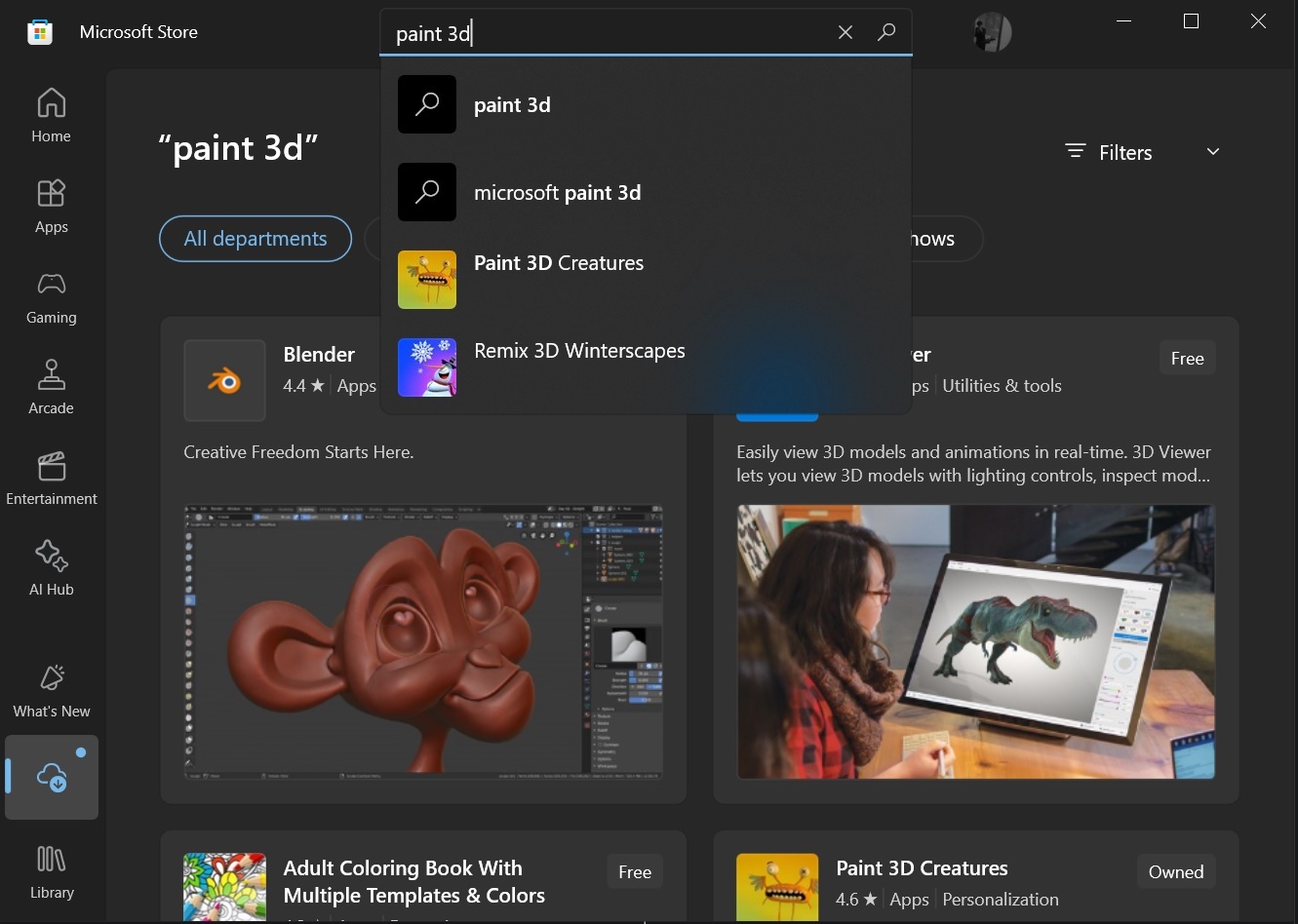
If you’ve been following Windows for a while, you probably remember the Windows 10 Creators Update (version 1703). Microsoft positioned it as a release aimed at “creators,” with a focus on things like 3D content, Paint 3D, and Windows Mixed Reality, alongside broader feature updates.
Before Windows 10, Microsoft pushed Windows 8 as a touch-first operating system, designed around tablets and 2-in-1 PCs, with UI and app behavior built to work best on touchscreen hardware.
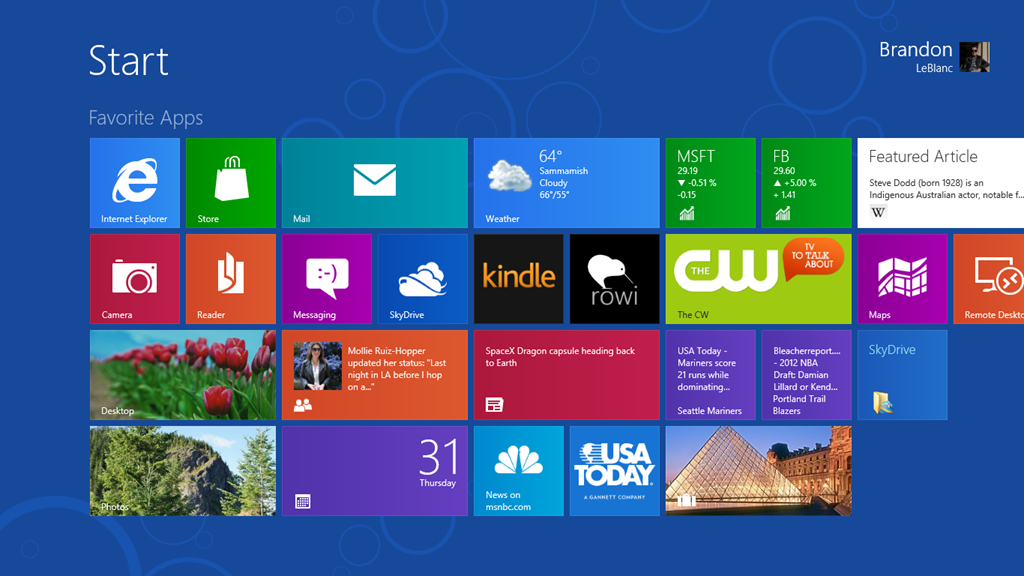
With these Windows releases, Microsoft tried to push a narrative, and we’re seeing something similar with “Windows as AI canvas” efforts.
Ironically, all previous attempts to change how people think and feel about Windows failed. It’s largely because Microsoft misses what makes Windows popular in the first place. What do you think?