




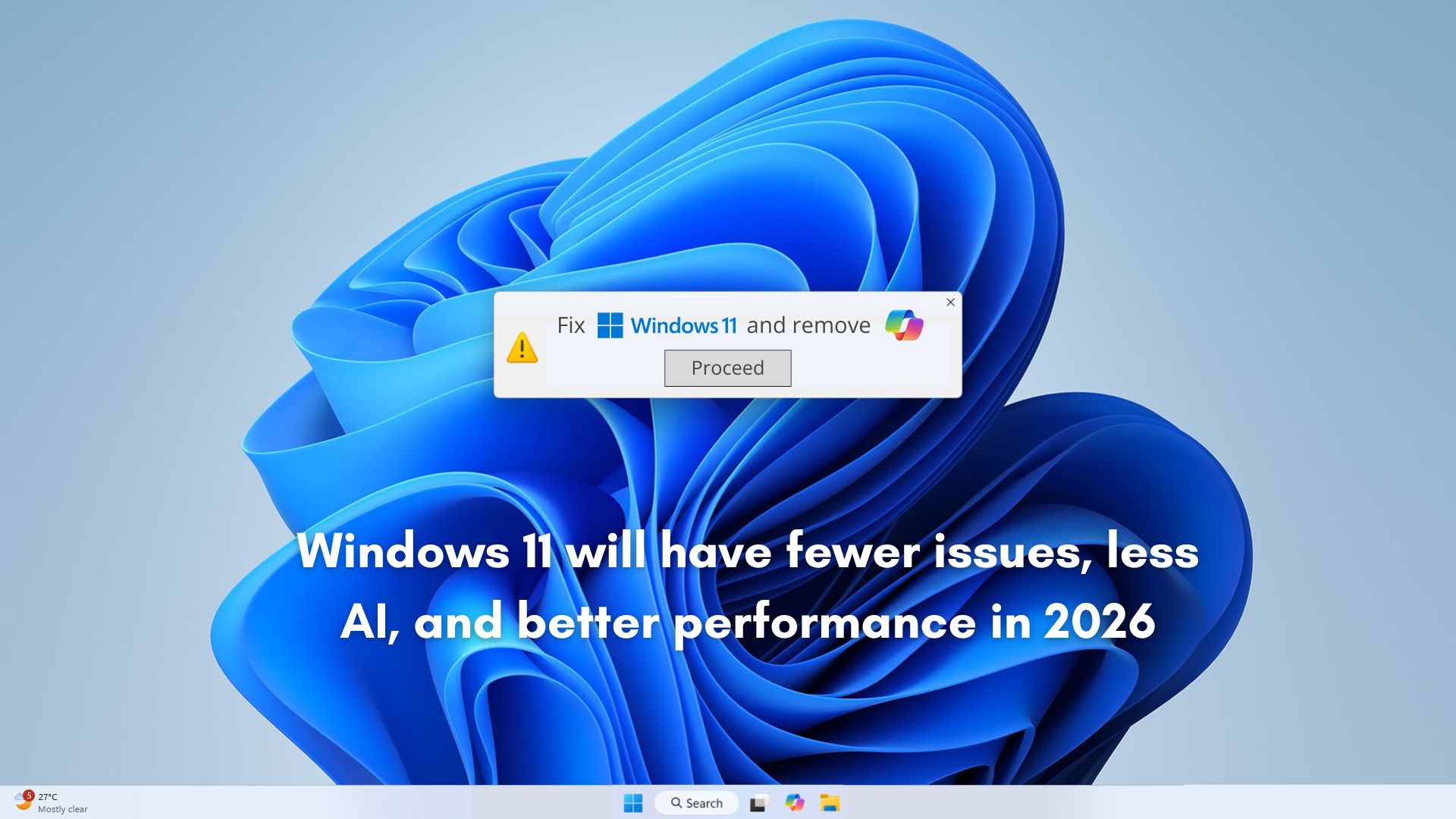
After what seems like years of neglect, Microsoft has finally decided to fix Windows 11, and in even better news, the company has plans to cut down the presence of Copilot in various parts of the OS.
Windows 11’s reputation hit a record low in 2025 after a steady stream of major issues turned what should have been a stable OS into a testing ground for broken updates. Windows Latest compiled a list of 20 major Windows 11 update issues in 2025, but there were many more, to be honest.
To make matters worse, Microsoft told the world that its intention with Windows was to turn it into an “Agentic OS”. The company was too busy chasing the “AI PC” dream, shoving Copilot into places where it didn’t belong, like Notepad, so much so that basic functionality suffered in Windows 11.
But the tide might finally be turning.
Microsoft plans to fix Windows 11 in 2026, while scaling back AI integration
In a candid admission that has surprised many of us, Microsoft has confirmed that it is hitting the brakes on its aggressive feature expansion to focus on making Windows work as it should. In statements to Notepad and The Verge, Windows lead Pavan Davuluri acknowledged the “pain points” users have been screaming about for years.
The company is now deploying a strategy known internally as “swarming,” where engineering resources are rapidly redirected to address the core reliability and performance issues that have plagued the OS.
“The feedback we’re receiving from our community of passionate customers and Windows Insiders has been clear. We need to improve Windows in ways that are meaningful for people. This year, you will see us focus on addressing pain points we hear consistently from customers: improving system performance, reliability, and the overall experience of Windows.”
– Pavan Davuluri, president of Windows and devices
Microsoft is also cutting down Copilot and reassessing Recall
Alongside its rekindled focus on fixing core Windows problems, Microsoft is also quietly stepping back from its AI-first approach for Windows 11.
According to a report by journalist Zac Bowden, the company is now reevaluating how Copilot and other AI features fit into Windows 11, after months of backlash from users who felt the OS was being turned into a testing ground for half-baked ideas.
The trust issues first started with Windows Recall in 2024, which was delayed by an entire year after users raised serious privacy and security concerns. Instead of learning from that response, Microsoft doubled down in 2025 by placing Copilot buttons across built-in apps like Notepad, Paint, and File Explorer, even when the integrations were intrusive and added little to no real value.
Unsurprisingly, this backfired.
The crisis point came in November, when Windows president Pavan Davuluri publicly talked about turning Windows into an “agentic OS” and was met with thousands of negative replies, prompting him to turn off replies in his X post. That reaction appears to have forced internal teams to rethink their strategy.
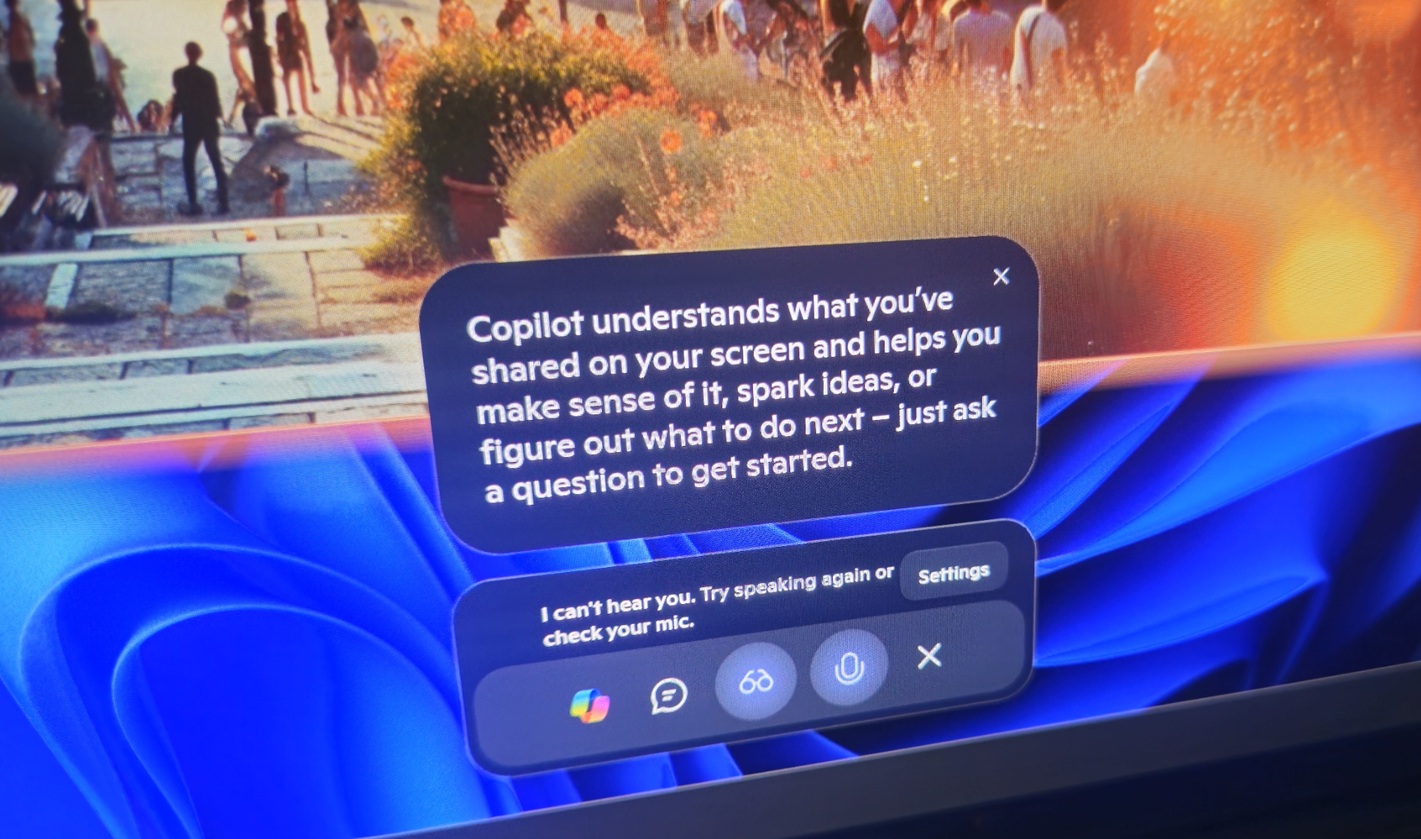
Sources familiar with Microsoft’s plans say that several Copilot integrations are now under review. Features inside apps like Notepad and Paint may be removed, redesigned, or stripped of Copilot branding. Microsoft has also reportedly paused work on adding new Copilot buttons to system apps, for the time being, that is.
Recall is also getting reworked
Windows Recall is also being reconsidered. Internally, Microsoft considers that the present setup of Recall has not delivered. The company is exploring ways to rework the feature entirely, maybe even abandoning the Recall name in the future, due to its negative press. But take this info with a grain of salt.
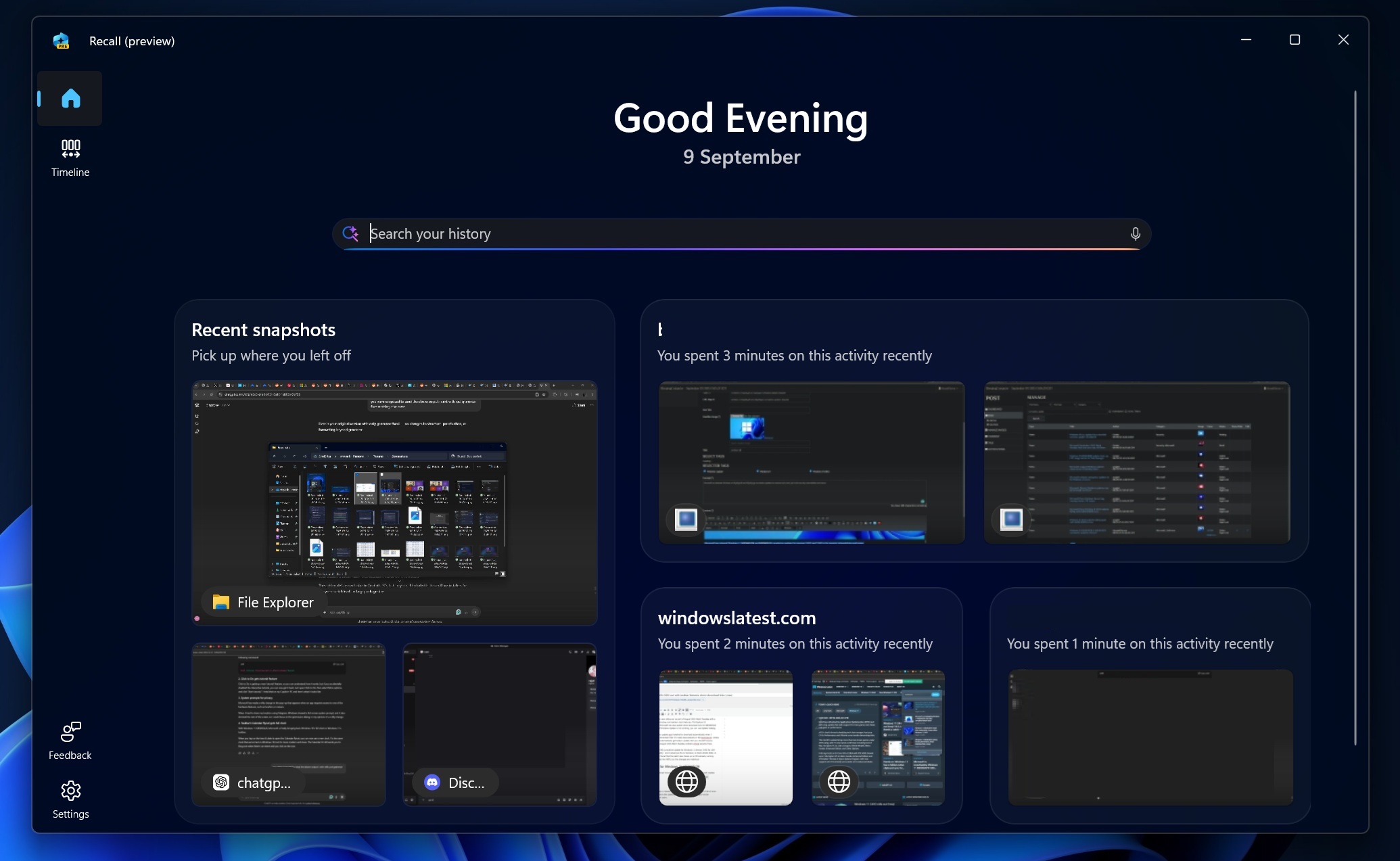
Also, none of this means that Microsoft is abandoning AI altogether. Technologies like Semantic Search, Windows ML, Agentic Workspace, and developer-facing AI APIs are still moving forward. The difference is that these tools operate mostly in the background, instead of being forced into everyday workflows. Microsoft definitely has to stand strong against its fast-moving competitors, including MacOS, with its updated Apple Intelligence, courtesy of Google’s Gemini.
Either way, if this reset is real, it could mark the end of Copilot being shoved into every corner of Windows. But whether users will trust Microsoft again after years of overpromising and underdelivering remains an open question.
And that brings us to another uncomfortable reality for Microsoft.
One billion users, but zero love
Even as Windows 11 suffers from persistent quality and trust issues, it recently hit a major adoption milestone that Microsoft will happily highlight. During its fiscal Q2 2026 earnings, the company confirmed that Windows 11 is now running on over one billion devices worldwide, reaching the mark in about 130 days faster than Windows 10.
On paper, this makes Windows 11 one of Microsoft’s most widely adopted OS versions. But reaching one billion users does not mean the OS is loved or trusted. Many users only moved to Windows 11 because Windows 10’s support ended.
People don’t trust Windows or Microsoft, for that matter
Trust in Windows has eroded for predictable reasons, such as the persistent bugs, poor update quality, and basic functionality getting worse.
The first Windows 11 update of 2026 had its own problems, forcing emergency out-of-band patches to fix shutdown issues and crashes in cloud apps like OneDrive and Dropbox. A second emergency update was needed days later to fix even more issues.
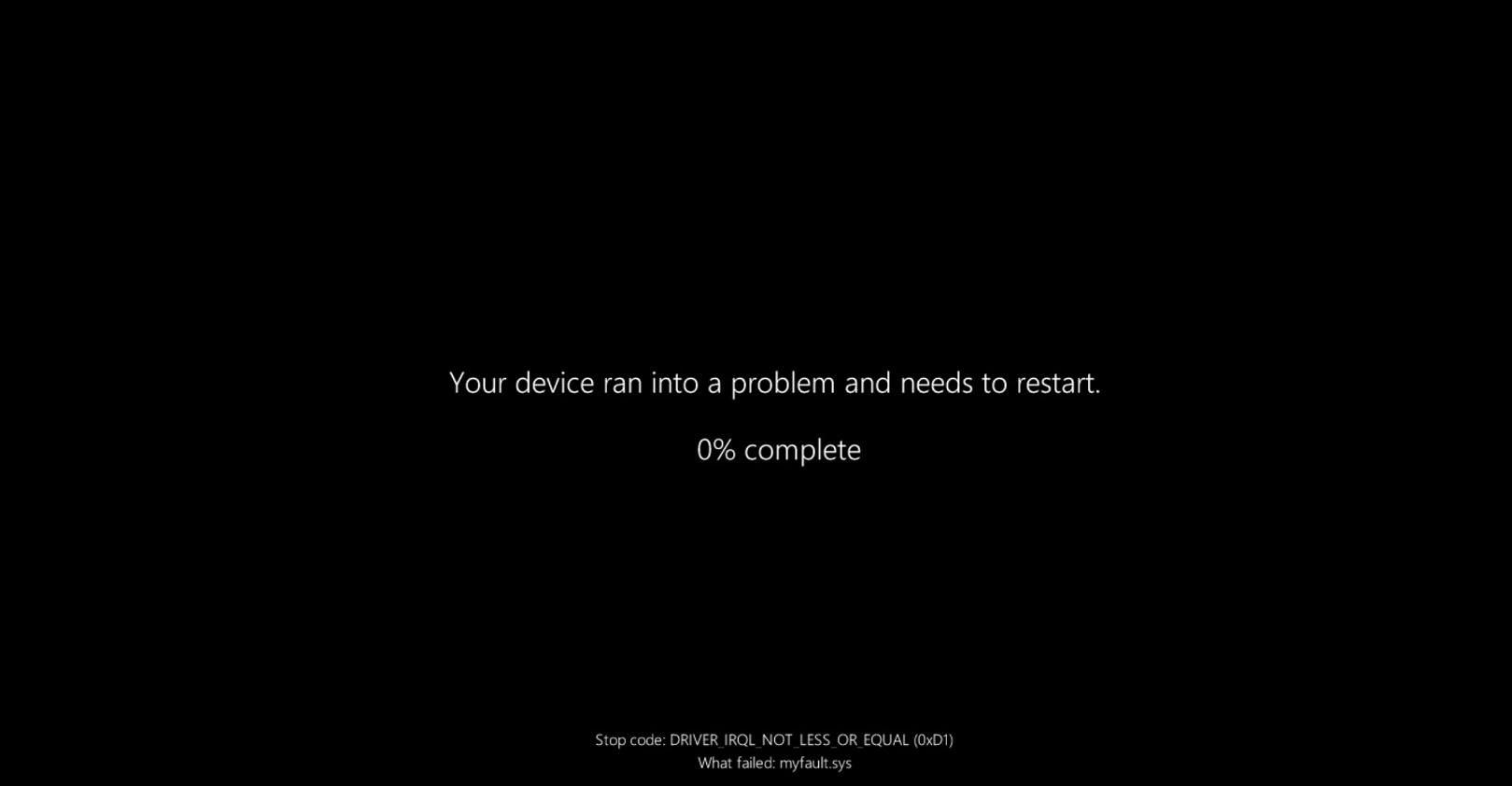
On top of that, recent security updates removed legacy modem drivers, unexpectedly disabling older hardware. Microsoft also confirmed BSOD and boot failures after the January security update, with recovery options still uncertain for some systems.
Issues aside, when the OS becomes a sales channel for all their other products, like Copilot, OneDrive, and M365, Microsoft can’t expect users to trust Windows anymore.
While the company reported strong overall revenues with cloud services and enterprise products continuing to grow, its More Personal Computing division, which includes Windows, Surface, and gaming, declined year-over-year. Windows OEM revenue saw only modest growth.
Even with 1 billion users, Microsoft cannot make meaningful revenue from AI if users don’t trust the platform, which might be a big reason for the new found focus to make Windows trustworthy.
2026 will also be the year Microsoft finally fixes Gaming on Windows
In December 2025, Windows Latest reported that Microsoft had finally admitted Windows 11 needs serious performance improvements, especially for gaming. The company outlined a new “Performance Fundamentals” approach for 2026, focused on background workload management, power and scheduling tweaks, graphics stack optimizations, and better driver coordination.
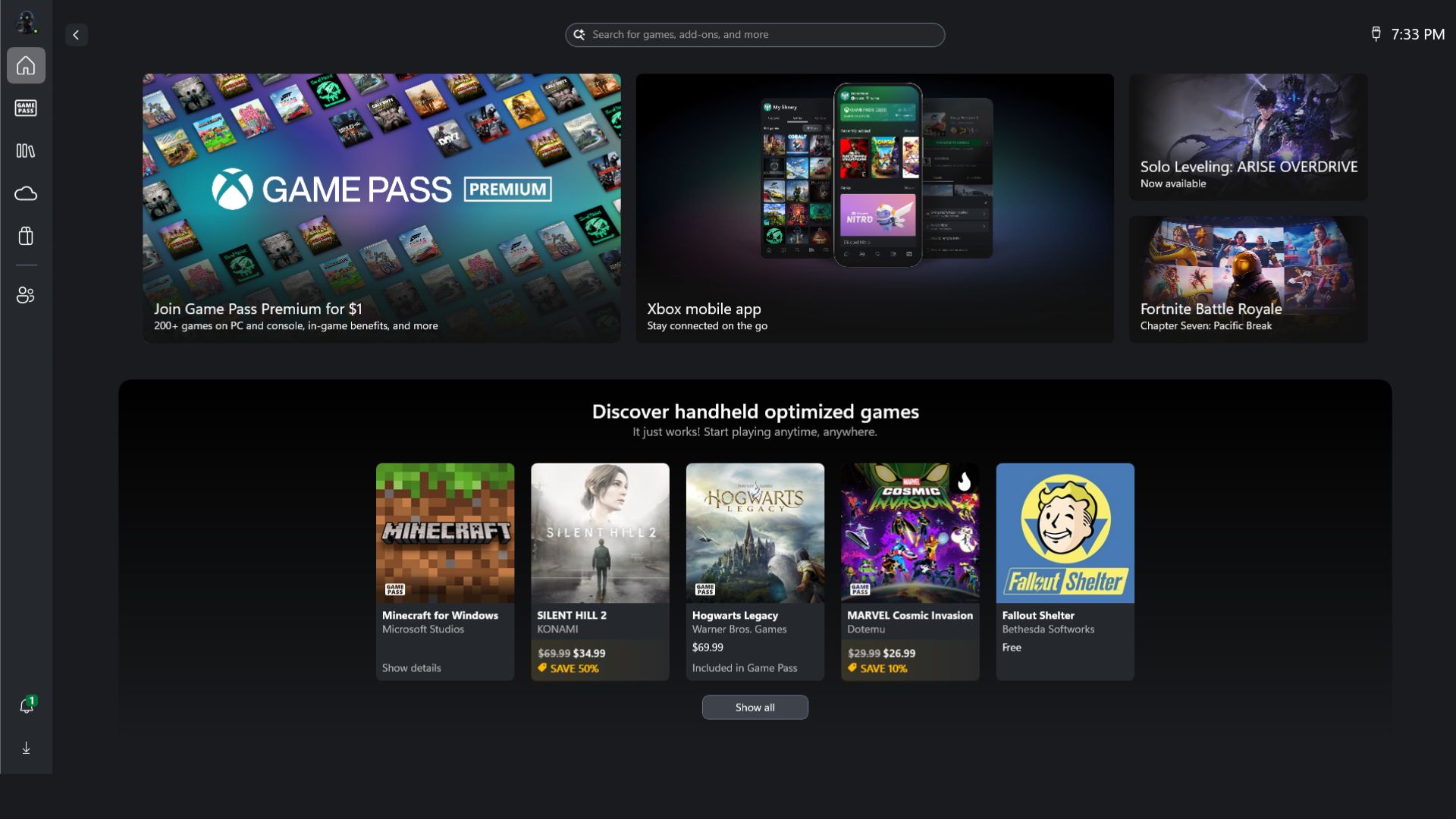
For 2026, Microsoft is promising to stop Windows from getting in the way when a game is running. We will also see tangible features arriving this year. The Xbox Full Screen Experience, which started as a handheld-only UI, is coming to all Windows devices.
Users have complained about inconsistent frame pacing, sudden CPU spikes, poor battery life on handhelds, and performance drops caused by background services. Microsoft knows it is losing ground to dedicated handhelds like the Steam Deck and consoles like the PS5. With a large chunk of gamers still clinging to Windows 10, the company has no choice but to prove that Windows 11 can offer better performance.
We need a “Windows 11.1” moment
Microsoft is at a crossroads. The “swarming” strategy and the retreat from intrusive AI are the first real signs that the company understands just how much trust it lost in 2025.
We have been here before. Remember Windows 8? It was a disaster of forced touch interfaces and confusing user interfaces. But Microsoft didn’t double down; they released Windows 8.1, which brought back the Start button and traditional desktop UI.
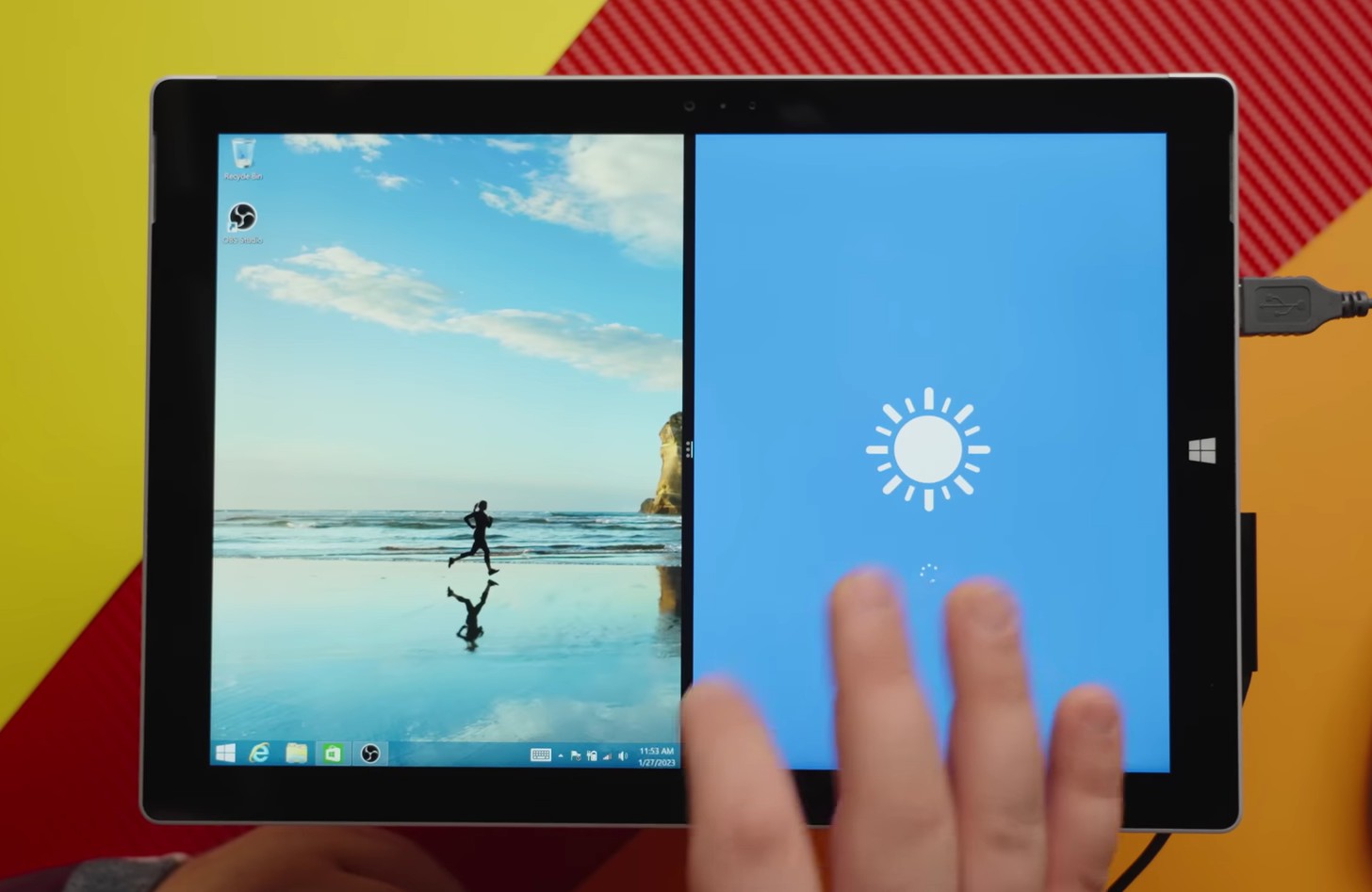
Windows 11 needs its own “8.1 moment”, a soft reboot that stops trying to sell us an “AI future” we didn’t ask for and starts delivering the stable, fast, and coherent operating system we actually need.
If Microsoft sticks to their plans for 2026, stripping back the bloat and finally optimizing the core performance, they might just win us back. But if it slips back, users will continue to look elsewhere, like macOS for work, SteamOS for gaming, or Linux for everything else.
2025 was arguably the worst year for Windows, but if things go as planned, 2026 could be the best one yet.