
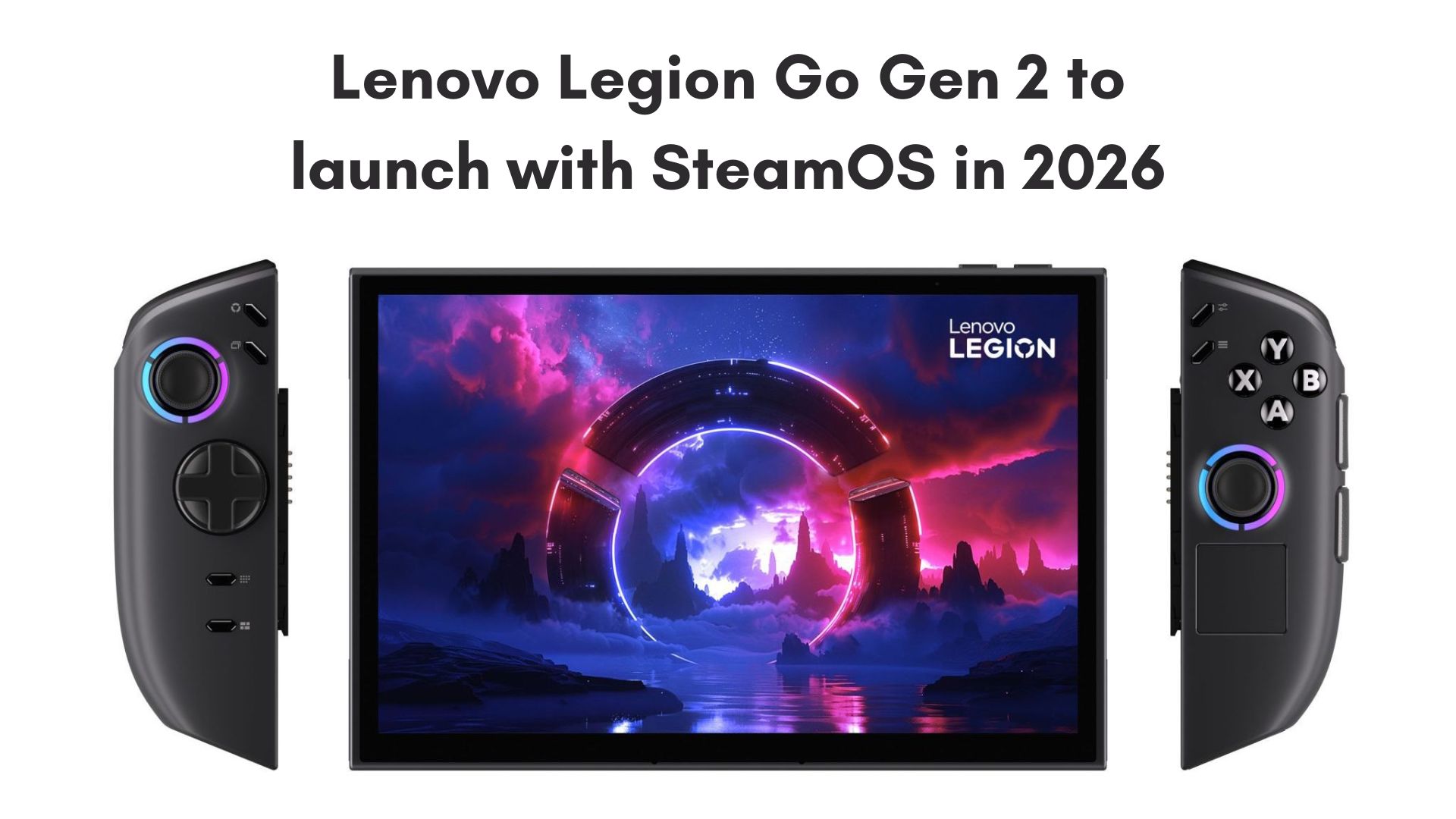
Windows Latest has learned exclusively that Lenovo is launching a SteamOS-powered version of the Legion Go Gen 2 “Legion Go (8.8”, 2)” at CES 2026.
This would be Lenovo’s most powerful handheld yet, capable of playing AAA titles, with desktop-class AMD hardware and the console-style SteamOS experience.
Gamers lauded the Lenovo Legion Go 2 handheld for its powerful hardware, but hated the unoptimized Windows 11 experience that came with it. Interestingly, Microsoft is taking efforts to make Windows handheld gaming better with the Xbox Full Screen Experience.
However, rather than going the Xbox route, Lenovo is leaning into SteamOS, betting on its low overhead, gamepad-first design, and suspend-and-resume workflow to extract more performance from the same silicon. Yes, Microsoft is openly trying to fix Windows’ handheld gaming problems, but SteamOS continues to gain mindshare among portable PC gamers.
According to details obtained by Windows Latest, Lenovo is pairing SteamOS with the same AMD Ryzen Z2 Extreme chip, up to 32GB of LPDDR5X memory, and up to 2TB of PCIe storage, all driving an 8.8-inch PureSight OLED display. Lenovo’s goal here is to deliver the full power of the Legion Go hardware, without the limitations that Windows has given to handheld gaming.
Lenovo Legion Go Gen 2 handheld to natively ship with SteamOS
Lenovo first showed the Legion Go (8.8”, 2) as a prototype at CES 2025, which was the rightful next step after the original Legion Go. Because the first-generation model shipped as a Windows 11 handheld, which had hardware that couldn’t stand tall for the software. The inconsistent performance, short battery life, and, of course, the PC like Windows 11 felt uncomfortable on a device that was clearly meant to behave like a console.
The Legion Go Gen 2 fixed a lot of the hardware issues when it officially launched later in 2025 as a Windows 11 device. Lenovo delivered a much stronger package. An 8.8-inch 144Hz OLED display, AMD’s Ryzen Z2 Extreme, up to 32GB of fast LPDDR5X memory, larger storage options, and a significantly bigger battery finally gave the hardware room to breathe.
The detachable TrueStrike controllers were redesigned to feel more ergonomic and flexible, while remaining backward-compatible with the first model.
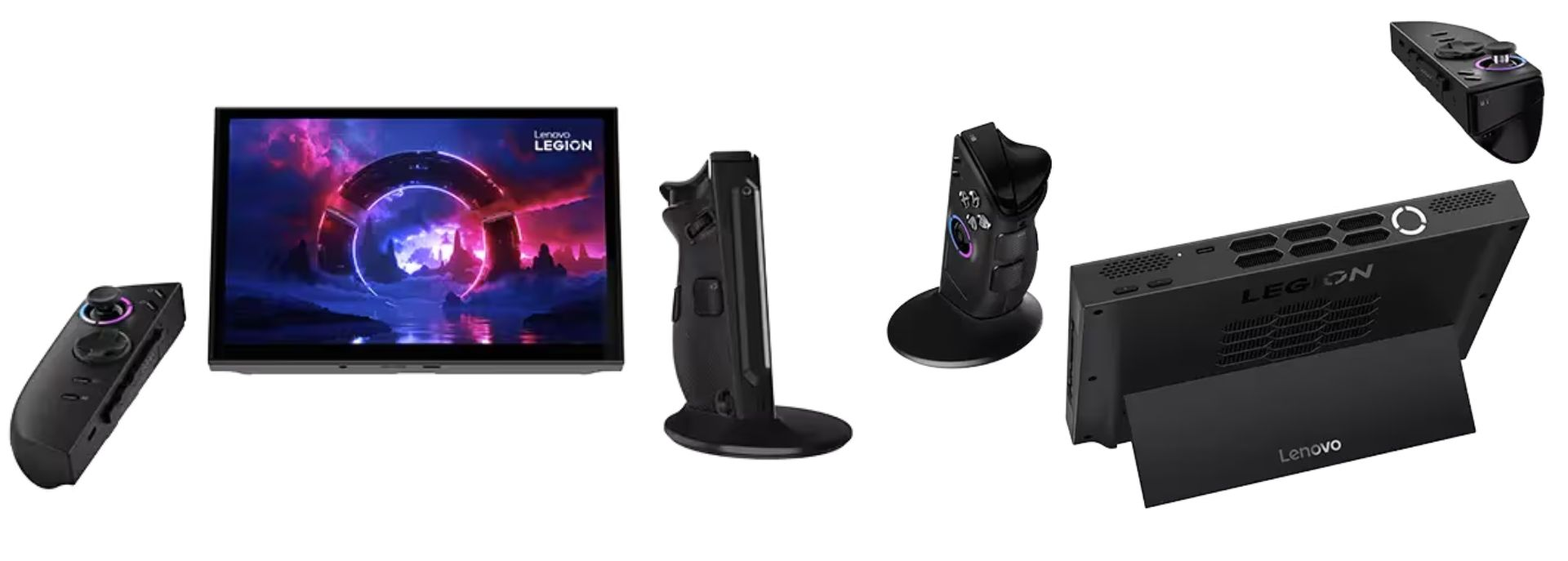
But Windows was still the issue for most gamers. They appreciated the raw power, yet many felt that Windows 11 was not built for handheld gaming.
With this SteamOS version, Lenovo is not changing the hardware at all. The Legion Go, powered by SteamOS (8.8”, 2) uses the same Ryzen Z2 Extreme chip, the same memory and storage configurations, and the same OLED display.
Full specifications of the Lenovo Legion Go Gen 2 (SteamOS)
| Product name | Legion Go, powered by SteamOS (8.8-inch) |
| Size and weight | |
|---|---|
| Dimensions (tablet only) | 8.11 × 5.38 × 0.90 in 206 × 136.7 × 22.95 mm |
| Dimensions (tablet + controllers) | 11.64 × 5.38 × 1.66 in 295.6 × 136.7 × 42.25 mm |
| Weight (tablet + controllers) | 2.2 lb (920 g) |
| Weight (controllers only) | 0.46 lb (210 g) |
| Display | |
| Panel and size | 8.8-inch OLED |
| Resolution / aspect ratio | WUXGA (1920 × 1200), 16:10 |
| Refresh / brightness / color | 144Hz, 500 nits, DCI-P3 |
| Touch | 10-point in-cell touch |
| Core hardware | |
| Processor / graphics | Up to AMD Ryzen™ Z2 Extreme Processor |
| Memory | Up to 32GB LPDDR5X (8000MHz) |
| Storage | Up to 2TB M.2 2242 PCIe SSD (Gen4) |
| Operating system | SteamOS |
| Battery and charging | |
| Battery | 74Whr rechargeable Li-ion |
| Power adapter | 65W (USB Type-C) |
| Ports and controls | |
| Top ports | 1 × 3.5mm audio combo jack 2 × USB Type-C (USB 4.0, DisplayPort 1.4, Power Delivery 3.0) |
| Bottom port | 1 × microSD card reader (supports up to 2TB) |
| Gamepad controls | Legion L/R buttons, ABXY buttons, D-pad L & R Hall Effect joysticks, L & R bumpers View button (L), Menu button (R), Trackpad (R) 2 × assignable grip buttons, 2 × adjustable trigger switches |
| Audio, wireless, and color | |
| Audio | 2 × 2W woofer; dual-array near-field mic |
| Wireless | Wi-Fi 6E (2×2 AX) + Bluetooth 5.3 |
| Color | Eclipse Black |
Why SteamOS is better than Windows 11 in handheld gaming
The Lenovo Legion Go S was a $700+ device that launched with Windows 11 but was received poorly, mostly due to its abysmal battery life and poor performance. However, it also had a SteamOS version, which was the first non‑Valve handheld to officially run the OS.
With SteamOS running the machine, it instantly became an excellent gaming handheld.
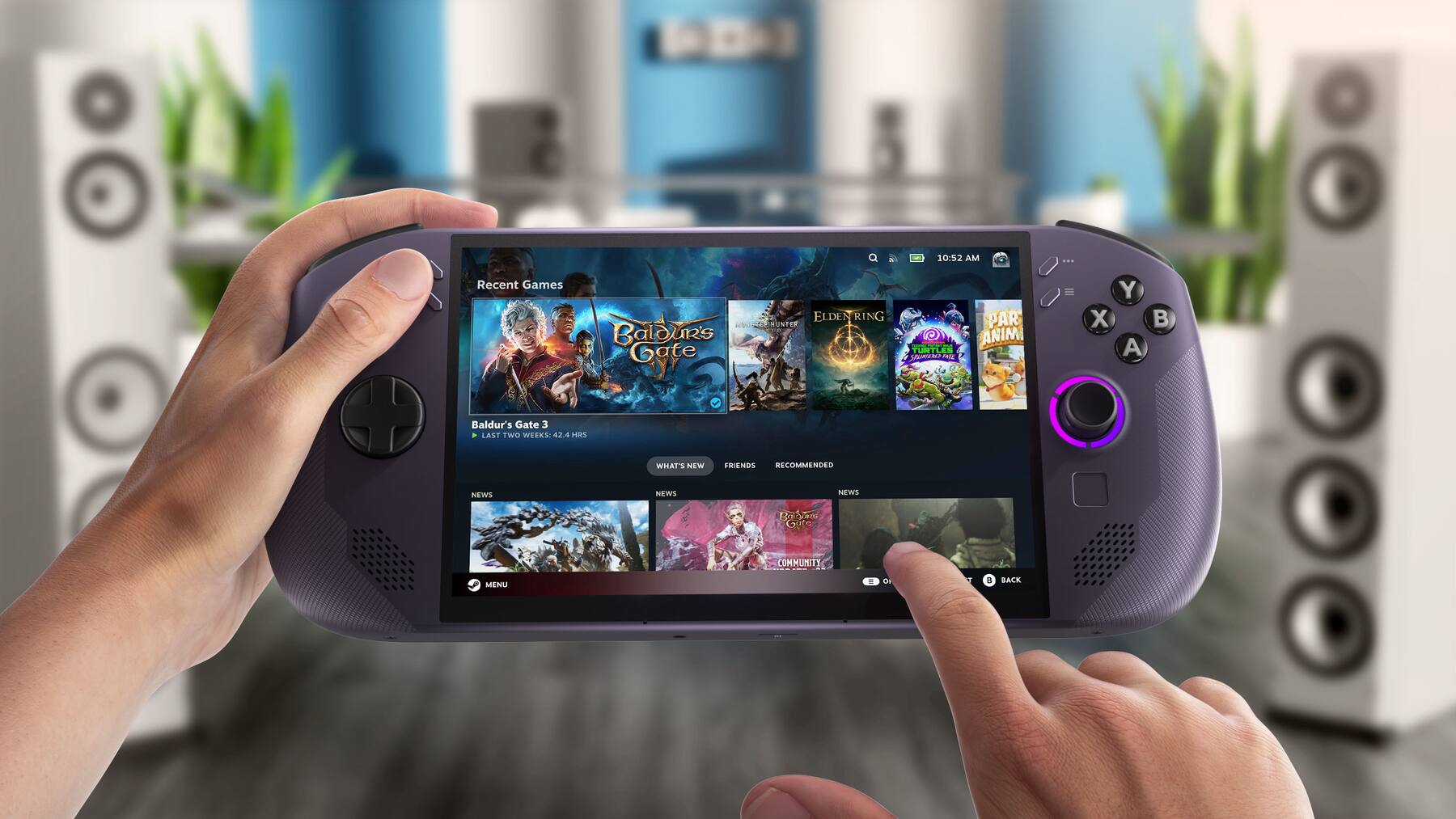
SteamOS is built like a console OS. The entire interface is designed around gamepad input, which means, when you run it on a small handheld device, you boot straight into a gaming environment instead of the tiny icons meant to be used with a mouse.
As for the performance side of things, SteamOS lets you pause a game, put the device to sleep, and jump back in almost instantly, something Windows still struggles to do reliably on handhelds, or gaming PCs for that matter.
SteamOS is also built for plug-and-play gaming. Your full Steam library is right there, cloud saves sync automatically, notifications are centralized, Steam Chat works out of the box, and game recording is built in without extra software running in the background. You do not have to manage launchers, services, or overlays. It’s a pure gaming OS.
When will the Lenovo Legion Go Gen 2 with SteamOS launch?
Windows Latest has learned that Lenovo will announce the Legion Go Gen 2, powered by SteamOS, at CES 2026 in January, which is where it first teased the Legion Go Gen 2 as a prototype design in 2025.
The Windows 11 version was officially launched later in September 2025, with availability beginning shortly after in key markets. The Windows 11-powered Legion Go Gen 2 had a starting price of around $1,049.99, with higher-end RAM and storage configurations going well beyond that.
Lenovo is not changing the hardware with the SteamOS version. But pricing is still unclear, and it would not be surprising if the company keeps it close to the Windows model.
For Microsoft, this should sting a little. Because Lenovo’s most powerful handheld may work better when Windows is taken out of the equation. Microsoft has acknowledged these problems and made a commitment to “make Windows the best place to game.”
But if Microsoft wants Windows 11 to stay relevant in the growing handheld market, it will need to move faster.